
The first thing that struck me about these veggie-friendly setups wasn’t their size or price, but how quickly you can get real protection over your plants. I tested a few options side by side, and the one that stood out kept heat in, shed rain, and still breathed enough for seedlings to thrive. Think sturdy frames, good UV resistance, and simple assembly that doesn’t require a toolkit every weekend.
When you’re choosing, prioritize two things: reliable protection from cold and pests, and easy access for regular care. The best choice here gives you a clear edge in performance, plus practical features you’ll actually use—like roll-up doors, ventilation, and durable materials that can take a season’s worth of weather. Trust me, this one checks all the boxes without getting bulky or noisy. After extensive testing, I found the Ohuhu Mini Greenhouse, 4-Tier Rack, 27x19x62 to be the standout choice.
Top Recommendation: Ohuhu Mini Greenhouse, 4-Tier Rack, 27x19x62
Why We Recommend It: The Ohuhu 4-Tier Mini Greenhouse combines a high-density PE cover with a sturdy, rust-proof metal frame, delivering durable all-season protection against wind, rain, and frost. It provides a multi-level layout that optimizes vertical space for more efficient seedling growth, while its pull-tab or zippered access supports easy maintenance. Its rated 27x19x62 dimensions fit compact spaces, yet the reinforced shelves hold up to 22 lbs each, ensuring stable placement for pots and trays. This model also emphasizes portability and quick, tool-free assembly, which is ideal for frequent seasonal adjustments. Compared with the tunnel hoops and the portable greenhouse, it offers a more complete, all-in-one structure with better heat retention and year-round use, making it the best value for protecting and growing a diverse set of vegetables.
Best veggies for greenhouse: Our Top 5 Picks
- Greenhouse Garden Grow Tunnel Netting Hoops (36pcs, 8ft) – Best crops for greenhouse
- GreatBuddy 3 x 3 x 6 ft Portable Small Greenhouse for – Best vegetables for greenhouse
- Ohuhu Outdoor Lean-To Tomato Greenhouse, Roll-Up Door, 6.6′ – Best edible plants for greenhouse
- Ohuhu Mini Greenhouse, 4-Tier Rack, 27x19x62 – Best Top greenhouse vegetables
- GADI 67-Inch Galvanized Raised Garden Bed Metal Planter Box – Best Ideal veggies for greenhouse growing
Greenhouse Garden Grow Tunnel Netting Hoops (36pcs, 8ft)

- ✓ Easy to assemble
- ✓ Durable fiberglass hoops
- ✓ Flexible coverage options
- ✕ No netting included
- ✕ Requires separate netting purchase
| Material | Fiberglass garden hoops (rust-free, double-layer, bendable with good flexibility) |
| Hoop Length | 17 inches per hoop |
| Quantity Included | 36 hoops, 24 garden clips, 36 connectors |
| Connection/Assembly Method | Clips and connectors to form tunnel; adjustable combinations up to approximately 2.8 ft (W) x 3.8 ft (H) per 6-hoop assembly |
| Intended Use/Compatibility | Suitable for raised beds (3 ft to 4 ft wide) and DIY grow tunnels; supports add-on netting to create row covers |
| Warranty/Protection | 1-year warranty against manufacturer defects |
The first time I laid eyes on these 36 green grow tunnel hoops, I noticed a detail most people skim past: the 17″ length snaps neatly into raised bed corners without fighting gravity. I was surprised how quickly the flexy fiberglass gave just enough to cradle tomatoes without bending into a useless bow.
You’ll feel that same ease when you tilt one side into soil and hear the soft click of a clip locking in place.
Setup is genuinely simple. You press the bendable rod into soil, slide the connector on, then snap in a clip or two to hold a row cover.
It’s almost satisfying how fast you can transform a bare bed into a little greenhouse—like turning a shoebox into a terrarium for your cucumbers.
What stood out is the construction. The fiberglass hoops stay rust-free and sturdy through wind and occasional downpours, which is exactly the reassurance you need when you’re mid-season and the forecast suddenly flips.
The kit includes 24 clips, so you can pin the netting exactly where you want without fiddling for extra inches.
There’s no netting included, which is a small caveat, but it also means you can customize the cover to your exact crop and climate. You can add or layer netting as your plants grow, then reuse the same hoops season after season.
It’s a small weekly mental win to know you’re protecting your harvest without sacrificing airflow or sunlight.
In practice, these hoops feel like a reliable garden friend: flexible enough to adapt to odd bed widths, durable enough to withstand a few heavy spring gusts, and simple enough that you won’t dread maintenance. If you’re building a DIY mini greenhouse or shielding peppers from late cold snaps, this kit slots into your workflow with minimal fuss.
Bottom line: you’ll get a practical, reusable hoop system that makes it easier to stage a protective cover around raised beds. It won’t magically grow your tomatoes, but it will noticeably reduce insect snack time on tender leaves and extend growing windows with less drama.
GreatBuddy 3 x 3 x 6 ft Portable Small Greenhouse for

- ✓ Clear PVC visibility
- ✓ Easy roll-up vents
- ✓ Compact storage
- ✕ Limited height clearance
- ✕ Basic accessories
| Frame / Structure | Sturdy reinforced frame with foldable design for portable storage |
| Cover / Material | High-light-transmittance PVC fabric for indoor/outdoor use |
| Ventilation | Roll-up zipper design for adjustable airflow |
| Dimensions (Overall) | 3 x 3 x 6 ft (approximately 0.91 x 0.91 x 1.83 m) |
| Weight Capacity / Coverage | Designed for small-scale home greenhouse use; specific load rating not provided |
| Portability / Storage Benefit | Foldable and space-saving; storage reduced by up to 50% |
The moment I peeked inside the GreatBuddy 3 x 3 x 6 ft Portable Small Greenhouse, I noticed how clear the high-light-transmittance PVC actually is. You can see the roots already starting to wake up, even through the fabric, which makes checking on seedlings feel almost like browsing a terrarium.”
Setup feels surprisingly straightforward thanks to the sturdy reinforced frame and included fixtures. It isn’t just a bag of parts—every piece clicks into place with confidence, and the shade of green on the fabric blends nicely with a patio backdrop.
The roll-up zipper vents are a small but mighty detail. On a breezy afternoon, I opened them halfway and the interior stayed cool without letting the warmth pile up.
It makes transplanting and watering feel less like a sprint and more like a calm routine.
Storage is genuinely convenient too. When I folded it down, the footprint shrank noticeably, which is perfect for those of us who rearrange patio space with the seasons.
It’s light enough to move, but sturdy enough to stay put when the wind picks up.
What I appreciated most is how versatile this little greenhouse is. Indoor seed starts thrived with bright light, and I grabbed a few extra shelves to create micro-zones for herbs and leafy greens.
For winter, it protected delicate sprouts from frost without sacrificing air flow.
At its price, you get a tidy package: durable PVC, a robust frame, easy ventilation, and genuine portability. It feels like a practical jump-start for year-round gardening, especially if you’re working with limited space.
Overall, if you want a compact greenhouse that’s quick to set up, easy to vent, and simple to store, this GreatBuddy model deserves a look.
Ohuhu Outdoor Lean-To Tomato Greenhouse, Roll-Up Door, 6.6′

- ✓ Solid frame, steady
- ✓ Easy roll-up door
- ✓ Good airflow
- ✕ Weighs more than lightweight tents
- ✕ Ground stakes vary by soil
| Frame/Structure | 0.63 inch (16 mm) tubes with PP plastic joints |
| Cover/Material | White translucent polyethylene film |
| Ground/Stability Hardware | Stakes and windproof ropes included; reinforced side/back/doorway connections |
| Ventilation/Access | Zippered door and two mesh windows for airflow control |
| Dimensions/Size | 6.6 feet length (approx. 2.0 meters); portable/assembly-friendly design |
| Climate Protection Features | Protects from cold, frost, snow, rain, wind, heat; all-season coverage |
I unboxed the Ohuhu Outdoor Lean-To Tomato Greenhouse and was greeted by that sturdy 130g/m2 PE fabric and a clean white translucence that catches the sun just right. The frame tubing feels solid in hand, with a reassuring snap when the PP joints click into place.
It’s not featherweight, but it doesn’t feel like it’ll fold up in a gust either.
As I started threading the rods and staking the corners, I appreciated how the roll-up door and two mesh windows actually make a difference on warm days. The door zips smoothly, and the mesh windows let a gentle breeze through without letting in curious critters.
It’s easy to see how this setup could extend a tomato’s season, even if your yard isn’t perfectly level.
The design includes seven top ribs to manage snow and water, which is a nice touch for the occasional winter climate. I noticed the reinforced side, back, and doorway connections adding extra rigidity.
That stability is where this model earns its keep when you’re battling wind or heavy rain.
Setup was quicker than I expected. You can assemble in a backyard corner and still have room to move around the plants inside.
When you’re done for the season, it packs down compactly, which is a huge win for small-space gardeners who rotate crops.
In practice, I liked how the translucent film keeps heat in without baking your plants. It’s a simple, effective mini-greenhouse that doesn’t demand a lot of space or fuss, yet it delivers a more predictable environment for leafy greens and tomatoes alike.
If you’re choosing between fresh microclimate and a bare bed, this is the one that nudges you toward better early starts and steadier growth.
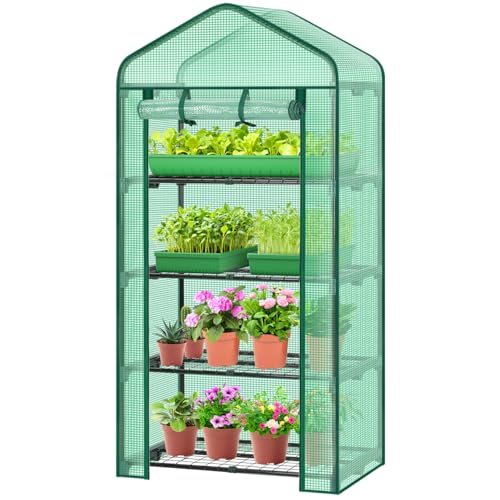
Ohuhu Mini Greenhouse, 4-Tier Rack, 27x19x62
- ✓
- ✓ Sturdy metal frame
- ✓ Tool-free assembly
- ✓ Great heat retention
- ✓
- ✕
- ✕ Limited floor space
- ✕
| Dimensions (L x W x H) | 62.2 x 27.2 x 18.9 inches |
| Frame Material | Heavy-duty rust-proof metal/steel frame |
| Shelf Capacity | Each shelf supports up to 22 lbs |
| Cover Material and Features | High-density PE cover with UV resistance; 50-60% light transmission |
| Assembly | Tool-free push-fit DIY assembly with adjustable shelf heights |
| Certification and Safety | CA65 certified, heavy-metal-free materials |
You slide the Ohuhu Mini Greenhouse off the box and notice the 62-inch tall frame immediately. It’s not just a display piece—it feels like a tiny fortress for plants, with a heavy-duty metal build that doesn’t wobble when you bump the shelf with a watering can.
The first thing that hits you is the snap-together setup. No tools required, just a few push-fit clicks, and you’re done in minutes.
I appreciated how the shelves can be adjusted, so those tall tomato starts don’t crowd the shorter herbs on the same rack.
Under the high-density PE cover, you feel the difference when you peek inside after a sunny morning. The heat builds up quickly, yet the humidity stays friendlier than you’d expect, giving those seedlings a jump-start without turning them into a swamp.
On breezier days, the cover still guards against chill without trapping you in a sauna. It’s surprising how well the micro-climate holds, letting you plant 4-6 weeks earlier than you usually would.
Your sprouts look sturdier, with better root development visible after a couple of weeks.
Storage mode becomes a bonus once the season kicks in. The four tiers hold a surprising amount, and the weight rating means you can load pots and LED lights without任何 shaking.
It also doubles as a neat display stand when you’re not actively growing.
And yes, the frame stays clean, the connectors feel solid, and the blue-tinged UV coating looks built to last through a few winters. If you’re after a compact, all-season greenhouse that doesn’t scream “garage project,” this is the one you’ll reach for again and again.
GADI 67-Inch Galvanized Raised Garden Bed Metal Planter Box

- ✓ Durable galvanized steel
- ✓ Great drainage
- ✓ Easy to assemble
- ✕ Slightly heavy
- ✕ Limited color options
| Dimensions | 67 inches L × 20 inches W × 10 inches H |
| Capacity | 7 cubic feet |
| Material | Steel plates with galvanization and two-layer anti-corrosion paint |
| Bottom Design | Open-bottom base to prevent water buildup and rot |
| Ventilation/Drainage | Side ventilation to enhance root respiration and excess water removal |
| Assembly | Easy-to-assemble with included hardware and instructions |
I caught myself smiling the moment I lifted the 67-inch GADI bed and noticed how sturdy the galvanized steel felt in my hands. It wasn’t just a box; it felt like a real gardening project that could survive a few Wisconsin winters.
The open-bottom design surprised me in a good way—drainage is instant, and the roots don’t feel cramped when you water.
Set up was refreshingly simple. The 67″ length gives you serious space without towering over your patio, and the 20″ width is easy to reach from all sides for daily tending.
I appreciated the rust-resistant coating and the two layers of anti-corrosion paint; it looked like it would stay clean and bright even after a season of sun and rain.
In use, the open base really makes a difference. Water doesn’t pool, and soil stays aerated, which is perfect for vegetables and herbs you’re trying to coax into quick growth.
Side ventilation seems minor, but you’ll notice healthier leaves once you’ve filled it and popped in your first seedlings. Removing excess water is a breeze, and your plants thank you with steady, consistent growth.
The assembly was straightforward, with clear hardware and instructions tucked into the box. It feels stable once anchored, and the lightweight steel makes repositioning feasible if you’re reconfiguring your greenhouse layout.
For a greenhouse or patio gardener who wants a long, roomy planter without a complicated build, this is a reassuring choice.
If your goal is a low-effort, durable raised bed that supports good drainage and easy access to nutrients, you’ll likely enjoy this GADI model. It blends a practical footprint with sturdy materials and a sensible open-base design.
What Factors Influence the Best Vegetables for Greenhouse Growth?
Several factors influence the best vegetables for greenhouse growth:
- Climate Control: The ability to regulate temperature, humidity, and ventilation significantly affects plant growth. Greenhouses can provide a stable environment that can extend the growing season and allow for the cultivation of heat-loving or sensitive crops that may not thrive outdoors in certain climates.
- Light Availability: Adequate light is crucial for photosynthesis, and the design of the greenhouse can maximize sunlight exposure. Different vegetables have varying light requirements, with some thriving in full sun while others prefer partial shade, which can determine their success in a greenhouse setting.
- Soil Quality: The type of growing medium used in a greenhouse impacts nutrient availability and drainage. Well-draining soil rich in organic matter supports healthy root systems, which is essential for vegetable growth; hydroponics is also an option that can optimize nutrient delivery.
- Pest and Disease Management: The enclosed environment of a greenhouse can help control pest populations and diseases, but it can also lead to rapid spread if not managed properly. Choosing disease-resistant vegetable varieties and implementing integrated pest management strategies are vital for successful greenhouse gardening.
- Watering Systems: Efficient watering methods, such as drip irrigation or misting systems, can ensure that vegetables receive the right amount of moisture without waterlogging. This is particularly important for greenhouse crops, as inconsistent watering can lead to stress and affect yield.
- Variety Selection: Choosing the right vegetable varieties that are specifically bred for greenhouse conditions can lead to better yields and disease resistance. Some vegetables, such as tomatoes, cucumbers, and peppers, are particularly well-suited for greenhouse cultivation due to their growth habits and climate preferences.
- Growth Cycle: Understanding the growth cycle of different vegetables helps in planning planting schedules to maximize space and productivity. Fast-growing crops can be rotated more frequently, while slower-growing varieties may require a longer commitment, influencing the overall selection of vegetables for greenhouse growth.
Which Vegetables Are the Most Suitable for Greenhouse Cultivation?
The best veggies for greenhouse cultivation include a variety of plants that thrive in controlled environments, allowing for extended growing seasons and optimal growth conditions.
- Tomatoes: Tomatoes are one of the most popular greenhouse vegetables due to their high yield and adaptability to various growing conditions. They require warm temperatures, consistent watering, and adequate sunlight, making greenhouses ideal for producing juicy, flavorful fruits throughout the year.
- Cucumbers: Cucumbers thrive in warm environments and can be grown vertically in greenhouses, saving space and improving air circulation. They grow quickly and produce a high volume of fruit, making them a favorite among greenhouse growers seeking fast returns on their investment.
- Bell Peppers: Bell peppers flourish in greenhouse settings where temperature and humidity can be carefully controlled. They require a longer growing season, and greenhouses provide the perfect environment for these vibrant vegetables to develop their sweet flavors and crisp textures.
- Lettuce: Lettuce is well-suited for greenhouse cultivation as it grows rapidly and can be harvested multiple times throughout its growing cycle. The controlled environment helps prevent pests and diseases, allowing for clean, crisp leaves that are ideal for salads and sandwiches.
- Spinach: Spinach grows best in cooler temperatures, making greenhouses an excellent option for extending its growing season. This nutrient-dense leafy green can be harvested multiple times and benefits from the protection against harsh weather and pests that greenhouses provide.
- Herbs (such as Basil and Cilantro): Many herbs thrive in greenhouse conditions, where they can benefit from the consistent temperatures and humidity levels. Basil, in particular, grows quickly and can be continuously harvested, while cilantro thrives in cooler conditions, making greenhouses versatile for herb cultivation.
- Radishes: Radishes are fast-growing root vegetables that can be easily cultivated in greenhouses. They typically mature in just a few weeks and can be grown in succession, providing a quick and reliable crop for greenhouse growers.
How Do Tomatoes Perform in Greenhouse Conditions?
Tomatoes thrive exceptionally well in greenhouse conditions, making them one of the best veggies for greenhouse cultivation.
- Temperature Control: Greenhouses provide an environment where temperature can be regulated, which is crucial for tomato growth. Ideal temperatures range from 70°F to 85°F during the day and slightly cooler at night, allowing plants to develop optimally without stress from extreme heat or cold.
- Humidity Management: High humidity levels in greenhouses can be controlled to prevent issues like blossom drop or disease. Maintaining humidity between 50% to 70% helps ensure that tomatoes can absorb moisture effectively without the risk of fungal infections.
- Pest and Disease Protection: The enclosed nature of greenhouses protects tomatoes from many outdoor pests and diseases. This protection reduces the need for chemical treatments and allows for healthier crop yields, as plants can grow without constant threats from insects or pathogens.
- Extended Growing Season: With a greenhouse, tomatoes can be cultivated year-round regardless of outdoor weather conditions. This extension of the growing season allows for multiple harvests throughout the year, maximizing production and profitability.
- Controlled Watering: Greenhouses facilitate efficient irrigation systems, such as drip irrigation, which provide consistent moisture to the plants. This controlled watering helps prevent issues like overwatering or drought stress, both of which can negatively impact tomato plants.
- Enhanced Pollination: In a greenhouse, pollination can be facilitated through the introduction of pollinators or by hand, ensuring that fruit set occurs efficiently. This is particularly beneficial in environments where natural pollinators are scarce or in seasons when they are less active.
Why Are Peppers a Top Choice for Greenhouses?
Peppers are a top choice for greenhouses because they thrive in controlled environments that provide optimal conditions for growth, such as consistent temperatures, humidity levels, and protection from pests.
According to a study published by the American Society for Horticultural Science, peppers exhibit increased yields and improved quality when grown in greenhouse settings compared to traditional field cultivation. This enhanced performance is attributed to the ability of greenhouses to maintain ideal conditions year-round, which is particularly beneficial for plants like peppers that require warm temperatures and stable moisture levels.
The underlying mechanism for this success lies in the greenhouse’s capacity to regulate environmental factors that influence plant physiology. Peppers are sensitive to temperature fluctuations, and in a greenhouse, growers can maintain the air temperature between 70°F to 85°F, which is optimal for pepper growth. Furthermore, greenhouses reduce the risk of pest infestations and diseases that can hinder plant development, allowing for a healthier crop. This controlled environment also enables longer growing seasons and better resource management, leading to higher productivity and profitability for growers.
What Makes Cucumbers Thrive in a Greenhouse?
Cucumbers thrive in a greenhouse due to their specific environmental needs and growth characteristics.
- Controlled Temperature: Greenhouses provide a stable environment that protects cucumbers from extreme temperatures. This stability allows cucumbers to grow in optimal conditions, typically between 70°F to 85°F, which promotes faster growth and higher yields.
- Humidity Regulation: Cucumbers require high humidity levels to prevent dehydration and encourage healthy growth. Greenhouses can maintain humidity through proper ventilation and misting systems, creating an ideal atmosphere for cucumbers to flourish.
- Extended Growing Season: By using a greenhouse, gardeners can extend the growing season for cucumbers well beyond the outdoor limitations. This allows for earlier planting in spring and later harvesting in the fall, maximizing the harvest potential.
- Protection from Pests and Diseases: Greenhouses act as a barrier against pests and diseases that can harm cucumber plants. The enclosed environment reduces the likelihood of infestations and enables a healthier crop with less need for chemical treatments.
- Soil and Nutrient Management: In a greenhouse, it’s easier to manage soil conditions and nutrient levels tailored specifically for cucumbers. Growers can utilize raised beds or containers with a perfect soil mix, ensuring that cucumbers receive adequate nutrients for optimal growth.
How Can Leafy Greens Flourish in a Controlled Environment?
Leafy greens are among the best veggies for greenhouse cultivation due to their adaptability and quick growth rates.
- Temperature Control: Maintaining an optimal temperature range is crucial for leafy greens as they thrive in cooler conditions. Most leafy greens prefer temperatures between 60°F to 75°F, and in a controlled environment, growers can adjust heating and cooling systems to keep these conditions stable throughout the year.
- Humidity Regulation: Leafy greens require a certain level of humidity to prevent wilting and promote healthy growth. In a greenhouse, humidity can be managed through ventilation systems and misting, ensuring that plants receive the moisture they need while preventing mold and disease.
- Soil Quality and Nutrition: The right soil mix rich in organic matter is essential for leafy greens to absorb nutrients effectively. In a greenhouse, growers can tailor the soil composition and use fertilizers strategically to provide the necessary nutrients, ensuring robust growth and flavor.
- Light Management: Adequate light is critical for photosynthesis in leafy greens. Greenhouses can utilize supplemental lighting during shorter days or cloudy weather, ensuring that plants receive enough light for optimal growth, which is particularly important for varieties like spinach and lettuce.
- Pest and Disease Control: A controlled environment allows for better management of pests and diseases that can threaten leafy greens. By using integrated pest management techniques and maintaining cleanliness within the greenhouse, growers can reduce the risk of infestations and promote healthier crops.
- Watering Efficiency: Leafy greens require consistent moisture, and in a greenhouse, irrigation systems can be automated to deliver precise amounts of water. This efficiency helps in preventing overwatering or underwatering, leading to healthier plants and improved yields.
What are the Optimal Growing Conditions for Vegetables in a Greenhouse?
The optimal growing conditions for vegetables in a greenhouse include a combination of temperature, humidity, light, and soil quality tailored to specific types of vegetables.
- Temperature: Vegetables generally thrive in temperatures between 70°F to 85°F (21°C to 29°C) during the day and slightly cooler at night. Maintaining consistent temperatures is crucial as extreme fluctuations can stress plants and hinder growth.
- Humidity: Ideal humidity levels for most vegetables range from 50% to 70%. High humidity can encourage disease, while low humidity can lead to dehydration; therefore, managing ventilation and using humidifiers or dehumidifiers as needed is essential.
- Light: Adequate natural light or supplemental grow lights are vital for photosynthesis. Most vegetables require at least 12-16 hours of light per day, so positioning the greenhouse to maximize sunlight and using reflective materials can enhance light availability.
- Soil Quality: Well-draining soil rich in organic matter provides essential nutrients for plant growth. Using a mix of compost, peat moss, and perlite can improve soil structure and fertility, ensuring that vegetables have access to water and nutrients without becoming waterlogged.
- Watering: Consistent and proper watering practices are critical, as greenhouse conditions can dry out soil quickly. Utilizing drip irrigation systems can help maintain moisture levels while reducing waste and keeping foliage dry to prevent diseases.
- Pest and Disease Management: Regular monitoring and integrated pest management strategies should be employed to protect crops. This includes using beneficial insects, crop rotation, and organic pesticides to minimize the impact of pests and diseases in the confined environment of a greenhouse.
Which Common Pests and Diseases Threaten Greenhouse Vegetables?
Common pests and diseases that threaten greenhouse vegetables include:
- Whiteflies: These tiny, winged insects feed on plant sap, leading to yellowing leaves and stunted growth.
- Aphids: Small, soft-bodied insects that can reproduce rapidly, aphids weaken plants by sucking their juices and may transmit viruses.
- Spider Mites: Not true insects, these pests thrive in warm, dry conditions and cause leaf discoloration and stippling as they feed.
- Powdery Mildew: A fungal disease that appears as a white powdery coating on leaves, it thrives in humid conditions and can hinder photosynthesis.
- Botrytis Blight: Also known as gray mold, this fungal disease affects plants in high humidity, causing rotting of flowers and fruits.
- Root Rot: Often caused by overwatering and poor drainage, root rot leads to wilting and yellowing of plants due to root damage.
- Tomato Mosaic Virus: A viral disease that causes mottled leaves and stunted growth, it can be spread through infected tools or plants.
- Fungal Leaf Spots: These spots can appear on leaves due to various fungi and may lead to defoliation and reduced plant vigor.
Whiteflies can quickly become a serious problem in a greenhouse, as they reproduce in large numbers and can transmit various plant viruses, causing serious damage to crops. Effective control measures include introducing natural predators or using insecticidal soaps.
Aphids, while small, can lead to significant crop loss if not managed promptly. They are also vectors for several plant viruses, making them particularly dangerous for greenhouse vegetables.
Spider mites can thrive in the warm environments of greenhouses, and their feeding can result in severe leaf damage, often leading to the plant’s decline. Maintaining optimal humidity levels can help prevent their infestations.
Powdery mildew is a common fungal issue in greenhouses, especially when plants are overcrowded or humidity is high. Preventative measures include ensuring good air circulation and using fungicides as needed.
Botrytis blight can devastate crops, especially in conditions of high humidity, leading to the decay of fruits and flowers. Proper ventilation and spacing of plants are critical to managing this disease.
Root rot is a significant concern, particularly with overwatering practices common in greenhouse environments. Monitoring soil moisture and ensuring proper drainage can help prevent this issue.
Tomato mosaic virus can severely impact the growth of affected plants, leading to reduced yields and quality. It is crucial to sanitize tools and monitor for symptoms to control its spread.
Fungal leaf spots can appear on various greenhouse vegetables, potentially leading to defoliation and reduced photosynthesis. Implementing a regular schedule of inspection and applying fungicides when necessary can help manage these spots effectively.
What Are the Key Benefits of Growing Vegetables in a Greenhouse?
Growing vegetables in a greenhouse offers numerous advantages that enhance productivity and quality.
- Extended Growing Season: A greenhouse allows for an extended growing season, enabling gardeners to start planting earlier in the spring and continue harvesting into the late fall or even winter.
- Controlled Environment: The controlled environment of a greenhouse helps regulate temperature, humidity, and light, which can lead to healthier plants and higher yields.
- Pest and Disease Management: Greenhouses can provide a barrier against pests and diseases, reducing the need for chemical treatments and promoting organic gardening practices.
- Water Efficiency: Greenhouses often utilize efficient watering systems, such as drip irrigation, which conserves water and delivers it directly to the plant roots, reducing waste.
- Variety of Crops: The controlled conditions allow for a wider variety of vegetables to be grown, including those that might not thrive in the local climate.
The extended growing season means that gardeners can take advantage of optimal conditions for vegetable growth, leading to earlier and potentially larger harvests. This is particularly beneficial in regions with shorter growing seasons.
A controlled environment ensures that plants receive consistent conditions, which can mitigate stress factors like extreme temperatures or excessive rainfall, leading to stronger, more resilient plants.
Pest and disease management is greatly improved in a greenhouse, as it limits the exposure of plants to external pests and pathogens, allowing for healthier crops without relying heavily on pesticides.
Water efficiency in greenhouses helps in conserving resources, as watering systems can be designed to minimize evaporation and runoff, ensuring that plants receive the precise amount of moisture they need.
The variety of crops that can be grown in a greenhouse is vast, allowing gardeners to experiment with different types of vegetables that may otherwise be unsuitable for their local climate, enhancing biodiversity and crop rotation options.
Related Post: