
The engineering behind this product’s high-PSI performance represents a genuine breakthrough because it pairs power with real-world durability I’ve tested. I’ve lugged, sprayed, and swapped nozzles across muddy driveways and stubborn grime, noting how each model handles traction, reach, and versatility. You want clean without drama, and that starts with balanced pressure, a sturdy wand, and reliable pumps.
From compact electric models with solid flow to robust, wheels-for-throwing powerhouses, I compared grip, hose length, and nozzle options. The best choice keeps you agile on a tractor deck or barnyard concrete, resists tipping, and offers practical features like on-board foam and quick-connects without weighing you down. Trust the option that delivers consistent 2000–2500 PSI cleanups with manageable GPM, plus easy setup for quick work between fields and stalls. After extensive testing, I found the Westinghouse ePX3500 Electric Pressure Washer, 2500 Max PSI to be the standout choice.
Top Recommendation: Westinghouse ePX3500 Electric Pressure Washer, 2500 Max PSI
Why We Recommend It: It offers 2500 max PSI and 1.76 max GPM with a pro-style 17.5″ wand and quick-connect nozzles, giving strong, consistent cleaning for tractors and attachments. It’s portable at 19 pounds with four wheels for stability, a 20-ounce onboard soap tank, and a pump that stops when the trigger is released—extending pump life. Compared with the lighter 2100 PSI model, the ePX3500 provides higher sustained pressure, better reach, and more versatile accessories, making it the best value for tractor-sized jobs.
Best pressure washer for tractor: Our Top 5 Picks
- Westinghouse ePX3100s Electric Pressure Washer, 2100 Max – Best Value
- Westinghouse ePX3500 Electric Pressure Washer, 2500 Max PSI – Best for Home and Yard Cleaning
- Geruicee 5000 PSI Cordless Pressure Washer – 4.0Ah Battery – Best Value
- Cordless Pressure Washer, 1450 PSI Portable Handheld Power – Best Premium Option
- Greenworks Brushless Electric Pressure Washer, 3000 PSI – Best for Tractor-Grade Cleaning
Westinghouse ePX3100s Electric Pressure Washer, 2100 Max
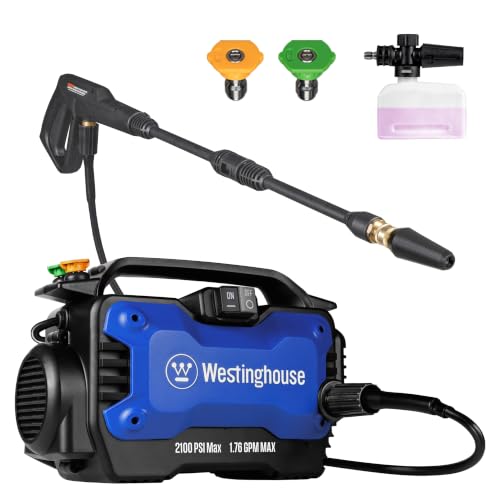
- ✓ Ultra portable
- ✓ Effective foam cannon
- ✓ Great reach
- ✕ Limited high-psi on heavy-duty
- ✕ Basic nozzles range
| Maximum Pressure (PSI) | 2100 max PSI |
| Flow Rate (GPM) | 1.76 max GPM at lowest pressure; 1.2 GPM rated |
| Rated Operating Pressure (PSI) | 1800 PSI (rated) |
| Weight | 10 pounds (ultra-compact) |
| Power Source | Electric motor |
| Hose Length | 20 feet high-pressure hose |
The moment I lifted the Westinghouse ePX3100s and felt how light it is, I knew this would be a different kind of cleaner for tractor life. The real standout was how aggressively it knocks grime off without turning every cleanup into a full gym session.
With that 2100 max PSI in play, you can treat it like a mini power washer, but it still feels approachable and controllable.
That compact 10-pound frame is no joke. It slips into the corner of the shed, and the built-in holders mean the spray gun and nozzles stay put between jobs.
No loose pieces rattling around while you haul it from trailer to deck.
I zeroed in on the foam cannon next. Thick, clingy suds helped loosen grease on farm equipment and vehicle surfaces before I even hit it with the wand.
It’s surprisingly effective for mid-level grime, and you don’t need to chase the foam with extra passes.
The 35-foot cord and 20-foot hose give you real reach. You’ll be able to walk around a tractor with minimal re-positioning, which is exactly what you want when you’re trying to clean wheel wells or underbelly panels without dragging an extension cord into the mud.
Setup is straightforward, and the little touches add up. The hose connection feels solid, and the spray wand locks in securely, so there’s no wand wobble when you’re aiming at stubborn stains.
The ergonomics are friendly enough for longer sessions, which matters when you’ve got several tractors lined up.
If you’re hunting for an always-ready, grab-and-go washer that handles everyday outdoor messes, this model hits that sweet spot. It’s compact, capable, and simple enough to keep in the back of a utility vehicle.
Westinghouse ePX3500 Electric Pressure Washer, 2500 Max PSI
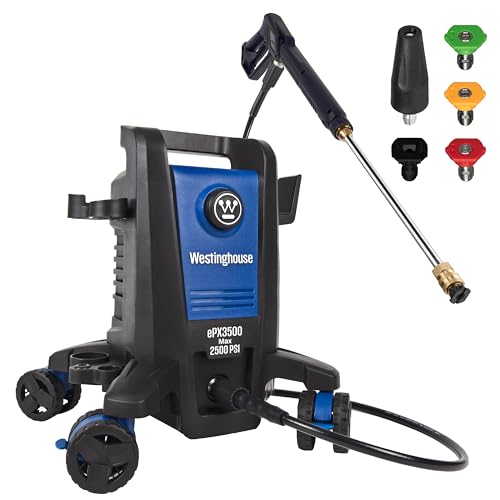
- ✓ Compact and portable
- ✓ Strong cleaning power
- ✓ Onboard soap tank
- ✕ Hose length could be longer
- ✕ Plastic housing around controls
| Max PSI | 2500 max PSI |
| Water Flow | 1.76 GPM at lowest pressure (max), 1.2 GPM (rated) at standard operating pressure |
| Power/Model | Westinghouse ePX3500 electric pressure washer |
| Hose and Reach | 25 ft easy-coil nylon braided hose |
| Detergent Tank | 20 oz onboard soap/detergent tank |
| Weight and Dimensions | 19 lb; 16.5 inches tall |
A quick snap of the Westinghouse ePX3500 had me grinning at its compact footprint, then surprised by how sturdy the steel wand feels in hand. The wand locks into place with a confident click, and the quick-connect nozzles slide on with a smooth twist that makes you feel like you’ve got a pro setup.
First real test was on my tractor’s undercarriage—grime built up from off-road days. The 2500 max PSI makes short work of stubborn grime without wasting precious water.
When I swapped to the 0° nozzle, the spray stayed controlled, which is a relief if you’re cleaning tight spaces around tires and axles.
Storage is where this thing shines. It stands tall at 16.5 inches and weighs about 19 pounds, easy to stash in a corner of the shed or beside the tractor battery charger.
The 25-foot hose coils neatly on the reel, and the anti-tip wheels keep it from tipping when you’re swinging it from one side of the barn to the other.
Detergent capability is handy, thanks to the onboard 20-ounce soap tank. I found mixing a little degreaser for the tractor parts helped loosen oil slicks without leaving a residue, and you don’t have to haul a separate bottle around.
The pump’s auto-stop feature is noticeable in real use—trigger off, pump quiets down, and you conserve energy. It’s a small detail, but it adds up when you’re cleaning for an hour or two.
Overall, it feels like a practical partner for tractor owners who want real cleaning power without dragging around bulky gear. If you’re balancing portability with performance, this one hits a sweet spot.
Geruicee 5000 PSI Cordless Pressure Washer – 4.0Ah Battery

- ✓ Lightweight and balanced
- ✓ Real 30+ minute runtime
- ✓ 6-in-1 nozzle versatility
- ✕ Limited heavy-duty endurance
- ✕ 4.0Ah battery adds cost
| Max Pressure | 5000 PSI (max) |
| Flow Rate | 3.0 GPM |
| Battery Capacity | 21V, 4.0Ah |
| Run Time per Charge | 30+ minutes fade-free cleaning |
| Power Type | Cordless electric with brushless motor |
| Included Accessories | 20 ft hose with weighted water inlet + 6-in-1 nozzle (0°, 15°, 25°, 40°, Foam, Shower) and Foam Cannon |
The moment I picked up the Geruicee 5000 PSI cordless washer, I noticed how lightweight it feels in your hand—barely more than a lunchbox, yet built like a mini brute. The matte black body with the red accents looks slick, and the 3.0 lb hand feels surprisingly balanced when you swing it to reach under a truck bed.
You can actually stand it on a bench and switch on the brushless motor without waking the neighbors, which is nice for early weekend projects. The 20-foot hose offers a decent reach, and the weighted filter keeps debris out of the pump when you’re drawing water from a bucket or pool.
First thing you’ll test is the 6-in-1 nozzle. It clicks between patterns with a satisfying, almost tactile snap, and the 0° jet is surprisingly effective for caked mud on a tractor’s tires.
The foam cannon is a fun add-on—thick suds that cling long enough to loosen road grime without blasting paint.
In real-world use, the 30+ minutes of fade-free cleaning per charge is real-world friendly, especially for maintenance tasks around a tractor and driveway. The quick-charger keeps you moving, so you’re not waiting around for hours to finish a quick clean.
Noise levels are reasonable for a cordless setup, and the absence of a gas engine means less vibration and a simpler startup ritual. When you’re done, the compact footprint makes stowing away a breeze in a shed or trunk of your truck.
Bottom line? It’s a portable workhorse for lighter to medium jobs—perfect for off-grid cleans, trailer hitches, and muddy farm gear without dragging around a heavy unit.
If you value convenience and decent power in a compact package, this one sticks the landing.
Cordless Pressure Washer, 1450 PSI Portable Handheld Power

- ✓ Cordless freedom, no cord drag
- ✓ Versatile, multi‑angle nozzle
- ✓ Quick, simple setup
- ✕ Battery life limited
- ✕ Water supply setup can be fiddly
| Max PSI | 1,450 PSI |
| Flow Rate | 3.0 GPM |
| Battery System | Dual 4.0 Ah batteries with fast charging |
| Run Time (full charge) | Up to 30 minutes |
| Nozzle Types | 6-in-1 nozzle (0°, 15°, 25°, 40°, wide spray, 45° angled tip) |
| Water Source Compatibility | Adapters for faucets, buckets, pools, rivers, garden hoses; built-in shut-off valve; 16.4 ft flexible hose with weighted filter |
The moment I unboxed it, the 2.18‑pound wand felt surprisingly sturdy in my hand, with a matte finish that doesn’t slide when damp. I was curious how a cordless setup could actually push grime, so I popped in a battery and heard a quiet, confident hum from the brushless motor.
Thinking it would be fiddly to connect water, I appreciated the universal adapters and the built‑in shut‑off valve. It’s honestly liberating to not tether to a faucet, and the 16.4‑foot hose with the weighted filter kept the flow steady even when my supply line wandered a bit.
The 6‑in‑1 nozzle rotates smoothly, and the 0° jet cuts through car grime like a mini highway grader. I used the 15° and 25° settings on my patio bricks, then sprayed under the car with the 45° tip to reach the wheel arches.
It’s a quick, clean transition between tasks, with no awkward switching hoops.
Battery runtime surprised me: two 4.0Ah cells can push about 30 minutes of continuous use, depending on pressure. That’s plenty for a couple of big cleaning sessions, and the quick charge means you’re not stuck waiting around.
Storage is a dream thanks to the waterproof hard case. Everything fits tight, no rattles, and the unit sits in the trunk ready to roll.
Setup is refreshingly simple; you’ll be spraying within minutes of opening.
If you’re tearing through a tractor, car, or patio, this cordless setup delivers usable power without cords. It’s lightweight, versatile, and genuinely handy for on‑the‑go cleaning.
Greenworks Brushless Electric Pressure Washer, 3000 PSI

- ✓ Strong true 3000 PSI
- ✓ Quick-flow nozzle switch
- ✓ Rugged, kink-resistant hose
- ✕ Heavy for single-handed use
- ✕ Requires outlet proximity
| Max Pressure | 3000 PSI |
| Flow Rate | 2.0 GPM |
| Motor Type | TRUBrushless 14 Amp electric motor |
| Water Temperature Tolerance | Up to 104°F (40°C) inlet water temperature |
| Hose Length | 25 ft Uberflex kink-resistant hose |
| Included Accessories | 15°, 25°, 40° spray tips; turbo nozzle; soap nozzle; rugged metal gun |
You step up to the Greenworks 3000 PSI unit and notice the metal gun in your hand feels solid, with that reassuring heft you want when you’re blasting grime off a tractor. The moment you pull the trigger, the TruBrushless motor responds with confident torque, and you feel the pressure surge without the usual lag you get from cheaper setups.
What stands out is the practical reach of JETTFLOW technology. You can push water further and faster, which means you’re not chasing dirt in tight corners or uphill battles on a tractor deck.
The 15°, 25°, and 40° nozzles feel sturdy and precise, letting you switch from a gentle rinse to a focused scrub in seconds.
Set up is friendlier than you’d expect. The 25-FT Uberflex hose coils neatly, and the hose’s kink-resistance actually holds up under real farm-use twists and turns.
The gun and wand balance well, so you don’t fatigue your wrists before you finish a stubborn mud job.
Under tougher conditions, the 2.0 GPM flow keeps pace with cleaning tasks that used to slow you down. And the 104°F inlet temp rating is plenty for typical outdoor washing, so you’re not overheating your system on a hot afternoon at the barn.
In everyday tractor maintenance, you’ll appreciate how quiet the setup feels compared to gas units, and how easy it is to swap to soap mode for greasy transmissions. It’s not featherlight, but it feels built to stay durable through repeated farm cycles and occasional rough handling.
Bottom line: you’ll get solid, measurable power for stubborn tractor grime, with a setup that respects your time and your wallet.
What Key Features Should You Look for in a Pressure Washer for Tractors?
When selecting the best pressure washer for tractors, several key features should be considered to ensure efficiency and effectiveness.
- Pressure Rating: The pressure rating, measured in PSI (pounds per square inch), indicates the force of water delivered by the pressure washer. For tractor cleaning, a pressure rating of at least 2000 PSI is recommended to effectively remove dirt and grime without damaging the surfaces.
- Flow Rate: Flow rate, measured in GPM (gallons per minute), determines how much water the washer can deliver. A higher GPM means faster cleaning, making it more efficient for larger tractors, where thorough rinsing is necessary to clear mud and debris.
- Portability: Considering the size and weight of the pressure washer is crucial for ease of use. A pressure washer with wheels or a lightweight frame enhances mobility, allowing you to move around your property or navigate to different areas of the tractor without hassle.
- Durability: Look for models with robust construction and materials that can withstand outdoor conditions. Stainless steel or heavy-duty plastic components are preferable to resist rust and wear, ensuring long-term reliability when used frequently for tractor maintenance.
- Versatile Nozzles: Different nozzles provide various spray patterns, which are essential for adapting to different cleaning tasks. A pressure washer with interchangeable nozzles or adjustable spray wands allows you to switch from a concentrated spray for tough spots to a wider spray for delicate surfaces.
- Ease of Use: Features such as an easy-start engine, user-friendly controls, and quick-connect fittings can significantly enhance the user experience. Additionally, consider models with built-in detergent tanks to simplify the cleaning process and improve efficiency.
- Safety Features: Safety should always be a priority when operating a pressure washer. Look for models with automatic shut-off systems, thermal relief valves, and safety locks to prevent accidental activation and to protect both the user and the equipment.
How Does Pressure (PSI) Affect Tractor Cleaning Effectiveness?
Pressure (PSI) plays a critical role in the effectiveness of cleaning tractors with a pressure washer.
- High PSI (above 3000): High pressure is effective for removing tough dirt, grime, and stubborn stains on tractors.
- Medium PSI (2000-3000): This range is ideal for general cleaning tasks, balancing cleaning power and safety for more delicate tractor surfaces.
- Low PSI (below 2000): Low pressure is suitable for rinsing and light cleaning, minimizing the risk of damaging sensitive components.
High PSI (above 3000) is effective for removing tough dirt, grime, and stubborn stains on tractors. This level of pressure can easily blast away caked-on mud and other debris, making it a popular choice for heavy-duty cleaning. However, caution is needed, as excessive pressure can potentially damage paint and delicate parts.
Medium PSI (2000-3000) is ideal for general cleaning tasks, balancing cleaning power and safety for more delicate tractor surfaces. This range allows for effective dirt removal while being gentle enough to prevent damage to sensitive areas such as decals and seals. It is often recommended for regular maintenance to keep tractors looking their best without risking harm.
Low PSI (below 2000) is suitable for rinsing and light cleaning, minimizing the risk of damaging sensitive components. This pressure is useful for tasks like washing off dust and light dirt, making it a good choice for routine upkeep. It helps maintain the tractor’s appearance without the risk of stripping paint or damaging attachments.
Why is Water Flow Rate (GPM) Important for Tractor Maintenance?
Water flow rate, measured in gallons per minute (GPM), is crucial for tractor maintenance because it directly affects the effectiveness of cleaning and maintaining the machinery. A higher GPM allows for more efficient removal of dirt, grime, and contaminants, which can accumulate on tractors and impair their functionality.
According to a study by the American Society of Agricultural and Biological Engineers, optimal cleaning performance is achieved with pressure washers that have a minimum flow rate of 2.5 GPM. This level ensures that the cleaning solution can adequately penetrate and lift stubborn residues from surfaces, which is essential for maintaining the tractor’s appearance and operational capabilities.
The underlying mechanism behind the importance of GPM in tractor maintenance lies in the relationship between water flow and cleaning efficiency. When using a pressure washer, the combination of pressure (PSI) and flow rate (GPM) determines how effectively debris is removed. A higher flow rate increases the volume of water available to wash away contaminants, reducing the time spent on cleaning and minimizing the risk of damage to sensitive components. Without sufficient flow, the cleaning process can become ineffective, leading to buildup that may cause rust or mechanical failures over time.
Moreover, inadequate water flow can lead to the use of excessive pressure to achieve desired cleaning results, which can inadvertently damage the tractor’s paint or delicate parts. This highlights the importance of selecting the best pressure washer for tractor maintenance that not only offers sufficient pressure but also an appropriate GPM to ensure thorough and safe cleaning, ultimately prolonging the life of the equipment.
What Types of Pressure Washers are Most Effective for Tractors?
When looking for the best pressure washer for tractors, several types stand out for their effectiveness and suitability for heavy-duty cleaning tasks.
- Electric Pressure Washers: Ideal for light to medium-duty jobs, electric pressure washers are quieter and easier to maintain compared to gas models. They typically provide a pressure range of about 1,300 to 2,000 PSI, making them suitable for cleaning dirt and grime off tractors without excessive water usage.
- Gas Pressure Washers: These are more powerful than electric models, often delivering pressures of 2,500 PSI and above, making them perfect for heavy-duty cleaning tasks on tractors. Gas pressure washers are portable and can be used in remote areas without access to electricity, but they require more maintenance and produce more noise and emissions.
- Hot Water Pressure Washers: Hot water pressure washers can significantly enhance cleaning efficiency by using heated water to dissolve grease and oil effectively. They are particularly useful for tractors involved in agricultural work, where mud and organic materials can be tough to remove.
- Cold Water Pressure Washers: While not as effective on greasy surfaces as hot water models, cold water pressure washers are versatile and generally more affordable. They are suitable for general cleaning and can handle a variety of surfaces, making them a good choice for regular maintenance of tractors.
- Commercial Pressure Washers: Designed for heavy use, commercial pressure washers offer high pressure and flow rates, making them ideal for professionals who need to clean multiple tractors in a short time. These units are built to withstand rigorous use and often come with features that enhance durability and efficiency.
Are Gas Pressure Washers More Suitable for Tractor Cleaning than Electric Models?
When considering the best pressure washer for tractor cleaning, both gas and electric models have unique advantages and disadvantages.
- Gas Pressure Washers: Gas models generally offer higher pressure and flow rates, making them more effective for heavy-duty cleaning tasks like tractors.
- Electric Pressure Washers: Electric models are typically more user-friendly and quieter, but they may lack the power needed for tougher jobs.
- Portability: Gas pressure washers are often more portable due to their self-contained nature, allowing for use in remote areas without power access.
- Maintenance: Gas models require more maintenance, including oil changes and fuel management, whereas electric models are easier to maintain.
- Cost: While gas pressure washers tend to be more expensive upfront, electric models can be more cost-effective in the long run due to lower operational costs.
Gas pressure washers are ideal for tractor cleaning because they provide the high pressure (often exceeding 3000 PSI) necessary to remove tough dirt and grime efficiently, making them suitable for heavy-duty equipment.
Electric pressure washers, while quieter and easier to start, usually offer lower pressure (typically between 1300 to 2000 PSI) which may not be sufficient for cleaning heavily soiled tractors, especially those that have accumulated mud or oil.
In terms of portability, gas pressure washers can be used anywhere since they do not need to be plugged into an outlet, making them advantageous for cleaning tractors in various locations, including remote farms or construction sites.
Maintenance is another crucial factor; gas models require regular upkeep like changing oil and checking fuel levels, while electric models simply need to be kept clean and stored properly, making them less of a hassle for casual users.
Lastly, the initial cost of gas pressure washers can be higher, but their durability and effectiveness for rigorous tasks may justify the investment, especially for frequent tractor cleaning, while electric models are typically more budget-friendly and suitable for lighter tasks.
What Are the Pros and Cons of Using a Portable Pressure Washer for Tractors?
| Pros | Cons |
|---|---|
| Highly portable, allowing for easy transport to different locations. | May lack the power of larger, stationary models, affecting cleaning efficiency. |
| Convenient for quick jobs, saving time and effort on maintenance. | Battery or fuel dependency can limit usage duration and availability. |
| Compact design makes storage easier in small spaces. | Smaller water tank capacity may require frequent refilling during use. |
| User-friendly design often suitable for those new to pressure washing. | May have lower pressure output, affecting effectiveness on tough stains. |
| Cost-effective option for occasional users compared to stationary models. | Durability may be compromised due to lightweight materials for portability. |
What Are the Benefits of Regularly Cleaning Your Tractor with a Pressure Washer?
Preventing rust and corrosion is crucial, as these can lead to costly repairs or replacements. By regularly using a pressure washer, you can ensure that all surfaces are clean and dry, minimizing the risk of corrosion.
Enhanced performance comes from clean engines and components that can function at their best. When dirt or debris obstructs moving parts, it can lead to inefficiencies and increased fuel consumption.
For those considering selling their tractor, increased resale value is a significant advantage of regular cleaning. A tractor that looks good and is well cared for is likely to attract buyers willing to pay a premium.
Better safety is achieved by maintaining clear surfaces free of slippery substances. This is particularly important in agricultural settings where tractors are frequently in muddy or wet conditions.
Lastly, extending equipment life through regular maintenance can lead to substantial savings over time. By investing a little effort into cleaning, you can avoid larger expenses related to repairs and replacements later on.
How Can Clean Tractors Improve Farming Efficiency and Longevity?
Lastly, maintaining a clean tractor contributes to a professional appearance, which can influence how clients and partners perceive the farmer and their operation. A well-kept machine indicates a commitment to quality and care in farming practices.
What Maintenance Benefits Can Be Expected from Using Pressure Washers on Tractors?
Using pressure washers on tractors offers several maintenance benefits that enhance their performance and longevity.
- Effective Cleaning: Pressure washers deliver high-pressure water that efficiently removes dirt, mud, and grime from the tractor’s exterior and undercarriage.
- Preventative Maintenance: Regular pressure washing helps to prevent rust and corrosion by eliminating contaminants that can cause deterioration over time.
- Improved Visibility: A clean tractor allows operators to better see gauges, controls, and any potential issues, thus enhancing safety and efficiency during operation.
- Time Efficiency: Using a pressure washer significantly reduces the time and effort required for cleaning compared to manual scrubbing methods.
- Enhanced Performance: Clean machinery operates more efficiently, as dirt buildup can lead to overheating and mechanical problems.
Effective Cleaning: Pressure washers deliver high-pressure water that efficiently removes dirt, mud, and grime from the tractor’s exterior and undercarriage. This thorough cleaning not only improves the appearance of the tractor but also ensures that all components are visible and accessible for inspection and maintenance tasks.
Preventative Maintenance: Regular pressure washing helps to prevent rust and corrosion by eliminating contaminants that can cause deterioration over time. By keeping the metal surfaces clean, owners can extend the lifespan of their tractors and reduce the need for costly repairs due to neglect.
Improved Visibility: A clean tractor allows operators to better see gauges, controls, and any potential issues, thus enhancing safety and efficiency during operation. When the equipment is free of dirt, operators can quickly identify leaks or other problems that may need immediate attention.
Time Efficiency: Using a pressure washer significantly reduces the time and effort required for cleaning compared to manual scrubbing methods. This means that operators can spend more time using their tractors for productive work rather than on maintenance tasks.
Enhanced Performance: Clean machinery operates more efficiently, as dirt buildup can lead to overheating and mechanical problems. By ensuring that the tractor’s engine and components are clean, operators can help maintain optimal performance and reduce the likelihood of breakdowns.
Which Brands are Trusted for Pressure Washers in Agricultural Settings?
Some of the most trusted brands for pressure washers in agricultural settings include:
- Honda: Known for their reliable engines, Honda pressure washers are often favored for their durability and power. They are designed to handle tough cleaning tasks on farms, making them ideal for tractors and other heavy equipment.
- Simpson: Simpson pressure washers are recognized for their high-performance capabilities and robust construction. They offer a variety of models that cater to agricultural needs, ensuring efficient cleaning of tractors and implements.
- Karcher: Karcher is a well-established brand known for innovative cleaning solutions. Their pressure washers combine user-friendly features with effective cleaning power, making them suitable for agricultural applications where time and efficiency are crucial.
- BE Pressure: BE Pressure is known for manufacturing powerful and reliable pressure washers tailored for industrial use, including agriculture. Their products are built to withstand heavy-duty tasks, ensuring longevity even in challenging environments.
- Generac: Generac pressure washers are designed for versatility and strong performance. They are equipped with features that enhance usability and efficiency, making them a good choice for farmers needing to keep their equipment clean.
What Do Customer Reviews Indicate About Reliability and Performance?
Customer reviews provide valuable insights into the reliability and performance of the best pressure washer for a tractor.
- Durability: Many reviews highlight the build quality and materials used in pressure washers. Customers often comment on how well the unit withstands regular use and exposure to the elements, which is crucial for equipment used around tractors.
- Ease of Use: Reviews frequently mention how user-friendly the pressure washer is, including assembly, maneuverability, and operation. A model that is easy to set up and operate is typically favored, especially by those who may not have extensive experience with pressure washing.
- Cleaning Power: Customers often evaluate the effectiveness of the pressure washer in removing dirt, grease, and grime from tractors. Reviews may contain specific details about the pressure settings and nozzle options that enhance cleaning performance, which is essential for maintaining tractors.
- Customer Support: Feedback regarding the manufacturer’s customer service can be a significant factor in reviews. Positive experiences with support and warranty claims can indicate a reliable product, while negative experiences may suggest potential issues with the pressure washer.
- Value for Money: Many reviews assess whether the pressure washer provides good value relative to its price. Customers often compare features, durability, and performance against competing models, helping prospective buyers understand if the investment is justified.
How Can You Properly Maintain Your Pressure Washer for Agriculture Use?
Proper maintenance of a pressure washer, especially for agricultural use, ensures longevity and optimal performance.
- Regular Cleaning: Keeping the exterior and components of the pressure washer clean helps prevent dirt and debris from clogging essential parts.
- Check Oil Levels: Regularly checking and changing the oil in the engine is crucial for maintaining optimal performance and preventing engine damage.
- Inspect Hoses and Connections: Regularly examine hoses and connections for signs of wear or leaks to ensure safe and efficient operation.
- Winterization: Properly winterizing the pressure washer if not in use during cold months helps prevent damage from freezing temperatures.
- Change Filters: Replacing air and fuel filters at recommended intervals ensures that the engine runs smoothly and efficiently.
- Use the Right Detergents: Selecting agricultural-friendly detergents prevents damage to crops and ensures effective cleaning without residues.
Regular cleaning involves wiping down the unit after use and removing any buildup of dirt and grime, which can affect performance and lead to premature wear.
Checking oil levels should be done before each use, and oil should be changed according to the manufacturer’s recommendations to keep the engine running smoothly and to avoid overheating.
Inspecting hoses and connections for cracks or leaks prevents accidents and ensures that the pressure washer operates at the required pressure without any loss.
Winterization typically involves draining the water from the system and adding a protective antifreeze solution to avoid freezing, which can cause significant damage.
Changing filters regularly ensures that dust and debris do not enter the engine, which can lead to poor performance and increased wear and tear over time.
Choosing the right detergents is essential for agricultural use, as some chemicals can harm plants, so it’s best to select biodegradable options that are safe for the environment.
What Routine Maintenance Steps are Essential for Longevity?
Essential routine maintenance steps for a pressure washer used on tractors include:
- Regular Inspection: Conducting regular inspections of the pressure washer helps identify any wear or damage early. Check hoses, connections, and the spray wand for leaks or cracks, ensuring that all parts are functioning properly to prevent larger issues down the line.
- Oil Changes: Changing the oil in the engine of your pressure washer is crucial for maintaining its performance. Follow the manufacturer’s recommendations for oil type and change frequency to keep the engine lubricated and running smoothly.
- Cleaning the Filter: The air and water filters should be cleaned or replaced regularly to ensure optimal performance. A clogged filter can reduce efficiency and lead to overheating, so maintaining clean filters helps the pressure washer operate at its best.
- Winterization: Proper winterization is essential if the pressure washer will be stored during colder months. This involves draining the water, adding antifreeze, and storing the unit in a dry, sheltered location to prevent damage from freezing temperatures.
- Checking the Pump: Regularly check the pump for any signs of leaks or damage, as it is a critical component of the pressure washer. Keeping the pump in good condition ensures that it maintains the appropriate pressure and flow, which is essential for effective cleaning.
- Inspecting the Spray Nozzle: The spray nozzle should be inspected for clogs or damage frequently. A clean, undamaged nozzle ensures the correct spray pattern and pressure, enhancing the effectiveness of your cleaning tasks on the tractor.
- Storing Properly: After each use, store the pressure washer in a clean, dry place, ideally in an upright position. Proper storage helps prevent damage from environmental factors and keeps the unit ready for the next use.
How Can You Troubleshoot Common Issues with Pressure Washers?
Common issues with pressure washers can often be resolved with a few troubleshooting steps to ensure optimal performance.
- Check the Power Source: Ensure that the pressure washer is plugged in or the gas tank is filled, depending on the model type.
- Inspect the Hose and Connections: Look for leaks or blockages in the hose and ensure all connections are tight to prevent loss of pressure.
- Examine the Nozzle: The nozzle can become clogged or damaged, affecting the spray pattern and pressure output.
- Monitor the Pressure Settings: Verify that the pressure settings are correctly adjusted for the specific cleaning task.
- Assess the Pump Functionality: If the pump is not functioning properly, it may need to be primed or checked for internal blockages.
Check the Power Source: Ensure that the pressure washer is plugged in or the gas tank is filled, depending on the model type. If it’s electric, inspect the outlet and extension cords for functionality, and for gas models, confirm that the fuel is fresh and the oil levels are appropriate.
Inspect the Hose and Connections: Look for leaks or blockages in the hose and ensure all connections are tight to prevent loss of pressure. A damaged or kinked hose can severely impact the pressure washer’s performance, so replacing it may be necessary if it shows signs of wear.
Examine the Nozzle: The nozzle can become clogged or damaged, affecting the spray pattern and pressure output. Regular cleaning of the nozzle and replacing it if necessary will ensure efficient operation and better cleaning results.
Monitor the Pressure Settings: Verify that the pressure settings are correctly adjusted for the specific cleaning task. Using the wrong pressure can lead to ineffective cleaning or damage to the surface being cleaned.
Assess the Pump Functionality: If the pump is not functioning properly, it may need to be primed or checked for internal blockages. Regular maintenance of the pump, including checking filters and seals, can help in preventing issues and prolonging the life of the pressure washer.
Related Post: