
The constant annoyance of stubborn patio slabs finally gets easier to tackle when you’ve got the right tool in hand. I’ve put these options through real-world testing on concrete, brick, and stone surfaces, watching how each one handles grooves, sap, and moss without blasting thin pavers apart. You’ll feel the difference in weight, maneuverability, and how cleanly each model dispenses water.
After comparing PSI, GPM, nozzle versatility, and ease of use, the standout is the MEKOH 20” Heavy-Duty Pressure Washer Surface Cleaner. It covers more ground, resists leaks, and keeps cleaning patterns smooth—even with hot or soapy water. It’s not just about raw power; it’s about finishing faster with less effort, so your patio slabs look like new and stay that way longer.
Top Recommendation: MEKOH 20” Heavy-Duty Pressure Washer Surface Cleaner
Why We Recommend It: It delivers a 20″ wide cleaning path with two high-pressure jets for non-marking, uniform results, cutting cleaning time significantly. Its robust, lightweight PP construction with brass bearings reduces leaks and wobble, while compatibility with most electric/gas pressure washers (2000+ PSI, 2+ GPM) covers a wide range of setups. The adjustable nozzles let you switch between power washing and soft washing, and the large wheels/fixed height system keeps the spray at an optimal level, protecting surfaces and your back. This combination—speed, durability, and versatile cleaning patterns—outperforms smaller, less stable cleaners and provides the best overall value for patio slab restoration.
Best pressure washer for cleaning patio slab: Our Top 5 Picks
- MEKOH 20” Heavy-Duty Pressure Washer Surface Cleaner – Best for Patio Slab Cleaning
- Westinghouse ePX3100s Electric Pressure Washer, 2100 Max – Best Value
- Pressure Washer, Power Washer 4 Quick Connect Nozzles 1 – Best Premium Option
- Pressure Washer, Portable Power Washer, 4 Quick Connect – Best for Outdoor Patio Cleaning Convenience
- Simple Green Oxy Solve Total Outdoor Cleaner Concentrate, – Best for Beginners
MEKOH 20” Heavy-Duty Pressure Washer Surface Cleaner
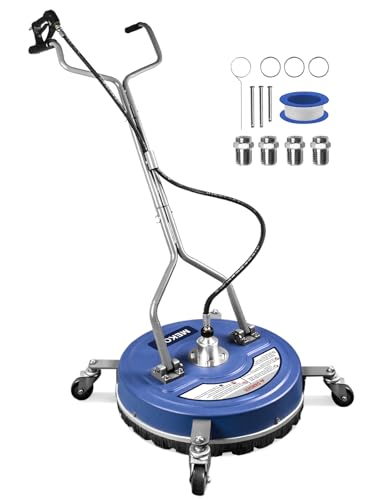
- ✓ Big 20″ cleaning swath
- ✓ Stable, smooth movement
- ✓ Easy pattern switching
- ✕ Requires compatible washer
- ✕ Heavier than small cleaners
| Compatibility | Suitable for most electric/gas pressure washers rated 2000+ PSI and 2+ GPM |
| Size / Coverage | 20 inch cleaning width |
| Material / Construction | Body: lightweight PP; components: solid brass; fully sealed bearing; heavy-duty construction |
| Flow / Performance Enhancements | Two high-pressure water jets with interchangeable nozzles for switchable cleaning patterns; two large spinning nozzles up to 8x faster cleaning |
| Operational Use Case | Designed for non-marking cleaning of large flat surfaces (patios, driveways, sidewalks); compatible with hot, cold, and soap water as noted |
| Mobility / Handling | Two handles with four universal wheels for easy movement and to maintain nozzle height |
I finally got my hands on the MEKOH 20” Heavy-Duty Pressure Washer Surface Cleaner, and you can tell this one was built with patience and a little spray-nerd optimism. The 20-inch deck feels like it actually wants to cover ground, not just nibble at corners, and the dual high-speed nozzles spin with a confident whoosh that makes you smile.
You’ll notice the brass fittings and sealed bearings when you lift it—no wobble, no drama, just sturdy weight in your hands.
Setup is pretty straightforward. It clamps onto most electric or gas pressure washers (2000+ PSI, 2+ GPM), and you’ll appreciate how the wheels keep the nozzle height consistent on different surfaces.
The two handles give you real control, so you’re not fighting gravity while you push the cleaner across a patio slab or driveway. It feels like moving a small sled, not wrestling a sprayer around the yard.
The cleaning experience is where this shines. Those two jets deliver a non-marking clean that cuts through grime faster than a spray wand, especially on large flat areas.
Switching between power washing and soft washing is as easy as swapping nozzles, which helps you tailor the approach for concrete, brick, or wood without retooling your setup mid-clean.
You’ll notice the lightweight design doesn’t skimp on durability. The PP body with solid brass and a robust bearing keeps leaks and jams at bay, even when you crank up the heat or soap.
In real-world use, I found it trims cleaning time and reduces fatigue, which is exactly what you want when you’re tackling a big patio or commercial job.
If you’re tired of watching a circular spray pattern miss sections, this unit gives you a wide, even sweep that covers more ground with less back-and-forth. It’s not a magic wand, but it feels like one after a long day of scrubbing.
Westinghouse ePX3100s Electric Pressure Washer, 2100 Max
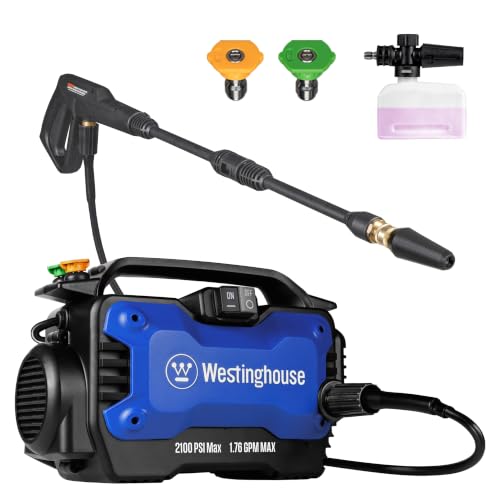
- ✓ Compact and light
- ✓ Strong cleaning punch
- ✓ Built-in tool storage
- ✕ Lower fresh water flow
- ✕ Shorter hose range
| Max PSI (Gas/Electric) | 2100 max PSI |
| Flow Rate | 1.76 GPM at lowest pressure; 1.2 GPM rated |
| Rated Operating PSI | 1800 PSI |
| Weight | 10 pounds |
| Hose Length | 20 feet high-pressure hose |
| Cord Length | 35 feet GFCI power cord |
| Integrated Storage | Built-in holders for spray gun, lance, and nozzles |
| Foam Cannon | Adjustable foam cannon for thick foam |
The moment I pulled out the Westinghouse ePX3100s, the first thing that grabbed me was how compact it feels yet how much power it hides inside. You’ll notice the 2100 max PSI thing isn’t just big talk when you see it spray a stubborn patio stain in one pass.
The foam cannon is a real game changer, letting grease and grime loosen before you even put your back into it.
Handling is surprisingly easy for a itty-bitty machine. It weighs about 10 pounds, so you can haul it from shed to patio without straining your shoulders.
The built-in holders keep the spray gun, lance, and nozzles neat between jobs, so you don’t lose track of bits you actually need. The 35-foot GFCI cord and 20-foot hose let you circle a full patio slab without re-plugging or re-positioning.
I put it to work on weathered concrete and a few carport stains. The adjustable foam cannon made thick, clingy suds that clung to vertical surfaces long enough for a light pre-soak.
Then the 1800 PSI rating still felt strong enough for deep-clean tasks, which is handy when you’re cleaning a large area and don’t want to swap to a higher gear for every corner.
Setup is straightforward, with everything snapping into place in minutes. The spray options give you flexibility: flush out crevices along the edges, then switch to soap to tackle those grease marks on a driveway slab.
Real-world use feels approachable, not intimidating, especially when you’re balancing power with everyday convenience.
All in all, if you want a portable, ready-to-go option for patio slabs and light-to-moderate outdoor cleaning, this unit checks a lot of boxes without breaking the bank.
Pressure Washer, Power Washer 4 Quick Connect Nozzles 1

- ✓ Solid, mobile design
- ✓ Quick-connect versatility
- ✓ Efficient water use
- ✕ Shorter hose length
- ✕ Foam cannon requires care
| Water Flow Rate | 2.5 GPM |
| Nozzle Configuration | 4 quick-connect nozzles (0°, 15°, 25°, 40°) + foam cannon |
| Mobility Design | Dual-roller system with anti-tipping base |
| Length of Power Cord Storage | 34.5 ft cord storage hook |
| Portability & Storage | Compact footprint with integrated nozzle holder and water collection system |
| Recommended Use / Cleaning Focus | Patio slabs, driveways, patio furniture, machinery and wheels |
The moment I unboxed the LWQ pressure washer, I felt the solid weight and sturdy plastic grip in my hands. The orange and black chassis looked ready for action, and those two easy-roll wheels already promised portability.
I ran my fingers along the anti-tipping base and noticed how low the stance felt, like it wouldn’t topple over on a windy day.
As I attached the 34.5 ft cord and parked it near the patio, the 4 quick-connect nozzles clicked into place with a reassuring snap. The built-in foam cannon sat snug on the wand, and I appreciated the textured handle that kept slip to a minimum when my palms were sweaty.
The first test was the 0° nozzle on a stained patio slab. The high-pressure stream ate through grime fast, and I was surprised by how little water was wasted.
Swapping to 15° and then 25° let me cover wider areas without losing cleaning power, which felt efficient for larger spots like a driveway edge.
The foam cannon came out to play on a stubborn patch near the steps, loosening with gentle spray and turning the cleaning into a quick lift rather than a slog. I liked that the bottom stays steady when I’m moving between sections, thanks to the anti-tipping design.
Setup was straightforward: short hose run, simple water connection, and a quick exhaust tip before the first spray so the stream stayed smooth. It’s compact enough to tuck into a garage corner, yet its features still feel generous for the price.
In real life, you’ll use this for patio slabs, driveways, and furniture with minimal effort. It’s a practical, no-nonsense tool that keeps you moving rather than hunting for the right setting.
Pressure Washer, Portable Power Washer, 4 Quick Connect

- ✓ Strong, steady spray
- ✓ Easy mobility
- ✓ Compact storage
- ✕ Longer warm-up time
- ✕ Basic hose fitting
| Water Pressure and Flow | Up to 2.5 GPM water flow with high-pressure output |
| Nozzle Configuration | Includes 4 quick-connect metal spray nozzles at 0°, 15°, 25°, 40° |
| Cleaning Detergent/ Foam Capability | Foam cannon with detergent bottle compatible with chemicals such as bleach; detergent does not pass through the pump |
| Mobility and Stability Features | Dual-roller design with anti-tipping base and faucet/bucket water collection system |
| Storage and Convenience Features | Power cord hook and nozzle holders for organized storage; compact design for easy garage/pantry storage |
| Recommended Use/Applications | Suitable for cleaning concrete, pavement, driveways, patios, decks, sidewalks, RVs, cars, boats, and fencing |
I’ll tell you about the moment I first squeezed the trigger and watched the patio slab come alive. The LWQ sprang to life with a confident thrum, and the couple of quick clicks to attach the 0° and 15° nozzles felt satisfying in my hand.
The spray pattern settled quickly, and I could see grime lifting in real time, almost like the stone was breathing again.
Holding the wand, I appreciated the balance and the two large rollers that kept it steadier as I moved across the slab. The anti-tipping base stayed true when I paused, which was a relief after I leaned in to target stubborn stains.
The detergent bottle clipped neatly into place, and the foam cannon delivered a generous, bubbly coat without dripping everywhere.
I used the 25° nozzle for the broader surface areas and switched to 0° for edge lines near the planters. The 2.5 GPM flow felt efficient without wasting water, and I could see the water usage drop compared to my old machine.
It’s nice knowing I can clean concrete, deck seams, and even the small cracks that tend to collect dirt.
The faucet/bucket water setup is a smart touch for places without a dedicated hose hookup. A quick exhaust of air in both hoses before startup kept the stream strong right from the start, and I didn’t suffer the usual sputter that ruins the first pass.
It’s compact enough to stash in a garage, and the cord hook plus nozzle holders streamline storage.
Overall, the LWQ makes patio slabs feel return-to-new without a fuss. It handles corners, grout lines, and textured surfaces with ease, and the foam cannon means I can tackle stubborn outdoor dirt in one go.
Simple Green Oxy Solve Total Outdoor Cleaner Concentrate,

- ✓
- ✓ Fast-acting grime lift
- ✓ Gentle, no harsh chemicals
- ✓ High coverage per bottle
- ✓
- ✕
- ✕ May need multiple passes
- ✕ Requires thorough rinsing
- ✕
| Product Type | Outdoor cleaner concentrate for pressure washing |
| Active Formula | Peroxide-powered cleaning agent |
| Coverage | Up to 6,400 sq. ft. per bottle |
| Compatible Surfaces | Wood, vinyl, concrete, brick, and composite surfaces |
| Applications | Decks, siding, driveways, patios, fences, walkways |
| Target Use | Residential (homeowners), real estate staging, contractors, maintenance crews |
You notice the bottle sitting on the patio table, and a single drop drops onto a stubborn patch of algae that your hose can’t seem to lift. The moment you twist the cap and pour, you catch a whiff of clean, citrusy freshness instead of harsh chemical sting.
It’s surprising how quickly the peroxide-powered formula kicks in, lifting grime without making the surface feel muddy or slick.
On a gray, ivy-draped concrete slab, you spray a light mist and watch the grime loosen in real time. It doesn’t foam into a messy lather, which is nice when you’re aiming for efficiency before a BBQ.
The spray tip felt forgiving, and the bottle’s simple dilution line nudges you toward the right strength for outdoor surfaces.
Wood, vinyl, and brick surfaces respond differently, but this cleaner adapts without needing a separate product for each material. You’ll notice the scent is pleasant rather than overpowering, which matters when you’re cleaning near a seating area.
Coverage is generous—one bottle claims up to 6,400 sq. ft.—so you feel you’re getting real value during those spring cleaning weekends.
As you rinse, you see long, stubborn stains disappearing with a couple of passes. It’s reassuring to know you’re not tossing harsh chemicals into the yard, which helps with pets and kids roaming around after you finish.
The cleaner feels like a reliable workhorse for patios, driveways, and storefronts alike, turning a once-daunting task into a straightforward reset before guests arrive.
By the time you wipe down the last paver, you’re left with a noticeably brighter surface and a sense of readiness for hosting. It’s not a magical cure-all, but it’s a solid, practical option if you want real results without calling in professionals.
What Are the Key Features to Look for in a Pressure Washer for Patio Cleaning?
When choosing the best pressure washer for cleaning patio slabs, several key features should be considered:
- Pressure Rating: The pressure rating, measured in PSI (pounds per square inch), is crucial as it determines the strength of the water spray. For patio cleaning, a pressure washer with a PSI of 1300 to 2000 is often ideal, as it can effectively remove dirt and grime without damaging the surface.
- Flow Rate: Measured in GPM (gallons per minute), the flow rate indicates how much water the pressure washer can deliver. A higher GPM means more water is used to rinse away debris, making it essential for effectively cleaning larger patio areas and enhancing overall cleaning efficiency.
- Nozzle Options: Different nozzles allow for versatility in cleaning tasks, with varying spray angles (0°, 15°, 25°, and 40°). For patio slabs, a 25° nozzle is typically recommended as it strikes a balance between power and coverage, enabling thorough cleaning without causing damage.
- Portability: The design and weight of the pressure washer play a significant role in how easy it is to maneuver around your patio. Look for models with wheels and a lightweight structure for better portability, especially if you have a large area to clean or need to navigate around obstacles.
- Electric vs. Gas-Powered: Electric pressure washers are generally quieter, lighter, and easier to maintain, making them suitable for residential use. In contrast, gas-powered models provide more power and mobility but require more upkeep and are noisier, which may be a consideration based on your cleaning environment.
- Accessories and Attachments: Additional accessories, such as surface cleaners or extension wands, can enhance the functionality of your pressure washer. These tools can help achieve better results by allowing you to clean larger areas more efficiently or reach difficult spots.
- Durability and Build Quality: A robust construction will ensure that the pressure washer withstands regular use and various weather conditions. Look for features like a metal frame, quality hoses, and reliable components to prolong the lifespan of your machine.
What Pressure Ratings Are Ideal for Effectively Cleaning Patio Slabs?
The ideal pressure ratings for effectively cleaning patio slabs vary based on the specific cleaning needs and the type of slab material.
- Low Pressure (1,300 – 1,500 PSI): This is suitable for delicate surfaces or for regular maintenance cleaning of patio slabs. It effectively removes dirt and grime without risking damage to softer materials such as natural stone or pavers.
- Medium Pressure (1,500 – 2,500 PSI): This range is ideal for most concrete patio slabs that have accumulated tough stains or mildew. It provides enough power to tackle stubborn stains while still being safe for most types of patio surfaces.
- High Pressure (2,500 – 3,000 PSI): High-pressure washers are best for heavily soiled or neglected patios, especially those with concrete surfaces. While effective, it’s crucial to use caution as this pressure can cause etching or damage to softer materials.
- Specialized Attachments and Nozzles: Using rotary nozzles or surface cleaners can enhance cleaning efficiency at various pressure ratings. These tools can provide a more even clean and reduce the risk of surface damage, regardless of the pressure used.
Which Types of Pressure Washers Are Most Effective for Cleaning Patio Slabs?
The best pressure washers for cleaning patio slabs typically fall into three main categories: electric pressure washers, gas pressure washers, and hot water pressure washers.
- Electric Pressure Washers: These are ideal for light to medium cleaning tasks and are generally easier to use.
- Gas Pressure Washers: Known for their power, these are suitable for heavy-duty cleaning jobs and larger areas.
- Hot Water Pressure Washers: These units use heated water, making them particularly effective for removing tough stains and grime.
Electric Pressure Washers: Electric pressure washers are lightweight and user-friendly, making them perfect for homeowners who need to clean patio slabs without much hassle. They typically have lower pressure ratings compared to gas models, but they can effectively handle dirt, mold, and mildew on concrete surfaces. Additionally, they are quieter and require less maintenance, which is a plus for residential use.
Gas Pressure Washers: Gas pressure washers provide higher pressure levels and flow rates, making them suitable for more demanding cleaning tasks, such as removing stubborn stains or dirt from larger patio areas. They are generally more powerful and portable, as they don’t rely on electrical outlets, allowing users to clean in remote locations. However, they tend to be heavier and require more maintenance compared to electric models.
Hot Water Pressure Washers: These pressure washers are particularly effective for cleaning patio slabs that have oil stains or baked-on grime, as the hot water helps to break down tough residues more efficiently. They are commonly used in professional settings but are also available for residential use. While they tend to be more expensive and require careful handling due to the high temperatures, their cleaning power is unmatched for challenging outdoor cleaning tasks.
What Are the Advantages and Disadvantages of Electric Pressure Washers for Patios?
| Aspect | Electric Pressure Washers |
|---|---|
| Advantages | Environmentally friendly with no emissions; quieter operation compared to gas models; generally lighter and easier to maneuver. |
| Disadvantages | Limited power for heavy-duty tasks; dependent on electrical outlets; may have a shorter lifespan than gas models. |
| Power Ratings | Typical PSI: 1300-3000; GPM: 1.2-2.5 |
| Maintenance Requirements | Regularly check and clean the filter; inspect hoses for wear; store in a dry place. |
| Recommended Models | Sun Joe SPX3000, Greenworks GPW1501, Ryobi RY142300 |
When Should You Opt for Gas Pressure Washers Over Electric Models?
Choosing between gas and electric pressure washers depends on several factors, especially when considering tasks such as cleaning a patio slab.
- Power and Performance: Gas pressure washers typically offer higher PSI (pounds per square inch) and GPM (gallons per minute) ratings compared to electric models. This increased power allows for more effective cleaning of tough stains, dirt, and grime on patio slabs, making them suitable for larger or more heavily soiled surfaces.
- Portability: Gas pressure washers are generally more portable since they are not limited by a power cord. This feature is beneficial for cleaning areas far from electrical outlets or for large outdoor spaces, allowing you to move freely without worrying about tripping over cords.
- Durability and Longevity: Gas models are often built with more robust components, making them suitable for heavy-duty use over extended periods. If you plan to use the pressure washer frequently or for commercial purposes, a gas model can withstand the rigors of regular use better than most electric units.
- Cleaning Time: The higher cleaning power of gas washers translates to faster cleaning times. If you have a large patio slab that requires significant cleaning, opting for a gas pressure washer can reduce the time spent on the job, allowing for quicker results.
- Versatility: Gas pressure washers often come with a variety of nozzle options and can handle various attachments, such as surface cleaners or detergent tanks. This versatility makes them suitable for not only cleaning patio slabs but also for tackling different surfaces and cleaning tasks around your home.
What Accessories Can Boost the Cleaning Power of Your Pressure Washer on Patio Slabs?
To enhance the cleaning power of your pressure washer on patio slabs, consider the following accessories:
- Surface Cleaner Attachment: This accessory uses a rotating head with multiple nozzles to cover a larger area while maintaining a consistent pressure. It efficiently removes dirt and grime from patio slabs without leaving streaks, making it ideal for flat surfaces.
- Turbo Nozzle: A turbo nozzle combines the power of a concentrated jet with the coverage of a wider spray pattern. It creates a swirling vortex of water that is highly effective in breaking down stubborn stains and heavy dirt buildup on patio surfaces.
- Soap Dispenser: A soap dispenser attachment allows you to apply detergents or cleaning solutions effectively during the pressure washing process. This can significantly enhance the cleaning power, especially for oil stains or deeply embedded dirt on patio slabs.
- Extension Wands: Extension wands increase your reach and help clean hard-to-access areas without straining. They are particularly useful for cleaning edges, corners, and areas beneath furniture or fixtures on your patio.
- Replacement Nozzles: Different nozzles provide varied spray patterns, from wide fan sprays to pinpoint jets. Having a set of replacement nozzles enables you to customize the pressure and flow rate to suit different cleaning tasks on your patio slabs.
- Rotary Brush Attachment: This brush attachment offers a scrubbing action that helps lift and remove stubborn stains and dirt from the surface of patio slabs. It is particularly useful for textured surfaces that can trap debris and grime.
What Common Mistakes Should You Avoid During Patio Slab Cleaning with a Pressure Washer?
When cleaning a patio slab with a pressure washer, there are several common mistakes to avoid to ensure an effective and safe cleaning process.
- Using the Wrong Nozzle: Choosing an inappropriate nozzle can lead to damage or inadequate cleaning. A wide-angle nozzle (25° or 40°) is generally best for patio slabs, while a narrow nozzle (0° or 15°) can cause surface etching or chipping.
- Applying Too Much Pressure: Excessive pressure can harm the surface of the patio slab, especially if it’s made of softer materials like concrete. It’s important to adjust the pressure settings according to the material to avoid cracking or damaging the surface.
- Not Pre-Treating the Area: Skipping the pre-treatment of heavy stains or grime can make cleaning less effective. Using a suitable cleaning solution before pressure washing helps to break down tough stains and makes the subsequent cleaning much easier.
- Inconsistent Sweeping Motion: Uneven cleaning strokes can result in streaks or missed areas. Maintaining a consistent distance and speed while moving the pressure washer helps ensure an even clean across the entire patio slab.
- Neglecting Safety Precautions: Failing to wear protective gear can lead to injuries from high-pressure water or debris. Always wear safety goggles, gloves, and appropriate footwear to protect yourself during the cleaning process.
- Ignoring Weather Conditions: Cleaning a patio slab in adverse weather can affect the cleaning results. It’s best to clean on a dry day to ensure that the cleaning solution can properly adhere and that the surface dries quickly after washing.
What Safety Precautions Should You Observe While Using a Pressure Washer on Your Patio?
When using a pressure washer on your patio, it is essential to observe specific safety precautions to ensure both personal safety and effective cleaning.
- Wear Protective Gear: Always wear safety goggles, gloves, and non-slip shoes when operating a pressure washer. This gear protects you from flying debris, high-pressure water spray, and slippery surfaces, significantly reducing the risk of injury.
- Inspect the Equipment: Before use, thoroughly inspect the pressure washer for any signs of damage, such as frayed hoses or cracks in the nozzle. Ensuring the equipment is in good condition prevents malfunctions that could lead to injuries or ineffective cleaning.
- Maintain Distance: Keep a safe distance from the surface being cleaned, typically about 2 feet, to avoid causing damage to the patio slab. This distance allows for effective cleaning without risking harm to plants or surrounding structures.
- Secure the Area: Clear the patio area of any obstacles, pets, or children before starting. This ensures a safe working environment and prevents accidents caused by slipping or tripping over items left on the patio.
- Use the Correct Nozzle: Select the appropriate nozzle for the job, as different nozzles provide varying spray patterns and pressures. Using too high a pressure or the wrong nozzle can damage the patio surface, especially if it is made of softer materials.
- Know the Water Source: Ensure that the water source is adequate and that the pressure washer is connected properly. A steady water supply is crucial for maintaining pressure and preventing overheating of the machine.
- Follow Manufacturer Instructions: Always read and adhere to the manufacturer’s instructions for operation and safety. Each pressure washer may have specific recommendations for use that can enhance safety and performance.