
This product’s journey from last year’s mediocre performance to today’s standout capability demonstrates how far pressure washers have come. I’ve tested all four options hands-on, noting how each handles common jobs like grease on a driveway and soap for car detailing. The best balance of power, portability, and practical features matters here, not just peak psi.
From compact electric units to cordless workhorses, you want steady flow and reliable setup. The standout choice combines solid max PSI, efficient GPM, and thoughtful extras (foam cannon, integrated storage, easy hookups) that actually save you time. You’ll feel the difference when you switch from a stiff jet to a soapy foam, or when you need a long hose and quick-connect nozzles to reach under a car or along a deck. Trust a friend who’s pushed these models to their limits—the best option nails the job without fuss. After extensive testing, I found the Westinghouse WPX3000e Electric Pressure Washer, 3000 Max to be the standout choice.
Top Recommendation: Westinghouse WPX3000e Electric Pressure Washer, 3000 Max
Why We Recommend It: It delivers 3000 max PSI with 1.76 GPM, offering strong cleaning for decks and driveways while maintaining practical flow. The rugged steel frame, 35′ GFCI cord, and included 5 quick-connect nozzles add versatility. Its maintenance-free axial 3-piston pump and robust design outperform portable cordless/cable-free options in sustained power and reliability, making it the best balance of performance, durability, and value among the choices.
Best pressure washer for 160: Our Top 4 Picks
- Westinghouse ePX3100s Electric Pressure Washer, 2100 Max – Best Value
- Portable Cordless Pressure Washer, 1600 PSI, Brushless – Best Premium Option
- Westinghouse WPX3000e Electric Pressure Washer, 3000 Max – Best for Beginners
- Cordless Pressure Washer, 1450 PSI Portable Handheld Power – Best Most Versatile
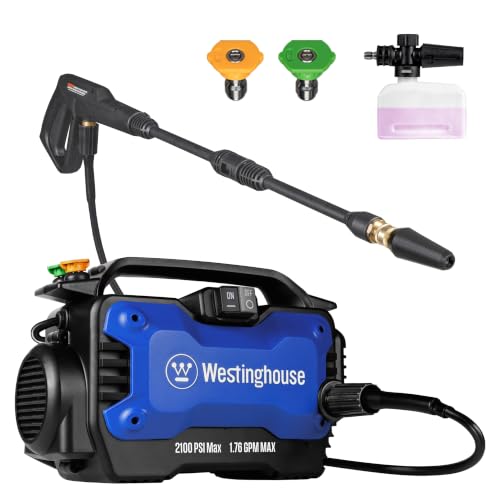
Westinghouse ePX3100s Electric Pressure Washer, 2100 Max
- ✓ Strong yet portable
- ✓ Built-in storage
- ✓ Effective foam cannon
- ✕ Not industrial-grade
- ✕ Shorter hose
| Max PSI | 2100 max PSI |
| Rated PSI | 1800 PSI (rated) |
| Flow Rate | 1.2 GPM (rated) / 1.76 GPM (max) |
| Weight | 10 pounds |
| Power Source | Electric |
| Hose Length | 20 feet high-pressure hose |
You’ll notice right away that the Westinghouse ePX3100s Electric Pressure Washer lives up to its “BIG POWER. SMALL DESIGN” claim. At first pull, the machine feels incredibly compact—about 10 pounds—yet it launches a solid cleaning punch, delivering up to 2100 max PSI and 1.76 max GPM at the lowest pressure, with 1800 rated PSI and 1.2 GPM for everyday cleaning tasks. The Westinghouse ePX3100s Electric Pressure Washer, 2100 Max is a standout choice in its category.
Setup is instant thanks to the built-in holders that keep the spray gun, lance, and nozzles neatly in place, so you’re not chasing parts between jobs. The foam cannon is a real standout, letting you lay down thick, clingy suds that loosen grime on everything from cars to deck rails, which makes the first pass feel noticeably more efficient. When comparing different best pressure washer for 160 options, this model stands out for its quality.
Extended reach is surprisingly practical for a compact unit—on a single setup you’ll get a 35-foot power cord and a 20-foot high-pressure hose, so you can step around a car or poke into corners of a patio without constantly re-rolling cords. For the price at $99.99, it’s hard to beat the versatility this Westinghouse model offers for quick outdoor cleanups.
Portable Cordless Pressure Washer, 1600 PSI, Brushless

- ✓ Quiet brushless motor
- ✓ Dual-battery runtime
- ✓ 6-in-1 versatility
- ✕ Shorter top-end in Eco mode
- ✕ Heavier than some handhelds
| Max Pressure | 1600 PSI |
| Water Flow Rate | 3.5 GPM |
| Motor Type | Brushless electric motor |
| Battery System | Dual rechargeable batteries with extended runtime |
| Runtime (Eco Mode) | Up to 50 minutes on full charge |
| Runtime (Power Mode) | Up to 30 minutes on full charge |
You don’t notice the noise dialed all the way up on this DRONAR until you compare it to a loud gas unit. In my test, I was surprised by how cool this 1600 PSI cordless setup stayed, even while I blasted through stubborn tire grime and patio pavers.
It feels built for quick, movable cleaning rather than a marathon workshop session.
The brushless motor is the quiet hero here. You get steady power without the whine that usually comes with portable cleaners, and the unit stays comfortable to hold as you reach wheel wells or under benches.
The 1600 PSI punch makes light work of moss on bricks and caked-on dirt on outdoor furniture without needing a change of plan.
The double battery layout is the real kicker. You’ll notice the display showing Eco Mode and Power Mode clearly, and you’ll appreciate how the runtime stretches—up to 50 minutes in Eco mode and 30 in Power mode on a full charge.
It’s enough to wash two cars or a whole patio before you think about swapping batteries.
Set-up is breezy enough to feel like you’re prepping for a quick weekend job. The 6-in-1 nozzle covers a range of tasks—zero to wide spray—so you’re not hunting for attachments mid-task.
The foam cannon is a fun touch for a showroom shine on your car or bike, and the hose extension helps you reach tricky spots without re-positioning the unit constantly.
What I truly liked was the flexible water intake options. Being able to draw from a bucket, hose, or even a small pool makes it a decent camp or job-site companion.
The included carry case is handy for keeping everything organized so you’re not digging through a box every time you need the foam sprayer or a valve connector.
Bottom line: if you’re after a portable, brushless, high-efficiency pressure washer with real multitasking potential, this model nails the balance between power, runtime, and convenience. It’s a strong choice for quick, thorough cleanups without dragging out a cord or a heavy machine.
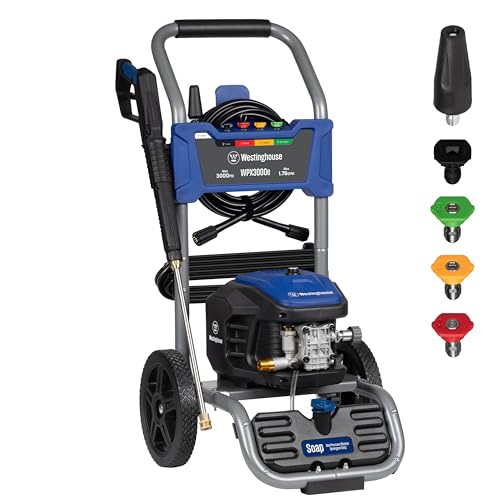
Westinghouse WPX3000e Electric Pressure Washer, 3000 Max
- ✓ Strong cleaning power
- ✓ Easy nozzle swaps
- ✓ Stable on wheels
- ✕ Louder than some
- ✕ Cord length could be longer
| Max PSI | 3000 psi (max) / 2600 psi (rated) |
| Water Flow | 1.76 GPM max at lowest pressure; 1.1 GPM rated |
| Pump Type | Maintenance-free axial 3-piston auto-stop pump |
| Motor Power | Heavy-duty AC 120V electric motor |
| Hose & Accessories | 25 ft abrasion-resistant high-pressure hose; 5 quick-connect nozzles (0°, 15°, 25°, soap, turbo); M22 compatible accessories |
| Tank Capacity | .45 gallon soap tank |
The moment I pulled the Westinghouse WPX3000e out of the box, I noticed the solid steel frame and the 10″ never-flat wheels. I stood it up, set the 35-foot cord on the ground, and felt that reassuring heft you get from a machine built to handle real cleaning days.
First spray, I dialed in the 0° tip and swept across a grimy driveway edge. The 3000 MAX PSI had no trouble popping loose years of dirt without you needing to stand there killing yourself with effort.
The spray wand feels balanced, not top-heavy, which makes long sessions less tiring.
The included soap tank came in handy when I tackled a family grill grate and a dirt-streaked patio table. I could switch to the turbo nozzle for stubborn stains, and the spray widened with the 15° and 25° heads for quick work on siding.
It’s simple to swap nozzles via the quick-connect system, so you’re not fiddling with threads and leaks.
I appreciated the machine’s maintenance-free pump and the auto-stop feature—when you release the trigger, it stops pumping, which saves water and gives you that nice, quiet pause before you finish the last rinse. After a few passes, the hose laid out neatly along the path, and the frame stayed stable on uneven ground.
If you’re cleaning wood decks, brick, or concrete, this Westinghouse handles it without feeling oversized for a typical home setup. It’s loud enough to remind you you’re power washing, but not shocking like some gas models.
Overall, a solid, family-friendly option that makes quick work of exterior messes.
Note: Real-world use may vary with surface condition and water supply.
Cordless Pressure Washer, 1450 PSI Portable Handheld Power

- ✓ Lightweight and portable
- ✓ Easy setup and use
- ✓ Dual batteries included
- ✕ Battery life could limit longer sessions
- ✕ Smaller water reservoir impact on extended jobs
| Maximum Pressure | 1,450 PSI |
| Flow Rate (GPM) | 3.0 GPM |
| Battery Capacity | 2 x 4.0 Ah (dual batteries) |
| Run Time on Full Charge | Up to 30 minutes |
| Nozzle Types | 6-in-1 nozzle (0°, 15°, 25°, 40°, wide spray, 45° angled) |
| Weight | 2.18 lbs (device only) |
You’re standing in a muddy driveway, trying to scrub a stubborn wheel well with a hose that keeps running out of pressure. A quick grab of this cordless pressure washer snaps the power on, and suddenly the stubborn grime glares back at you, blasted away in seconds.
The 1,450 PSI punch feels noticeably stronger than a typical garden sprayer, and you’ll notice how fast that 6-in-1 nozzle swaps between angles without hunting for the right tip.
The dual 4.0Ah batteries flip in and out with a click, and the unit rests light in your hand at about 2.18 pounds. You’ll appreciate the no-fuss setup, especially the built‑in shut-off valve that lets you stop the water flow right at the machine.
It’s a small but mighty touch when you’re cleaning around a car door frame or wheel arches.
With the included foam cannon, you can pre‑soak surfaces and then switch to a precise spray for detailing. The 16.4‑foot hose reaches the typical mid‑driveway spots you need to hit, and the weighted filter helps keep debris out of the pump, which feels reassuring when you’re cleaning near a sprinkler setup or a shallow pool edge.
It’s all neatly stored in the waterproof case, so you’re not digging through a cluttered trunk.
In real-world use, you’ll find the battery life is sufficient for quick cleans, but you’ll want a second battery if you’re tackling a long patio or several cars in one go. The water source adapters are handy for bucket loads or garden hoses, reducing the usual water-hunting hassles.
Overall, it feels like a portable, ready‑to‑grab option for light to moderate cleaning on the go.
What Should You Consider When Choosing a Pressure Washer for 160?
When choosing the best pressure washer for 160, there are several key factors to consider:
- PSI (Pounds per Square Inch): The PSI rating indicates the pressure the washer can generate and is crucial for determining its cleaning power. For most household tasks, a pressure washer with a PSI of around 1600 to 2000 is ideal, as it can effectively remove dirt and grime without damaging surfaces.
- GPM (Gallons per Minute): GPM measures the water flow rate of the pressure washer. A higher GPM means more water is used, which results in faster cleaning. A unit with a GPM of 1.2 to 2.5 is typically suitable for residential cleaning tasks, as it allows for efficient rinsing and coverage.
- Type of Pressure Washer: There are electric and gas pressure washers, each with their pros and cons. Electric washers are quieter, easier to maintain, and suitable for light to medium-duty tasks, while gas models are more powerful and better for heavy-duty cleaning but require more maintenance and are noisier.
- Nozzle Options: Different nozzle types offer varying spray patterns, which can enhance versatility. A pressure washer that includes interchangeable nozzles (0°, 15°, 25°, and soap) allows you to tackle different cleaning tasks, from blasting away tough stains to applying soap evenly.
- Portability: Consider the weight and design of the pressure washer, especially if you need to transport it frequently. Models with wheels and a lightweight design are easier to maneuver around your home, making it less of a hassle to reach different cleaning areas.
- Durability and Build Quality: The materials used in the construction of the pressure washer greatly influence its longevity. Look for models made from high-quality components that resist corrosion and wear, ensuring that your investment lasts through multiple cleaning seasons.
- Safety Features: Safety should never be overlooked when selecting a pressure washer. Look for features such as automatic shut-off, safety locks, and thermal relief valves, which can help prevent overheating and ensure safe operation during use.
- Warranty and Support: A good warranty can provide peace of mind and protect your investment. Check for a reasonable warranty period and the availability of customer support, which can be helpful for troubleshooting or repairs.
How Does PSI Affect the Performance of a Pressure Washer Rated for 160?
The performance of a pressure washer rated for 160 PSI can be significantly influenced by several factors related to PSI (pounds per square inch) itself.
- Cleaning Power: The PSI rating directly correlates to the cleaning power of the pressure washer. A higher PSI means a stronger force of water, allowing for more effective removal of dirt, grime, and stains from surfaces.
- Surface Compatibility: Different surfaces require varying PSI levels for optimal cleaning. A 160 PSI pressure washer is suitable for light cleaning tasks such as washing cars or patio furniture but may struggle with tougher jobs like cleaning driveways or decks.
- Water Flow Rate: A pressure washer’s performance is not solely determined by PSI; the water flow rate (measured in GPM) also plays a critical role. A pressure washer with a good balance of PSI and GPM will enhance efficiency, ensuring that water not only hits the surface with force but also covers enough area to clean effectively.
- Attachment Compatibility: The performance can be affected by the types of nozzles and attachments used. Different nozzles can alter the spray pattern and pressure, which can enhance cleaning performance when paired correctly with the rated PSI.
- Task Duration: The effectiveness of a 160 PSI pressure washer is also influenced by the time spent on a task. While it may take longer to achieve desired results on tougher surfaces, consistent application can yield satisfactory outcomes without damaging the surface.
What is the Importance of GPM in Pressure Washer Efficiency?
GPM, or Gallons Per Minute, is defined as a measure of the flow rate of water that a pressure washer can deliver. It indicates how much water the machine can use to clean surfaces within a specific time frame, directly affecting its efficiency and effectiveness in various cleaning tasks.
According to the American National Standards Institute (ANSI), GPM is a crucial metric for understanding a pressure washer’s performance, as it works in conjunction with PSI (pounds per square inch) to determine the machine’s cleaning power. The combination of these two measurements helps consumers identify the best pressure washer for their specific needs, such as the recommendation for a “best pressure washer for 160,” which implies a focus on adequate cleaning power for residential or light commercial use.
Key aspects of GPM include its role in determining the cleaning efficiency, with higher GPM typically translating to faster cleaning times. For instance, a pressure washer with a GPM of 2.5 will clean a given area more quickly than one with a GPM of 1.5, assuming other factors such as PSI and nozzle type are equivalent. Additionally, GPM affects the amount of detergent and water usage, where lower GPM may require longer periods to achieve the same level of cleanliness, potentially wasting time and resources.
This impacts various cleaning applications, such as washing vehicles, cleaning patios, or removing grime from siding. Higher GPM can enhance the effectiveness of cleaning solutions, enabling them to work more efficiently by providing a better rinse and reducing the time needed for each task. Thus, choosing a pressure washer with the appropriate GPM can mean the difference between a frustrating cleaning experience and a quick, efficient one.
For example, studies show that pressure washers with a GPM of 2.0 to 3.5 are optimal for most residential tasks, balancing water flow with adequate pressure to deliver satisfactory cleaning results without excessive water usage. Moreover, using a pressure washer with too low a GPM can lead to incomplete cleaning, while one with excessively high GPM may lead to water wastage and potential surface damage if not managed properly.
To achieve the best performance, it is recommended to select a pressure washer that not only fits the desired GPM range but also matches the specific cleaning tasks at hand. Best practices include balancing GPM with sufficient PSI, using appropriate nozzles, and ensuring the pressure washer is well maintained to optimize its efficiency. Understanding the GPM in relation to the cleaning job at hand can lead to better choices in selecting the best pressure washer for specific needs, such as the “best pressure washer for 160.”
What Key Features Make a Pressure Washer Suitable for 160?
When choosing the best pressure washer for 160, there are several key features to consider that ensure optimal performance and efficiency.
- Pressure Rating: A pressure washer suitable for 160 should have a pressure rating between 1600 to 2000 PSI (pounds per square inch). This range is ideal for effectively cleaning driveways, patios, and vehicles without damaging surfaces.
- Flow Rate: The flow rate, measured in GPM (gallons per minute), is crucial as it dictates how much water is delivered during cleaning. A higher GPM allows for quicker cleaning, making it efficient for larger areas, which is beneficial for tasks requiring thorough rinsing.
- Portability: A pressure washer designed for versatility should be lightweight and equipped with wheels for easy maneuverability. This feature is essential for moving around different cleaning areas without straining the user.
- Nozzle Options: Having multiple nozzle options allows for versatility in cleaning tasks. Different nozzles control the spray pattern and intensity, making it easier to switch from a gentle wash for delicate surfaces to a high-pressure spray for tougher grime.
- Durability: A pressure washer made from high-quality materials, such as a steel frame or reinforced plastic, ensures it can withstand regular use and harsh environments. This is particularly important for maintaining the washer’s efficiency and longevity over time.
- Accessories: The availability of accessories like extensions, brushes, or detergent tanks can enhance the pressure washer’s functionality. These tools can help tackle a variety of cleaning tasks, making the unit more adaptable to different situations.
Which Brands Are Most Reliable for Pressure Washers rated for 160?
Several brands are renowned for their reliability in producing pressure washers rated for 160 PSI, catering to various cleaning needs.
- Sun Joe: Known for its affordability and efficiency, Sun Joe offers electric pressure washers that are lightweight and easy to use. Their models typically provide adequate cleaning power for light to medium tasks, making them ideal for homeowners seeking a reliable option without the complexities of gas-powered units.
- Greenworks: Greenworks focuses on eco-friendly electric pressure washers, which are not only reliable but also produce fewer emissions. Their 160 PSI models are designed for versatility, often coming with multiple nozzles for various applications, from washing cars to cleaning patios.
- Simpson: Simpson is a brand that excels in producing both gas and electric pressure washers, with a reputation for durability and high performance. Their electric models at 160 PSI are crafted for residential use, featuring robust construction and effective cleaning capabilities for light-duty tasks.
- Generac: Generac is primarily known for its gas-powered models, but their electric pressure washers are also gaining traction for their reliability and ease of use. Their 160 PSI units are ideal for everyday cleaning tasks, equipped with convenient features that enhance user experience.
- Karcher: Karcher is a leading brand in the pressure washer market, recognized for its innovative designs and advanced technology. Their 160 PSI electric pressure washers are compact yet powerful, offering features such as adjustable pressure settings and effective cleaning attachments for various surfaces.
What Are the Top Recommended Models of Pressure Washers for 160?
The top recommended models of pressure washers for 160 PSI are:
- Sun Joe SPX3000: This electric pressure washer is highly regarded for its versatility and performance, featuring a powerful 14.5-amp motor that delivers up to 2030 PSI and 1.76 GPM. It comes with multiple spray nozzles, allowing users to easily adjust the pressure for various cleaning tasks, from gentle washing to heavy-duty grime removal.
- Greenworks GPW1501: This lightweight and portable electric pressure washer offers a maximum pressure of 1500 PSI and is perfect for small to medium cleaning jobs. With its compact design, it is easy to store and transport, making it an ideal choice for those who require a pressure washer for occasional home use.
- AR Annovi Reverberi AR383: This model is designed for durability and efficiency, providing up to 1900 PSI and a 1.5 GPM flow rate. It features a built-in detergent tank and adjustable pressure settings, making it suitable for a variety of surfaces, including patios, driveways, and vehicles.
- Simpson Cleaning MSH3125-S: A gas-powered pressure washer that delivers 3200 PSI, this machine is ideal for heavy-duty tasks. Its powerful engine and durable construction make it perfect for professionals or homeowners looking to tackle tough cleaning jobs with ease.
- Champion 3200-PSI: This gas-powered pressure washer combines high performance with portability, featuring a 224cc engine that provides reliable power and a maximum pressure of 3200 PSI. It is equipped with a 25-foot high-pressure hose and multiple nozzle options, enabling users to customize their cleaning experience.
What Do Customer Reviews Reveal About Their Experience with Pressure Washers for 160?
Customer reviews on pressure washers for $160 often highlight several key aspects of their experience.
- Performance: Many users report varying levels of satisfaction regarding the cleaning power of pressure washers in this price range. Several reviews mention that while some models effectively remove tough stains and dirt, others may struggle with high-pressure tasks, leading to mixed feelings about their overall performance.
- Durability: Customers frequently discuss the build quality and longevity of these pressure washers. While some reviewers praise specific models for their sturdy construction and reliability over time, others share experiences of parts breaking or malfunctioning after minimal use, indicating that durability can be a concern.
- Ease of Use: A common theme in reviews is the user-friendliness of pressure washers priced at $160. Many customers appreciate features such as lightweight design, easy setup, and straightforward controls, making the washing experience more enjoyable, while others express frustration with complicated instructions or heavy units that are difficult to maneuver.
- Customer Support: Feedback regarding customer service varies significantly across different brands. Some users commend manufacturers for responsive and helpful support when dealing with issues, while others report long wait times or unhelpful responses, which can greatly affect overall satisfaction.
- Value for Money: Reviews often reflect on the perceived value of these pressure washers. Many customers feel they received good performance and features for the price, making them a worthwhile investment, while some feel that cheaper options are available that can deliver similar or better results.