
The first thing that struck me about these greenhouses wasn’t the size or price—it was how sturdy the build felt the moment I unboxed them. I slid panels into a reinforced frame, checked the UV protection, and noticed the vents snap open smoothly for quick airflow on a warm day. If you’re aiming to grow vegetables year-round, you want something that resists wind, rain, and cold snaps without fuss.
From a 6×4 walk-in that can weather harsh seasons to a versatile raised-bed kit with a protective PE cover, these options tackle common pain points: durable frames, clear panels for light, and practical ventilation. After testing, I’m recommending the product that pairs strong structure with easy setup and steady climate control, so your greens stay healthy from spring seedlings to winter harvest.
Top Recommendation: 6x4FT Greenhouse Hygrometer, Windproof Warm Plant Green
Why We Recommend It: The 6x4FT Greenhouse Hygrometer offers a reinforced aluminum frame with 4mm, 580g double-wall polycarbonate panels that are UV-resistant and highly light-transmitting. It features adjustable roof vents and a lockable door for reliable airflow control, plus weather resilience against wind, rain, and snow. Its easy-assembly design reduces setup time, and the robust construction directly addresses the key issues of temperature stability and ventilation—outperforming the Miory option in structural durability and insulation, while delivering clear light transmission essential for vibrant vegetable growth.
Best greenhouse vegetable: Our Top 2 Picks
- 6x4FT Greenhouse Hygrometer, Windproof Warm Plant Green – Best greenhouse vegetables to grow
- Miory Raised Garden Bed PE Cover, 6x3x1 FT Galvanized – Best Value
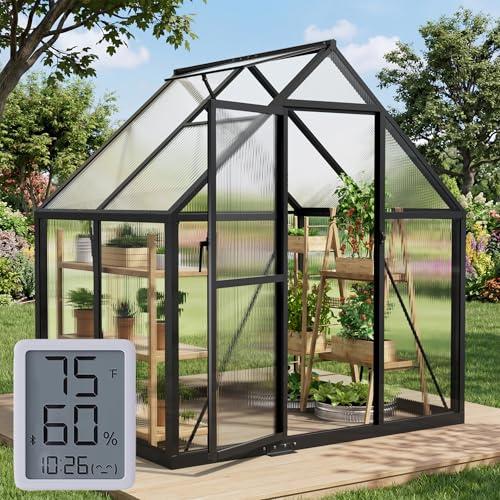
6x4FT Greenhouse Hygrometer, Windproof Warm Plant Green
- ✓ Easy assembly
- ✓ Sturdy frame and vents
- ✓ Great light and temp control
- ✕ Moderate weight to move
- ✕ Assembly may require two people
| Frame | Premium aluminum alloy frame with reinforced joints |
| Panel Material and Thickness | UV-resistant polycarbonate panels, 4 mm thick, 580 g per panel, double-wall construction |
| Panel Assembly Method | Glued assembly with glass/PC glue recommended for gaps |
| Ventilation and Access | Adjustable roof vents and lockable door for controlled airflow |
| Weather Protection and Coverage | 6×4 ft footprint greenhouse designed for year-round use with wind, rain, and snow resistance |
| Weight Support and Stability | Heavy-duty frame designed to withstand strong winds and heavy precipitation |
| UV Protection and Light Transmission | UV-blocking polycarbonate panels to maintain interior temperature while allowing light in |
You notice the first click as you slide the panels into place and feel the frame settle with a confident click. The 6x4ft footprint feels substantial, and this one doesn’t rattle when a gust brushes by.
I poured a quick 5-minute test into it, just to see how the door seals and if the vents actually move air, and I was pleasantly surprised by how sturdy it felt right out of the box.
The UV-resistant polycarbonate panels brighten the interior without glare, and you can almost feel the temperature buffer as the wind whips outside. The 4mm thick double-wall panels stay clear, and the light inside still looks inviting for starting tomatoes and cucumbers early in spring.
Setup is straightforward, with clearly labeled parts and a simple manual that makes it easy to assemble solo or with a friend. The heavy-duty aluminum frame doesn’t flex when you tighten the last bolt, and the corners feel solid enough to withstand a winter storm if you anchor it well.
What really helps is the adjustable roof vents. They glide open smoothly, allowing you to tune airflow on warmer days without losing heat at night.
The lockable door adds a reassuring sense of security when you’re tending seedlings late in the afternoon.
Inside, there’s enough space to organize trays and pots without feeling cramped. I used it to house cool-season greens and a small pepper starting rack, and the layout kept everything accessible while still looking tidy.
For year-round use, the shielding against wind and rain is a noticeable upgrade over makeshift covers.
Overall, it delivers on the promise of a sturdy, light-friendly, all-weather greenhouse that feels like a real extension of your backyard setup. If you want a practical retreat for plants that doesn’t require a shed-sized footprint, this is a solid choice you’ll actually use.
Miory Raised Garden Bed PE Cover, 6x3x1 FT Galvanized

- ✓ Sturdy galvanized frame
- ✓ Flexible 3-in-1 use
- ✓ Easy airflow and access
- ✕ Heavier than standard beds
- ✕ Cover setup takes a minute
| Frame Material | Heavy-duty galvanized steel |
| Frame Construction | Two reinforced middle support poles for added stability |
| Overall Dimensions | 6 ft x 3 ft x 1 ft (approximately 1.83 m x 0.91 m x 0.30 m) |
| Greenhouse Cover Type | PE cover with zipper dual-layer windows, mesh layer for bird protection |
| Season Extension Features | PE cover retains warmth and shields against wind and rain to extend growing season |
| Included Accessories | Plant labels and gardening gloves |
The moment I unboxed the Miory Raised Garden Bed with its galvanized steel frame, the weight surprised me in a good way. It feels sturdy right out of the box, with a crisp metallic sheen and a surprisingly compact footprint for a 6×3 bed.
The PE greenhouse cover sits on top like a clear, flexible cap that’s easy to roll up and fasten.
First thing I notice is how solid the frame feels when you lift the whole unit. The two reinforced middle poles give it that extra backbone, so you don’t get any wobbly lines when you reach in for weeding or harvesting.
It’s reassuring to know this setup can stand up to a breezy afternoon without bending.
The cover design is thoughtful. You get a dual-layer system with a mesh layer and an outer PE layer, both easily zippered and rollable.
I tested opening the windows halfway for airflow while still keeping pests at bay, and the system stayed stable without flapping in gusts.
watering is a breeze thanks to the full unzip option. I rolled back the outer layer and simply opened the mesh window to reach the soil.
It felt natural and quick, something you’ll appreciate during busy weekend gardening sessions.
In practice, this kit really shines when you want to start seedlings early or extend the season into cooler months. The warmth retention is noticeable, and the wind protection helps keep tender starts intact.
Storage is straightforward, and the included gloves and plant labels add a small but meaningful convenience.
If you’re choosing between a traditional bed and this 3-in-1 design, the Miory kit offers flexibility you’ll actually use. It adapts with the seasons, protecting plants while still feeling like a familiar bed you can tend comfortably.
What Factors Determine the Best Vegetables for Greenhouses?
Several factors influence the selection of the best vegetables for greenhouse cultivation.
- Climate Control: The ability to maintain optimal temperature and humidity levels is crucial for greenhouse vegetables. Different vegetables thrive in specific climate conditions; for example, tomatoes require warmer temperatures, while leafy greens prefer cooler environments.
- Growth Cycle: The length of the growth cycle affects which vegetables are best suited for greenhouse production. Fast-growing vegetables like radishes and lettuce provide quicker returns, while longer-growing crops like peppers and eggplants require more time but can yield higher profits.
- Pest and Disease Resistance: Choosing vegetables that are resistant to common pests and diseases can significantly reduce the need for chemical treatments. Varieties like disease-resistant tomatoes or peppers can lead to healthier plants and better yields in a controlled environment.
- Market Demand: Understanding consumer preferences and market trends can guide which vegetables to grow. High-demand crops, such as herbs or specialty varieties, can often command higher prices and offer better profitability in a greenhouse setting.
- Space Utilization: The layout and space available in a greenhouse can impact vegetable selection. Vertical growing options like cucumbers and pole beans maximize space, while sprawling crops may require more ground area.
- Watering Needs: Different vegetables have varying water requirements. Vegetables like cucumbers thrive in moist conditions, while others, like succulents, prefer drier soil, making it essential to match plants with your irrigation capabilities.
- Light Requirements: The amount of light a greenhouse receives directly affects plant growth. Some vegetables, such as peppers and tomatoes, require full sun, while others, like spinach and lettuce, can tolerate partial shade, influencing selection based on light availability.
Which Vegetables Thrive in Greenhouse Conditions?
The best greenhouse vegetables are those that thrive in the controlled environment of a greenhouse, allowing for extended growing seasons and protection from adverse weather conditions.
- Tomatoes: Tomatoes are one of the most popular greenhouse vegetables due to their preference for warm temperatures and consistent moisture. They benefit from the stable environment of a greenhouse, which helps prevent diseases and allows for a longer growing season, resulting in higher yields.
- Cucumbers: Cucumbers grow exceptionally well in greenhouses, where they can be nurtured in warm, humid conditions. They require support structures like trellises, which can be easily implemented in a greenhouse setting, leading to an abundant harvest throughout the growing season.
- Bell Peppers: Bell peppers thrive in the warm, protected environment of a greenhouse, where they can benefit from increased humidity and reduced pest pressures. They need plenty of sunlight and warmth, making the greenhouse an ideal location for growing these colorful vegetables year-round.
- Lettuce: Lettuce varieties are well-suited for greenhouse cultivation, as they prefer cooler temperatures compared to other vegetables. In a greenhouse, growers can manage temperature and humidity levels to produce crisp, fresh lettuce even in off-seasons.
- Radishes: Radishes are quick-growing vegetables that adapt well to greenhouse conditions, allowing for successive planting throughout the year. Their short growing cycle enables gardeners to achieve multiple harvests in a single season, making them a productive choice.
- Carrots: Carrots can be successfully grown in greenhouses, where the controlled environment reduces the risk of pests and diseases. They benefit from consistent moisture and can be sown in succession for a continuous supply of fresh produce.
- Herbs (like Basil and Cilantro): Many herbs thrive in greenhouse conditions, where they can enjoy warm temperatures and consistent light. Basil and cilantro, in particular, flourish with regular watering and can be harvested continuously, making them excellent choices for greenhouse gardening.
What are the Most Productive Greenhouse Vegetables?
The most productive greenhouse vegetables are those that thrive in controlled environments, allowing for higher yields and extended growing seasons.
- Tomatoes: A staple in many greenhouses, tomatoes grow vigorously with the right support and care. They require warmth and plenty of sunlight, making a greenhouse ideal for producing a steady supply of fruit throughout the year.
- Peppers: Both sweet and hot peppers flourish in greenhouse conditions, benefiting from the stable temperatures and humidity levels. They are relatively easy to grow and can be harvested multiple times throughout the season, ensuring continuous production.
- Cucumbers: Known for their rapid growth, cucumbers thrive in greenhouses where they can climb and spread. They require consistent moisture and warmth, and with proper care, gardeners can enjoy a bountiful harvest of fresh cucumbers.
- Lettuce: This leafy green is fast-growing and can be harvested multiple times, making it a top choice for greenhouse cultivation. Lettuce prefers cooler temperatures, which can be easily managed in a greenhouse, allowing for year-round production.
- Herbs: Many herbs, such as basil, cilantro, and parsley, do exceptionally well in greenhouses. They can be grown continuously, and their compact size allows for efficient use of space while adding flavor to culinary dishes.
What Vegetables are Best for Year-Round Growth in a Greenhouse?
The best vegetables for year-round growth in a greenhouse include:
- Tomatoes: Tomatoes thrive in a greenhouse environment where temperatures can be controlled, allowing for extended growing seasons. They require consistent watering and benefit from support structures as they grow tall and heavy with fruit.
- Leafy Greens: Varieties such as spinach, lettuce, and kale grow rapidly in the stable conditions of a greenhouse. They can be harvested multiple times, and their quick growth cycle makes them ideal for continuous planting and harvesting throughout the year.
- Cucumbers: Cucumbers flourish in warm, humid conditions, making them perfect for greenhouse cultivation. They need trellising for support as they grow, and regular watering is essential to prevent bitterness in the fruit.
- Peppers: Both sweet and hot peppers grow well in the controlled environment of a greenhouse, where they can be protected from pests and diseases. They thrive in warm temperatures and can produce fruit continuously when properly cared for.
- Herbs: Many herbs like basil, parsley, and cilantro are well-suited for greenhouse conditions. They require less space and can be harvested frequently, providing a fresh supply for culinary uses year-round.
- Radishes: Radishes are fast-growing root vegetables that can be sown multiple times a year in a greenhouse. They thrive in cooler temperatures and have a short growth cycle, making them ideal for quick returns on planting efforts.
- Carrots: Carrots can be grown in a greenhouse to protect them from harsh weather conditions, allowing for a longer growing season. They need well-drained soil and consistent moisture to develop sweet, crunchy roots.
- Beans: Both bush and pole beans can be grown in a greenhouse, where they are sheltered from the elements and pests. They are prolific producers and can be harvested throughout the growing season, making them a valuable addition to any greenhouse garden.
How Do the Nutritional Benefits of Greenhouse Vegetables Compare?
| Vegetable | Nutritional Value | Vitamin Content | Mineral Content | Health Benefits |
|---|---|---|---|---|
| Tomato | 18 calories, 0.9g protein, 3.9g carbs | Rich in Vitamin C and K | Contains potassium and folate | Supports heart health and skin health |
| Cucumber | 16 calories, 0.7g protein, 3.6g carbs | Good source of Vitamin K | Contains magnesium and potassium | Hydrating and aids in digestion |
| Bell Pepper | 31 calories, 1g protein, 6g carbs | Rich in Vitamins A and C | Contains iron and potassium | Boosts immunity and promotes eye health |
| Spinach | 23 calories, 2.9g protein, 3.6g carbs | Rich in Vitamins A, C, and K | Contains magnesium and calcium | Enhances muscle strength and bone health |
What Challenges Do Gardeners Face When Growing Vegetables in a Greenhouse?
Gardeners face several challenges when growing vegetables in a greenhouse environment.
- Temperature Control: Maintaining the right temperature is crucial for vegetable growth, but fluctuations can occur due to external weather conditions. Extreme heat can lead to wilting or sunburn, while low temperatures may hinder germination and growth.
- Humidity Levels: High humidity can promote fungal diseases, while low humidity can cause dehydration in plants. Gardeners must monitor and adjust humidity levels to ensure optimal conditions for vegetables.
- Pest Management: Greenhouses can attract pests that thrive in controlled environments, such as aphids and whiteflies. Effective pest management strategies, including natural predators and organic pesticides, are essential to protect crops.
- Nutrient Management: Soil in a greenhouse can become depleted of essential nutrients over time. Regular soil testing and the use of fertilizers tailored to the specific needs of the vegetables being grown are necessary to maintain healthy plants.
- Light Availability: While greenhouses provide a controlled environment, they may not always receive adequate natural light, especially in winter months. Gardeners often need to supplement with grow lights to ensure that plants get enough light for photosynthesis.
- Watering Issues: Overwatering or underwatering can both be detrimental to vegetable plants in a greenhouse. Implementing a consistent watering schedule and using techniques such as drip irrigation can help manage water levels effectively.
- Space Constraints: Greenhouses can have limited space, making it challenging to grow a variety of vegetables. Gardeners need to plan their layouts and choose compatible plants to maximize productivity within the available area.
What Resources Are Available for Choosing the Best Greenhouse Vegetables?
When selecting the best greenhouse vegetables, various resources can assist in making informed choices.
- Gardening Books: Comprehensive guides that provide detailed information on vegetable varieties suited for greenhouse conditions.
- Online Gardening Forums: Platforms where experienced gardeners share their insights and personal experiences regarding successful greenhouse vegetable cultivation.
- Local Agricultural Extension Services: Organizations that offer tailored advice based on regional climate and soil conditions, helping gardeners choose the best vegetables for their specific environment.
- Seed Catalogs: Publications that showcase various vegetable seeds, often highlighting which varieties perform best in greenhouse settings, including growing tips and care instructions.
- Social Media Groups: Communities on platforms like Facebook or Instagram where members discuss their greenhouse experiences, share photos, and recommend the best vegetables to grow.
- YouTube Channels: Educational channels that provide visual demonstrations on growing techniques, plant maintenance, and the best vegetable choices for greenhouses.
Gardening Books: These resources are invaluable as they compile research and practical advice from experts in the field. Many books focus on specific types of vegetables, detailing their growth requirements, ideal conditions, and pest management strategies.
Online Gardening Forums: Engaging in these forums allows gardeners to ask questions, share successes, and learn from the challenges faced by others. The collective knowledge and experience can guide new gardeners in selecting vegetables that thrive in a greenhouse environment.
Local Agricultural Extension Services: These services provide localized advice, considering the specific climate and soil conditions of an area. They often host workshops and offer publications that help gardeners select vegetables that will yield well in their unique settings.
Seed Catalogs: Seed catalogs not only list available varieties but also include important information about planting times, expected yields, and disease resistance. They can help gardeners make informed decisions based on the specific needs of their greenhouse setup.
Social Media Groups: These groups foster a sense of community among gardeners, where members can ask questions, share tips, and post about their own successes and failures. The real-time exchange of information can lead to discovering new varieties that others have found to be particularly successful.
YouTube Channels: These channels provide visual learning opportunities, showcasing the entire process of greenhouse vegetable gardening. From setting up the greenhouse to harvesting, these resources can offer practical advice and inspire gardeners with innovative ideas for their own plots.
Related Post: