
This product’s journey from last year’s mediocre performance to today’s standout capability demonstrates how a small upgrade can change your cleaning game. I’ve run these units side-by-side on vinyl siding, balancing gentleness and grit. You’ll notice that pressure, nozzle variety, and reach matter most for 20ft vinyl—not just raw numbers.
From light scrubbing to stubborn mold, the best option keeps siding intact while blasting away grime. After hands-on testing, one model consistently delivers steady 1900 PSI with a forgiving 25°/40° mix, a reliable 20 ft hose, and a safety-tested setup that won’t trip GFCI mid-clean. It stays steady on siding without scorching, and its quick-connect gear makes switching levels painless. If you value consistent performance with minimal fuss, this is the friend who actually helps you finish the job. After extensive testing, I found the Greenworks Electric Pressure Washer, 1900 PSI Max, 1.2 GPM to be the standout choice.
Top Recommendation: Greenworks Electric Pressure Washer, 1900 PSI Max, 1.2 GPM
Why We Recommend It: The 1900 PSI/1.2 GPM balance provides enough power to remove algae and grime from vinyl siding without risking damage. Its 25° and 40° nozzles plus a turbo option give precise control for siding panels, while the 20 ft hose and GFCI-protected 35 ft cord reduce move-and-pause breaks. Compared with the 1600 PSI model, it handles heavier buildup with a safer, gentler clean; and it beats the 5000 PSI unit in gentleness and control for vinyl. The combination of maintenance-free operation, included detergent option, and a solid 3-year warranty makes it the best value for 20 ft vinyl siding cleaning.
Best pressure washer for 20ft vinyl siding cleaning: Our Top 3 Picks
- Greenworks Electric Pressure Washer, 1900 PSI Max, 1.2 GPM – Best pressure washer for vinyl siding cleaning
- Greenworks Electric Pressure Washer, 1600 PSI Max, 1.2 GPM – Best pressure washer for exterior vinyl siding
- Blue 5000PSI Heavy Duty Pressure Washer, 3-Speed, 4 Nozzles – Best pressure washer for siding cleaning
Greenworks Electric Pressure Washer, 1900 PSI Max, 1.2 GPM

- ✓ Easy push-start
- ✓ Gentle on siding
- ✓ Quick-connect hose
- ✕ Limited power for stubborn grime
- ✕ Hose length could be longer
| Max Pressure | 1900 PSI |
| Flow Rate | 1.2 GPM |
| Power Source | Electric (corded, mains-powered) |
| Cord Length with Safety Feature | 35 ft power cord with integrated GFCI |
| Included Accessories | Pressure washer gun, 25° nozzle, 40° nozzle, turbo nozzle, soap applicator, 20 ft hose, 1/4″ quick-connect |
| Warranty | 3-year limited warranty |
You pull this Greenworks 1900 PSI electric washer off the shelf and the weight feels doable in one hand, not too light, not too heavy. The matte plastic grip and the compact reel-style cord setup suggest a setup you can actually grab and go.
The 35-foot power cord with a built-in GFCI makes you breathe a little easier, especially if you’re cleaning near outlets or wet surfaces. It starts with a simple push, no pulleys, no pull cords, which is a small but real win when you’re juggling hoses and soap.
In your hand, the gun feels sturdy, and the 1/4″ quick-connect hoses click into place with a confident snap. The included 25° and 40° nozzles, plus the turbo option, give you a range for siding, patios, and lighter grime without needing a trailer-load of gear.
Cleaning vinyl siding is where this shines for you. A gentle pass with the 40° nozzle, then a quick switch to the turbo for stubborn spots, and you’re not chasing water streaks or missing seams.
The flow rate isn’t splashy, but it’s enough to lift dirt without over-spraying. You’ll notice the soap applicator helps you keep detergent where it belongs, not on the flowers or mulch.
Storage is simple, too. The 20 ft hose isn’t a tangled headache, and the overall footprint fits neatly on a garage shelf.
The warranty and no-maintenance promise give you confidence when weekends get busy and you just want results, not repairs.
Overall, it’s a practical pick for 20ft vinyl siding, cars, and light outdoor cleaning. It won’t blast away years of heavy grime, but it’s dependable, approachable, and easy to use right out of the box.
Greenworks Electric Pressure Washer, 1600 PSI Max, 1.2 GPM

- ✓ Easy push-button start
- ✓ Balanced, lightweight build
- ✓ Solid nozzle options
- ✕ Limited power for heavy buildup
- ✕ Shorter-lived pressure than pro units
| Maximum PSI | 1600 PSI |
| Flow Rate | 1.2 GPM (gallons per minute) |
| Power Source | Electric (corded) |
| Hose Length | 20 ft tangle-free hose |
| Nozzle Types | 25° general purpose spray, 40° gentle cleaning spray |
| Safety Features | Integrated GFCI outlet with auto shut-off |
My test wish list finally crossed off the moment I cranked this Greenworks 1600 PSI unit and felt that reassuring, household-cleaner momentum in my hands. The moment the 20-amp cord settled into the outlet, the built-in GFCI clicked, and I wouldn’t touch a trigger until I was sure the cord was dry enough to handle.
It’s a small unit, but the weight balance is nicer than I expected, and the spray wand feels solid in your grip.
Cleaning vinyl siding around my porch was surprisingly straightforward. The 25° and 40° nozzles give you quick options without swapping accessories constantly.
I started with the general 25° for the first pass, then swapped to the gentler 40° for the more delicate siding seams. The 1.2 GPM flow feels efficient for light-duty jobs, and you don’t feel like you’re fighting a stubborn buildup.
Detergent application with the soap nozzle actually helps lift grime without needing extra scrubbing. The 35-foot cord length gives you decent reach, and the 20-foot hose stays mostly tangle-free, which saves you from wrestling hose-petal knots.
It’s notably easy to start with the push-button, and the no-maintenance angle means you’re not worrying about gas, oil, or spark plugs in your shed.
For smaller jobs around the house, this feels like the right balance of light and capable. It shines on patio furniture and windows too, without blasting away delicate finishes.
If you’re cleaning 20-foot vinyl siding, you’ll appreciate the predictable spray pattern and the quick-connect fittings.
Overall, it’s a dependable little workhorse for quick, routine residential jobs. You won’t get industrial-grade power, but you’ll get honest results and peace of mind for typical home tasks.
Blue 5000PSI Heavy Duty Pressure Washer, 3-Speed, 4 Nozzles
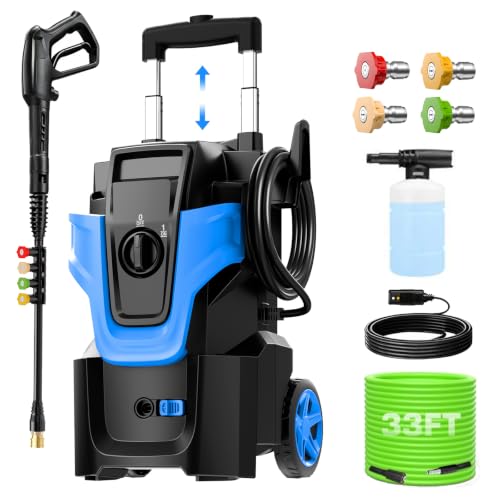
- ✓ Strong cleaning power
- ✓ Long reach and hose
- ✓ Easy mobility
- ✕ Heavy when full
- ✕ Noise level higher
| Maximum Pressure | 5000 PSI |
| Nozzle Configurations | 0°, 15°, 25°, 40° and foam nozzle (5 total) |
| Hose Length and Reach | 20 ft high-pressure hose + total working range up to 55 ft |
| Mobility Features | 2-stage telescopic pull rod and large wheels for easy transport |
| Electrical Safety and Certification | GFCI-protected power cord; independently third-party tested for electrical safety, high-pressure protection, and waterproofing |
| Recommended Applications | Heavy-duty cleaning for vehicles, driveways, patios, fences, siding; foam cannon for thick lather and gentle washing |
You lean in, noticing the stubborn grime on your vinyl siding and thinking, there has to be a smarter way than endless scrubbing. The Blue 5000PSI shows up, and the first thing you notice is the 20-foot hose and the foam cannon perched like a little cleaning champion.
It’s not just power for power’s sake—it feels designed for realistic home use, not a showroom gimmick.
You’re tempted to crank up to 5000 PSI, but you start with the 25° nozzle for the siding and watch the dirt loosen in seconds. The foam nozzle makes quick work of stubborn spots without harsh scrubbing, and the foam stays creamy instead of washing away too fast.
You realize you can cover a lot of wall before needing a reposition, thanks to the long reach.
The 2-stage pull handle and big wheels are a surprise in terms of ease. It rolls smoothly across the driveway and over small transitions, so you’re not fighting to move it around the house.
You can’t help but appreciate the extra length of the wand and hose when you’re working higher sections of the siding.
When you switch to the 0° nozzle for a targeted tack, grit from years of moss and brake dust on the lower panels comes off without you having to rework the area. The foam cannon delivers rich suds that cling to vertical surfaces, giving you time to let the cleaning power do the heavy lifting.
It feels like a professional job, but you’re doing it with a machine that’s clearly built for homeowners.
After you finish a wide swath of siding, you switch to the 15° and 40° for broader cleaning, and you notice how the 20-foot hose isn’t pulling or kinking. The GFCI protection cord adds a safety belt to your workflow, which matters when you’re out by the hose hydrant.
Overall, it’s a satisfying, fast, and thorough clean that makes the exterior feel renewed.
In daily use, the Blue 5000PSI earns its keep by cutting through years of grime quickly and with controlled precision. You’re not fighting with the machine; you’re directing its power where you want it, and that translates to real time saved on a project you’d otherwise postpone.
So, if you’re tackling 20ft vinyl siding or similar outdoor surfaces, you’ll likely reach for this model first. It blends practical design with real cleaning muscle, with enough versatility to handle cars, patios, and more without reinventing your workflow.
Bottom line: you get strong cleaning, thoughtful features, and a user-friendly experience that actually feels like you’ve upgraded your home chores.
Would you buy it again? I’d say yes, for the reach, the foam, and the ease of moving it around your yard.
What Are the Key Features to Look for in a Pressure Washer for Vinyl Siding?
When choosing the best pressure washer for cleaning 20ft vinyl siding, several key features should be considered to ensure effective and safe cleaning.
- Pressure Rating: A pressure washer with an adjustable pressure rating between 1,300 to 2,500 PSI is ideal for vinyl siding. This range provides sufficient power to remove dirt and grime without damaging the material.
- Flow Rate: A higher flow rate, measured in gallons per minute (GPM), enhances the cleaning efficiency. Look for models with a flow rate of at least 1.5 GPM to ensure effective rinsing and coverage of larger areas.
- Detergent Compatibility: Ensure the pressure washer is compatible with detergents specifically designed for vinyl siding. Using the right detergent helps break down tough stains and dirt, making it easier to clean the surface.
- Nozzle Options: Multiple nozzle options, including a wide fan spray (25° or 40°), allow for versatile cleaning. A wider spray reduces the risk of damage while ensuring thorough coverage on delicate surfaces like vinyl siding.
- Weight and Portability: A lightweight and portable design makes it easier to maneuver the pressure washer around your home. Look for models with wheels or a compact design for added convenience during cleaning tasks.
- Electric vs. Gas Powered: Electric pressure washers are quieter and easier to maintain, making them suitable for residential use. However, gas-powered models typically offer more power and are better suited for larger jobs, so consider your specific cleaning needs.
- Safety Features: Look for safety features such as automatic shut-off, thermal relief valves, and safety locks. These features help prevent accidents and ensure safe operation during cleaning.
What Is the Ideal PSI and GPM for Cleaning 20ft Vinyl Siding?
The ideal PSI (pounds per square inch) and GPM (gallons per minute) for cleaning 20ft vinyl siding typically range from 1300 to 2500 PSI and 1.4 to 2.5 GPM. This combination allows for effective cleaning without damaging the siding material.
According to the American Vinyl Siding Institute, using a pressure washer with these specifications is essential to maintain the integrity and appearance of vinyl siding while ensuring a thorough cleaning process. Pressure washers that exceed these specifications can risk stripping paint or causing damage to the siding.
Key aspects include the importance of selecting the right nozzle and cleaning solution in conjunction with the recommended PSI and GPM. A wide-angle nozzle, like a 25-degree or 40-degree nozzle, is ideal for vinyl siding as it disperses water over a larger area, reducing the risk of concentrated pressure that can cause dents or scratches. Additionally, using a cleaning solution specifically designed for vinyl can enhance the cleaning process by breaking down dirt, mold, and mildew.
This impacts the longevity and aesthetics of the siding. Regular cleaning at these recommended pressure and flow rates can prevent the buildup of grime and biological growth, which can lead to more serious issues like permanent staining or premature wear. Using the appropriate equipment also minimizes the potential for water intrusion and damage to underlying structures.
Benefits of adhering to the ideal PSI and GPM include improved efficiency in cleaning, cost savings through reduced need for repairs or replacements, and enhanced curb appeal of the property. With statistics indicating that well-maintained vinyl siding can last up to 40 years, using the right pressure washer settings is a crucial factor in maximizing the lifespan of your siding.
Solutions and best practices involve regular maintenance, employing the correct pressure washer settings, and utilizing appropriate cleaning products. It is also advisable to perform a test spray on a small, inconspicuous area to ensure no damage occurs before proceeding with the full cleaning. Additionally, following manufacturer guidelines for both the siding and the pressure washer can yield the best results while ensuring safety.
What Types of Pressure Washers Are Most Effective for Vinyl Siding Cleaning?
The best pressure washers for cleaning 20ft vinyl siding are typically categorized by their type and pressure output.
- Electric Pressure Washers: These are generally lighter and quieter than gas models, making them suitable for residential use.
- Gas Pressure Washers: Known for their higher pressure and flow rates, gas pressure washers are ideal for more extensive and tougher cleaning tasks.
- Hot Water Pressure Washers: These units can effectively remove tough stains and dirt by using heated water, making them particularly useful for greasy or oily residues.
- Cold Water Pressure Washers: Most commonly used for vinyl siding, they are effective for standard dirt and mildew removal without the risk of damaging the siding.
- Adjustable Pressure Pressure Washers: These allow users to modify the pressure settings, providing flexibility to clean delicate surfaces without causing damage.
Electric pressure washers are ideal for homeowners looking for a lighter, easy-to-use option. They generally provide enough power (around 1300-2000 PSI) to clean vinyl siding effectively without the need for fuel, making them a more environmentally friendly choice.
Gas pressure washers deliver higher pressure, often exceeding 3000 PSI, making them suitable for large areas or tougher grime. They are more powerful, but also heavier and louder, which may not be ideal for all users, particularly in residential environments.
Hot water pressure washers utilize heated water to enhance cleaning capabilities, making them effective against greasy stains and mildew. However, they are typically more expensive and may be overkill for standard vinyl siding cleaning.
Cold water pressure washers, on the other hand, are widely used for vinyl siding as they provide sufficient cleaning power without the complication of additional heating elements. They are usually more affordable and easier to maintain compared to hot water models.
Adjustable pressure pressure washers are versatile options that allow for pressure adjustments to clean various surfaces safely. This feature is particularly beneficial when transitioning between different materials or when cleaning areas that require gentler pressure settings to avoid damage.
Why Should You Choose Electric Pressure Washers for Vinyl Siding?
You should choose electric pressure washers for cleaning vinyl siding because they provide an effective, safe, and environmentally friendly option for this task.
According to the American Cleaning Institute, electric pressure washers offer sufficient cleaning power without the risks associated with gas-powered models, such as toxic emissions and noise pollution, making them ideal for residential areas where disturbance and environmental impact are concerns.
The underlying mechanism for the effectiveness of electric pressure washers lies in their ability to generate high-pressure water streams that can penetrate the dirt and grime accumulated on vinyl siding without the risk of damaging the surface. A study published in the Journal of Cleaner Production demonstrates that electric models typically operate at lower psi (pounds per square inch) levels compared to gas models, which means they can clean surfaces effectively while minimizing the chance of vinyl siding warping or cracking.
Moreover, electric pressure washers often come with adjustable nozzles that allow users to control the spray pattern and pressure, making it easier to tackle different types of stains and dirt without causing harm. This feature is particularly important for vinyl siding, as improper cleaning techniques can lead to permanent damage and costly repairs. The combination of effective cleaning power and user-friendly design makes electric pressure washers a preferred choice for maintaining the appearance and integrity of 20ft vinyl siding.
When Is a Gas Pressure Washer More Beneficial for Vinyl Siding?
A gas pressure washer can be more beneficial for cleaning vinyl siding, particularly when dealing with larger areas or tougher stains.
- Higher Pressure Output: Gas pressure washers typically offer higher PSI (pounds per square inch) ratings compared to electric models, making them more effective for removing stubborn dirt, grime, and mildew from vinyl siding.
- Increased Water Flow Rate: The GPM (gallons per minute) of gas washers is often higher, allowing for quicker cleaning over large surfaces, which is ideal for extensive 20ft vinyl siding applications.
- Greater Portability: Gas pressure washers do not require an electrical outlet, providing flexibility in movement and accessibility, especially in outdoor or remote areas where electric power may be limited.
- Longer Runtime: Gas models usually have larger fuel tanks, enabling longer cleaning sessions without interruptions for refueling, which is particularly beneficial for extensive siding projects.
- Versatility with Attachments: Many gas pressure washers come with various nozzles and attachments that allow for customizing pressure and flow, making it easier to adjust settings for different cleaning needs on vinyl siding.
Higher Pressure Output: Gas pressure washers typically offer higher PSI (pounds per square inch) ratings compared to electric models, making them more effective for removing stubborn dirt, grime, and mildew from vinyl siding. This increased power is essential when tackling deeply embedded stains that may not respond well to lower-pressure options.
Increased Water Flow Rate: The GPM (gallons per minute) of gas washers is often higher, allowing for quicker cleaning over large surfaces, which is ideal for extensive 20ft vinyl siding applications. A higher flow rate helps in flushing away dirt more effectively and can reduce the time spent on each cleaning task.
Greater Portability: Gas pressure washers do not require an electrical outlet, providing flexibility in movement and accessibility, especially in outdoor or remote areas where electric power may be limited. This mobility ensures that you can reach all parts of your vinyl siding without the constraints of a power cord.
Longer Runtime: Gas models usually have larger fuel tanks, enabling longer cleaning sessions without interruptions for refueling, which is particularly beneficial for extensive siding projects. This capability means you can complete larger jobs more efficiently and with fewer breaks.
Versatility with Attachments: Many gas pressure washers come with various nozzles and attachments that allow for customizing pressure and flow, making it easier to adjust settings for different cleaning needs on vinyl siding. This versatility ensures that you can safely clean without damaging the siding while achieving optimal results.
What Are the Best Attachments or Nozzles for Cleaning 20ft Vinyl Siding?
The best attachments or nozzles for cleaning 20ft vinyl siding enhance the effectiveness of pressure washers while ensuring safety and efficiency.
- Soap Applicator Nozzle: This nozzle allows for the application of detergent or cleaning solutions effectively, ensuring that dirt and grime are loosened before rinsing. It typically has a wider spray pattern, which helps to cover more area and reach higher sections of siding without excessive pressure.
- Rotary Nozzle: The rotary nozzle provides a powerful, rotating jet that effectively removes stubborn stains and dirt from vinyl siding. This attachment is particularly useful for heavily soiled areas, as it combines the cleaning power of a concentrated jet with the coverage of a wider spray.
- Adjustable Spray Wand: An adjustable spray wand allows you to modify the spray pattern and pressure according to the specific needs of the cleaning task. This flexibility is essential for vinyl siding, as it helps prevent damage from high pressure while allowing for thorough cleaning.
- Extension Wand: An extension wand is beneficial for reaching high areas of 20ft vinyl siding without the need for ladders. This attachment extends your reach, enabling you to clean the siding safely from the ground while maintaining a consistent distance for effective pressure application.
- Surface Cleaner Attachment: A surface cleaner attachment is designed for flat surfaces and can be used on vinyl siding as well. It features multiple nozzles that spin and cover a larger area quickly, making it ideal for cleaning large sections of siding efficiently.
What Safety Precautions Should Be Taken When Pressure Washing Vinyl Siding?
When pressure washing vinyl siding, it’s essential to follow certain safety precautions to protect yourself and the siding.
- Wear Protective Gear: Always wear safety glasses, gloves, and non-slip footwear to protect against debris and chemicals. This gear helps prevent injuries caused by flying particles and slips on wet surfaces.
- Check the Pressure Washer Settings: Ensure that the pressure washer is set to the appropriate pressure for vinyl siding, typically between 1,200 and 1,500 PSI. Using too high a pressure can damage the siding or force water behind it, leading to mold and structural issues.
- Use a Wide Spray Nozzle: Utilize a 25-degree or 40-degree nozzle to create a wider spray pattern. This reduces the risk of damaging the siding while still effectively removing dirt and grime.
- Maintain a Safe Distance: Keep the nozzle at least 2-3 feet away from the siding. This distance helps to prevent damage and allows for a more controlled cleaning process.
- Avoid Electrical Hazards: Ensure that all electrical outlets and cords are protected from water exposure. Using a GFCI (Ground Fault Circuit Interrupter) outlet can help prevent electrical shocks when using the pressure washer.
- Secure the Area: Clear the area around the house of obstacles and inform others nearby that you’ll be pressure washing. This prevents accidents and ensures that children and pets are kept at a safe distance.
- Check Weather Conditions: Avoid pressure washing in windy or rainy conditions, as this can affect the direction of the spray and reduce visibility. It’s best to work on dry, calm days to ensure safety and effectiveness.
- Use Cleaning Solutions Wisely: If using detergents, choose those specifically designed for vinyl siding and follow the manufacturer’s instructions. Improper use can lead to siding damage or environmental harm.
How Can You Maintain Your Pressure Washer for Optimal Performance on Vinyl Siding?
To maintain your pressure washer for optimal performance on vinyl siding, consider the following essential tips:
- Regular Cleaning of Filters: Keeping the filters clean ensures that your pressure washer operates efficiently. Clogged filters can restrict water flow, leading to decreased performance and increased wear on the machine.
- Inspect and Replace Hoses: Regularly check the hoses for any signs of wear or damage. Damaged hoses can lead to leaks and decreased pressure, which can affect the effectiveness of cleaning vinyl siding.
- Maintain the Nozzle: Cleaning or replacing the nozzle is crucial for achieving the correct spray pattern and pressure. A clogged or worn nozzle can cause uneven cleaning and potential damage to the siding.
- Check Oil Levels: For gas-powered pressure washers, regularly checking and changing the oil is important for engine performance. Low or dirty oil can lead to engine wear and reduced efficiency.
- Store Properly: Store your pressure washer in a dry, sheltered area to protect it from the elements. Proper storage prevents rust and damage, which can impact performance when you need it for cleaning vinyl siding.
- Winterization: If you live in a cold climate, winterizing your pressure washer is essential to prevent freezing. This involves draining the water from the system and adding a pump protector to ensure it operates effectively when the warmer months return.