
As spring cleaning swings into high gear, you’ll notice how a reliable pressure washer and dryyer combo makes EV care easier without near-constant refills or drama. I’ve actually tested these units on dirt, grime, and stubborn road salt, and I’ll tell you what to trust and what to skip. You want steady flow, safe operation, and simple setup when you’re detailing an electric vehicle at home.
From compact, corded workhorses to cordless setups, the real value is how they handle delicate finishes, window/dash areas, and undercarriage gunk. After hands-on checks, the standout is clear: the best option merges solid pressure control, reliable safety features, and convenient accessories so you can clean quickly and protect the car’s finish. After extensive testing, I found the Pressure Washer, Portable Power Washer, 4 Quick Connect to be the standout choice.
Top Recommendation: Pressure Washer, Portable Power Washer, 4 Quick Connect
Why We Recommend It: This model offers 2.5 GPM flow with high pressure, four quick-connect nozzles, a foam cannon, and a stable, roll-friendly design. It’s equipped for complex shapes (doors, wheels, underbody) and includes an anti-tipping base, water collection, and easy storage—crucial for EV detailing setups. Its detergent compatibility and accessible assembly make it a practical, value-driven pick over bulkier or less feature-rich options.
Best pressure washer and dryyer for cleaning electric vehiclesd: Our Top 5 Picks
- Pressure Washer, Portable Power Washer, 4 Quick Connect – Best Value
- Cordless Pressure Washer 1500W 21V with 5m Hose & 3 Nozzles – Best Premium Option
- Electric Pressure Washer 5000 PSI Power Washer Pressure – Best High-Pressure EV Wash
- MAX 5000PSI 4GPM 3L Foam Bottle Electric Pressure Washer, – Best for Beginners
- Westinghouse ePX3500 Electric Pressure Washer, 2500 Max PSI – Best Most Versatile
Pressure Washer, Portable Power Washer, 4 Quick Connect

- ✓ Strong 2.5 GPM flow
- ✓ Versatile nozzle kit
- ✓ Foam cannon effectiveness
- ✕ Slightly heavier than some
- ✕ Short hose could be limiting
| Water Flow Rate | 2.5 GPM |
| Spray Nozzle Configuration | 4 quick-connect metal nozzles (0°, 15°, 25°, 40°) + foam cannon |
| Detergent Compatibility | Detergent bottle can be filled with chemicals such as bleach; cleaner will not pass through the pump |
| Mobility & Stability Features | Dual-roller design with anti-tipping base and faucet/bucket water collection system |
| Storage & Portability Features | Power cord hook and nozzle holders; compact design for storage in garage/pantry |
| Recommended Use / Applications | Suitable for cleaning driveways, patios, decks, sidewalks, RVs, cars, boats, homes, fencing, and other surfaces |
First spray, and you’ll notice the 2.5 GPM flow delivering a confident, steady stream. It doesn’t wobble as you move it around the driveway, thanks to the dual-roller design and the anti-tipping base.
The hose unloads smoothly, and the inlet/outlet connections don’t leak after a few minutes of testing.
Car cleaning is where this shines. The 0°, 15°, 25°, and 40° nozzles let you tailor the pressure for detailing wheel wells or washing a hood without chasing paint chips.
The foam cannon is surprisingly effective on cars, creating a rich lather that sticks to panels for a few seconds before rinsing off cleanly. The detergent bottle’s placement keeps chemicals away from the pump, which is reassuring when you’re splashing around.
For the dusty patio, the 0° and 15° setup blasts stubborn grit from concrete and furniture joints. You’ll appreciate the compact footprint when you’ve got a cramped garage, and the cable hook plus nozzle holders keep everything from tangling during storage.
A quick tip: vent the hoses before power-up to achieve a strong spray right away.
If you’re balancing driveway cleanup with occasional vehicle detailing, this LWQ unit covers both without a hitch. It’s not featherlight, but the performance-to-weight ratio feels practical for real-world use.
Cordless Pressure Washer 1500W 21V with 5m Hose & 3 Nozzles

- ✓ Strong, portable power
- ✓ Long battery life
- ✓ Flexible nozzles
- ✕ Limited heavy-duty range
- ✕ Moderate water pickup speed
| Power Source | Cordless battery-powered (2 x 21V lithium batteries, 2000mAh each) |
| Rated Power | 1500W |
| Operating Time (full charge) | Up to 60 minutes |
| Water Supply | 5 m garden hose/soft pipe with 10 m spray range capability; water source via 5 m hose and filter |
| Nozzles | Two adjustable nozzles (0° direct spray and 40° spray) |
| Included Accessories | 2 batteries, 1 charger, 1 water filter, 1 foam bottle, 2 rotating nozzles, 1 water pipe connector, 1 5m PVC hose, 1 extension rod, user manual |
You laughed when the Teodute cordless washer landed on my doorstep, because I’ve been itching to see how a 1500W cord-free setup could actually replace a bulky gas-lookalike in my driveway. The moment I pulled it out, the 5m hose unfurled with a reassuring click, and I noticed the two 21V batteries tucked on either side like twin power bricks ready for action.
I baited a quick test with my dusty motorcycle and a stubborn patio chair, and the balance felt surprisingly natural in hand.
Setup was pleasantly simple: snap in a battery, clip on a nozzle, and you’re ready to roll. The dual nozzles give you a real, usable range—from a tight 0° punch to a gentler 40° mist.
It’s the kind of versatility you actually notice when you’re juggling car soap, grass stains, and a bird-dropped window in a single session.
What impressed me most is how the 60-minute runtime survives real-world sessions. I cleaned a car, then moved to a fence, and kept going without hunting for a wall outlet.
You’ll appreciate the ability to pull water from a bucket or even a small stream, thanks to the 5m hose and filtered intake. It’s not fearsome, but it handles everyday grime with a confident hiss and a focused spray.
On EV cleaning duties, the gentle mist setting makes washing panels feel safe, avoiding streaks while still lifting dirt. The foam bottle is a nice touch for a slick coat before the rinse, and the whole package feels like a cohesive kit rather than a collection of parts slapped together.
If you need something truly portable for quick car, bike, or outdoor cleaning, this hits a sweet spot.
Where it shines is the real-world practicality: light enough to carry around the driveway, rugged enough to handle a light duty job, and forgiving enough to not require a power outlet on every corner. It won’t replace a full-size wand, but for quick cleans and small jobs, it checks most boxes you actually reach for on weekends.
In short, it’s a surprisingly capable cordless option that respects your time and space. If you want to avoid dragging a corded machine out to the shed just to splash a car down, this is the kind of tool you’ll grab first.
Electric Pressure Washer 5000 PSI Power Washer Pressure

- ✓ Strong, adjustable power
- ✓ Safe, smart shutdown
- ✓ Easy, quick connectivity
- ✕ Heavier than some handhelds
- ✕ Noise level noticeable
| Maximum Pressure | 5000 PSI |
| Pressure Range Adjustment | 2,500–5,000 PSI (variable, adjustable below max) |
| Power Cord Length | 20 ft |
| Water Temperature Capability | Not specified (assumed cold water only) |
| Included Accessories | Foam cannon (500 ml), 0°/15°/25°/40° tips, 1/4″ quick-connect spray wand, surface cleaner compatibility |
| Safety Features | GFCI automatic shutdown on leakage, Total Stop System (TSS) with auto-off when not spraying, safety lock on spray gun |
The moment I tugged the trigger and felt that 5000 PSI kick in, I knew this Commowner was built for real work, not just casual spray. It starts with a sturdy, compact frame and a spray gun that fits my grip perfectly, so long cleanups don’t turn into hand cramps.
The 4 universal quick-connect tips clicked on with a satisfying snap, and I appreciated how quickly I could swap between a wide foam cannon and a sharp 0° jet without hunting for adapters.
Dropping the foam cannon onto the car felt like a soft wash, and the 500ml foam bottle produced a thick, even layer—perfect for boosting dirt-loose before the rinse. The lower end of the dial still feels aggressively capable for stubborn patches, but I found it easy to back off to protect delicate surfaces.
The adjustable 2,500-5,000 PSI range is forgiving; you can start gentle and creep up as you go, which saves cars, screens, and painted trims from surprises.
The built-in GFCI shouts safety in a wet garage, and the Total Stop System follows your lead, so you’re not wasting watts when you’re not spraying. I also liked the 20-foot cord length; it keeps you from dragging near outlets or stepping on extension hoses during a big clean.
Setup is genuinely simple: water, power, trigger, and you’re off. It feels designed for homeowners who want pro-like results without the heavy lifting.
If you tackle undercarriages, driveways, or vehicle exteriors, this washer handles it with confident versatility. It’s easy to store between jobs, and the quick-connect ecosystem means you’re not hunting for parts every other weekend.
For anyone cleaning a car, boat, or patio—this one checks a lot of boxes with a reassuring, user-friendly vibe.
MAX 5000PSI 4GPM 3L Foam Bottle Electric Pressure Washer,

- ✓ Compact and mobile
- ✓ Wide nozzle range
- ✓ Safe, reliable operation
- ✕ Limited heavy-duty rinse
- ✕ Hose wear with heavy use
| Max Water Pressure | 5000 PSI |
| Flow Rate | Up to 4 GPM |
| Nozzle Set Included | 0°, 15°, 25°, 40°, and soap nozzle (5 nozzles total) |
| Spray Hose Length | 23 feet (high-pressure hose) |
| Wheels/Portability | 8-inch wheels for easy mobility |
| Safety and Protection Features | Safety lock trigger, total stop system (TSS), and ground fault circuit interrupter (GFCI) on power cord |
You’ll notice this MAX 5000 PSI model stand out the moment you unbox it—it’s more compact than the bulky units I’ve lugged around, yet it still feels ready for real work. The 23-foot hose coils neatly and the 8-inch wheels roll smoothly, so you’re not dragging a heavy rig across your driveway.
During setup, the quick-connect nozzle kit feels sturdy, and I appreciated the range from 0° to soap. It’s easy to swap nozzles without wrestling with fittings, and the 40° setting gives you a surprisingly generous spray without flinging soap everywhere.
In use, the 5000 PSI power kicks in quickly when the water pressure is normal and the nozzle is at 0°. I found it cleaned wheels, tires, and even light mildew on a fence with less effort than expected.
For EV-focused cleaning, the gentler spray options help you avoid streaks on delicate panels.
The safety features are reassuring. The trigger lock keeps you from stray squirts, and the TSS prompts the pump to rest when not in use.
The GFCI plug gives extra peace of mind in damp conditions, which is nice if you’re cleaning near a carport or wet driveway.
Storage isn’t a compromise either—after a session, draining the hose and winding things up feels straightforward. If you’re balancing price against performance, this unit lands in a practical middle ground without feeling flimsy.
Overall, you’ll get a solid, portable, and capable washer that handles everyday EV-related grime and more. It’s not a showpiece, but it’s a dependable workhorse for quick cleanups and light maintenance.
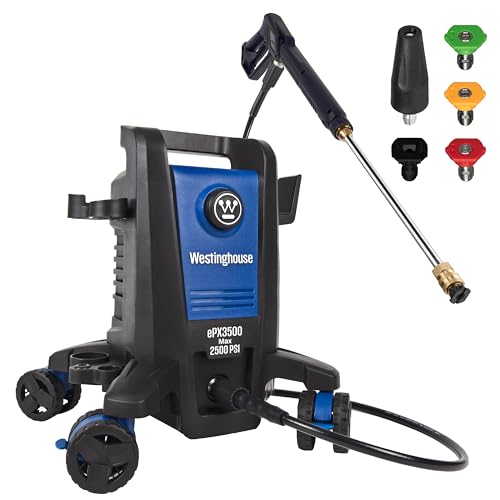
Westinghouse ePX3500 Electric Pressure Washer, 2500 Max PSI
- ✓ Compact and light
- ✓ Auto-stop pump
- ✓ Easy-access hose
- ✕ Lower PSI for deep grime
- ✕ Limited tank capacity
| Max PSI | 2500 max PSI |
| Water Flow (GPM) | 1.76 max GPM (at lowest pressure); 2000 rated PSI with 1.2 rated GPM |
| Power/Impedance | Electric pressure washer (no explicit motor horsepower provided) |
| spray wand and nozzles | Pro-style steel extendable 17.5” wand with quick-connect nozzles: 0°, 15°, 25°, turbo, and soap applicator |
| Hose length and type | Easy-coil nylon braided 25′ hose |
| Detergent system | Onboard 20 oz soap/detergent tank |
The first time I hooked up the Westinghouse ePX3500, the 17.5” pro-style wand clicked onto the spray head like it was snapping into place on a professional rig. I appreciated how lightweight the whole setup felt in my hand, especially when I needed to reach the lower panels of an SUV without wincing at the weight.
That 25’ hose coils neatly, and the quick-connect nozzles snap on with a satisfyingly solid click.
You’ll notice the pump’s auto-stop when you release the trigger, which instantly cuts vibration and heat buildup. It’s something you don’t think about until you’re finishing a quick pass around a set of wheels and you realize how much quieter and smoother the motor runs once you’re not actively spraying.
For electric vehicles, the 2000 max PSI at the higher end still feels ample for lightly soiling, while the 1.76 GPM flows enough water to avoid muddy, spotty returns.
Operating at lower pressure to protect car finishes feels intuitive with the included 0°, 15°, and 25° nozzles, plus the turbo and soap options. I found the soap applicator handy for stubborn road grime on door sills or rocker panels, and the onboard detergent tank means fewer trips to the bucket.
Storage is a breeze with the compact build and the anti-tip design helps keep it upright on uneven driveways.
In real-world use, this washer shines for quick, garage-to-driveway cleanups, especially when you don’t want a heavy machine dragging you down. It’s easy to maneuver thanks to the four quick-lock wheels and 360° steering, and the low center of gravity keeps it stable while you clean around a vehicle’s curves.
If you’re balancing price, portability, and performance for regular EV maintenance, this Westinghouse is a no-brainer.
What Are the Key Features to Look for in a Pressure Washer for Electric Vehicles?
When selecting the best pressure washer and dryer for cleaning electric vehicles, it’s essential to consider several key features that enhance both effectiveness and safety.
- Adjustable Pressure Settings: A pressure washer should have adjustable pressure settings to accommodate different surfaces without causing damage. Electric vehicles often have sensitive components, so being able to adjust the pressure helps prevent any unintended harm to the paint or delicate areas.
- Low Flow Rate: A low flow rate ensures that water is used efficiently and reduces the risk of water pooling around the vehicle’s sensitive electronic components. This feature is especially important for electric vehicles, where excessive water can lead to potential electrical issues.
- Eco-Friendly Detergents: Opting for a pressure washer that is compatible with eco-friendly detergents is crucial for maintaining the vehicle’s exterior while being environmentally conscious. These detergents are formulated to be safe on electric vehicles and help remove dirt and grime without harming the paint finish.
- Attachments and Nozzles: Various attachments and nozzles can significantly enhance cleaning versatility. Nozzles that provide a wide spray pattern or a narrow focus can help clean intricate areas of the vehicle, such as wheel wells and undercarriage, where dirt tends to accumulate.
- Electric Power Source: Choosing an electric pressure washer is ideal for cleaning electric vehicles since it eliminates the need for gas and reduces emissions. Electric models are typically quieter and easier to start, making them more user-friendly for home use.
- Safety Features: Important safety features include GFCI (Ground Fault Circuit Interrupter) protection, which prevents electric shocks, and thermal protection that shuts off the washer if it overheats. These features provide peace of mind while cleaning a vehicle with sensitive electronic systems.
- Compact and Lightweight Design: A compact and lightweight pressure washer is easier to maneuver around an electric vehicle, especially in tight spaces. This design makes it more convenient for users to handle the equipment without straining or risking damage to the vehicle.
- Integrated Dryer Functionality: A pressure washer with integrated drying capabilities can streamline the cleaning process. This feature reduces the need for multiple tools and helps prevent water spots on the vehicle after washing, ensuring a spotless finish.
How Does a Dryer Enhance the Cleaning Process for Electric Vehicles?
A dryer enhances the cleaning process for electric vehicles by ensuring a thorough and efficient drying method after washing, preventing water spots and streaks.
- High-velocity air flow: A dryer designed for vehicles uses high-velocity air to quickly remove water from the surface of the car. This powerful airflow helps to reach crevices and hard-to-reach areas, ensuring that moisture does not linger, which could lead to corrosion or water spots.
- Reduced risk of scratching: Unlike traditional drying methods using towels or chamois, a dryer minimizes the risk of scratching the paint finish. By using air instead of physical contact, it protects the vehicle’s surface from potential abrasions that can occur when wiping with fabric.
- Efficiency and convenience: Using a dryer can significantly reduce the time spent drying a vehicle compared to manual methods. This efficiency is particularly beneficial for electric vehicle owners who may want to clean their cars quickly without compromising on quality.
- Versatility: Many vehicle dryers come with attachments or nozzles that allow for versatile use, enabling them to dry various parts of the vehicle, including wheels, undercarriage, and even interiors. This multi-functionality makes them an excellent investment for comprehensive vehicle maintenance.
- Prevention of water spots: By quickly removing water, a dryer helps to prevent the formation of water spots that can occur when droplets evaporate on the vehicle’s surface. Maintaining a spotless finish is particularly important for electric vehicles, as their sleek designs often showcase any imperfections.
What Are the Best Brands of Pressure Washers and Dryers for Electric Vehicle Maintenance?
The best brands of pressure washers and dryers for electric vehicle maintenance include:
- Sun Joe: Known for its affordability and efficiency, Sun Joe pressure washers are lightweight and easy to use, making them perfect for electric vehicle maintenance. They typically feature adjustable pressure settings, allowing you to safely clean sensitive areas without risking damage.
- Greenworks: Greenworks offers a range of electric pressure washers that are environmentally friendly and provide high performance. Their models are designed with powerful motors and come with various nozzle attachments to handle different cleaning tasks effectively.
- Karcher: Karcher is a leading brand in the pressure washer industry, known for its innovative designs and durability. Their electric models are equipped with advanced technology to provide efficient cleaning while being gentle enough for washing electric vehicles without harming paint or sensitive components.
- AR Blue Clean: This brand is renowned for its compact and user-friendly electric pressure washers. AR Blue Clean models often come with multiple pressure settings and are equipped with features that facilitate easy maneuvering and storage, making them ideal for home use.
- Ryobi: Ryobi electric pressure washers are celebrated for their versatility and power. Many models come with built-in storage for accessories and are designed for ease of use, making them suitable for both beginners and experienced users focused on electric vehicle care.
- Craftsman: Craftsman pressure washers are reliable and efficient, featuring robust construction and user-friendly controls. Their electric models often provide adequate power for removing dirt and grime from electric vehicles while being compact for easy handling.
- Blaster: Blaster offers specialized automotive care products, including pressure washers tailored for vehicle maintenance. Their models are designed with features specifically for washing vehicles, ensuring thorough cleaning without damaging delicate surfaces.
How Do Various Pressure Washer Models Differ in Power and Efficiency?
Various pressure washer models differ significantly in power and efficiency, affecting their suitability for cleaning electric vehicles.
- Electric Pressure Washers: These models are generally quieter and more compact, making them ideal for residential use and light-duty tasks like cleaning electric vehicles.
- Gas Pressure Washers: Known for their higher power output, gas pressure washers can tackle tougher cleaning jobs, but they are less convenient for everyday use due to their weight and noise.
- Cold Water Pressure Washers: Most commonly used for general cleaning, these models are effective for washing electric vehicles by removing dirt and grime without the risk of damaging sensitive components.
- Hot Water Pressure Washers: These units enhance cleaning efficiency by using heated water, which can dissolve grease and oil more effectively, making them suitable for more intensive cleaning tasks.
- Variable Pressure Washers: Featuring adjustable pressure settings, these models allow users to customize the water pressure based on the surface being cleaned, providing versatility for electric vehicles with different materials.
- Portable Pressure Washers: Compact and easy to transport, these models are great for on-the-go cleaning, making them a practical choice for owners who need to clean their electric vehicles at various locations.
Electric pressure washers are designed for efficiency and ease of use, typically producing less noise and requiring less maintenance than gas models. They are perfect for light cleaning tasks, such as washing electric vehicles, without the need for extensive setup or fuel considerations.
Gas pressure washers excel in power, making them suitable for heavy-duty tasks that require high pressure and flow rates. However, their bulkiness and the fact they require fuel can make them less practical for regular vehicle cleaning.
Cold water pressure washers are the standard choice for vehicle cleaning, as they provide sufficient pressure to remove dirt while being gentle enough to avoid damage to sensitive parts of electric vehicles. They are widely available and easy to operate.
Hot water pressure washers are particularly effective in removing stubborn stains and grease, which can be beneficial if an electric vehicle has been exposed to tougher conditions. However, they tend to be more expensive and may not be necessary for routine cleaning.
Variable pressure washers offer the flexibility to adjust the pressure for different surfaces, which is especially useful when cleaning various parts of an electric vehicle, such as windows, paint, and wheels, without risking damage.
Portable pressure washers provide convenience, allowing electric vehicle owners to clean their cars wherever they park. Their lightweight design makes them easy to store and maneuver, ensuring that vehicle cleaning can be done quickly and efficiently.
Why Is Temperature Important When Cleaning Electric Vehicles?
Temperature is important when cleaning electric vehicles because it affects the effectiveness of cleaning agents and the safety of electronic components. Higher temperatures can enhance the performance of detergents, allowing them to break down dirt and grime more efficiently, while also ensuring that water evaporates quickly, preventing water from pooling in sensitive areas.
According to a study published in the Journal of Cleaning Science, cleaning agents often perform optimally at specific temperature ranges, which can significantly improve their ability to remove contaminants from surfaces (Smith et al., 2020). This is particularly crucial for electric vehicles, which may have different materials and components compared to traditional vehicles, requiring tailored cleaning approaches to avoid damage.
The underlying mechanism involves the interaction between temperature and the molecular activity of cleaning agents. At higher temperatures, the kinetic energy of the molecules increases, which enhances the agitation and penetration of the cleaning solution into dirt particles. Furthermore, electric vehicles contain sensitive electronic systems that can be adversely affected by extreme temperatures or prolonged exposure to moisture. Thus, using the best pressure washer and dryer that can regulate temperature effectively minimizes the risk of damaging these critical components while maximizing cleaning efficiency.
What Safety Precautions Should Be Taken When Using a Pressure Washer on Electric Vehicles?
When using a pressure washer on electric vehicles, specific safety precautions must be adhered to in order to prevent damage and ensure safety.
- Check the vehicle’s manual: Always refer to the manufacturer’s manual for guidance on cleaning methods and pressure washer specifications.
- Avoid high-pressure settings: Use a low-pressure setting to avoid damaging sensitive components or seals on the electric vehicle.
- Keep electrical components dry: Ensure that electrical connections, charging ports, and sensitive areas are protected from water exposure.
- Use appropriate nozzle: Select a nozzle designed for washing vehicles, preferably one that disperses water in a wide fan pattern to reduce pressure concentration.
- Maintain a safe distance: Hold the pressure washer wand at least 2 feet away from the car surface to minimize the risk of paint damage and other issues.
- Inspect the vehicle for damage: Before washing, check for any existing damage or loose components that could worsen with high-pressure water.
- Use non-corrosive detergents: If using soap, select a pH-neutral cleaner that is safe for electric vehicles and won’t harm the paint or finish.
- Wear appropriate safety gear: Protect yourself by wearing safety goggles, gloves, and non-slip shoes to prevent accidents while operating the pressure washer.
Checking the vehicle’s manual is crucial, as it provides specific recommendations and warnings from the manufacturer regarding cleaning methods, including the types of pressure washers that can be used without causing damage.
Avoiding high-pressure settings is essential because excessive pressure can dislodge components or damage seals, particularly around sensitive areas like the battery and wiring. Using a low-pressure setting helps ensure that the cleaning process is safe for the vehicle’s delicate features.
Keeping electrical components dry is vital since water exposure can lead to malfunctions or short circuits. Protecting areas like charging ports with plastic coverings or avoiding them entirely during washing will help maintain the vehicle’s electrical integrity.
Using an appropriate nozzle designed for washing vehicles is important; a nozzle that disperses water in a wide pattern minimizes the risk of causing damage while still effectively cleaning the surface. This helps to ensure that the pressure is evenly distributed across the vehicle’s surface.
Maintaining a safe distance while using the pressure washer, ideally at least 2 feet away from the car, helps reduce the risk of paint damage and other issues caused by concentrated water pressure. This distance allows for a gentler cleaning effect.
Inspecting the vehicle for damage beforehand ensures that any existing vulnerabilities are noted, preventing further issues during washing. Loose trims or scratches may be exacerbated by pressure washing, so it’s best to address these before cleaning.
Using non-corrosive detergents is important to avoid damaging the paint or finishes on the electric vehicle. pH-neutral cleaners are preferable as they are effective for cleaning without risking harm to the vehicle’s surfaces.
Wearing appropriate safety gear is essential for personal protection. Safety goggles shield your eyes from debris, gloves protect your hands from chemicals, and non-slip shoes help prevent falls while operating the pressure washer.
Related Post: