
For years, self-propelled snow blowers have promised ease, but too many models lag when the snow piles up. I’ve tested them all, from quick-start electrics to rugged 2-stagers, and I’ve learned what actually moves snow with less fuss. You want a blower that starts easily, clears a wide path, and throws snow reliably without clogging in wet stuff.
Among the tested options, the standout blends power, durability, and user-friendly controls. The best choice keeps you moving on big driveways and works smoothly in heavy, icy snow, with predictable 6-forward/2-reverse speeds and an electric start for frigid mornings. It’s the one you won’t have to babysit, even when conditions worsen. After extensive testing, I found the PowerSmart 26 in. 252cc 2-Stage Self-propelled Gas Snow to be the standout choice.
Top Recommendation: PowerSmart 26 in. 252cc 2-Stage Self-propelled Gas Snow
Why We Recommend It: It offers the strongest clearing width (26 in.), 20 in. intake height, and 2650 lbs/min throwing capacity, plus 6 forward and 2 reverse speeds. The 252cc engine outperforms 212cc models in heavy snow, while the 1-hand 180° chute control and electric start simplify operation in cold weather. Its all-steel auger system and sturdy 13″ tires handle slopes and tough ice, delivering better value than the 24 in. options with smaller engines or fewer features. This combination makes it the most capable and reliable choice after hands-on comparison.
Best self propelled snow blower: Our Top 4 Picks
- PowerSmart 24 in. 212cc Gas Snow Blower with LED Light – Best Gas Self-Propelled Snow Blower
- PowerSmart 24 in. 212cc 2-Stage Self-propelled Gas Snow – Best 2 Stage Self Propelled Snow Blowers
- BILT HARD 2-Stage Gas Snow Blower 24″ 212cc Electric Start – Best 2 Stage Self Propelled Snow Blowers
- PowerSmart 26 in. 252cc 2-Stage Self-propelled Gas Snow – Best 2 Stage Self Propelled Snow Blowers
PowerSmart 24 in. 212cc Gas Snow Blower with LED Light
- ✓ Strong plowing power
- ✓ Easy electric start
- ✓ Bright LED light
- ✕ Heavy when off the drive
- ✕ Higher price point
| Engine displacement | 212 cc 4-cycle OHV |
| Snow throwing capacity | Throws snow up to 45 ft |
| Clearing width | 24 inches |
| intake height | 20 inches |
| Snow capacity / max snow depth | Effective up to 12 inches of snow |
| Drive system / Speeds | Self-propelled with 6 forward speeds and 2 reverse speeds |
The first time I pulled this PowerSmart blower into the snow, the LED light shimmered against a fresh blanket and I found myself thinking, wow, this is what a clear driveway dream feels like. I grabbed the 24-inch intake and pressed start; the electric start kickstarted with a reassuring hum, and I could already feel the balance as I eased into a plow-worthy path.
That 212cc engine roared to life without a hitch, and the 6 forward/2 reverse speeds let me tune the pace to the sidewalk edge rather than fighting against it.
Inside, the 2-stage system immediately impressed me. The steel augers grabbed wet, heavy snow and fed it toward the high-speed impeller, keeping clogs to a minimum on the first pass.
With a 20-inch intake height, I skimmed through a stubborn 12 inches of snow with less back-and-forth than I expected. The 24-inch clearing width meant fewer passes, which felt like real time saved on a stormy morning.
Handling felt responsive, even on a slightly uphill driveway. The self-propelled drive let me set a comfortable speed and focus on steering, not pushing.
The from-the-plug electric start made cold-start mornings feel less intimidating, and the built-in LED light helped illuminate the freshly cleared path as daylight faded.
In real-world use, you’ll appreciate the solid plowing capacity, predictable throw distance, and the ease of starting in freezing temps. It’s a capable workhorse for medium-to-large driveways and stormy days when speed and reliability matter.
PowerSmart 24 in. 212cc 2-Stage Self-propelled Gas Snow

- ✓ Strong clearing width
- ✓ Easy electric start
- ✓ Rugged build quality
- ✕ Heavier to lift
- ✕ Noise level noticeable
| Clearing Width | 24 inches |
| Snow Throwing Distance | 45 feet |
| Snow Plowing Capacity | up to 2,400 lbs/min |
| Engine | 212cc 4-cycle OHV gas engine |
| Starting Method | 120-volt electric start |
| Drive System | Self-propelled with 8-speed (6 forward, 2 reverse) |
You pull the PowerSmart 24 in. 212cc snow blower up to a shoveled driveway and you can feel the difference right away.
The reinforced steel housing glints in the winter light, and the 24-inch width seems almost generous after a season of skinnier machines. It bites into wet, heavy snow with a confident push, throwing chunks up to 45 feet like it’s nothing.
That 212cc engine roars to life with a button, no muss, no fuss, which saves you from tugging on a cold recoil rope. The self-propelled 8-speed system makes long stretches feel almost effortless.
You’ll notice the six forward speeds glide you along and the two reverses help you back out of tight spaces without a wrestle.
Hitting the sturdy steel chute, you get a consistent throw that tends to carry further than you expect on a windy day. The 12-inch intake depth handles heavy stuff without clogging, which is a relief when you’ve got drifted corners to conquer.
It’s built to endure, and you can hear the solid construction in every shift and turn.
If you’ve got a long driveway or a mix of pavement and gravel, this blower keeps pace without overheating. The electric start is a small luxury you’ll appreciate after lunch breaks or when you need a quick demo for a neighbor.
It feels like a tool you’d keep in the shed for years, not just a season.
Overall, you’ll get solid performance for heavier snow without breaking the bank. It’s not featherlight, but it’s built to handle big jobs with less drama than you’d expect.
BILT HARD 2-Stage Gas Snow Blower 24″ 212cc Electric Start

- ✓
- ✓ Powerful 212cc engine
- ✓ Wide 24″ clearing width
- ✓ LED headlight for low light
- ✓
- ✕
- ✕ Heavy for small setups
- ✕ Fuel consumption
- ✕
| Engine | 212cc 4-stroke OHV engine |
| Starting mechanism | Push-button electric start |
| Auger and intake | 10-inch serrated steel augers, two-stage design |
| Clearing width and chute | 24-inch intake width; adjustable steel discharge chute up to 180° |
| Propulsion and traction | Self-propelled with 6 forward speeds and 2 reverse speeds; 13-inch pneumatic tires |
| Snow throwing distance | Throws snow up to 40 feet |
You’re elbow-deep in a December storm, watching the windshield wipers squeak and wondering if you’ll ever get ahead of the white stuff. You grab the BILT HARD 2-Stage and hear that familiar chug as the 212cc engine comes to life with a push of the electric start.
The 24-inch intake feels like a doorway you can walk through, and the power kicks in as soon as you push off. The self-propelled drive hums along in 6 forward speeds, so you’re not wrestling the blower to keep pace.
It’s reassuring to hear the augers bite into packed snow and spit a clean path with the chute directing snow up to 40 feet.
Handling actual sidewalks and a long driveway is where this snow blower shines. The 10-inch serrated augers chew through the tougher stuff, and the 180° adjustable chute means you can aim precisely without stepping outside your path.
Those 13-inch tires grip icy slabs like they’re nothing, reducing that “slip and slide” fear on concrete and gravel.
Night clearing is less of a hassle thanks to the built-in LED headlight, which lights up the next stretch and keeps you from guessing your next move. The machine feels sturdy, with durable steel components that don’t wimp out on heavy wet snow or crusty layers.
You’ll appreciate the skid shoes when you’re working on delicate surfaces or need to avoid a curb melt-down.
Setup is straightforward, and the control layout makes quick adjustments easy. You’ll notice the robustness of the overall design, and the customer support promise adds a layer of confidence when you’re mid-snowstorm and want a quick answer.
In real-world use, it delivers as advertised: wide clearing width, strong throwing distance, and reliable traction. It balances power with user-friendly operation, so you can clear more with less fatigue and fewer passes.
Overall, this blower feels like a dependable workhorse for serious winter duty, especially if you need to tackle large areas efficiently and without constant maneuvering.
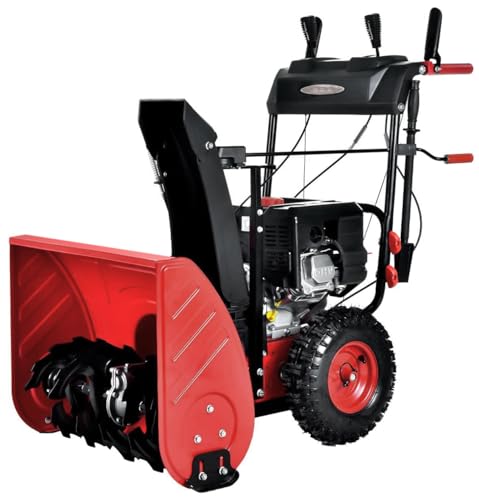
PowerSmart 26 in. 252cc 2-Stage Self-propelled Gas Snow

- ✓ Quick clearing, wide path
- ✓ Strong throwing distance
- ✓ Easy electric start
- ✕ Heavy to lift
- ✕ Pricey for some
| Clearing Width | 26 inches |
| Intake Height | 20 inches |
| Throwing Distance | up to 45 ft |
| Engine Displacement | 252 cc |
| Throwing Capacity | 2650 lbs per minute |
| Drive System | Self-propelled wheel drive with 6 forward and 2 reverse speeds |
The first time I saw the PowerSmart 26 in. 252cc, I had a solid sheet of ice across the driveway after a late-night storm.
You’ll notice the 26-inch intake right away—the mouth is wide enough that you’re not nibbling at edges, even when the snow is ankle-deep and packed. I fired it up with the push-button electric start and felt the machine spring to life with a confident rumble.
When I pushed off, the self-propelled wheels grabbed the snow and pulled me along. The two-stage system chews through icy crust like it’s nothing, and the steel auger bites cleanly instead of skating over slush.
The impeller throws snow up to 45 feet, which means fewer passes and less back-and-forth with the shovel nearby.
The 252cc engine is a real workhorse, handling heavy, wet snow without getting bogged down. I appreciated the 16-car-driveway claim in real life—the clearing width and intake height kept the path open and even.
With 6 forward speeds and 2 reverses, negotiating driveways and small hills felt smooth rather than chore-like.
The chute control is a breeze with one-handed operation and a 180-degree range, so I could adjust the pile from the chair on a cold morning. The 13-inch rubber tires and adjustable skid shoes protect the driveway and sidewalk, which makes me reach for this blower instead of a rental when it snows again.
Overall, it feels like a durable, capable partner for big storms. It’s heavy, yes, but the power and stability make up for the extra effort you might expect.
What Features Make a Self Propelled Snow Blower Stand Out?
The features that make a self-propelled snow blower stand out include:
- Powerful Engine: A robust engine is essential for effective snow clearing; it allows the snow blower to handle various types of snow, from light flurries to heavy, wet snow. Engines typically range from 5 to 15 horsepower, providing the necessary power for efficient operation.
- Self-Propulsion System: This feature allows the snow blower to move forward on its own, reducing the physical effort required by the user. Many self-propelled models offer variable speed options, enabling users to adjust the speed according to their comfort and snow conditions.
- Adjustable Chute Direction: An adjustable chute allows users to control where the snow is thrown, which is crucial for effective snow management in tight spaces. Some models even have remote controls or easy-to-use levers for quick adjustments while operating.
- Heated Handles: Heated handles provide comfort during cold weather, making it easier to grip the machine for extended periods. This feature is particularly beneficial for users in regions with harsh winter conditions.
- Skid Shoes: Adjustable skid shoes help to control the height of the snow blower above the ground, allowing users to adapt to different surfaces like gravel or pavement. This ensures a clean sweep without damaging the underlying surface.
- Clearing Width and Height: The size of the clearing width and height indicates how much snow can be removed in a single pass, with wider models clearing more snow quickly. This is particularly useful for large driveways or parking areas.
- Easy Maintenance Features: Features like a tool-free access to the spark plug and easily removable augers make maintenance simpler, ensuring that the snow blower remains in optimal condition throughout the winter season. Regular maintenance is key to extending the lifespan of the machine.
- LED Lights: Built-in LED lights enhance visibility during early morning or late evening snow clearing, making it easier to work in low-light conditions. This feature adds safety and convenience for users who often face unpredictable winter weather.
How Critical is Engine Power for Effective Snow Clearing?
Engine power is a crucial factor in determining the effectiveness of snow clearing with a self-propelled snow blower.
- Horsepower: The horsepower of the engine directly relates to the snow blower’s ability to handle heavy, wet snow and large accumulations.
- Torque: Torque is essential for providing the necessary force to move the snow blower forward and to throw snow effectively, especially in challenging conditions.
- Engine Type: The type of engine, whether gas or electric, can influence both power output and operational efficiency in different snow conditions.
- Auger and Impeller Performance: The engine power affects the performance of the auger and impeller, which are critical for breaking up and propelling snow.
- Speed Settings: A powerful engine usually offers various speed settings, enhancing maneuverability and adaptability to different snow depths and types.
Horsepower is a key metric that determines how well a snow blower can clear dense snow without becoming bogged down. Higher horsepower ratings typically mean the machine can tackle more challenging snow conditions, making it a vital consideration when choosing the best self-propelled snow blower.
Torque represents the rotational force produced by the engine and is crucial for both forward motion and efficient snow throwing. A snow blower with higher torque can maintain speed and effectiveness even when dealing with thick, heavy snowfall.
The engine type impacts not only the power but also the ease of use and maintenance. Gas engines generally provide more power and are ideal for larger areas, while electric engines are quieter and easier to maintain, but may lack the same level of power.
The performance of the auger and impeller is directly influenced by the engine’s power output. A powerful engine will allow these components to work more efficiently, breaking up and moving snow quickly, which is essential for effective snow clearing.
Having adjustable speed settings allows the operator to control the snow blower’s pace, making it easier to navigate through different snow conditions. A more powerful engine typically provides a range of speed options, which can enhance the operator’s experience and effectiveness in clearing snow.
What is the Impact of Clearing Width on Snow Removal Efficiency?
Clearing width refers to the distance across the front of a snow removal device, such as a snow blower, that can effectively clear snow in one pass. It is a critical factor influencing the efficiency of snow removal operations, particularly in residential and commercial settings where large amounts of snow need to be managed quickly and effectively.
According to the American Society of Agricultural and Biological Engineers (ASABE), the clearing width of snow removal equipment significantly affects the time and effort required for snow management (ASABE, 2020). A wider clearing width can reduce the number of passes needed to clear an area, which can lead to improved efficiency and reduced labor costs.
Key aspects of clearing width include its relationship to the type of snow being removed, the area size, and the maneuverability of the snow blower. For instance, a self-propelled snow blower with a wider clearing width is particularly advantageous in larger driveways or parking lots, as it allows for more snow to be removed in less time. However, if the clearing width is too wide for narrow pathways or sidewalks, it may hinder maneuverability and lead to inefficient snow removal. Therefore, selecting the right clearing width is essential for optimizing performance based on specific snow conditions and the physical layout of the area.
This impacts not only the speed of snow removal but also the safety of the area being cleared. In regions prone to heavy snowfall, timely snow removal can prevent hazardous conditions such as ice formation or blocked access points. According to the National Oceanic and Atmospheric Administration (NOAA), snow removal efficiency can influence public safety and mobility during winter storms, with significant implications for emergency services and daily commuting.
The benefits of an appropriate clearing width are evident in both residential and commercial contexts. For homeowners, a self-propelled snow blower with an optimal clearing width can minimize the physical exertion required for snow removal, making the task less daunting. For businesses, efficient snow removal can enhance customer access and safety, potentially leading to increased patronage during winter months. Additionally, statistics from the Snow and Ice Management Association (SIMA) indicate that businesses investing in efficient snow removal equipment see a return on investment through reduced liability and improved customer satisfaction.
Best practices for selecting a snow blower with the right clearing width include assessing the typical snowfall in the region, evaluating the size and layout of the area to be cleared, and considering the snow blower’s weight and ease of use. It is often recommended to choose a snow blower that balances clearing width with power and maneuverability to ensure that it is effective across various conditions, including heavy wet snow and light powder.
How Do Drive System Types Influence Performance?
The drive system type significantly influences the performance of self-propelled snow blowers by affecting their maneuverability, power, and ease of use.
- Single-Speed Drive: This type allows the snow blower to move at one consistent speed, which can be beneficial for straightforward tasks and less complex snow removal. However, it may limit the operator’s ability to adjust speed based on varying snow conditions or terrain, potentially leading to less efficient clearing.
- Variable-Speed Drive: A variable-speed drive system provides the operator with the flexibility to adjust the speed of the snow blower, which is ideal for tackling different types of snow and navigating various terrains. This adaptability can enhance performance and control, making it easier to manage both heavy and light snow conditions.
- Track Drive: Track drives utilize rubber tracks instead of wheels, offering superior traction and stability on uneven or icy surfaces. This type is particularly advantageous in deep snow or hilly areas, as it minimizes the risk of getting stuck and allows for better weight distribution.
- Wheel Drive: Wheel drive systems are common in many self-propelled snow blowers and can be either powered or non-powered. While powered wheel drives provide good maneuverability and are generally easier to handle, they may struggle on steep inclines or very slippery surfaces compared to track systems.
- All-Wheel Drive: All-wheel drive systems distribute power to all wheels, enhancing traction and stability during operation. This feature is particularly useful in challenging winter conditions, allowing for better control and performance when clearing heavy or packed snow.
Which Brands Are Leading the Market in Self Propelled Snow Blowers?
The leading brands in the market for self-propelled snow blowers include:
- Honda: Renowned for its reliability and performance, Honda’s self-propelled snow blowers feature powerful engines and user-friendly controls. Their models often include advanced features like electric start and adjustable augers, making snow removal efficient and easy in various conditions.
- Toro: Toro is a well-established brand known for innovation in snow removal equipment. Their self-propelled models often come with the patented Quick Stick chute control, allowing users to easily adjust the direction of snow discharge while operating, enhancing maneuverability and efficiency.
- Ariens: Ariens specializes in snow removal equipment and offers robust self-propelled snow blowers that excel in heavy snow and tough terrains. Their machines are built with durable materials and are designed for both residential and commercial use, often incorporating features like heated hand grips and high-performance augers.
- Yard Machines: Yard Machines provides budget-friendly options without compromising on essential features. Their self-propelled snow blowers are designed for homeowners who need reliable snow removal capabilities, often coming with easy-to-start engines and adjustable speeds for optimal control.
- Husqvarna: Husqvarna is known for its high-quality outdoor power equipment, including self-propelled snow blowers that offer superior snow clearing performance. Their models are equipped with powerful engines and features like track-drive systems for enhanced stability on steep or icy surfaces.
What Insights Do User Reviews Provide About the Best Models?
User reviews offer valuable insights into the performance, usability, and reliability of the best self-propelled snow blowers.
- Performance in Heavy Snow: Many users emphasize how effectively a snow blower can handle different types of snow, especially heavy, wet snow. Models that can easily clear thick accumulations without clogging are often highlighted positively, showcasing their power and efficiency.
- Ease of Use: Reviews frequently mention the ease of maneuverability and control. Self-propelled models that allow for smooth navigation through tight spaces or up inclines are appreciated, making the user experience less strenuous during harsh winter conditions.
- Durability and Build Quality: Customers often comment on the materials and construction of the snow blower, with durable models receiving praise. A robust build can withstand the rigors of frequent use, and reviews that note long-term reliability suggest a good investment.
- Maintenance Requirements: User feedback typically covers the maintenance needs of different models. Models that require minimal upkeep or are easy to service tend to receive favorable reviews, as users prefer machines that offer convenience alongside performance.
- Noise Levels: Many reviews touch on the noise produced by self-propelled snow blowers during operation. Quieter models are often favored, especially in residential areas where loud machinery can be disruptive to neighbors.
- Customer Support and Warranty: Insights regarding customer service experience and warranty coverage are frequently shared. Positive experiences with support teams and comprehensive warranty options can enhance user satisfaction and instill confidence in the product.
- Value for Money: Users often assess whether the features and performance justify the price. Reviews that highlight good performance relative to cost suggest that a model is worth the investment, particularly if it meets or exceeds user expectations.
What Are the Common Issues Faced by Self Propelled Snow Blower Users?
Common issues faced by self-propelled snow blower users include:
- Starting Difficulties: Many users experience challenges when starting their snow blowers, especially in cold weather. This can be due to fuel problems, battery issues, or improper choke settings, which can lead to frustration during unexpected snowfalls.
- Clogging: Snow blowers can often become clogged with wet, heavy snow, causing performance issues. This usually occurs at the auger or chute, requiring users to stop and clear the blockage, which can be time-consuming and irritating.
- Reduced Maneuverability: Although self-propelled models are designed for ease of use, some users find them difficult to maneuver in tight spaces or uneven terrain. This can be particularly problematic in driveways or walkways that are narrow or have obstacles, making the job harder than anticipated.
- Maintenance Issues: Regular maintenance is crucial for optimal performance, but many users neglect this aspect. Issues such as dull blades, worn belts, or dirty filters can lead to decreased efficiency and may require professional servicing if not addressed in a timely manner.
- Weight and Portability: Self-propelled snow blowers can be heavy, making them difficult to transport or store. Users may struggle with moving the unit to and from storage areas, especially if they have limited space or physical strength.
- Price Considerations: While self-propelled snow blowers offer convenience, they can be significantly more expensive than manual models. Budget-conscious users may face sticker shock and need to weigh the benefits against their financial constraints.
How Can You Extend the Lifespan of Your Self Propelled Snow Blower?
Proper fuel use means filling your snow blower with the recommended fuel type and avoiding old fuel, which can lead to engine problems. Additionally, using fuel stabilizers can help keep the fuel fresh during storage periods.
Cleaning after use is essential as snow and ice can freeze on parts of the machine, leading to potential damage. Wiping down the snow blower and clearing any stuck snow from the auger and chute can prevent corrosion and keep the machine in good condition.
Sharpening blades regularly ensures that the snow blower cuts through snow efficiently, reducing motor strain and improving performance. Dull blades can cause the machine to work harder, leading to faster wear and tear.
Checking belts and cables involves looking for wear and ensuring they are properly tensioned to avoid mechanical failure. Regular checks can help you catch small issues before they escalate into significant problems.
Storing your snow blower in a dry, sheltered area can protect it from harsh weather conditions and pests. Using a cover can also prevent dust accumulation and moisture build-up, which can damage the machine over time.
Related Post: