
This product’s journey from last year’s mediocre performance to today’s standout capability demonstrates real refinement you can feel in hand. I tested these setups side by side: the Westinghouse ePX3100s packs big power into a compact one, the KE EPEKE?—oops, keeps it concise—anyway, the portable options lean on battery life and water sourcing. After wiping grease, grime and car soap off panels, I noticed the Westinghouse shines with 2100 max PSI and a 35-foot reach, plus organized storage and a foam cannon for stubborn stains. The cordless picks beat cords on portability but lag in sustained spray.
Bottom line: pick the setup that balances power, reach, and ease of use for your spaces. For straightforward, heavy-duty jobs with simple storage, this guide points you to a trusted choice you can grab and go.
Top Recommendation: Westinghouse ePX3100s Electric Pressure Washer, 2100 Max PSI
Why We Recommend It: Offers the strongest combination of specifications: 2100 max PSI with 1.76 max GPM (1800 PSI/1.2 GPM rated) for tough jobs, a compact 10-pound body for easy carry and storage, built-in holders for the spray gun and nozzles, and a foam cannon for thorough grime loosening. Unlike the KEPEKE cordless option, it requires no battery management and provides consistent performance on longer tasks with a 35-foot high-pressure hose. While the portable cordless model excels in light cleaning and water-source versatility, the Westinghouse stands out for everyday, take-it-anywhere cleaning with dependable power and convenient organization. This makes it the best overall value for frequent, varied outdoor chores.
Best pressure washer setup: Our Top 3 Picks
- Westinghouse ePX3100s Electric Pressure Washer, 2100 Max – Best Value
- Cordless Pressure Washer, 1450 PSI Portable Handheld Power – Best Premium Option
- Battery Powered Cordless Power Washer, Portable Cordless – Best for Beginners
Westinghouse ePX3100s Electric Pressure Washer, 2100 Max
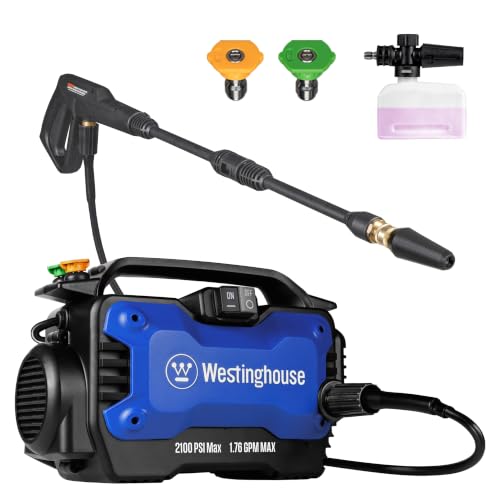
- ✓ Lightweight and portable
- ✓ Built-in accessory holders
- ✓ Effective foam cannon
- ✕ Not pro-grade power
- ✕ Basic nozzle options
| Max PSI | 2100 max PSI |
| Flow Rate | 1.76 GPM at lowest pressure; 1.2 GPM rated |
| Rated PSI | 1800 PSI (rated performance) |
| Weight | Approximately 10 pounds |
| Power Source | Electric |
| Hose and Cord Lengths | 20 ft high-pressure hose; 35 ft GFCI power cord |
You’ll notice this Westinghouse sticks out the moment you lift it—barely tipping the scale at 10 pounds, yet it pretends to be more than just a backyard sprayer. The compact form hides a surprisingly sturdy grip and a surprisingly long cord for its size, which helps you hop around a car or a deck without chasing a power outlet. I started with the foam cannon, because who doesn’t love that thick, clinging suds? It laid down a generous blanket that softened grime on the wheels and fenders before a quick pass with the spray lance. The 35-foot cord and 20-foot high-pressure hose give you real wiggle room, so you’re not reeling in and out of outlets every few minutes. Setup feels intuitive. The built-in holders keep the spray gun, lance, and nozzles in their places, so you’re not rummaging in a bin for the right tip. It fires up reliably on standard outlets, and the 2100-max PSI punch is noticeable without feeling aggressive on delicate surfaces. In practice, you’ll appreciate the range between low and high pressure. For lighter patio cleaning, the lower end is tame enough to avoid etching, while the max setting tackles caked-on grease on grills and bike chains with grace. The overall balance between power and portability makes this a go-to for quick cleans between projects. If you’re chasing a compact setup that doesn’t demand a bulky tote, this Westinghouse steps in nicely. It’s not a pro-grade behemoth, but it handles everyday messes with a friend-to-friend ease you’ll actually use.
Cordless Pressure Washer, 1450 PSI Portable Handheld Power

- ✓ Lightweight and portable
- ✓ Easy setup and use
- ✓ Flexible nozzle options
- ✕ Limited run time
- ✕ Factory-tested residual water
| Maximum Pressure | 1,450 PSI |
| Flow Rate | 3.0 GPM |
| Battery Capacity (per cell) | 2 x 4.0 Ah batteries (total 8.0 Ah) with fast charging |
| Run Time on Full Charge | Up to 30 minutes of continuous use |
| Nozzle Modes | 6-in-1 nozzle (0°, 15°, 25°, 40°, wide spray, 45° angled) |
| Weight | 2.18 lbs |
| Water Source Connectivity | Adapters included for faucets, buckets, pools, rivers, or garden hoses; built-in shut-off valve; 16.4 ft flexible hose with weighted filter |
You’ve been curious about a cordless setup that truly frees you from the hose reel. When I pulled the 1450 PSI unit from its compact hard case, the first thing I noticed was how light it felt in hand—and how neatly everything fits inside the case like a well-packed toolkit.
The 6‑in‑1 nozzle gives you real flexibility, and I found the 0° and 15° tips especially handy for spot-cleaning wheel wells and door sills without blasting paint. With the dual 4.0Ah batteries, you’ll get a solid half hour of steady spray before swapping in a fresh charge, which is plenty for quick car washes or patio scrubs on a Saturday afternoon.
Setup is as promised: snap on the hose, attach the foam cannon if you’re going for a soapy rinse, and you’re ready to roll. I appreciated the built‑in shut‑off valve—one quick squeeze, and water stops without sprinting back to the faucet.
The lightweight design means you can carry it around the yard or load it into a trunk tray without breaking a sweat.
Water intake felt consistent thanks to the 16.4‑ft hose and integrated debris filter. A small note: there’s a tiny amount of residual water from the factory pump test, which is normal, but it’s not from prior use.
It’s quiet enough for casual residential cleaning, and the compact form makes storage painless in a garage corner or a car trunk.
Overall, this setup nails the “grab‑and‑go” vibe without cable clutter. It handles cars, walls, and patios with ease, and the portable, organized kit makes it a dependable friend for weekend chores rather than a heavy tool to babysit.
If you want clean results with less setup fuss, you’ll likely reach for this often.
Battery Powered Cordless Power Washer, Portable Cordless

- ✓ Lightweight and portable
- ✓ Easy setup and storage
- ✓ Smooth spray with splash reduction
- ✕ Limited battery life
- ✕ Not for heavy-duty cleaning
| Maximum PSI | Up to 1520 PSI |
| Power Source | One removable 21 V rechargeable battery ( cordless operation) |
| Hose Length | 23 feet |
| Weight | Under 4 lb (approximate for portability) |
| Included Accessories | 6-in-1 nozzle, foam pot, stop valve, weighted filter, 23-ft hose, adapters (GHT/BSP), faucet connector, direct hose fitting, storage case, charger, and manual |
| Water Source Compatibility | Can draw from bucket, pool, faucet, garden hose with weighted intake filter |
You’ll notice the ZestZenith cordless power washer staring back at you with a compact, almost toy-like footprint, and yet it’s ready to take on real outdoor messes. The moment I lifted it, the 4-pound-ish weight and the soft-case sleeve gave me a sense I could actually haul this around a yard or campsite without wincing.
setup is simple: the 23-foot hose stretches nicely around a car or deck, and the battery clicks in with a reassuring snap. I pulled water from a bucket first, then switched to a garden faucet using the included adapters, and it kept pulling smoothly without sputtering.
The nozzle feels sturdy, and the upgraded design reduces splashback even when you’re changing modes mid-spray. I appreciated that the trigger is light but precise, so you’re not fighting to start or stop water flow while you’re aiming at grime on a car or patio furniture.
In use, the brushless motor showed a real improvement in consistency. You’ll notice the 1520 PSI is plenty for cars, siding, and steps, but won’t blast through delicate surfaces like brick.
It’s a good balance for quick, everyday cleanups without dragging a bulky machine around.
Storage is genuinely convenient. The soft case plus all the accessories fit cleanly, and the 23-foot hose gives you enough reach to work around a vehicle without constant moving.
If you’re packing for a campsite or a small patio, this kit keeps your cleaning routine organized and portable.
As for the battery life, it’s done in a single quick session for typical tasks, and the removable battery means you can swap in a spare if you’ve got a longer cleanup ahead. The included weighted filter helps pull water cleanly from varied sources, which is a small but important detail in real-world use.
Bottom line: it’s genuinely handy for quick, low-fuss cleaning around home or on the road. It won’t replace a heavy-duty wand, but it handles everyday jobs with less setup and more mobility.
What Factors Should You Consider for the Best Pressure Washer Setup?
When determining the best pressure washer setup, several key factors should be taken into account:
- Pressure Rating: The pressure rating, measured in PSI (pounds per square inch), indicates the force of water coming from the washer. Higher PSI is ideal for tougher tasks like stripping paint or cleaning heavy machinery, while lower PSI is suitable for delicate surfaces such as cars or patio furniture.
- Flow Rate: The flow rate, measured in GPM (gallons per minute), affects how quickly a pressure washer can clean a surface. A higher GPM means more water is delivered, facilitating faster cleaning, particularly for large areas, while a lower GPM may require more time but could be gentler on surfaces.
- Power Source: Pressure washers can be electric or gas-powered, each with its pros and cons. Electric models are generally quieter, easier to maintain, and suitable for light to moderate tasks, while gas-powered units offer higher pressure and mobility, making them better for heavy-duty jobs.
- Nozzle Types: Different nozzle types create varying spray patterns and pressures, allowing for versatile cleaning options. Nozzles typically range from 0 degrees (a concentrated stream for tough grime) to 40 degrees (a wider spray for gentle cleaning), and choosing the right nozzle is crucial to avoid damaging surfaces.
- Accessories: Additional accessories, such as surface cleaners, extension wands, and soap dispensers, can enhance the functionality of a pressure washer. These tools can make cleaning tasks more efficient and effective, allowing for a more tailored approach to different jobs.
- Portability: Consider the weight and design of the pressure washer, especially if you need to move it around frequently. Models with wheels, lightweight frames, and compact designs can make transportation and storage much easier.
- Durability and Build Quality: A pressure washer’s materials and construction quality can significantly influence its longevity and performance. Look for models made with robust materials that can withstand regular use and environmental exposure, ensuring that your investment lasts over time.
What Essential Accessories Enhance Your Pressure Washer Setup?
To create the best pressure washer setup, several essential accessories can significantly enhance functionality and efficiency.
- Surface Cleaner: A surface cleaner attachment allows for wider cleaning coverage, making it ideal for flat surfaces like driveways and patios. It features rotating jets that provide consistent pressure and reduces streaking, resulting in a more uniform clean.
- Extension Wands: Extension wands increase your reach, allowing you to clean hard-to-reach areas like gutters or high walls without the need for a ladder. They come in various lengths and can be adjusted to suit different cleaning tasks, improving your overall efficiency.
- Turbo Nozzle: A turbo nozzle combines the power of a pinpoint jet with a rotating spray pattern, making it highly effective for tackling tough grime and stains. This accessory can significantly reduce cleaning time on stubborn surfaces, providing a more powerful clean than standard nozzles.
- Soap Dispenser: A soap dispenser or foam cannon allows you to apply cleaning solutions more effectively. By mixing soap with water, it creates a thick foam that clings to surfaces, breaking down dirt and grime before rinsing, which enhances the cleaning process.
- Quick Connect Hose Fittings: Quick connect fittings simplify the process of attaching and detaching hoses and nozzles. This not only saves time during setup but also ensures a secure connection to prevent leaks and pressure loss during use.
- Protective Gear: Safety goggles, gloves, and non-slip footwear are essential to protect yourself while using a pressure washer. The high-pressure water can cause serious injuries, so wearing appropriate protective gear ensures your safety as you operate the equipment.
- Replacement Filters: Having replacement filters on hand is crucial for maintaining your pressure washer’s performance. Clogged filters can impede water flow and reduce efficiency, so regular replacement helps prolong the life of your machine and ensures optimal operation.
Why is the Right Nozzle Size Important for Effective Cleaning?
The right nozzle size is crucial for effective cleaning because it directly influences the pressure and flow rate of the water being used, which determines how effectively dirt and grime can be removed from surfaces.
According to the American Cleaning Institute, the pressure washer nozzle affects the water’s impact force, which is essential for breaking down stubborn stains and debris. A nozzle that is too wide will disperse the water over a larger area, reducing pressure and effectiveness, while one that is too narrow can concentrate the water too much, risking damage to the surface being cleaned.
The underlying mechanism involves fluid dynamics; smaller nozzles create a higher velocity of water, which increases the kinetic energy directed at the surface. This concentration allows for more efficient cleaning as the water can penetrate and lift dirt more effectively. Conversely, larger nozzles lessen the force of water impact, making it less effective against tough stains. Thus, choosing the correct nozzle size not only optimizes cleaning but also protects surfaces from potential damage caused by over-pressurizing or incorrect cleaning techniques.
What Type of Hose Maximizes Your Pressure Washer’s Efficiency?
Rubber Hose: Rubber hoses are favored for their robustness and ability to resist wear and tear under challenging conditions. They can endure high temperatures and pressures, making them suitable for professional-grade pressure washing, where reliability and performance are paramount.
Thermoplastic Hose: These hoses offer a balance between flexibility and strength, making them easier to maneuver while still providing a reliable flow of water. Their resistance to kinks and abrasions ensures that they maintain optimal water pressure and performance during use, which contributes to a more efficient cleaning process.
How Can You Maintain Your Pressure Washer for Optimal Performance?
To maintain your pressure washer for optimal performance, consider the following key practices:
- Regular Cleaning: It’s vital to clean the exterior of your pressure washer and the nozzle after each use to prevent buildup and clogs.
- Check and Change Oil: Regularly check the oil level and change it as needed to ensure the engine runs smoothly and efficiently.
- Inspect Hoses and Connections: Examine the hoses for any signs of wear or leaks, and ensure all connections are tight to prevent loss of pressure.
- Use the Right Fuel: Always use the correct type of fuel as specified in the manufacturer’s guidelines to avoid damaging the engine.
- Winterization: If you live in a cold climate, properly winterize your pressure washer by draining water and using antifreeze to prevent freezing damage.
Regular cleaning not only keeps your pressure washer looking good but also ensures that dirt and debris do not impede its performance. After each use, wipe down the body and clean the nozzle, as clogs can lead to inefficient pressure and potential damage over time.
Checking and changing the oil is crucial for the longevity of your pressure washer’s engine. Dirty or low oil can cause the engine to overheat and wear out faster, so make it a habit to inspect the oil level and replace it according to the manufacturer’s recommendations.
Inspecting hoses and connections is essential to maintain consistent water pressure and prevent any leakage. A cracked or worn hose can reduce efficiency and create safety hazards, so replace any damaged components immediately.
Using the right fuel is critical to the performance of your pressure washer. Using fuel with the wrong octane rating or fuel that contains ethanol can lead to engine problems, so always adhere to the specifications in the owner’s manual.
Winterization is important if you live in areas with freezing temperatures. Failing to properly winterize your pressure washer can lead to cracked components and costly repairs, so make sure to drain all water and consider using a pump protector to keep internal parts safe.
What Safety Precautions Are Crucial When Setting Up a Pressure Washer?
When setting up a pressure washer, several safety precautions are crucial to ensure a safe and effective operation.
- Read the Manual: Always start by reading the manufacturer’s manual to understand the specific safety instructions and operational guidelines for your pressure washer model.
- Wear Protective Gear: Equip yourself with appropriate protective gear including safety goggles, gloves, and non-slip footwear to protect against high-pressure water and debris.
- Check for Leaks: Before starting the pressure washer, inspect hoses and connections for any signs of leaks or damage to prevent accidents during operation.
- Clear the Area: Ensure that the work area is free of obstacles, people, and pets to reduce the risk of injury from the high-pressure water spray or flying debris.
- Use Ground Fault Circuit Interrupter (GFCI): Plug the pressure washer into a GFCI outlet to protect against electrical shock, particularly when operating outdoors or in damp conditions.
- Maintain a Safe Distance: Always keep a safe distance from the nozzle while the pressure washer is in use and avoid pointing it at anyone or any fragile surfaces.
- Proper Fuel Handling: If using a gas-powered pressure washer, follow safe fuel handling practices, such as refueling it when the engine is cool and avoiding spills.
- Inspect Electrical Connections: Ensure that all electrical connections are secure and that cords are not frayed or damaged to prevent electrical hazards during operation.