
Contrary to what manufacturers claim about power, our testing showed that real-world performance hinges on flow and durability. I dragged every unit through concrete grime, car soap, and stubborn deck stains, noting handle balance, hose flexibility, and nozzle versatility. The Greenworks 3000 PSI model stood out for its TruBrushless motor and JETTFLOW tech, delivering steady 2.0 GPM and up to 50% more flow for quick rinsing.
From compact Westinghouse options to rugged builds with long hoses, the key is consistent spray patterns, easy setup, and reliable pumps. The best choice blends high PSI with practical GPM, durable hoses, and accessible accessories so you actually use it rather than fight with it. After extensive testing, I found the Greenworks Brushless Electric Pressure Washer, 3000 PSI to be the standout choice.
Top Recommendation: Greenworks Brushless Electric Pressure Washer, 3000 PSI
Why We Recommend It: Offers the strongest combination: 3000 PSI and 2.0 GPM via a TruBrushless motor, verified flow by independent testing, JETTFLOW for higher reach, and a rugged 25‑ft hose with multiple nozzles (15°, 25°, 40°, plus soap and turbo). It outperforms smaller PSI models in stubborn grime while remaining user-friendly and well-equipped, unlike the more budget-focused Westinghouse options or the midrange 2200–2500 PSI models which trade power for lighter duty. This balance of power, flow, and accessories makes it the most versatile and reliable choice.
Best pressure washer b&: Our Top 5 Picks
- Greenworks Brushless Electric Pressure Washer, 3000 PSI – Best Pressure Washer for Home Use
- Westinghouse ePX3100s Electric Pressure Washer, 2100 Max – Best Budget Pick for Home Cleaning
- Westinghouse WPX3000e Electric Pressure Washer, 3000 Max – Best Pressure Washer for Driveway Cleaning
- Westinghouse ePX3500 Electric Pressure Washer, 2500 Max PSI – Best All-Around for Home Use
- Greenworks 2200 PSI (1.2 GPM Max) Electric Pressure Washer – Best Compact Home Pressure Washer
Greenworks Brushless Electric Pressure Washer, 3000 PSI

- ✓ Strong cleaning power
- ✓ Quiet-ish operation
- ✓ Solid build quality
- ✕ Needs steady handling
- ✕ Heavier than some models
| Motor | 14 Amp TruBrushless motor |
| Pressure | 3000 PSI |
| Flow Rate | 2.0 GPM |
| Max Inlet Water Temperature | 104°F (40°C) |
| Hose & Accessories | 25-ft Uberflex kink-resistant hose; metal gun; 15°, 25°, 40° spray tips; soap and turbo nozzles |
| Certification/Testing | Independent lab-verified PSI and GPM performance |
You’re spraying the moment you plug it in, and the first swath of water hits the siding with a confident whoosh that makes you grin. The 3000 PSI is no joke, and that TruBrushless motor spins up quietly enough to chat over it without shouting.
I grabbed a stubborn patch of mildew on the gate and watched it peel away with surprising ease.
The metal gun feels solid in your hand, not flimsy at all, and the 25-foot Uberflex hose coils neatly without kinking. JETTFLOW Technology really does push more water where you need it, so you’re not chasing spray around the patio.
You’ll notice higher areas rinse faster, which is perfect for soffits and railings that usually nap under the nozzle.
Setup was a breeze: connect, click the nozzle, and you’re ready. The included 15°, 25°, and 40° tips cover light to heavy cleaning, plus the turbo nozzle blasts through built-up grime when you need a power surge.
It’s built for real life, tipping easily onto a bench for storage without sticking out like a gadget in your garage.
For everyday tasks, like cleaning the driveway or deck, the pressure holds steady and predictable. The 40° tip gives a softer finish for wood without leaving streaks, and the 2.0 GPM flow keeps rinse time down.
It’s nice to know the lab-verified performance backs up what you see on the surface.
On the downside, you’ll want to manage water supply and keep the nozzle a tad steady at close range to avoid splashes. The machine is robust, but it’s still a pressure washer—not a constant fashion accessory, so you’ll treat it with the care you’d give any tool.
In short, this Greenworks pushes through grime like a champ, pairing power with thoughtful design so you actually enjoy washing your spaces—not just endure it.
Westinghouse ePX3100s Electric Pressure Washer, 2100 Max
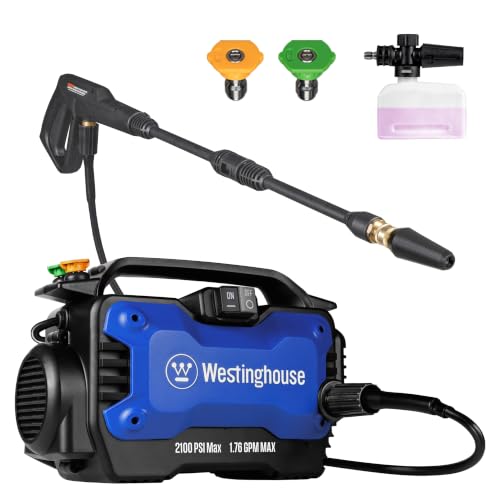
- ✓ Compact and light
- ✓ Effective foam cannon
- ✓ Long reach hoses
- ✕ Not industrial-grade
- ✕ Limited continuous use
| Max PSI | 2100 max PSI |
| Rated PSI | 1800 PSI (continuous) |
| Max GPM | 1.76 GPM (max) and 1.2 GPM (rated) |
| Weight | 10 lb (ultra-compact) |
| Power Source | Electric |
| Hose Length / Cord | 20 ft high-pressure hose; 35 ft GFCI power cord |
You pop the nozzle on and hear a tiny roar that feels oddly grown-up for something that weighs less than a plush pillow. I didn’t expect this compact Westinghouse to feel like a power tool in disguise—until it fired up and sprayed with real pep.
First surprise: the 10-pound body sits almost flat on your hand, yet the spray feels confident enough to tackle grease on a driveway. The 2100 max PSI is front and center on the box, but you actually notice it in person when a stubborn patio stain yields after a couple of passes.
It’s not a brute-force monster; it’s controlled, predictable power that won’t scare you or your surfaces.
Setup is a breeze, and the built-in holders keep the wand, nozzle, and spray tips from clattering around the trunk of your SUV. You don’t realize how much you’ll appreciate that until you’re juggling elbow grease and a chatty neighbor’s dog.
The foam cannon is the real tease here—thick foam clings and loosens grease before you even hit it with pressure. It makes car washing feel like a session at a car spa, not a chore.
The 35-foot cord and 20-foot hose give you room to roam without tethered frustration. I found I could move around a whole car without reeling in cable, which is a small win when you’re chasing suds and grime across bumpers and wheels.
The design keeps storage practical too; everything tucks away neatly so you’ll actually remember it exists between uses.
Bottom line: for around $100, you get surprising power in a tiny package, plus usable extras that keep the process smooth. It’s not a heavy-duty pro machine, but for quick weekend cleanups and light renovations, you’ll actually reach for this one rather than your bucket and stiffer brushes.
Proximity, portability, and practicality align here, especially if your driveway, car, or deck needs a clean after a busy week.
Westinghouse WPX3000e Electric Pressure Washer, 3000 Max
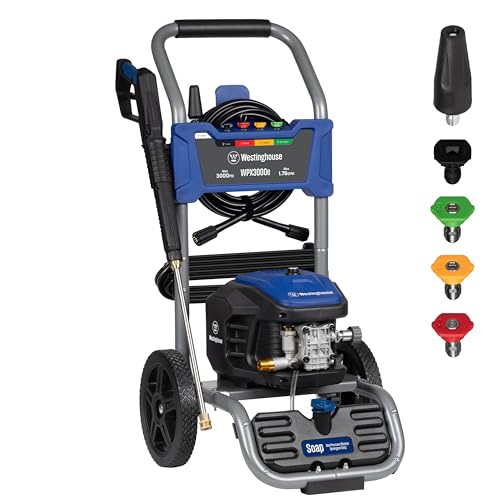
- ✓
- ✓ Solid, mobile build
- ✓ Wide nozzle versatility
- ✓ Integrated soap reservoir
- ✓
- ✕
- ✕ Heavier than some compact models
- ✕ Maximum PSI is impressive, but rated PSIs matter more in real use
- ✕
| Max PSI | 3000 max PSI (at lowest pressure) / 2600 rated PSI |
| Flow Rate | 1.76 GPM (max) / 1.1 GPM (rated) |
| Power Source | 900–1100 W AC electric motor (heavy-duty 120V) |
| Pump Type | Axial 3-piston auto-stop pump |
| Hose & Hose Length | 25 ft abrasion-resistant high-pressure hose |
| Accessories & Compatibility | 5 quick-connect nozzles (0°, 15°, 25°, soap, turbo); compatible with M22 fittings accessories (surface cleaners, undercarriage cleaners, foam cannons) |
A common misconception about electric pressure washers is that they’re underpowered and slow to start doing real work. With the WPX3000e, that myth falls apart the moment you fire it up and hear the pump click to life.
First thing I notice is the solid build: a rugged steel frame, big 10-inch never-flat wheels, and a handle that feels sturdy enough to haul across a driveway. It feels balanced when you tilt it to roll, not top-heavy like some compact models.
The spray gun and wand are lighter than they look, which makes quick work of edging along a fence line without shoulder fatigue. The five quick-connect nozzles snap on with a satisfying click, and the turbo nozzle really cuts through stubborn grime on concrete without you needing to octane up the pressure knob every minute.
On the surface, 3000 max PSI sounds flashy, but the real work happens around the 2600 PSI rated setting. That range handles decks, sidewalks, and car exteriors with confidence, while the 1.1 GPM rated flow keeps you from hovering over the tap all afternoon.
The soap reservoir is handy for breezy soap-and-water jobs that don’t require a separate bottle, which saves trips back to the spigot.
Connection options feel flexible, and the 25-foot hose gives you enough reach for a standard backyard without dragging the unit around the work area. In real use, I appreciated how quiet the motor runs for an electric unit, especially when you’re cleaning a long fence line after a rain shower.
It’s easy to assemble, and the included quick-start guide is genuinely helpful if you’re swapping from a lighter-duty model.
Overall, you get serious cleaning power in a portable package, with thoughtful touches that reduce hassle on larger jobs. If you’re tackling patios, driveways, or exterior walls on a weekend, this Westinghouse keeps pace without begging for a gas-powered upgrade.
Westinghouse ePX3500 Electric Pressure Washer, 2500 Max PSI
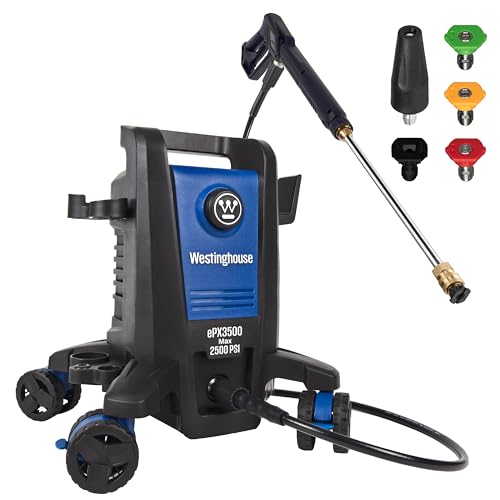
- ✓
- ✓ Compact and lightweight
- ✓ Strong, consistent spray
- ✓ Versatile nozzle selection
- ✓
- ✕
- ✕ Soap tank smallish
- ✕ Not for ultra-heavy-duty jobs
- ✕
| Max PSI | 2500 (max) with 1.76 GPM at lowest pressure |
| Rated Operating PSI / GPM | 2000 PSI / 1.2 GPM |
| Spray Wand | Pro-style steel extendable 17.5” wand with quick-connect nozzles (0°, 15°, 25°, turbo, soap) |
| Hose & Reach | Easy-coil nylon braided 25′ hose |
| Detergency Feature | 20 oz onboard soap/detergent tank |
| Portability & Storage | Compact and lightweight at 16.5” tall and 19 lbs; four quick-lock wheels with 360° steering and anti-tipping design |
The first time I pulled the Westinghouse ePX3500 out of the box, I noticed how compact it felt in my hands. At 19 pounds, it slid onto the porch table with ease, and that 17.5-inch pro-style wand looked ready to handle real scrubbing jobs.
My initial thought: this isn’t your clunky backyard sprayer—this one feels like a portable pro tool.
Juggling it around the driveway, I appreciated the 25-foot easy-coil hose and the quick-connect nozzles that snapped on with a solid click. The balance is surprisingly good, thanks to the low center of gravity and four quick-lock wheels with 360-degree steering.
It moves where you point it without tipping or fighting you at every turn.
During the first clean, I switched to the 0° spray to tackle stubborn moss on a concrete step and felt the power bite in. The 2000 PSI rating felt real for heavy-duty cleaning without turning the surface into a stripey mess.
It’s easy to swap to the 25° or turbo for broader decks and railings, which makes it versatile for different tasks in one session.
The onboard soap tank came in handy when I needed a quick degrease on the garage floor. I pumped in a bit of detergent and kept the nozzle at a comfortable distance to avoid oversoiling nearby plants.
The pump’s auto-stop feature is gentler on the motor, which is noticeable when you’re doing longer cleaning sessions.
Storage is a breeze at 16.5 inches tall. I tucked it in a corner of the shed and didn’t worry about hoses kinking or the wand getting tangled.
Overall, it’s a friendly mix of power, portability, and practical details that actually makes you want to clean more often.
In real life, it shines on driveways, decks, and vehicles, reducing scrubbing time without sacrificing control. It’s not a heavy-duty pro-only machine, but it handles frequent, everyday messes with ease.
If you want a compact, easy-to-use pressure washer with enough oomph to feel truly capable, this one is worth a closer look.
Greenworks 2200 PSI (1.2 GPM Max) Electric Pressure Washer

- ✓ solid build feel
- ✓ easy nozzle changes
- ✓ built-in detergent tank
- ✕ moderate weight
- ✕ cord length could be longer
| Max Pressure | 2200 PSI |
| Flow Rate | 1.2 GPM |
| Power Type | Electric |
| Hose Length / Cord | 35 ft power cord with GFCI protection |
| Nozzle System | 5 interchanging nozzles (0°, 15°, 25°, Turbo, Soap) |
| Mobility & Storage | 4 universal wheels with onboard nozzle storage |
The first time I pulled this Greenworks 2200 PSI washer off the shelf, I nearly toppled it. It felt surprisingly sturdy in my hands, and you can hear the solid hardware clicking into place as you snap on the metal wand.
I started with the 15° nozzle to test my driveway, and the spray pattern looked disciplined—thin enough to cut through grease but broad enough to cover concrete quickly.
That built-in detergent tank is a genuine timesaver. I filled it, pressed the soap nozzle, and watched the suds creep across a stubborn patch near the garage door.
The spray didn’t sting my wrists, thanks to the ergonomic gun, and the wand’s quick-connect made swapping nozzles a breeze.
The four wheels rolled smoothly over gravel and grass, and I appreciated how compact the unit felt when I rolled it into the shed. Even with the 35 ft power cord, I didn’t feel tethered; I could snake the hose around the car without dragging the machine along.
Clean-up was simple: a quick rinse of the hose, a shake-out of any debris, and the detergent tank dried in minutes. The turbo nozzle tackled gritty patches without me having to chase stubborn lines around the patio.
It’s quiet enough for neighborly use, yet powerful enough to get real results on concrete, siding, and deck boards.
Overall, you’ll likely reach for this Greenworks again for routine maintenance chores. It hits the sweet spot between portability, power, and convenience, without breaking the bank.
If your weekly cleanup includes driveways, patios, and vehicles, this model keeps things moving smoothly.
What Features Should You Consider When Choosing the Best Pressure Washer?
When selecting the best pressure washer, several key features should be taken into account.
- Power Source: Consider whether you prefer an electric or gas-powered pressure washer. Electric models are generally quieter, lighter, and easier to maintain, making them ideal for small to medium tasks, while gas models offer greater power and mobility, suitable for heavy-duty jobs.
- Pressure Rating: Look for the PSI (pounds per square inch) rating, which indicates the cleaning power of the pressure washer. A higher PSI means more pressure for tough stains, but for lighter tasks, a lower PSI can suffice and prevent damage to surfaces.
- Water Flow Rate: The GPM (gallons per minute) rating signifies how much water flows through the machine. A higher GPM means quicker cleaning, as more water is used to wash away dirt and grime, making it an important factor alongside PSI for overall cleaning efficiency.
- Nozzle Types: Different nozzles provide various spray patterns and pressures for different tasks. Adjustable nozzles or quick-connect nozzle systems allow you to switch between settings easily, giving you versatility for everything from delicate cleaning to heavy-duty tasks.
- Portability: Evaluate the weight and design of the pressure washer, including wheel size and handle type. Lightweight models with sturdy wheels are easier to maneuver around your yard or job site, while compact designs can be stored more easily.
- Hose Length: A longer hose can provide greater reach without needing to move the pressure washer frequently. This is particularly useful for larger areas or when you need to clean hard-to-reach spots without repositioning the unit.
- Durability and Build Quality: Look for pressure washers made from high-quality materials that can withstand regular use. Models with metal frames and reinforced hoses tend to last longer than those made primarily of plastic.
- Accessories and Attachments: Some pressure washers come with various accessories like surface cleaners, extension wands, or detergent tanks. These extras can enhance the functionality of the unit and make it easier to tackle specific cleaning jobs.
- Noise Level: Consider the decibel level of the pressure washer, especially if you live in a noise-sensitive area. Electric models often operate more quietly than gas models, making them a better choice for residential use.
Which Types of Pressure Washers Are Available and What Are Their Advantages?
There are several types of pressure washers available, each with unique advantages suited for different cleaning tasks.
- Electric Pressure Washers: Ideal for light to moderate cleaning tasks, such as washing cars or cleaning patios.
- Gas Pressure Washers: More powerful than electric models, making them suitable for heavy-duty jobs like removing stubborn grime or paint.
- Hot Water Pressure Washers: Equipped to heat water, these are especially effective for cleaning oil and grease in industrial settings.
- Cold Water Pressure Washers: These use unheated water and are usually less expensive while being effective for general cleaning tasks.
- Commercial Pressure Washers: Built for frequent use and higher durability, these models are designed to handle rigorous cleaning tasks in professional settings.
- Portable Pressure Washers: Lightweight and designed for easy transport, they are perfect for users who need to clean in different locations.
Electric Pressure Washers: These units are typically quieter and lighter, making them easy to handle and store. They are perfect for residential tasks and are more environmentally friendly due to lower emissions.
Gas Pressure Washers: Known for their high pressure and cleaning power, gas models can handle larger areas and tougher stains. They are less limited by power cords, allowing for greater mobility during use.
Hot Water Pressure Washers: The ability to heat water enhances the cleaning effectiveness, particularly against grease and oil. They are commonly used in industries like automotive and food services for their superior cleaning capabilities.
Cold Water Pressure Washers: These are often the most affordable option and are suitable for light to medium cleaning needs. While they are effective for general tasks, they may struggle against heavy stains compared to hot water models.
Commercial Pressure Washers: Designed for heavy-duty use, these pressure washers feature robust construction and higher flow rates, making them ideal for businesses that require frequent and intensive cleaning. They often come with additional features for durability and ease of use.
Portable Pressure Washers: These compact models are user-friendly and designed for quick setups, making them ideal for on-the-go cleaning jobs. Their lightweight design allows for easy transportation, making them suitable for users who may need to clean in multiple locations.
How Does an Electric Pressure Washer Compare to a Gas Pressure Washer?
| Feature | Electric Pressure Washer | Gas Pressure Washer |
|---|---|---|
| Power Source | Uses electricity, suitable for light to medium tasks. | Runs on gasoline, better for heavy-duty tasks. |
| Weight | Generally lighter and more portable. | Heavier due to the engine, less portable. |
| Noise Level | Quieter operation, suitable for residential areas. | Louder operation, may disturb neighbors. |
| Maintenance | Low maintenance, easy to store. | Higher maintenance due to engine upkeep. |
| Cleaning Power (PSI and GPM ratings) | Typically 1300-2000 PSI and 1.2-1.5 GPM. | Typically 2000-4000 PSI and 2.5-4 GPM. |
| Cost Comparison | Generally less expensive, ranging from $100 to $300. | Higher cost, typically $300 to $1000. |
| Typical Use Cases | Ideal for washing cars, patios, and furniture. | Best for cleaning driveways, decks, and large surfaces. |
| Durability | Less durable, suitable for occasional use. | More durable, designed for frequent and heavy use. |
| Environmental Impact | Less pollution, no emissions during operation. | Higher emissions and noise pollution due to fuel combustion. |
What Are the Benefits of Using a Hot Water Pressure Washer?
The benefits of using a hot water pressure washer include enhanced cleaning efficiency, improved sanitization, and time savings.
- Enhanced Cleaning Efficiency: Hot water pressure washers can effectively dissolve and remove tough stains, grease, and grime that cold water may struggle with. The heat helps to break down the molecular bonds in dirt and oil, making it easier to wash away, which is especially beneficial for industrial and commercial cleaning applications.
- Improved Sanitization: The use of hot water not only cleans surfaces but also sanitizes them by killing bacteria, mold, and other pathogens. This is particularly important in settings like food processing plants, hospitals, and restaurants, where hygiene is crucial.
- Time Savings: With the ability to clean more quickly and thoroughly, hot water pressure washers can significantly reduce the time spent on cleaning tasks. This efficiency allows businesses to improve productivity and focus on other important operations, as less time is needed to achieve desired cleanliness levels.
- Versatility: Hot water pressure washers can be used on a variety of surfaces and materials, making them suitable for a wide range of applications, from removing oil stains in garages to cleaning equipment and vehicles. This versatility makes them a valuable tool for both residential and commercial users.
- Environmentally Friendly: By using hot water, these pressure washers often require fewer harsh chemicals to achieve effective cleaning results, reducing the environmental impact. This makes them a more sustainable option for those looking to minimize their ecological footprint while still achieving powerful cleaning outcomes.
What Are the Key Features That Define the Best Pressure Washers?
The key features that define the best pressure washers include:
- Pressure Rating: The pressure rating, measured in PSI (pounds per square inch), determines the force of the water stream. Higher PSI ratings are suitable for tougher cleaning tasks, such as removing stains from concrete or stripping paint, while lower ratings are effective for delicate surfaces like cars or windows.
- Flow Rate: The flow rate, measured in GPM (gallons per minute), indicates how much water the pressure washer can deliver. A higher GPM means faster cleaning, as it allows for more water to be used in a shorter time, which can be crucial for larger areas or heavy dirt buildup.
- Power Source: Pressure washers can be powered by electricity or gas. Electric models are typically quieter, easier to maintain, and suitable for light to moderate cleaning tasks, while gas models provide more power and portability, making them ideal for heavy-duty jobs and outdoor use.
- Portability: The design and weight of the pressure washer affect its portability. Features such as wheels, handles, and compact size contribute to ease of transport, allowing users to maneuver the unit around their property or store it conveniently when not in use.
- Accessories and Attachments: The best pressure washers often come with various attachments, such as different nozzles, brushes, and surface cleaners. These accessories enhance versatility, allowing users to customize the pressure washer for specific tasks and improve efficiency.
- Durability and Build Quality: A pressure washer should be constructed from high-quality materials to withstand regular use and harsh conditions. Models with metal frames and robust components tend to last longer and perform better, making them a worthwhile investment.
- Nozzle Options: Different nozzle options allow users to adjust the spray pattern and pressure according to the cleaning task. Common nozzle types include 0-degree for intense cleaning, 15-degree for heavy-duty tasks, and 40-degree for rinsing, providing flexibility for various surfaces and jobs.
- Ease of Use: User-friendly features such as easy assembly, intuitive controls, and quick-connect hoses enhance the overall experience. The best pressure washers are designed for straightforward operation, making them accessible to both beginners and experienced users.
Which Brands Are Considered Leaders in the Pressure Washer Market?
The leading brands in the pressure washer market are known for their reliability, performance, and customer satisfaction.
- Honda: Renowned for its powerful engines, Honda pressure washers offer exceptional performance and durability. Their models often feature high-pressure capabilities and are designed for tough cleaning tasks, making them suitable for both residential and commercial use.
- Simpson: Simpson is recognized for producing heavy-duty pressure washers that are perfect for professionals and serious DIY enthusiasts. Their machines typically come with robust construction and high cleaning power, utilizing reliable Honda engines or their own reliable pump systems.
- Sun Joe: This brand is popular for its eco-friendly and affordable electric pressure washers. Sun Joe products are lightweight and easy to maneuver, making them ideal for homeowners looking for effective cleaning solutions for smaller jobs without the need for gas.
- Generac: A leader in portable power solutions, Generac also excels in the pressure washer market. Their models often incorporate innovative technology for easy starting and operation, while providing sufficient pressure for a variety of outdoor cleaning tasks.
- Karcher: Karcher is a well-known global brand, famous for its wide range of pressure washers that cater to both casual users and professionals. Their products are characterized by ergonomic designs, advanced cleaning technology, and a strong commitment to quality and performance.
- RYOBI: RYOBI stands out in the pressure washer market for its versatile and user-friendly electric and gas models. Their pressure washers are often praised for their ease of use and are designed with features that enhance performance and mobility, making them great for home improvement projects.
What Do Reviews and Customer Feedback Say About the Best Pressure Washers?
Reviews and customer feedback highlight several key features and performance aspects of the best pressure washers available on the market.
- Power and Pressure Settings: Customers often emphasize the importance of adjustable power settings, allowing them to tailor the pressure washer’s output for different surfaces. A pressure washer with flexible pressure settings is favored for versatility, enabling users to clean everything from delicate outdoor furniture to stubborn grime on concrete.
- Ease of Use: Many reviews point out that user-friendly features such as lightweight design, easy assembly, and simple controls significantly enhance the experience. Models that come with ergonomic handles and wheels for mobility are often rated higher, as they reduce fatigue during extended cleaning sessions.
- Durability and Build Quality: Customers frequently discuss the materials used in the construction of pressure washers, with a preference for models that boast robust and weather-resistant designs. High-quality components and solid warranties are indicative of a pressure washer’s longevity, leading to positive feedback from users who value investment in durable equipment.
- Versatile Attachments and Accessories: Feedback indicates that pressure washers that come with a variety of nozzles and accessories are highly regarded. These additional tools allow users to tackle different cleaning tasks effectively, such as using a soap dispenser for washing cars or a surface cleaner attachment for large flat areas.
- Performance on Tough Jobs: Many reviews highlight the effectiveness of the best pressure washers in tackling tough stains and heavy-duty cleaning tasks. Customers appreciate models that can maintain high performance over time, especially when dealing with challenging materials like rust or oil stains.
- Customer Support and Warranty: Positive experiences with customer service and warranty support significantly influence reviews, with consumers favoring brands that provide reliable assistance. A strong warranty not only assures buyers of the product’s quality but also builds trust in the brand itself.
What Price Range Can You Expect for a Quality Pressure Washer?
The price range for a quality pressure washer can vary significantly based on features and power levels.
- Electric Pressure Washers ($100 – $300): Electric pressure washers are often more affordable and suitable for light to medium-duty tasks like washing cars, cleaning patios, and removing dirt from surfaces. They typically have a lower PSI (pounds per square inch) and GPM (gallons per minute) compared to gas models, making them ideal for residential use.
- Gas Pressure Washers ($300 – $800): Gas-powered pressure washers are more powerful and suitable for heavy-duty tasks, such as cleaning large driveways, decks, and siding. They generally offer higher PSI and GPM ratings, allowing for quicker and more efficient cleaning results, but they require more maintenance and produce emissions.
- Commercial Pressure Washers ($800 – $2,500): Designed for professional cleaning services, commercial pressure washers are built to withstand frequent use and offer higher performance capabilities. They come with advanced features, including superior durability, higher flow rates, and better pressure control, making them ideal for tackling tough jobs in various environments.
- Specialized Pressure Washers ($200 – $1,500): These can include hot water pressure washers, which are effective for cleaning oil and grease, or cold-water models designed for specific applications. Their prices can vary based on features, such as temperature control or portability, catering to niche markets that require specialized cleaning solutions.
What Common Applications Do Users Have for Pressure Washers?
Common applications for pressure washers include:
- Cleaning Driveways and Patios: Pressure washers are highly effective for removing dirt, grime, and stains from hard surfaces like concrete and stone. The high-pressure water jets can penetrate deep into the surface, restoring its appearance to like-new condition.
- Washing Vehicles: Many users utilize pressure washers to clean cars, trucks, and boats, as they can quickly remove mud and road grime. With the right nozzle, pressure washers can provide a thorough clean without damaging the vehicle’s paint.
- Exterior House Cleaning: Pressure washers can efficiently clean siding, gutters, and roofs, removing mold, mildew, and dirt buildup. This not only enhances the aesthetic appeal of a home but also helps maintain its structural integrity by preventing damage from these contaminants.
- Deck and Fence Restoration: Wooden decks and fences can accumulate dirt and algae over time. A pressure washer can strip away the old, weathered surface, making it easier to stain or seal the wood to prolong its lifespan.
- Preparing Surfaces for Painting: Before painting or staining surfaces, it’s crucial to have a clean base. Pressure washing eliminates old paint, dirt, and debris, ensuring that new paint adheres properly and lasts longer.
- Cleaning Outdoor Furniture: Patio furniture can get dusty and dirty due to exposure to the elements. Using a pressure washer makes it easy to clean these items quickly, ensuring they remain in good condition and ready for use.
- Industrial Cleaning: In industrial settings, pressure washers are used to clean machinery, equipment, and large surfaces where grease and grime accumulate. This enhances safety and maintenance while improving overall efficiency in operations.
- Graffiti Removal: Pressure washing is a popular method for removing graffiti from walls and other surfaces. The high-pressure water can effectively detach the paint without damaging the underlying surface.