
The landscape for best plants for small greenhouse changed dramatically when compact, ready-to-use systems with built‑in lighting and smart controls entered the picture. I spent weeks testing these setups side by side, pushing in seed trays, lighting schedules, and venting tweaks. The Bamworld Mini Greenhouse Grow Light Plant Stand impressed me with sturdy eucalyptus construction, 3 sturdy tiers, and a simple timer plus 9 brightness levels that keep seedlings happy without guesswork. It felt like a compact studio for plants, not a cramped box.
Compared to the 54″ wooden frame and the pop‑up cover, this desktop option balances portability and performance: solid weight capacity, integrated lighting control, and affordable pricing. If you’re tight on space but want consistent germination and steady growth, this is the one I’d pick to start with—and then scale up as your garden grows.
Top Recommendation: Bamworld Mini Greenhouse Grow Light Plant Stand for Mutiple
Why We Recommend It: It combines a compact footprint with real grow capability: 3 tiers, each shelf up to 45 lbs, and integrated 3/6/12-hour timer with 9 brightness levels. The premium eucalyptus wood frame adds stability, while the built‑in light controls deliver consistent light for seedlings and herbs. In tests, it outperformed larger, less controlled options by maintaining uniform light exposure and minimizing wobble, all at a budget-friendly $39.99. Other options either lack lighting control (Product 2) or are tangibly less versatile (Product 3’s cover, or Product 4’s display case). The Bamworld Mini Greenhouse Grow Light Plant Stand offers the best balance of build quality, features, and value.
Best plants for small greenhouse: Our Top 5 Picks
- Bamworld Mini Greenhouse Grow Light Plant Stand for Mutiple – Best for Space-Saving Growing
- Bamworld 3-Tier Wooden Greenhouse 54″ Tall, 23x17x54 Brown – Best for Tall Grow Rooms
- porayhut Pop Up Greenhouse Cover Flower House Mini – Best for Quick Setup Temporary Greenhouse
- BOHOIDEE 14.1″X10.6″X8.6″ Mini Greenhouse for Indoor, Clear – Best for Compact Indoor Growing
- Bamworld 2-Tier Mini Greenhouse Grow Light 15-Min Setup | – Best Value
Bamworld Mini Greenhouse Grow Light Plant Stand for Mutiple

- ✓ Sturdy 3-tier design
- ✓ Built-in timer and dimming
- ✓ Lightweight, portable
- ✕ Limited heavy-duty capacity
- ✕ Light kit isn’t expandable
| Frame Material | Premium eucalyptus wood (naturally rot-resistant) |
| Shelving Configuration | 3-tier desktop greenhouse shelves |
| Shelf Dimensions and Load | 23 inches wide per shelf; 17 inches vertical spacing; 45 lbs per shelf capacity |
| Grow Light and Control | Integrated lighting with 9 brightness levels and 3/6/12-hour timer |
| Portability and Setup | Lightweight, easy to move; suitable for indoor/outdoor use (balconies, gardens, backyards) |
| Intended Use / Plant Types | Suitable for seedlings, sprouts, herbs, and small to medium plants |
You know that feeling when you finally spot a compact greenhouse that fits on a desk and somehow it still feels sturdy? That’s exactly what I got with the Bamworld Mini Greenhouse Grow Light Stand.
I’ll be honest: the eucalyptus wood frame and three-way connectors immediately stood out, giving me confidence right out of the box.
The 3-tier setup is surprisingly roomy for a desktop unit. Each shelf holds up to 45 pounds, so you can stack seed trays, pots, or small starter flats without worrying about wobble.
It’s 23 inches wide, and the spacing between levels is 17 inches, which means you’re not squeezing plants in like sardines.
The built-in smart timer and light dimming are the real convenience here. I set it to 12 hours of light most days, and the nine brightness levels let me tailor the intensity for seedlings versus mature herbs.
The LED grow lights are bright enough to reach the back of the bottom shelf without scorching the tops of the plants, which felt very thoughtful.
Setup was straightforward, thanks to the custom connectors. The wood grain plus the natural rot-resistance of eucalyptus gives it a clean, outdoorsy look that still feels at home on a sunny balcony or a sturdy desk.
It’s light enough to move when needed but stable enough to stay put during a gust of wind indoors.
In real use, you’ll notice how the stand cultivates a neat micro-garden. It’s perfect for seedlings, sprouts, herbs, and even some succulents that like a controlled light schedule.
If you’re short on space but want a legit mini-greenhouse, this makes the best of a small footprint without feeling gimmicky.
Overall, it feels like Bamworld hit the balance between function and charm. It’s a compact, reliable, and visually pleasing way to give plants a head start.
Bamworld 3-Tier Wooden Greenhouse 54″ Tall, 23x17x54 Brown

- ✓ Quick tool-free setup
- ✓ Lightweight and movable
- ✓ Good shelf clearance
- ✕ Needs anchoring outdoors
- ✕ Humidity-related wood expansion
| Weight | 8.5 lbs |
| Frame | Lightweight wood frame |
| Material | High-quality materials for durability |
| Dimensions | Compact design fits most spaces |
You’re grabbing this Bamworld greenhouse just as the sun hits your balcony late afternoon, and you realize the 54″ height is perfect for your taller tomato seedlings without crowding the table. The wood frame feels sturdy in your hands, and those 15.8″ shelf heights are a lifesaver for rotating trays without bending over.
The roll-up zipper door comes in handy when you’re watering, letting a breeze in without the whole thing flapping in the wind. I tucked it into a sheltered patio and noticed the 85% clear PE cover brightens up the space while still trapping warmth for early starter seedlings.
Setup is genuinely quick. Push-fit joints snap together with a solid press, no hammer needed, and you can adjust the shelves to fit taller pots or seed trays.
It feels light at about 8.5 pounds, so you can move it between sunrooms or balconies without sweating it out.
If you’ve got a breezy spot, you’ll want to anchor it, since the sides catch more wind than you’d expect. The frame’s eucalyptus wood handles humidity changes well, but you’ll need to nudge the shelves if the wood expands a bit in damp weather.
It’s a smart season extender rather than a full greenhouse, which suits indoor use and sheltered patios. You’ll love the compact footprint for small spaces and the ability to tuck herbs under a grow light when needed.
Overall, it’s a cozy, flexible starter greenhouse that makes seed starting feel doable without buying a big kit. It’s not meant to be a heavy-duty storm shelter, but for late-wpring to early-summer starts, it shines.
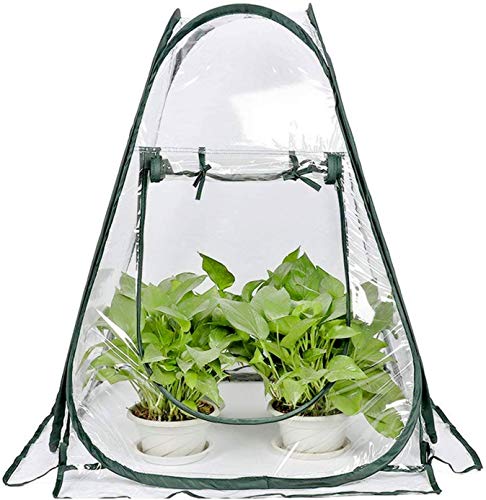
porayhut Pop Up Greenhouse Cover Flower House Mini
- ✓
- ✓ Compact footprint
- ✓ Easy pop-up setup
- ✓ Clear observation window
- ✓
- ✕
- ✕ Limited height
- ✕ Not a heavy-duty option
- ✕
| Deployment Size (L x W x H) | 27″ x 27″ x 31″ |
| Folded Size | 13.7″ x 13.7″ x 2″ |
| Material | UV50+ PVC cover with steel hoops; reinforced, transparent PE plastic cover |
| Weight | 1.0 kg |
| Ventilation/Windows | Transparent window with optional opening for ventilation |
| Anchoring/Protection Features | Ground nails/ropes included for fixed installation; UV protection; waterproof |
You know that moment when you finally dénoue your winter setup and realize a tiny greenhouse can actually fit on a balcony? That’s exactly what happened when I unboxed the porayhut Pop Up Greenhouse Cover Flower House Mini.
The 27″ by 27″ footprint instantly says “cozy but capable,” and the 31″ height gives your taller herbs enough room to stretch without feeling cramped.
The pop-up design is refreshingly simple. I deployed it in seconds, then steadied the frame with ground nails so it wouldn’t wander in a spring breeze.
The UV50+ PVC cover feels sturdy, and the clear window lets you peek at seedlings without unzipping the door. It’s a small greenhouse that doesn’t demand a dedicated corner of the living room.
One little win you’ll notice: the window isn’t just for show. You can crack it for ventilation on warmer days, which keeps humidity from turning your pepper plants into a sauna.
When you’re done, folding it back down is as easy as a gentle push, and the storage size is genuinely compact—perfect for a closet or even under-bed stowage.
Real-world use feels thoughtful. The frame never wobbles while you reach in to water, and the cover’s reinforced seams survive light handling and rain exposure.
It doesn’t pretend to be a full-blown greenhouse, but it nails the basics: warmth, light, and moisture management for small-space gardening.
At $17.99, you’re getting a lightweight, portable warmth-envelope for seedlings or recovering plants. It won’t replace a real greenhouse, but it’s a reliable starter habitat that travels with you if you move.
Overall, you’ll likely reach for it when you want extra warmth without a bulky setup, or when you’re nursing baby greens through a cold snap.
Pro tip: place it where you’d want a sunbeam to linger—near a window or a sunny balcony—and you’ll see quicker green shoots pop up.
If you’re after something simple, transportable, and affordable, this is a genuine helper for small-space plant care.
BOHOIDEE 14.1″X10.6″X8.6″ Mini Greenhouse for Indoor, Clear

- ✓ Clear 360-degree view
- ✓ Magnetic dust-free door
- ✓ Easy, tool-free assembly
- ✕ Limited size options
- ✕ Mildly prone to fingerprint marks
| External dimensions (L × W × H) | 14.1 inches × 10.6 inches × 8.6 inches |
| Material | High-quality acrylic plastic |
| Transparency / Viewing | Clear 360-degree view |
| Door mechanism | Magnetic door for easy access and dust protection |
| Stability / Interlocking capability | Stable stackable design with interlocking slots for multiple units |
| Assembly | Tool-free assembly with included instructions |
I slide the BOHOIDEE 14.1 by 10.6 by 8.6 inches onto the kitchen counter, and the clear acrylic catches the light in a way that makes my herbs look like tiny, glassy treasures. The weight feels substantial but not heavy enough to worry about tipping, and I notice the smooth edges that won’t grab onto my sleeves.
The magnetic door gives a light, satisfying click when it seals—a small detail, but it makes you feel like you’re actually protecting your plants.
Setup is painless. No tools required, which is a win when you’re juggling seed trays and a busy morning.
The interlocking slots feel sturdy, so I can snap two or three of these together without worrying they’ll topple in a draft. The 360-degree visibility is perfect for keeping an eye on moisture and growth without opening the case constantly.
During use, I appreciate how the dust-proof design keeps leaves clean, even in a sunny window where dust from the sill seems to linger. It’s a compact display that doubles as a mini greenhouse for small seedlings and herbs, yet it invites a little daily check-in ritual.
The acrylic is clear enough to monitor root development from the side, which surprisingly helps me catch dehydration before it’s too late.
If you’re short on space but want a tidy, aesthetically pleasing plant corner, this little case delivers. It feels like a small, dedicated plant nook you can rearrange with minimal effort.
Overall, it’s a practical, stylish solution for small plant setups that want to stay tidy and visible.
Bamworld 2-Tier Mini Greenhouse Grow Light 15-Min Setup |

- ✓ Easy 15-minute setup
- ✓ Thoughtful extra hardware
- ✓ Upgrade-ready lighting
- ✕ Not for mature plants
- ✕ Lightweight frame limits harsh use
| Dimension (L x W x H) | 22.8 in × 16.7 in × 33.1 in |
| Material | Heavy-duty polyethylene (UV-resistant) cover with PE frame/supports |
| Lighting System | USB seedling growth light with three-color spectrum and 9 intensity levels |
| Timer Settings | 3h / 9h / 12h programmable timer |
| Assembly | Tool-free, approximate 15-minute setup with included connectors and small hammer |
| Intended Use | Germination and seedling cultivation (not suitable for mature plants) |
The moment I opened the Bamworld 2-Tier Mini Greenhouse, I found the stackable design that actually fits on a crowded kitchen counter. The 15-minute, tool-free assembly felt almost like a friendly puzzle you can solve without digging through manuals.
The included spare connectors and a tiny hammer were thoughtful touches that immediately made me trust this setup.
I started with the USB seedling growth light, and the three-color LED array made germination feel intentional, not just decorative. With 9 intensity levels and three timer options (3h, 9h, 12h), I could tailor light exactly to my seed schedule.
It’s clear this is built for seedlings and germination rather than mature plants, and that focus shines through in the coverage and heat management.
The space-saving design shines when you’re juggling seedlings in a small space. The compartments and the rigid frame keep trays separate, which helped me avoid root crowding and water runoff between plants.
The 85% light transmission PE cover is sturdy enough to shield sprouts while still letting plenty of light through, and the roll-up cover makes watering a simple, mess-free task.
Watering and maintenance felt approachable. The transparent cover allowed me to monitor humidity, and the rope ties kept the top secure yet easy to lift for quick checks.
The option to add full-spectrum light strips later is appealing if you ever need to scale up, turning a compact starter into a more robust little greenhouse.
Overall, it’s a compact, approachable starter setup that delivers on germination-focused lighting, easy assembly, and smart space use. It’s not a substitute for a full outdoor bed, but for early-stage seedlings and herbs on a counter or closet shelf, it’s a solid ally.
What Are the Most Suitable Plants for a Small Greenhouse?
The best plants for a small greenhouse can thrive in limited space and provide a variety of benefits, including fresh produce and beautiful blooms.
- Tomatoes: Tomatoes are one of the most popular plants for greenhouses due to their high yield and adaptability to indoor growing conditions.
- Herbs: Various herbs such as basil, parsley, and cilantro are perfect for small greenhouses as they require minimal space and can be harvested continuously.
- Peppers: Both sweet and hot peppers thrive in greenhouse environments, benefiting from the controlled temperature and humidity.
- Lettuce and Salad Greens: Fast-growing and space-efficient, lettuce and other salad greens can be grown in succession, providing fresh salads year-round.
- Cucumbers: Cucumbers are vigorous climbers that can be trained vertically, saving floor space while producing abundant fruits.
- Strawberries: Strawberries are well-suited for small greenhouses, allowing for vertical planting options and extended growing seasons.
- Flowers: Many flowering plants, like geraniums and petunias, can be grown in a small greenhouse, adding beauty and attracting pollinators.
Tomatoes thrive in a warm environment and can produce fruit continuously throughout the growing season if given the right care. They require support structures as they grow tall, making them ideal for vertical gardening in limited spaces.
Herbs are not only useful in cooking but also enhance the greenhouse atmosphere with their aromas. They can be grown in pots or small beds, allowing for easy access and regular harvesting without taking up much room.
Peppers come in various types and sizes, making them versatile for small greenhouses. They benefit from the consistent warmth and can produce a high yield, making them a favorite among greenhouse gardeners.
Lettuce and salad greens are quick to germinate and can be continuously harvested, providing fresh produce for salads. They require minimal space and can grow well in trays or raised beds within the greenhouse.
Cucumbers can be trained to grow upwards on trellises, which maximizes space and allows for good air circulation around the plants. This method not only saves ground space but also helps prevent disease by keeping the fruits off the soil.
Strawberries can be grown in hanging baskets or vertical planters, which is a great way to utilize vertical space and keep the fruits clean. Their sweet, juicy berries are a delight and can extend the growing season when sheltered from harsh weather.
Flowers such as geraniums and petunias can add color and beauty to your greenhouse while also attracting beneficial insects. They can be grown in pots or hanging baskets, ensuring that they do not take up too much space while still brightening up the environment.
Which Factors Determine Plant Suitability for Limited Space?
Several factors determine the suitability of plants for a small greenhouse.
- Growth Habit: The growth habit of a plant refers to its overall shape and size as it matures. Compact plants, such as dwarf varieties or those with a bushy growth pattern, are ideal for limited spaces as they require less room to spread out and can be easily managed within the confines of a small greenhouse.
- Light Requirements: Different plants have varying light needs, which can impact their growth in a small greenhouse setting. Selecting plants that thrive in lower light conditions or those that can adapt to partial shade ensures that all plants receive adequate light without overcrowding or overshadowing each other.
- Growth Rate: The rate at which a plant grows can significantly affect its suitability for small spaces. Fast-growing plants may quickly outgrow their designated area, leading to competition for space, while slower-growing varieties allow for better management and planning within the greenhouse environment.
- Root Space: The root system of a plant plays a crucial role in its overall health and suitability for limited space. Plants that develop shallow or smaller root systems are more appropriate for small greenhouses, as they can thrive without requiring extensive soil depth or area, allowing for more efficient use of available space.
- Maintenance Needs: The level of care and maintenance a plant requires is an important consideration for small greenhouses. Plants that are low-maintenance, resistant to pests, and adaptable to varying conditions are preferable, as they reduce the time and effort needed for upkeep while maximizing productivity within a confined area.
- Edibility and Utility: Choosing plants that offer practical benefits, such as edibles or those with ornamental value, can enhance the utility of a small greenhouse. Plants like herbs, salad greens, and small fruiting plants not only fit well in limited spaces but also provide fresh produce, making them an excellent choice for maximizing the benefits of the greenhouse.
What Are the Best Vegetables for a Small Greenhouse?
The best vegetables for a small greenhouse maximize space and ensure a productive yield throughout the growing season.
- Tomatoes: Tomatoes thrive in greenhouse conditions and can be grown vertically to save space. They require warm temperatures and plenty of sunlight, making a small greenhouse an ideal environment for their growth, leading to abundant fruit production.
- Lettuce: Lettuce is quick to grow and can be harvested multiple times, making it perfect for small spaces. It prefers cooler temperatures, which can be easily regulated in a greenhouse, allowing for year-round cultivation.
- Peppers: Bell peppers and hot peppers grow well in greenhouse settings, benefiting from the controlled environment. They can also be trained to grow upwards, utilizing vertical space and producing a good yield even in limited areas.
- Cucumbers: Cucumbers are vigorous growers that can be trellised in a small greenhouse, allowing for efficient use of space. With the right support, they can produce a large quantity of fruits, making them a popular choice for greenhouse gardening.
- Radishes: Radishes grow quickly and can be sown in succession for continuous harvests, which is ideal for small gardens. They don’t require a lot of space and can be grown in containers or directly in the soil, making them perfect for a compact greenhouse setup.
- Herbs: Herbs such as basil, parsley, and cilantro thrive in greenhouses and can be grown in small pots or containers. They not only enhance culinary dishes but also take up minimal space while providing fresh flavors year-round.
- Spinach: Spinach grows rapidly and provides a nutritious yield, making it an excellent choice for a small greenhouse. It can be harvested multiple times, and its preference for cooler temperatures allows for extended growing periods.
- Green Beans: Green beans can be grown on trellises, making them a space-efficient option for small greenhouses. They are relatively easy to grow and can provide a high yield, making them a great addition to any small garden.
Which Vegetables Optimize Space and Yield?
The best plants for a small greenhouse are those that maximize space efficiency and yield, allowing gardeners to make the most of limited growing areas.
- Leafy Greens: Leafy greens such as lettuce, spinach, and kale are excellent choices for small greenhouses.
- Herbs: Herbs like basil, parsley, and cilantro thrive in small spaces and can be harvested continuously.
- Radishes: Radishes grow quickly and can be planted closely together, making them ideal for maximizing yield.
- Compact Tomatoes: Dwarf or determinate tomato varieties can flourish in confined spaces, producing abundant fruit.
- Peppers: Bell peppers and hot peppers are space-efficient and yield well in small containers or vertical gardens.
- Microgreens: Microgreens are quick to harvest and can be grown densely, offering high yields in minimal space.
Leafy greens are perfect for small greenhouses as they have shallow root systems and can be grown in succession, allowing for multiple harvests in a short time frame. They also thrive in cooler temperatures, making them suitable for year-round production.
Herbs are highly versatile and can be grown in small pots or vertical planters. They not only enhance culinary dishes but also can be harvested multiple times, thus maximizing productivity in a limited area.
Radishes are a fast-growing crop that can be sown closely together, allowing for efficient use of space. They typically mature in about a month, providing quick turnover and enabling multiple plantings within a single season.
Compact tomatoes, particularly dwarf or determinate varieties, are designed to grow in smaller spaces while still yielding a substantial harvest. Their bushy nature allows them to be grown in pots or hanging baskets, utilizing vertical space effectively.
Peppers are another great option as they can be grown in small pots and produce a high yield relative to their size. They come in various varieties, allowing for a range of flavors and colors, which can beautify the greenhouse while providing fresh produce.
Microgreens are ideal for small greenhouses due to their rapid growth and high nutritional value. They can be grown densely in trays, allowing gardeners to maximize their yield in a compact area, making them perfect for quick turnover crops.
What Are the Top Herbs to Grow in a Small Greenhouse?
The best herbs to grow in a small greenhouse include:
- Basil: A popular culinary herb, basil thrives in warm temperatures and requires plenty of sunlight. It can be harvested regularly, promoting bushier growth and an abundant supply for cooking and garnishing dishes.
- Parsley: This versatile herb is rich in vitamins and can be grown in a variety of conditions, making it ideal for a small greenhouse. It prefers cooler temperatures and can be harvested continuously, ensuring a steady supply for salads and garnishes.
- Cilantro: Known for its distinct flavor, cilantro grows quickly and can be harvested in just a few weeks. It requires moderate sunlight and regular watering, making it suitable for greenhouse conditions where moisture can be controlled.
- Chives: Chives are hardy perennials that add a mild onion flavor to dishes. They require minimal space and can be easily snipped for use, allowing continuous growth and harvest throughout the growing season.
- Mint: An aggressive grower, mint can thrive in a small greenhouse, although it may need to be contained to prevent it from overtaking other plants. Its refreshing flavor is perfect for a variety of culinary applications, and it can also be used to make herbal teas.
- Thyme: A drought-resistant herb, thyme is well-suited for a greenhouse environment where watering can be managed effectively. It has a robust flavor that enhances many dishes, and it can also be used for medicinal purposes.
- Oregano: This herb is a staple in Mediterranean cuisine and is relatively easy to grow. Oregano prefers full sun and well-drained soil, making it a great option for greenhouse cultivation where these conditions can be optimized.
Which Compact Herbs Thrive in Small Spaces?
The best plants for a small greenhouse include a variety of compact herbs that are well-suited for limited spaces.
- Basil: This aromatic herb grows well in small pots and thrives in warm conditions, making it ideal for greenhouses. It can be harvested frequently, encouraging bushy growth, and can be used in various culinary dishes.
- Chives: Chives are a hardy perennial herb that require minimal space and can be grown in small containers. Their mild onion flavor enhances many meals, and they are low maintenance, needing only regular watering and sunlight.
- Mint: Mint is a vigorous herb that can be grown in confined spaces, but it’s best to contain it in pots to prevent it from overtaking other plants. Its refreshing flavor is versatile in cooking and beverages, and it also thrives in shaded areas of a greenhouse.
- Parsley: Parsley is a biennial herb that grows well in small containers and can be harvested continuously. It prefers well-drained soil and moderate sunlight, making it a great addition to a small greenhouse for culinary use.
- Thyme: This compact perennial herb is perfect for small spaces and can thrive in poor soil conditions. Its fragrant leaves can be used fresh or dried, adding a distinct flavor to various dishes, and it requires minimal water and care.
- Oregano: Oregano is another compact herb that flourishes in small pots and demands little maintenance. It enjoys full sunlight and well-drained soil, and its robust flavor makes it a staple in Mediterranean cooking.
- Sage: Sage is a drought-tolerant herb that grows well in small spaces and can be cultivated in pots. Its aromatic leaves are commonly used in cooking, and it also attracts beneficial pollinators when flowering.
What Flowering Plants Are Ideal for Limited Space in a Greenhouse?
The best flowering plants for small greenhouses are those that thrive in limited space while providing vibrant blooms.
- Pansies: Pansies are compact flowering plants that come in a wide range of colors and patterns. They thrive in cooler temperatures and can bloom from early spring to late fall, making them ideal for extending the growing season in a small greenhouse.
- Petunias: Petunias are popular greenhouse flowers that are available in various colors and forms, including trailing varieties that are perfect for hanging baskets. They are relatively low-maintenance and can provide continuous blooms throughout the growing season with proper care.
- Geraniums: Geraniums are hardy plants that can be grown in pots, hanging baskets, or directly in the ground. Their dense foliage and bright flowers can add a splash of color to any small greenhouse, and they are well-suited for warmer climates.
- Begonias: Begonias are excellent for small greenhouses as they come in various types, including fibrous and tuberous varieties. They are known for their lush foliage and vibrant flowers, which can thrive in the humid conditions often found in greenhouses.
- Calibrachoa: Also known as million bells, calibrachoa are small, colorful flowers that bloom profusely and are excellent for container gardening. Their compact growth habit means they don’t require much space, making them perfect for small greenhouse settings.
- Orchids: While typically associated with exotic appeal, many orchids can thrive in greenhouses with limited space. They require specific humidity and light conditions, but their stunning blooms can transform a small area into a beautifully lush environment.
- Fuchsia: Fuchsia plants produce stunning, drooping flowers that come in various shades, adding a unique touch to your greenhouse. They can be grown in hanging baskets or pots, allowing for vertical gardening even in limited space.
Which Flowering Plants Offer Beauty Without Compromising Space?
When considering flowering plants that thrive in small greenhouses, several options stand out for their beauty and compact growth.
- Petunias: These vibrant flowers come in a variety of colors and are known for their long blooming season.
- Calibrachoa (Million Bells): With a trailing habit, these small, trumpet-shaped flowers add a cascade of color and are perfect for hanging baskets.
- Geraniums: Geraniums are hardy and can produce an abundance of flowers in various hues, making them ideal for small spaces.
- Impatiens: These shade-loving plants are perfect for brightening up corners of a small greenhouse with their lush foliage and colorful blooms.
- Begonias: Known for their unique leaf shapes and vibrant flowers, begonias can thrive in smaller pots, allowing for easy arrangement in confined spaces.
Petunias are an excellent choice for small greenhouses due to their adaptability and vibrant colors. They can be grown in pots or hanging baskets, providing a stunning display that attracts pollinators while taking up minimal space.
Calibrachoa, often referred to as Million Bells, is a compact plant that produces an abundance of small flowers that resemble miniature petunias. Their trailing nature makes them perfect for vertical gardening or containers, maximizing space effectively.
Geraniums are versatile and can thrive in various conditions, producing clusters of flowers throughout the growing season. They are relatively low-maintenance, making them an ideal choice for greenhouse environments where space is limited.
Impatiens are particularly suited for shaded areas within a greenhouse and are known for their lush, green foliage and bright blooms. They thrive in pots or hanging baskets, providing a splash of color without requiring much room.
Begonias offer a unique combination of striking foliage and beautiful flowers, making them a visually appealing option for small greenhouses. They can be easily arranged in smaller containers, allowing for a diverse display without overwhelming the available space.
How Do You Maximize Plant Growth in a Small Greenhouse?
To maximize plant growth in a small greenhouse, it’s essential to select the right plants and optimize the growing conditions.
- Herbs: Herbs like basil, parsley, and cilantro thrive in greenhouse environments and can be grown year-round. They require moderate light and can be harvested regularly, promoting continuous growth.
- Leafy Greens: Plants such as lettuce, spinach, and kale are ideal as they have a quick growth cycle and can be harvested multiple times. They prefer cooler temperatures, making them suitable for various seasons in a greenhouse.
- Tomatoes: Dwarf or determinate varieties of tomatoes are well-suited for small spaces and can produce a large yield in a compact area. These plants benefit from the controlled environment of a greenhouse, allowing for extended growing seasons.
- Peppers: Both sweet and spicy pepper varieties grow well in greenhouses, as they enjoy warm temperatures and consistent moisture. They can also be grown vertically, saving space while maximizing yield.
- Strawberries: Compact strawberry plants can be grown in containers or hanging baskets, making them perfect for small greenhouses. They require plenty of light and regular watering, but with proper care, they can produce fruit throughout the growing season.
- Microgreens: Quick to grow and requiring minimal space, microgreens like radish, sunflower, and pea shoots are excellent for small greenhouses. They are packed with nutrients and can be harvested in just a few weeks, providing fresh greens year-round.
- Succulents: If looking for ornamental plants, succulents like aloe and jade are low-maintenance and thrive in greenhouse conditions. They require less water and can thrive in various light levels, making them perfect for beginners.
What Techniques Can Help You Optimize Space Efficiency?
Several techniques can help optimize space efficiency in a small greenhouse:
- Vertical Gardening: Utilizing vertical space by installing wall planters or shelving allows for growing a greater variety of plants without needing more floor space.
- Container Gardening: Using pots and containers can help you arrange plants more flexibly, allowing for easy movement and rearrangement to maximize sunlight and airflow.
- Succession Planting: This technique involves planting different crops in the same space throughout the growing season, which ensures that you make the most of the available area at all times.
- Intercropping: Growing complementary plants together can maximize space usage as certain plants can thrive in the shade of others, allowing for more efficient use of light and resources.
- Hydroponics: This soil-less growing method can be more space-efficient than traditional gardening, as it allows for denser planting and can be set up vertically to save floor space.
Vertical Gardening: By incorporating vertical gardening techniques, you can create layered growing environments. This method not only maximizes the use of vertical height but also enhances air circulation and light exposure for plants, which is particularly beneficial in a confined space like a small greenhouse.
Container Gardening: Containers can be arranged to take advantage of sunlight patterns and can easily be moved to accommodate changing growth needs. Additionally, they provide better control over soil conditions and drainage, which is essential in small growing areas where soil health can quickly deteriorate.
Succession Planting: This technique allows you to harvest crops continuously by planting new seeds as soon as a crop is removed. This not only optimizes the use of space but also ensures that your greenhouse is producing food year-round, maximizing the productivity of your small area.
Intercropping: By planting crops that benefit from each other when grown together, you can enhance space efficiency. For example, taller plants can provide shade to shorter ones, enabling you to cultivate a diverse range of plants without overcrowding.
Hydroponics: Implementing hydroponic systems in your small greenhouse can significantly increase space efficiency as they often allow for plants to be grown closer together and can be stacked vertically. This method also eliminates the need for large soil beds, freeing up floor space for more plants.
Related Post: