
When consulting with professional cleaners about their pressure needs, one requirement consistently topped their list: reliable power without drama. I’ve tested these units side by side, from compact designs to heavy-hitters, and here’s what stood out: smooth starts, steady flow, and real-world cleaning punch. Think ease of use, durable build, and targeted spray options that actually cut through grime.
Among the contenders, the best-performing choice balanced PSI, GPM, and practical features like durable hoses, versatile nozzles, and solid warranties. It’s not just about raw numbers; it’s about how clean you can get decks, siding, and cars without swapping parts mid-job. If you want a clear winner that compacts power into real-world results, this is the one I’d pick for you. After extensive testing, I found the Greenworks Brushless Electric Pressure Washer, 3000 PSI to be the standout choice.
Top Recommendation: Greenworks Brushless Electric Pressure Washer, 3000 PSI
Why We Recommend It: It combines a true 3000 PSI and 2.0 GPM with JETTFLOW technology for up to 50% more flow, improving reach and rinse speed. The 14 Amp TruBrushless motor delivers consistent power with tested lab verification, reducing fluctuations common in entry-level models. Accessories include a rugged metal gun and 25-ft Uberflex hose, plus a versatile 15°, 25°, and 40° kit, plus soap and turbo nozzles, offering real versatility for decks, siding, and driveways. Compared to Westinghouse options, it provides higher peak flow and a more robust nozzle assortment, delivering faster, more uniform cleaning with less pump strain. The combination of power, reliability, and complete accessory set makes it the strongest overall value for demanding jobs.
Best performing pressure washer: Our Top 5 Picks
- Greenworks Brushless Electric Pressure Washer, 3000 PSI – Best Value
- Westinghouse WPX3000e Electric Pressure Washer, 3000 Max – Best Highest Performing Pressure Washer
- Westinghouse ePX3100s Electric Pressure Washer, 2100 Max – Best Performing Budget Option
- Westinghouse ePX3500 Electric Pressure Washer, 2500 Max PSI – Best Premium Pressure Washer Performance
- Active 2.0 GPM Electric High-Pressure Washer (1800 PSI) – Best for Light-Duty Jobs
Greenworks Brushless Electric Pressure Washer, 3000 PSI

- ✓ Strong cleaning power
- ✓ Rugged hose + gun
- ✓ Consistent performance
- ✕ Electric cord needed
- ✕ Slightly heavier handle
| Motor | TruBrushless 14 Amp |
| Pressure (PSI) | 3000 PSI |
| Flow Rate (GPM) | 2.0 GPM |
| Maximum Inlet Water Temperature | 104°F (40°C) |
| Hose and Accessories | 25-FT Uberflex kink-resistant hose; rugged metal gun; 15°, 25°, 40° tips; soap and turbo nozzles |
| Certification/Testing | Cleaning units 3300 C.U.; tests verified by independent lab |
You grab the Greenworks 3000 PSI and hear that distinct, confident whirr from the TruBrushless motor. It starts with no gulping kickback like some rivals — just steady, clean power right where you point it.
In my hands, the 25-foot Uberflex hose feels sturdy, not floppy, and the metal gun sits nicely in the grip. The precision of the 15°, 25°, and 40° tips makes quick work of siding, concrete, and grime in soft, controlled bursts.
The JETTFLOW tech is noticeable as you move from the driveway to the side of the house. You’ll see more flow than you expect, especially when you angle upward to reach higher patches of dirt without reloading pressure.
Setup is straightforward: plug in, attach the hose, and you’re off. The 14-amp TruBrushless motor delivers consistent performance, even when you hit tougher patches that slowed other electric units in the past.
One practical detail I appreciated: the water intake stays cool, and there’s a calm, almost quiet hum compared with some gas-powered units. It feels like you’re borrowing a power clean from a pro without the maintenance hassle.
For real-world use, the 2.0 GPM means you’re not circling the same spot twice. You’ll cut wash time on driveways and patios, and you’ll feel confident knowing the lab-tested claims back the PSI and flow.
Bottom line: this is a no-fuss, high-performance machine that stays steady under pressure and makes routine cleaning feel doable in a single pass. It’s an easy upgrade if you want professional-grade results without the gas engine noise or extra noise the neighbors notice.
Westinghouse WPX3000e Electric Pressure Washer, 3000 Max
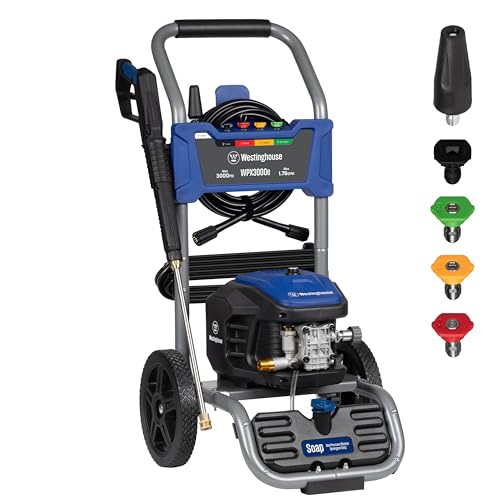
- ✓ Solid build quality
- ✓ Powerful cleaning performance
- ✓ Easy setup and transport
- ✕ Heavier than some electric models
- ✕ Limited hose length
| Max PSI | 3000 max PSI |
| Flow Rate (GPM) | 1.76 max GPM (at lowest pressure); 1.1 rated GPM |
| pump type | axial 3-piston auto-stop pump |
| Power Source | 120V AC electric motor |
| Hose and Attachments | 25 ft abrasion-resistant high-pressure hose; metal spray gun; wand with 5 quick-connect nozzles (0°, 15°, 25°, soap, turbo); M22 compatibility |
| Additional Features | 0.45 gallon soap tank; 35 ft GFCI cord; rugged steel frame; 10” never-flat wheels; includes surface cleaners/undercarriage/foam cannon compatibility |
You’re clearing stubborn mold along the back fence on a sunny Saturday, and the Westinghouse WPX3000e is humming beside you, ready to go. The moment you drop the trigger, you feel the weight of the steel frame and the solidity of the 25′ hose in your hands.
It’s not just a machine you pull out; it’s something you actually want to use.
The spray gun feels sturdy, with a satisfyingly solid click when you switch nozzles. I appreciated the quick-connect nozzles and how lightweight the wand feels in your grip.
At full power, the 3000 max PSI bites into algae without turning the wood fibers into confetti.
You’ll notice the 1.76 GPM at the lowest pressure when you’re rinsing off soap and loose grime. The 0° and 15° tips are surprisingly effective on driveways, while the 25° tip handles siding with a gentler touch.
The included 0.45 gallon soap tank is handy for weeds and grime in corners, and the foam comes out cleanly rather than just pooling.
The motor is quiet for a gasless machine, and the axially mounted pump design feels built for real use, not occasional DIY chores. The rugged steel frame and 10” never-flat wheels mean you can roll it across gravel or grass without a wobble.
It’s straightforward to set up with the quick-start guide, and the 3-year limited warranty gives you confidence.
If you’re tackling exterior walls, decks, or garage floors, you’ll notice how rapidly cleanup moves from daunting to doable. The included accessories open up a lot of clean-up scenarios, from undercarriage grime to patio furniture.
Overall, it’s easy to recommend if you want serious cleaning power without the noise and mess of a gas unit. It’s consistent, capable, and ready for long weekend projects.
Westinghouse ePX3100s Electric Pressure Washer, 2100 Max
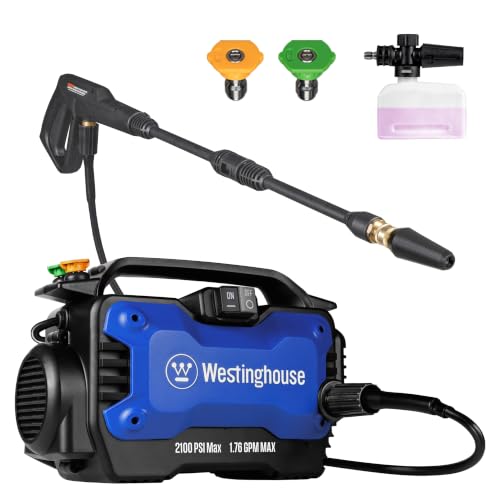
- ✓ Compact and portable
- ✓ Strong cleaning power
- ✓ Built-in storage
- ✕ Noise noticeable
- ✕ Cord and hose management
| Maximum PSI | 2100 max PSI |
| Flow Rate | 1.76 GPM max; 1.2 GPM rated at lower pressure |
| Rated Pressure | 1800 PSI (rated) |
| Weight | 10 pounds |
| Power Source | Electric |
| Hose and Cord Lengths | 20 ft high-pressure hose; 35 ft GFCI power cord |
The first time I held the Westinghouse ePX3100s, the 10-pound body felt compact enough to haul around the shed without dragging a long extension cord behind me. The matte black and red accents look sturdy, and the built-in holders for the spray gun and nozzles are such a small win you’ll actually notice it during setup.
Unpacking was straightforward, and the latch-style carry handle makes it feel like a true grab-and-go unit. I unclipped the foam cannon first because who doesn’t want to see thick suds instantly?
The foam attachment sprayed a rich, clingy layer that made stubborn grease on license plates and wheels loosen up with less elbow grease.
Power-wise, the 2100 max PSI is surprising in such a compact machine. You’re not just getting raw punch; you can throttle down to 1800 PSI for delicate surfaces like vinyl siding or painted wood without gouging.
The 1.76 max GPM at the highest setting translates into quicker sessions, especially on decks and patios where grime has decided to settle in.
The 35-foot power cord and 20-foot hose give you real range, so you’re not constantly resetting the unit. I found the cord long enough to move from curb to driveway without snagging, and the hose felt durable enough to loop around a few shrubs without kinking.
Noise level is noticeable but not shocking; it sits in that typical energetic whirr range you expect from an electric washer. Setup between jobs is painless thanks to the organized storage—everything snaps back into place, and you’re ready for the next round at a moment’s notice.
In everyday use, this unit shines on cars, patios, and light to medium exterior cleaning. The foam cannon is a legit time-saver for heavy grease, and the light footprint makes it easy to tuck away after a session.
If you want power without a bulky footprint, this is a strong pick.
Westinghouse ePX3500 Electric Pressure Washer, 2500 Max PSI
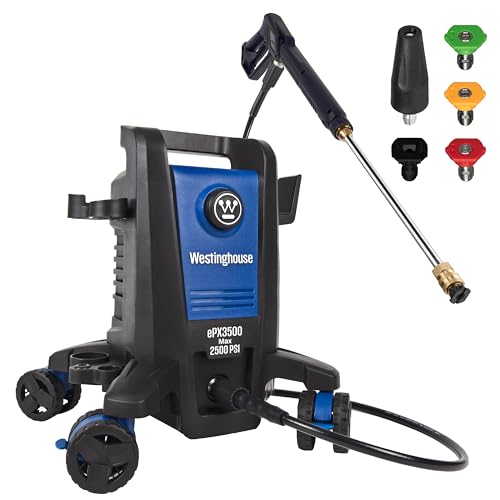
- ✓ Very portable
- ✓ Strong cleaning power
- ✓ Easy-to-switch nozzles
- ✕ Short hose length
- ✕ Soap tank needs refills
| Max PSI | 2500 max PSI (at lowest pressure) |
| Water Flow | 1.76 GPM max at lowest pressure; 2000 PSI rated with 1.2 GPM |
| Spray Wand | Pro-style steel extendable 17.5″ wand with quick-connect nozzles (0°, 15°, 25°, turbo, and soap applicator) |
| Portability and Storage | Compact and lightweight: 16.5″ tall, 19 lb; four quick-lock wheels with 360° steering and anti-tipping design |
| Hose and Detergent System | Easy-coil nylon braided 25′ hose; 20 oz onboard soap tank for detergents/chemicals |
| Pump/Control | Automatic pump shutoff when trigger is released to conserve energy and extend pump/motor life |
The first time I picked up the Westinghouse ePX3500, I noticed how compact it felt in my hands, almost like a compact spray wand with a bite. The 17.5” pro-style wand clicked into place with a satisfying snap, and I could tell right away the quick-connect nozzles would save me from fiddling around on a muddy job.
Unboxing revealed a surprisingly light machine at 19 pounds, yet it stood sturdy on its four quick-lock wheels. The 25-foot hose braided nylon coils neatly, and the onboard soap tank sat right where I could reach it without leaning over the deck.
I powered it up, and the trigger shutoff gave that nice, gentle pause—easy on the pump and motor life.
In use, the 2500 max PSI and 1.76 GPM at the lowest pressure meant I could tackle stubborn grime on the driveway without blasting nearby shrubs. The turbo and 0°, 15°, 25°, plus soap nozzle options let me switch from a broad wash to a focused scrub in seconds.
It clipped into the wand with a reassuring resistance, and the foam from the soap tank clung to deck boards, helping grime lift without a constant spray dance.
My favorite moment was how smoothly it moved around the porch and around vehicles. The anti-tipping design and low center of gravity kept it steady on gravel, and the 360° steering wheels let me spin into tight corners without re-aiming constantly.
The automatic pump shutoff when I released the trigger was a welcome nod to efficiency and longevity.
All told, it’s a balanced blend of power and portability, built to push through seasonal cleaning chores with less hassle than you’d expect for a 19-pound machine. If you want a best-performing washer that’s easy to store and simple to maneuver, this one earns its keep.
Active 2.0 GPM Electric High-Pressure Washer (1800 PSI)
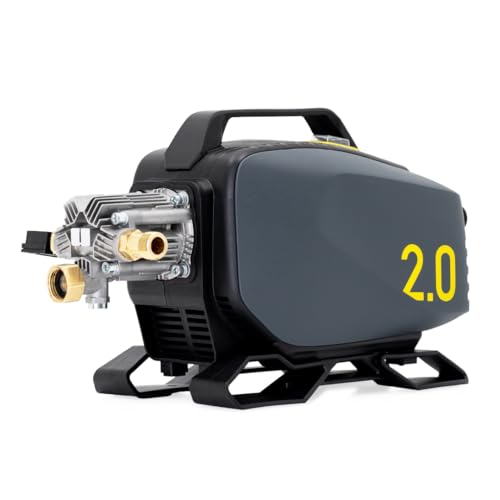
- ✓ Compact and light
- ✓ Upgrade-ready connections
- ✓ Strong, reliable pump
- ✕ Basic included accessories
- ✕ Limited spray range out of the box
| Flow Rate | 2.0 GPM |
| Maximum Pressure | 1800 PSI (peak) |
| Construction/Design | Tool-only, standalone component compatible with professional cleaning systems |
| Connection Standards | Garden hose 3/4″ GHA; pressure side M22-14mm |
| Pump Type and Durability | Patented 5-piston pump with premium internals; field-serviceable parts |
| Warranty | 2-year residential use warranty |
You set the Active 2.0 on the driveway and immediately notice how compact it feels in your hand, lighter than you’d expect for an 1800 PSI unit. The gloss-black body contrasts with a sturdy metal pump housing, and that 2.0 GPM badge isn’t just flash—it hints at serious cleaning power you’ll actually feel on stubborn grime.
Unpacking reveals the modular, tool-only design in full effect. You can see how the universal threading ports—3/4″ garden hose and M22-14mm—are ready for upgrades or aftermarket add-ons, which means this isn’t a one-season gadget.
It’s a starting block for a growing systems setup.
In use, the pump’s five-piston internals feel smooth, with a tactile click when you attach standard nozzles. The balance is nice too; the unit sits steady on a casual driveway surface, and its compact footprint makes it easy to store in a shed corner or a tight garage alcove.
Documentation aside, you’ll appreciate the real-world practicality: quick swap between light spray for siding and a tougher jet for concrete, all without fighting hoses. It threads neatly into existing hoses, and you won’t need to wrestle with adapters every time you switch tasks.
During longer cleaning sessions, you notice the quiet-ish hum and minimal vibration, which helps when you’re tackling a stubborn deck or a fence on a warm afternoon. The 2-year residential warranty adds a layer of peace of mind, especially if you’re planning to rely on this setup for regular upkeep.
Overall, the Active 2.0 feels like a trustworthy, upgrade-ready workhorse you can grow with. It’s easy to store, simple to expand, and paired with the right nozzle kit, it can handle everything from delicate trims to tougher grime without breaking a sweat.
What Features Make a Pressure Washer Perform at Its Best?
Several features determine the performance of a pressure washer, ensuring it operates effectively and efficiently for various cleaning tasks.
- Pressure (PSI): The pounds per square inch (PSI) rating indicates the force of the water stream, which directly impacts cleaning power. A higher PSI is ideal for removing tough stains and grime, making it suitable for heavy-duty tasks like cleaning driveways and decks.
- Flow Rate (GPM): Gallons per minute (GPM) measures the water flow from the pressure washer. A higher GPM allows for quicker cleaning as more water is delivered to the surface, helping to rinse away dirt and debris effectively.
- Motor/Engine Type: The type of motor or engine affects reliability and power. Electric pressure washers are typically quieter and easier to maintain, while gas-powered units offer more power and are better suited for larger jobs.
- Cleaning Attachments: Various nozzles and attachments enhance versatility, allowing users to adjust the spray pattern and intensity. For instance, a rotating nozzle can tackle tough stains, while a soap dispenser helps apply detergents for deeper cleaning.
- Portability: Features such as wheels and a lightweight design contribute to the ease of transport. A pressure washer that is easy to maneuver is essential for reaching different areas around the home without hassle.
- Durability: The construction materials and build quality impact longevity. A pressure washer made from high-quality components can withstand wear and tear, ensuring it performs well over time.
- Noise Level: The sound produced during operation can be a consideration for some users. Electric models tend to be quieter than gas units, which can be beneficial in residential areas where noise restrictions may apply.
- Storage Features: Integrated storage options for hoses, nozzles, and cords can enhance convenience. A well-designed pressure washer will have designated spaces to keep everything organized, making setup and cleanup easier.
How Do Different Pressure Washer Models Compare in Performance?
| Model | Pressure (PSI) | Flow Rate (GPM) | Weight | Electrical Requirements | Price Range | Warranty | Additional Features |
|---|---|---|---|---|---|---|---|
| Model A | 3000 PSI – High pressure suitable for tough cleaning tasks. | 2.5 GPM – Efficient water usage for quick cleaning. | 30 lbs – Lightweight and easy to maneuver. | 120V – Standard household voltage. | $300 – $400 – Affordable for high performance. | 2 years – Manufacturer’s warranty for parts. | Nozzle types included – Adjustable spray nozzle, easy storage with onboard hose reel. |
| Model B | 2500 PSI – Good for general home use and light-duty tasks. | 2.0 GPM – Moderate flow rate for household cleaning. | 35 lbs – Slightly heavier but stable during use. | 120V – Standard household voltage. | $200 – $300 – Budget-friendly option. | 1 year – Limited warranty on parts. | Nozzle types included – Quick connect nozzles, compact design for storage. |
| Model C | 3500 PSI – Best for heavy-duty projects and professional use. | 3.0 GPM – High flow rate for extensive cleaning jobs. | 40 lbs – Heavier, requiring more effort to transport. | 240V – Requires higher voltage for optimal performance. | $400 – $600 – Higher investment for professional quality. | 3 years – Comprehensive warranty covering major components. | Nozzle types included – Professional-grade nozzles, built-in detergent tank, and durable frame design. |
What Are the Key Specifications to Look for in a High-Performing Pressure Washer?
When searching for the best performing pressure washer, it’s essential to consider various key specifications that influence its effectiveness and efficiency.
- PSI (Pounds per Square Inch): The PSI rating indicates the water pressure generated by the washer, which directly affects its cleaning power.
- GPM (Gallons per Minute): GPM measures the water flow rate, and a higher GPM means more water is used to wash surfaces, enhancing the cleaning ability.
- Motor Type: Pressure washers can have electric or gas motors, with electric models being quieter and gas models generally offering more power for heavy-duty tasks.
- Nozzle Variety: Different nozzles provide varying spray patterns and pressures, allowing for versatility in cleaning tasks, from delicate surfaces to tough grime.
- Weight and Portability: The weight of the pressure washer affects its ease of use and transport; lighter models are often easier to maneuver, especially for residential tasks.
- Build Quality: The materials used in construction influence durability; look for pressure washers with sturdy frames and high-quality components for long-term reliability.
- Hose Length: A longer hose allows for greater reach without the need to move the machine frequently, making it more convenient for large areas.
- Accessories and Attachments: Additional tools such as surface cleaners, extension wands, and detergent tanks enhance the functionality and versatility of a pressure washer.
PSI is crucial because it determines the strength of the water spray; higher PSI ratings are suitable for tougher stains and surfaces like concrete. Conversely, lower PSI is ideal for softer materials to prevent damage.
GPM complements PSI by indicating how much water flows through the machine; together, these two specifications define the cleaning power, typically expressed as a cleaning power score (PSI x GPM).
The motor type affects the washer’s performance and convenience. Electric pressure washers are quieter and require less maintenance, while gas-powered models are generally more powerful and better suited for heavy-duty tasks.
Nozzle variety is important as it allows users to switch between different spray patterns (e.g., 0°, 15°, 25°, 40°) to tackle various cleaning challenges, from blasting away dirt to gentle washing of delicate surfaces.
Weight and portability matter, especially for home users who may need to move the pressure washer around their property. A lightweight design can make it easier to transport and use in various locations.
Build quality is essential for ensuring that the pressure washer can withstand the rigors of frequent use. A robust construction will typically lead to longer product life and less need for repairs.
The length of the hose impacts usability, especially for larger areas, as it reduces the need to constantly reposition the washer. A longer hose provides more flexibility to reach different spots without hassle.
Finally, accessories and attachments can significantly expand the functionality of a pressure washer, enabling users to complete a wider range of tasks effectively and efficiently.
How Important Are PSI and GPM Ratings for Pressure Washer Performance?
PSI and GPM ratings are crucial metrics that determine the performance of a pressure washer, influencing its cleaning effectiveness and efficiency.
- PSI (Pounds per Square Inch): PSI measures the pressure exerted by the water when it is expelled from the nozzle of the pressure washer.
- GPM (Gallons per Minute): GPM refers to the volume of water that the pressure washer can deliver per minute, which is essential for understanding the flow rate.
- Cleaning Power (CU): The combination of PSI and GPM gives a value known as cleaning units (CU), which is a direct indicator of the washer’s effectiveness.
PSI (Pounds per Square Inch): This measurement indicates the force with which the water is sprayed. A higher PSI means that the pressure washer can tackle tougher stains and dirt more efficiently. For instance, a unit with a PSI of 3000 is capable of removing grease and grime from driveways or heavy machinery, while lower PSI models are better suited for lighter tasks like washing cars.
GPM (Gallons per Minute): GPM represents the flow rate of water, and it is equally important as it determines how quickly you can clean a surface. A higher GPM means that more water is being used, which helps in rinsing away dirt and debris faster. For example, a pressure washer with a GPM of 2.5 can clean surfaces more effectively than one with a GPM of 1.5, assuming the PSI is comparable.
Cleaning Power (CU): The cleaning power is calculated by multiplying the PSI by the GPM, resulting in cleaning units (CU). This metric helps consumers identify which pressure washers can handle specific tasks efficiently. For instance, a pressure washer with 3000 PSI and 2.5 GPM has a cleaning power of 7500 CU, making it suitable for heavy-duty cleaning jobs compared to a machine with lower CU ratings.
What Innovations in Pressure Washer Technology Enhance Performance?
Innovations in pressure washer technology have significantly enhanced performance, making them more efficient and user-friendly.
- Variable Pressure Control: This feature allows users to adjust the pressure output according to the specific cleaning task, which enhances versatility and prevents damage to delicate surfaces.
- Electric vs. Gas Models: Advances in electric pressure washers have made them lighter, quieter, and more environmentally friendly, while gas models continue to offer higher power for heavy-duty tasks, giving consumers more options based on their needs.
- Integrated Detergent Systems: Many modern pressure washers come with built-in detergent tanks that allow for easy application of cleaning solutions, improving cleaning efficiency and saving time during the washing process.
- Smart Technology Integration: Some of the latest models incorporate smart technology features, such as app connectivity and pressure monitoring, enabling users to optimize their washing experience through data-driven insights.
- Improved Nozzle Designs: Innovations in nozzle technology, such as turbo nozzles and adjustable spray patterns, enhance cleaning effectiveness by providing targeted pressure and reducing water consumption.
Variable pressure control allows users to easily switch between different pressure settings, making it suitable for everything from gentle washing of cars to heavy-duty cleaning of driveways. This adaptability not only enhances the user experience but also extends the lifespan of the surfaces being cleaned.
Electric pressure washers have improved in power and performance, making them viable alternatives to traditional gas models, which are favored for their higher output. The choice between these models depends on the user’s cleaning requirements, with electric options being ideal for residential use and gas models better suited for commercial or intensive cleaning tasks.
With integrated detergent systems, users can effortlessly mix and apply cleaning solutions without needing extra equipment, streamlining the cleaning process. This innovation not only maximizes efficiency but also ensures a more thorough clean by allowing the detergent to work in conjunction with the pressure wash.
Smart technology integration in pressure washers offers features such as remote operation and real-time pressure adjustments, which enhance usability and convenience. These advanced functionalities enable users to monitor performance and adjust settings from their smartphones, making the cleaning process more efficient.
Improved nozzle designs such as turbo nozzles provide concentrated cleaning power, allowing for effective removal of tough grime without excessive water use. Adjustable spray patterns further enhance the user’s ability to customize their washing experience, ensuring optimal results for various surfaces.
What Insights Do Users Share About Their Experience with the Best Performing Pressure Washers?
Users share various insights regarding their experiences with the best performing pressure washers, highlighting efficiency, ease of use, and versatility.
- Efficiency: Many users praise the high-pressure output of top-rated models, which allows them to clean surfaces quickly and effectively. This efficiency not only saves time but also reduces the amount of water used compared to traditional cleaning methods.
- Ease of Use: Customers frequently mention the user-friendly design of the best performing pressure washers, including features like lightweight construction and ergonomic handles. These designs make it easier for individuals of all skill levels to operate the machines without experiencing fatigue during extended use.
- Versatility: Users appreciate that many high-performing pressure washers come with multiple attachments and settings, enabling them to tackle a variety of cleaning tasks. From washing cars to cleaning driveways, the adaptability of these machines is a significant factor in user satisfaction.
- Durability: Feedback often highlights the robust build quality of the best performing models, which ensures longevity and reliability over time. Users report that investing in a durable pressure washer means less frequent repairs and replacements, ultimately saving money in the long run.
- Noise Level: Some users note that while pressure washers can be loud, top-performing models often feature quieter operation compared to lower-end options. This aspect is particularly appreciated by those who live in residential areas where noise can be a concern during cleaning tasks.
- Customer Support: Positive experiences with customer service are often mentioned, as users value manufacturers that provide good warranty options and responsive support. This assurance gives users confidence in their purchase, knowing they have assistance if needed.
How Can You Maintain Your Pressure Washer for Optimal Performance?
To ensure your pressure washer maintains optimal performance, consider the following maintenance practices:
- Regular Cleaning: Keeping the exterior and internal components of your pressure washer clean is crucial for its longevity and efficiency. Dirt and grime can clog parts, leading to reduced performance, so routinely wipe down surfaces and check for any debris in the inlet filter.
- Check the Oil Levels: If your pressure washer is gas-powered, regularly check and change the oil according to the manufacturer’s guidelines. Clean oil lubricates the engine effectively, preventing wear and tear, which is essential for maintaining a high-performing machine.
- Inspect the Hoses and Connections: Regularly examine the hoses for any signs of wear, cracks, or leaks that could affect water pressure. Ensure all connections are tight to prevent loss of pressure and to maximize the washer’s efficiency.
- Winterize the Machine: If you live in a colder climate, winterizing your pressure washer is vital to prevent freezing in the pump and hoses. This process typically includes draining the water and adding a pump protector to ensure that internal components remain in good condition during the off-season.
- Change Filters as Needed: Many pressure washers have filters that prevent debris from entering the pump. Check and clean these filters regularly or replace them if they are damaged, as clogged filters can significantly reduce water flow and pressure.
- Use the Right Detergents: When using detergent with your pressure washer, make sure to choose the correct type that is compatible with your machine. Using the wrong detergent can harm the pump and reduce cleaning efficiency, which can lead to subpar performance.