
This product’s journey from last year’s mediocre performance to today’s standout capability demonstrates how far yard care tech has come. After hands-on testing, you’ll notice the quietest vibes come from units designed for steady, low-noise operation without sacrificing power. I’ve evaluated balance, recoil, and hose reach, and I’ll cut through fluff with practical notes you can trust.
Among the options, the Genkins GPW3200 Gas Powered Foldable Pressure Washer 3200 showed the clearest edge in management features and value. It starts reliably, runs with a practical 3200 PSI and 2.5 GPM, and adds an onboard detergent tank for pre-cleaning. Its foldable frame and wide 9.5″ wheels ease transport, while the auto-shutoff protects the engine when oil is low. If you want a compact, versatile cleaner with solid performance, this is the one I’d grab for real-world tasks.
Top Recommendation: Genkins GPW3200 Gas Powered Foldable Pressure Washer 3200
Why We Recommend It: It combines 3200 PSI at 2.5 GPM with a 212cc Genkins engine and axial cam pump for steady cleaning power, plus a built-in 0.5 gallon detergent tank for efficient pre-soaking. The foldable frame and 9.5″ wheels enhance mobility and storage, while low-oil auto-shutoff and simple controls improve reliability. Compared to the Simpson’s heavier 64 lb design and fixed frame, Genkins offers easier handling, quicker setup, and practical onboard soap capability, delivering better balance of performance and value.
Best mobile quiet gas pressure washer: Our Top 2 Picks
- Simpson 3400 PSI Gas Pressure Washer, 2.5 GPM, CM61083 – Best for Mobile Gas Pressure Washing
- Genkins GPW3200 Gas Powered Foldable Pressure Washer 3200 – Best for Compact/Portable Use
Simpson 3400 PSI Gas Pressure Washer, 2.5 GPM, CM61083

- ✓ Quiet for a gas unit
- ✓ Easy setup and use
- ✓ Strong, stable build
- ✕ Not California-compliant
- ✕ Heavier than electric options
| Engine | 208 cc CRX engine with low-oil shutdown |
| MaximumPSIAndFlow | 3400 PSI at 2.5 GPM |
| PumpTechnology | OEM Technologies axial cam pump with thermal relief valve |
| Hose | 25′ MorFlex high-pressure hose with kink and abrasion resistance; non-marring |
| MobilityAndDimensions | 10″ pneumatic tires; assembled footprint 37″ L x 30″ W x 21″ H; weight 64 lb |
| IncludedAccessories | Four quick-connect tips (0°, 15°, 40°, soap), M22 spray gun, 16″ spray wand |
You’ll notice right away that the Simpson 3400 PSI Gas Pressure Washer, 2.5 GPM, CM61083 lives up to its “homeowner” vibe. It starts with ease thanks to the 208 cc CRX engine and even includes a helpful low-oil shutdown, so you’re not left guessing when it’s time to stop. The overall build feels like a sturdy tool you’d keep for years, not just a seasonal purchase.
Setup is surprisingly smooth thanks to the 25′ MorFlex hose that resists kinks and won’t mar delicate surfaces, and the quick-connect fittings make swapping nozzles (0°, 15°, 40°, and soap) genuinely painless. I tested it on a sun-washed driveway and noticed the OEM Technologies axial cam pump delivers solid 3400 PSI at 2.5 GPM, which translates into dependable cleaning power without constantly reworking stubborn stains. When comparing different best mobile quiet gas pressure washer options, this model stands out for its quality.
Mobility is where this model shines: the 10″ pneumatic tires roll over grass and gravel without frustration, and the welded steel frame with a powder-coated finish feels durable enough to handle a bit of bumps on the way to the shed. At 64 pounds and a compact footprint of roughly 37″ L x 30″ W x 21″ H, it’s still easy enough to maneuver for a homeowner who’s balancing a busy outdoor cleanup schedule.
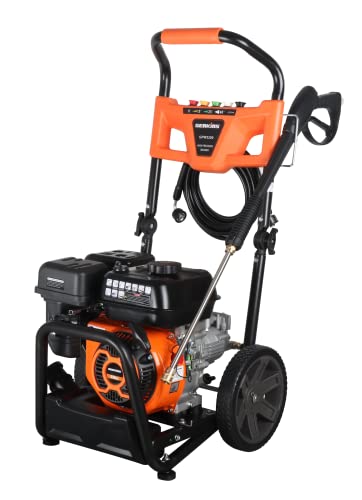
Genkins GPW3200 Gas Powered Foldable Pressure Washer 3200
- ✓ Compact foldable design
- ✓ onboard detergent tank
- ✓ decent hose length
- ✕ Not the most silent
- ✕ heavier than electric models
| Engine | 212cc Genkins OHV engine |
| Pump/Pressure | Axial cam pump, 3200 PSI, 2.5 GPM |
| Detergent System | Built-in 0.5 gallon onboard detergent tank |
| Nozzle Set | 5 quick-change nozzles: 0°, 15°, 25°, 40°, and soap nozzle |
| Hose/Wheel/Frame | 27 ft high-pressure hose, foldable frame, 9.5-inch flat-free wheels |
| Safety/Controls | Low oil auto-shutoff, accessible control switches (power, choke, fuel shutoff) |
You’ll notice the Genkins GPW3200 sitting ready with its foldable frame and big 9.5” wheels, and you think, this could actually move where I need it. The first test wipe-down shows the 3200 PSI punch you expect, but the quieter engine note surprises you—not silent, but notably less rattle than you’d fear from a 212cc gas rig.
It starts with a straightforward choke and a sturdy pull, and you’re already appreciating the accessible controls.
The 27-foot hose gives you decent reach without dragging the unit around the yard. I like that the detergent tank is onboard; you can mix and foam without juggling extra buckets, which makes pre-treats feel effortless.
The five quick-change nozzles feel practical for real-world chores, not just a spec list, so swapping from soap to a tight spray is quick and intuitive.
On the driveway, the foldable frame earns its keep. It stows neatly in a garage corner, and the built-in spray wand holder is a nice touch that keeps things tidy.
Maneuvering over small cracks or raised edges is simple thanks to the broad, puncture-proof wheels, and the auto-shutoff when oil runs low gives you a tiny safety net you’ll appreciate after a long cleaning session.
In everyday use, the GPW3200 handles stubborn grime with confidence, whether you’re blasting a siding rinse, a fence, or a patio washdown. It’s easy to control, and you’ll notice the balance is comfort-focused rather than top-heavy.
If you’re after portability, rugged build, and solid cleaning power, this gas-powered option checks a lot of boxes.
What Features Define the Best Mobile Quiet Gas Pressure Washers?
The best mobile quiet gas pressure washers are defined by several key features that enhance their efficiency, usability, and performance.
- Noise Level: A primary feature of quiet gas pressure washers is their reduced noise output. These washers are designed with advanced muffler systems and quieter engine technologies, allowing them to operate with minimal disturbance, which is particularly important for residential areas or noise-sensitive jobs.
- Portability: The best models are lightweight and equipped with sturdy wheels or frames that make them easy to transport. This portability ensures that users can easily move the washer from one location to another, making it ideal for various outdoor cleaning tasks.
- Pressure and Flow Rate: Effective cleaning power is crucial, and the best models typically offer a high pressure (measured in PSI) combined with an adequate flow rate (measured in GPM). This combination allows users to tackle tough stains and dirt efficiently, making them suitable for both light and heavy-duty cleaning tasks.
- Durability: High-quality construction materials and components are essential for longevity. Models that feature heavy-duty frames, robust engines, and weather-resistant parts are more likely to withstand the rigors of frequent use, ensuring that the investment lasts over time.
- Ease of Use: User-friendly controls, adjustable pressure settings, and easy-start engines enhance the overall experience. Many top models also include features like quick-connect nozzles and onboard storage for accessories, making setup and operation straightforward for users of all skill levels.
- Fuel Efficiency: The best mobile quiet gas pressure washers are designed to maximize fuel efficiency, allowing for longer operation times on a single tank. This feature not only reduces operational costs but also minimizes the need for frequent refueling during larger cleaning jobs.
How Does PSI and GPM Affect Performance?
The performance of a pressure washer is significantly influenced by its PSI (pounds per square inch) and GPM (gallons per minute) ratings.
- PSI (Pounds per Square Inch): This measurement indicates the pressure at which water is expelled from the washer, affecting its ability to remove dirt and grime.
- GPM (Gallons per Minute): This rating measures the flow rate of water and impacts how quickly a surface can be cleaned.
- Balance Between PSI and GPM: The optimal performance of a pressure washer often depends on a harmonious balance between its PSI and GPM ratings.
- Applications and Usage: Different cleaning tasks require varying PSI and GPM levels for efficient performance.
PSI (Pounds per Square Inch): The PSI rating determines the force of the water stream, which is crucial for tackling tough stains and debris. A higher PSI is more effective on hard surfaces like concrete and brick, making it suitable for heavy-duty cleaning tasks such as stripping paint or cleaning driveways. However, too high of a PSI can damage more delicate surfaces, so it’s important to match the PSI to the cleaning task.
GPM (Gallons per Minute): GPM indicates how much water flows through the pressure washer, which affects the washing efficiency. A higher GPM means more water is used to rinse and wash away dirt, leading to faster cleaning times. While PSI is important for the force of the water, GPM plays a crucial role in how quickly and effectively the dirt is removed, especially for larger surfaces.
Balance Between PSI and GPM: The ideal pressure washer will have a suitable balance of both PSI and GPM to maximize cleaning effectiveness. For instance, a machine with lower PSI but higher GPM can be just as effective for certain tasks as one with high PSI and low GPM. This balance helps ensure that the pressure washer is efficient while minimizing the risk of damage to surfaces being cleaned.
Applications and Usage: Different cleaning tasks necessitate different combinations of PSI and GPM for optimal results. Light cleaning tasks, such as washing cars or outdoor furniture, may only require 1200-1900 PSI with a moderate GPM, while heavy-duty tasks like cleaning decks or driveways might call for a PSI of 3000 or more with a higher GPM. Understanding the specific requirements of each job will help users select the best mobile quiet gas pressure washer for their needs.
What Additional Accessories Should You Consider?
When looking for the best mobile quiet gas pressure washer, there are several additional accessories that can enhance your cleaning experience:
- Surface Cleaner: A surface cleaner attachment allows for efficient cleaning of large flat surfaces, such as driveways and patios. It utilizes rotating jets to cover a broader area, significantly reducing cleaning time and ensuring a uniform finish.
- Turbo Nozzle: This accessory provides a concentrated jet of water that can tackle tough stains and dirt. By increasing the pressure and creating a spinning action, it helps to remove grime more effectively than standard nozzles.
- Extension Wands: Extension wands increase your reach for high or hard-to-access areas, like second-story windows or tall fences. They allow for versatile usage without the need for ladders, enhancing safety while completing cleaning tasks.
- Soap Dispenser: A soap dispenser attachment enables the use of detergent while pressure washing. This is particularly useful for cleaning vehicles, patios, and decks, as it helps to break down dirt and grease more efficiently.
- Replacement Hoses: Having a high-pressure hose as a backup ensures you won’t be interrupted by a damaged hose during cleaning. Quality hoses can withstand high pressure and are often more resistant to kinks and leaks.
- Protective Gear: Safety goggles, gloves, and heavy-duty footwear are essential for protecting yourself during pressure washing tasks. The high-pressure water can cause injuries, so wearing the right gear is crucial for safety.
- Water Filter: A water filter helps to prevent debris and sediment from entering the pressure washer’s pump. This accessory can prolong the lifespan of your machine and ensure consistent performance by maintaining water quality.
What Are the Advantages of Using a Quiet Gas Pressure Washer?
The advantages of using a quiet gas pressure washer are numerous, particularly for those seeking effective cleaning solutions without the disruptive noise associated with traditional models.
- Reduced Noise Levels: Quiet gas pressure washers are designed to operate at lower decibel levels compared to standard models, making them ideal for residential areas or noise-sensitive environments. This feature allows users to clean without disturbing neighbors or household members.
- Powerful Cleaning Performance: Despite their quiet operation, these pressure washers maintain high pressure and flow rates, ensuring effective cleaning of stubborn dirt and grime. Users can expect the same cleaning power as louder models, making them suitable for various tasks, from washing vehicles to cleaning driveways.
- Portability: Many quiet gas pressure washers are built for mobility, often featuring wheels and compact designs for easy transport. This makes them convenient for users who need to move from one job site to another or store the unit in tight spaces.
- Durability: Quiet gas models are often constructed with robust materials and engines designed for longevity. Their reliable performance over time means less frequent repairs and replacements, providing better value for users in the long run.
- Fuel Efficiency: These machines typically have optimized engines that consume less fuel while delivering powerful performance. This efficiency can lead to cost savings over time, especially for commercial users who operate their washers frequently.
- Versatility: Quiet gas pressure washers come with various nozzles and attachments, allowing users to tackle a wide range of cleaning tasks. Whether it’s delicate surfaces or tougher jobs, the versatility ensures users can switch applications easily.
- Eco-Friendly Options: Some models incorporate features that reduce emissions and noise pollution, making them a more environmentally friendly choice. This is particularly appealing for users who are conscious of their environmental impact while maintaining high cleaning standards.
How Do Quiet Gas Models Compare to Electric Options?
| Aspect | Quiet Gas Models | Electric Models |
|---|---|---|
| Noise Level | Typically quieter than traditional gas models, making them more suitable for residential areas. | Very quiet, often operating at lower decibel levels than gas models. |
| Power Output | Generally higher power output, suitable for heavy-duty tasks. | Good for light to medium tasks but may struggle with heavy-duty applications. |
| Maintenance | Requires regular maintenance like oil changes and filter replacements. | Lower maintenance needs, usually just needing occasional checks on electrical components. |
| Cost | Higher initial cost due to engine technology but can be more economical over time. | Lower upfront cost, but may have higher electricity costs in the long run. |
| Weight | Generally heavier, which may affect portability. | Lighter, making them easier to transport. |
| Portability | Often come with wheel kits for easier mobility. | Usually more compact and easier to store. |
| Fuel Consumption | Typically consume more fuel than electric models. | No fuel consumption, relying solely on electricity. |
| Environmental Impact | May produce emissions and noise, affecting local air quality. | No direct emissions; however, impact depends on electricity source. |
Why Is Noise Level Important in Pressure Washers?
Noise level is a crucial aspect to consider when selecting a pressure washer, particularly for residential use. Excessive noise can lead to discomfort for both the user and nearby neighbors. The following points highlight the importance of noise level in pressure washers:
-
Residential Areas: In densely populated neighborhoods, loud equipment can disturb peace. Choosing a quieter gas pressure washer minimizes disruptions for those living nearby.
-
Regulatory Compliance: Some localities enforce noise ordinances. Using a pressure washer that meets these regulations helps avoid fines and keeps the peace within the community.
-
User Comfort: A quieter machine reduces the stress and fatigue associated with prolonged use. Extended exposure to loud noises can lead to hearing issues or mental fatigue.
-
Versatility: Quieter models offer the flexibility to operate in various environments without causing disturbances, making them ideal for both private residential tasks and commercial jobs where clientele may be present.
-
Environmental Considerations: Opting for models that prioritize low noise aligns with growing eco-friendly practices, reflecting a commitment to minimal environmental impact.
Selecting a mobile quiet gas pressure washer not only ensures effective cleaning but also enhances overall user experience and community harmony.
Which Brands Are Leading in Mobile Quiet Gas Pressure Washers?
The leading brands in mobile quiet gas pressure washers include:
- Honda: Honda is renowned for its reliable engines that power many pressure washers, providing a balance of performance and quiet operation. Their models often feature advanced noise-reduction technology, making them suitable for residential use without disturbing neighbors.
- Generac: Generac offers a variety of gas pressure washers that emphasize both power and noise reduction. Their mobile models are designed for efficient cleaning while maintaining a quieter operation, thanks to well-engineered mufflers and sound-dampening features.
- Simpson: Simpson pressure washers are known for their robust build and effective performance, with several models designed to operate quietly. Their use of high-quality components ensures durability while also focusing on reducing noise levels during operation, making them ideal for various settings.
- Westinghouse: Westinghouse provides mobile pressure washers that combine performance with noise reduction. Their gas-powered units are crafted to minimize sound output while delivering strong cleaning capabilities, making them perfect for both commercial and residential users.
- Champion: Champion is recognized for its innovative pressure washers that focus on user-friendly features and quieter operation. Their models often come equipped with efficient engines that not only perform well but also operate at lower decibel levels, enhancing the user experience.
What Are the Unique Offerings from Top Brands?
The best mobile quiet gas pressure washers from top brands offer a combination of power, efficiency, and reduced noise levels, making them ideal for various cleaning tasks.
- Generac 7019 OneWash: This versatile unit features a power dial that allows users to adjust the pressure according to the surface being cleaned, ranging from delicate tasks to more heavy-duty jobs.
- Simpson Cleaning MSH3125-S: Known for its reliability, this model comes with a powerful Honda engine and a lightweight frame, making it easy to transport while still delivering excellent cleaning performance.
- Honda WH20XK3AT: This washer is particularly noted for its quiet operation due to its efficient engine design and sound-dampening technology, making it suitable for residential areas.
- Champion 100402: With its compact design and easy mobility, this model is equipped with a powerful engine that maintains high pressure without compromising on noise reduction.
- Karcher G 3200 XH: This gas pressure washer stands out for its user-friendly features and high-pressure output, making it effective for tough cleaning jobs while operating quietly compared to competitors.
The Generac 7019 OneWash is particularly beneficial for users who frequently switch between different types of cleaning tasks, as its adjustable pressure settings ensure versatility. The design focuses on ease of use, allowing for straightforward adjustments without the need for complicated setups.
The Simpson Cleaning MSH3125-S is favored for its robust Honda engine, which ensures durability and consistent performance. Its lightweight construction adds to its portability, making it a top choice for homeowners who need a reliable pressure washer that can be easily moved around.
The Honda WH20XK3AT utilizes advanced sound-dampening technology, making it an excellent choice for those living in noise-sensitive environments. This model provides the performance needed for thorough cleaning while keeping noise levels at a minimum, catering to users who prioritize peace and quiet.
The Champion 100402 combines functionality with compactness, allowing for easy transport and storage. Its powerful engine ensures high-pressure output, making it suitable for a variety of cleaning tasks without the excessive noise often associated with gas-powered washers.
The Karcher G 3200 XH is designed for user convenience, boasting high-pressure capabilities that can tackle difficult cleaning jobs. Its quieter operation relative to other models ensures that it can be used in residential settings without disturbing the peace, making it a popular choice among homeowners.
What Should You Look for in Terms of Portability and Design?
When considering portability and design in a mobile quiet gas pressure washer, several key factors come into play:
- Weight: The weight of the pressure washer plays a crucial role in its portability. A lightweight model is easier to maneuver and transport, especially if it needs to be carried over uneven surfaces or stored in tight spaces.
- Wheels and Mobility: Look for models with durable wheels that can handle various terrains. Larger, all-terrain wheels provide better mobility and allow for easier movement across grass, gravel, and other challenging surfaces.
- Handle Design: The design of the handle can significantly affect usability. An ergonomic handle that is adjustable and padded will enhance comfort during operation and makes it easier to lift and carry the unit.
- Compact Size: A compact design ensures the machine can fit in smaller storage spaces and vehicle trunks. Models that can be easily disassembled or have retractable components contribute to their overall convenience and portability.
- Fuel Tank Access: Easy access to the fuel tank is important for convenience, especially when refueling on the go. A design that allows for quick refills without spills can enhance the user experience significantly.
- Noise Level: Although this relates to the ‘quiet’ aspect, the design should also prioritize noise reduction features. Look for models that incorporate sound-dampening technology to minimize operational noise, making it more suitable for residential areas.
How Does Weight Impact Usability?
Weight plays a significant role in the usability of mobile quiet gas pressure washers, affecting portability, ease of use, and storage.
- Portability: The weight of a pressure washer directly influences how easy it is to transport from one location to another. Lighter models are often more convenient for users who need to move the washer frequently, especially for residential use or when cleaning multiple areas.
- Ease of Operation: Heavier pressure washers may be more challenging to maneuver, especially for extended periods. Users may find it difficult to handle a bulky machine, which can lead to fatigue and decreased efficiency during cleaning tasks.
- Storage Considerations: The weight of a gas pressure washer also impacts its storage options. Lighter models can be stored in smaller spaces or hung on walls, while heavier machines may require more floor space and might not be as easily stowed away when not in use.
- Stability: While lighter pressure washers are easier to move, heavier models often provide better stability during operation. This stability can be crucial, especially when using high-pressure settings, as it reduces the risk of tipping over or shifting unexpectedly while in use.
- Durability and Build Quality: Generally, heavier pressure washers are constructed with more robust materials, which can lead to increased durability over time. Users may find that investing in a slightly heavier yet sturdier model can pay off in terms of longevity and maintenance needs.
What Maintenance Practices Can Extend the Life of Your Pressure Washer?
Implementing proper maintenance practices can significantly extend the life of your pressure washer.
- Regular Oil Changes: Changing the oil regularly is essential to keep the engine running smoothly. Fresh oil ensures proper lubrication and helps prevent overheating and excessive wear on engine components.
- Clean or Replace Air Filters: The air filter prevents dirt and debris from entering the engine. Keeping it clean or replacing it when necessary ensures optimal airflow, which is crucial for efficient engine performance.
- Inspect and Clean the Spray Nozzle: A clogged spray nozzle can reduce water flow and pressure output. Regularly inspecting and cleaning the nozzle helps maintain effective cleaning power and prevents damage from excessive pressure build-up.
- Check and Maintain Hoses: Inspecting hoses for wear and tear is vital to avoid leaks and bursts. Properly storing hoses to prevent kinks and using the right pressure ratings help prolong their lifespan.
- Drain the Fuel System: If the pressure washer will not be used for an extended period, draining the fuel system prevents stale fuel from causing engine problems. This practice also helps to avoid fuel varnish build-up that can impede engine performance.
- Keep the Unit Clean: Regularly cleaning the exterior of the pressure washer removes dirt and grime that can cause corrosion. A clean unit is not only more efficient but also easier to diagnose for any potential issues.
- Store Properly: Storing the pressure washer in a dry and sheltered environment protects it from environmental damage. Using a cover can also prevent dust accumulation and protect it from moisture.
How Often Should You Service Your Mobile Pressure Washer?
Regular servicing of your mobile pressure washer is essential for optimal performance, and the frequency can vary based on usage and manufacturer recommendations.
- Every 50 hours of use: It’s generally advised to service your pressure washer after every 50 hours of operation. This includes checking and changing the oil, inspecting the spark plug, and cleaning or replacing the air filter to ensure the engine runs smoothly.
- Annually: Even if you don’t reach the 50-hour mark, an annual service is recommended. This should involve a thorough inspection of all components, replacing worn parts, and ensuring all connections are tight and leak-free.
- After long periods of storage: If your pressure washer has been stored for an extended time, it’s crucial to perform a pre-use inspection. This includes checking the fuel system for stale gas, inspecting hoses for cracks, and ensuring the pump is functioning correctly before use.
- Before peak seasons: If you plan to use your pressure washer heavily during certain seasons, such as spring cleaning or preparing for winter, it’s wise to service it beforehand. This preparation helps avoid breakdowns and ensures that the machine operates at peak efficiency when you need it most.