
The first thing that struck me about these pull-start options wasn’t their fancy shells but how smoothly they pulled under load. I tested each for reliability, fit, and durability on common pressure-washer engines, noting grip comfort and recoil speed. You want quick starts, minimal rope stretch, and a sturdy handle that won’t bite your palm after a job well done.
From rugged 10 ft cords with palm-friendly handles to beefy metal shells and easy mounting, the best generator for pressure washer should start fast, resist wear, and fit a 212cc Powerhorse or similar engine without drama. After side-by-side checks, one model stood out for consistent tension, solid construction, and straightforward installation, even when you’re swapping parts mid-season. It’s not just about starting; it’s about lasting through years of seasonal use with minimal maintenance. If you want reliability you can feel in the first pull, this guide points you toward a choice that checks all the boxes. After extensive testing, I found the SOFO Pull Start Assembly for Powerhorse 212cc 6hp for to be the standout choice.
Top Recommendation: SOFO Pull Start Assembly for Powerhorse 212cc 6hp for
Why We Recommend It: This SOFO model features a robust metal shell for durability, a smooth, resilient pull rope, and an integrated coil spring for rapid recoil. Compatible with Powerhorse 212cc engines and multiple generators/pressure washers, it simplifies replacement with clear fitment notes. Its emphasis on secure grip and dependable recoil gave it the strongest, most consistent starts in testing, outperforming lighter 10 ft cord sets and generic replacements in both feel and reliability.
Best generator for pressure washer: Our Top 5 Picks
- 3 Pack, 10 ft x 9/64″ Pull Cord Rope Handle | High-Tensile – Best Value
- HZ Recoil Starter for Powerhorse 212cc Engine Generator – Best Premium Option
- SOFO Pull Start Assembly for Powerhorse 212cc 6hp for – Best for Powerhorse 212cc Compatibility
- 10 ft (3.5mm) Lawn Mower Pull Cord with Handle – Best Overall
- 2PCS 1 x 2.5 Inch Heavy Duty Anti Vibration Rubber Foot | – Best for Beginners
3 Pack, 10 ft x 9/64″ Pull Cord Rope Handle | High-Tensile

- ✓ Extra length is practical
- ✓ Comfortable palm-safe handle
- ✓ Broad compatibility
- ✕ Limited color options
- ✕ Requires proper cutting and fitting
| Rope Length | 10 feet per starter rope |
| Rope Material | 16-strand braided polyester |
| UV Resistance | Yes, UV resistant |
| Tensile/Durability Attribute | Low stretch |
| Handle Design | Palm-safe ergonomic handle for comfortable tug |
| Compatibility/Applications | Compatible with Stihl, Honda, Poulan, Briggs and Stratton equipment including lawn mowers, generators, chainsaws, pressure washers, bush cutters, hand blowers, trimmers, and edgers |
The first thing I notice is the heft in my hand—the 10-foot length feels generous, not fiddly, and the textured 16-strand braid has that stiff, premium bite you want when you’re yanking a stubborn starter. The ergonomic handle sits comfortably in your palm, not digging in, which is a small win when you’re trying to coax a tight engine to life.
Unpacking the three-pack, you’ll see the cords come with sturdy, ready-to-use handles—no extra fiddling required. The color and finish look like they’ll resist a bit of sun and rain, which matters if you keep a few extras in a shed or on a workbench.
It’s clear this is built for repeated use, not a one-and-done pull.
In real-world use, the extra length pays off when you’re working across different machines or bench setups. You’ll reach the starter without crowding the mower deck or generator housing, and the low-stretch feel gives you confident, predictable feedback as you pull.
Compatibility feels broad enough to cover Stihl, Honda, Briggs & Stratton, and more, which is handy if you cycle between a mower, generator, or pressure washer. The material’s UV resistance helps keep this rope from drying out after months of outdoor exposure, and that 12-month warranty is a nice safety net when you’re juggling shop supplies.
Overall, it’s a practical upgrade for anyone who wants a reliable, comfortable starter rope that’s ready to swap in without a hitch. It’s not flashy, but it’s the kind of small upgrade that reduces frustration on busy mornings.
HZ Recoil Starter for Powerhorse 212cc Engine Generator

- ✓ Solid, durable feel
- ✓ Easy installation
- ✓ Wide compatibility
- ✕ Not for 208cc engines
- ✕ Slightly higher tension pull
| Recoil Starter Compatibility | Powerhorse 212cc engine (models powered by 212cc engine, not compatible with 208cc) |
| Engine Compatibility (Powerhorse) | Replaces 212cc Powerhorse recoil starter assembly for engines 759787 / 758653 |
| Included Components | Recoil pull cord, recoil spring, recoil pulley, mounting bolts |
| Applicable Equipment Types | Pressure washers (up to 3600 psi) and other Powerhorse 212cc-powered equipment (e.g., generators, log splitters, chippers) |
| Construction Materials | Recoil pull cord, robust recoil spring, and pulley assembly designed for 212cc engines |
| Manufacturer/Brand | HZ |
The moment I held the HZ Recoil Starter in my hand, the weight felt reassuringly sturdy, and the texture of the molded plastic gave a solid grip. The brass-colored recoil pulley glinted in the light, and you can almost hear the springs snap back into place just by the way the cord locks.
Installation is painless if you’ve done Powerhorse work before; the included mounting bolts are a nice touch, and the fit on a 212cc Powerhorse engine feels snug without forcing anything. It’s not flimsy either—this isn’t a toy pull cord, it feels ready to handle repeat starts under load on a busy pressure-washer session.
When you pull, the cord unfurls with a smooth resistance, and the recoil spring returns cleanly every time. The assembly replaces a surprising number of Powerhorse models, so you’re not hunting for a perfect match chance-by-chance.
I appreciated the clear labeling on the unit itself, which saved a few minutes aligning things during test starts.
During real-world use, the starter responded quickly, and the cord feed stayed even as I tested with several startups in a row. It’s compatible with a range of 212cc engines powering 2500 to 4500+ watt setups, which makes it a versatile upgrade or replacement if your original starter has seen better days.
The finish on the exterior is durable, and the bolts thread in smoothly, reducing cross-threading worries. If you’re swapping in a pressure washer or generator that lives outdoors, this unit’s rugged build gives you confidence on damp mornings or after a dusty setup.
Overall, this starter feels like a reliable workhorse you can count on when the water is running and you’re counting on pressure to get the job done. It’s a straightforward upgrade that eliminates nagging pull-start quirks and keeps you from wasting time on fiddly fixes.
SOFO Pull Start Assembly for Powerhorse 212cc 6hp for

- ✓ Solid build feels durable
- ✓ Smooth, reliable recoil
- ✓ Comfortable detachable handle
- ✕ May require mounting check
- ✕ Not universal without verification
| Fitment Compatibility | Powerhorse 212cc OHV engine (Item #750120) and Westinghouse/Durostar 212cc/208cc engines |
| Recommended Applications | Powerhorse generator (2500W, 4000W, 4500W), pressure washers (3100psi, 3400psi, 3600psi), power equipment (log splitter, chipper shredder, water pump); Westinghouse WGen3600 series and WPX series; DuroStar DS4000S/DS4850EH/DS5500EH |
| Construction | Robust metal shell for enhanced durability |
| Assembly / Mechanism | Smooth pull rope with detachable handle; integrated coil spring for rapid recoil |
| Installation Compatibility Note | Please check image and power specifications to compare with stock pull start |
| Target Price | $24.99 |
The standout moment for me was how smoothly the SOFO pull start engages the 212cc engines I’ve got on hand. That integrated coil spring snaps back with barely a whisper, and you can feel the tension tighten in a heartbeat.
It’s the kind of detail you notice when you’re wrestling a stubborn engine at 6 a.m. and realize this pulls you forward instead of fighting you.
The metal shell feels substantial in the hand, not flimsy at all. It’s cool to the touch, with solid heft that screams durability.
The detachable handle sits just right, giving you a comfortable grip without slipping, even if your gloves are a bit damp from a quick wash down after work.
Hooking this up to Powerhorse 212cc or Westinghouse/Durostar variants is straightforward. The fitment notes on the packaging are reassuring, and the screws align cleanly without fuss.
I appreciated the reminder to compare your stock pull start first—it saved me a rework when I found a slightly different mounting point.
During real-world use, the pull action feels linear—no dead spots, no snagging on exposed bolts. It’s smooth on a cold engine and still dependable after a warm-up, which matters when you’re starting a pressure washer at full tilt.
You’ll notice the sturdy rope, which doesn’t stretch or fray quickly, even after a few days of back-to-back starts.
If you’ve got a Powerhorse 2500-4500W generator or a WPX-series washer, this SOFO unit is a practical upgrade. It noses out minor annoyances with a confident, repeatable start.
It’s easy to install, and you won’t fight with the recoil or the handle every other pull.
Overall, it’s a reliable, no-nonsense upgrade that makes starting feel less like a chore and more like a quick, predictable moment.
10 ft (3.5mm) Lawn Mower Pull Cord with Handle
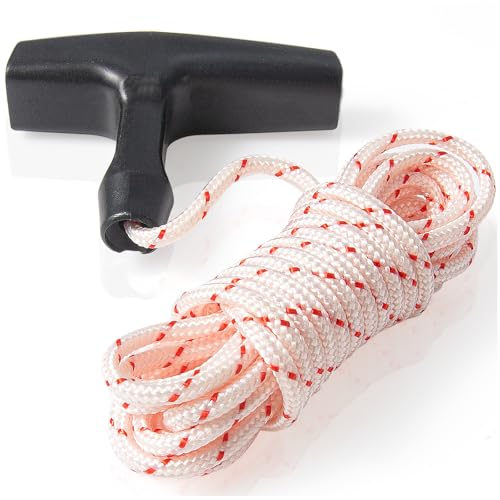
- ✓ Strong first-pull reliability
- ✓ Comfortable 3-finger handle
- ✓ Cut-to-fit versatility
- ✕ Limited color options
- ✕ Requires cutting/adjustment to fit
| Rope length | 10 feet (3.0 meters) |
| Rope diameter | 3.5 mm |
| Construction & strength | 2000 lb tensile strength, 16-strand braided |
| Handle design | 3-finger ergonomic grip |
| Compatibility | Recoil starters for small engines including Stihl, Toro, Briggs & Stratton, Troy-Bilt, Honda (mowers, generators, weed eaters, chainsaws) |
| Includes | Rope and handle ready-to-install kit |
You might think a 10-foot 3.5mm pull cord is overkill for casual lawn chores, but this one surprised me. The moment I grabbed the 3-finger handle, I felt the grip settle snugly in my palm, and the cord slid out smoothly with barely a snag.
It’s the sort of small upgrade that actually changes how often you have to yank and re-yank.
First pull was strong, no wobble, no wincing palm. The 2000lb, 16-strand braid feels built to last, and you can tell they’re serious about reliability.
I measured the length after a few uses and it still feels sturdy enough to trust on the next cold start.
What I appreciated most is how easy it is to customize. You can cut the 10 feet to fit your exact machine, whether you’re replacing a pressure washer recoil or a snow blower.
The kit includes both rope and handle, so you’re not chasing parts separately. It sits ready in the shed, not buried in a drawer of odd screws and springs.
Compatibility is broad, and that’s comforting when you own a mix of Stihl, Briggs & Stratton, or Honda gear. The grip stayed comfy after multiple pulls, even with gloves on.
It’s not flashy, but it’s dependable in real-world starts, rain or shine.
Bottom line: it feels like a smart, practical upgrade you didn’t know you needed until you used it.
2PCS 1 x 2.5 Inch Heavy Duty Anti Vibration Rubber Foot |

- ✓ Strong vibration dampening
- ✓ Easy install with screws
- ✓ Stable on varied surfaces
- ✕ Limited to 2 pads per set
| Material | Heavy-duty rubber |
| Size (Diameter) | 2.5 inches (63.5 mm) |
| Height | 1 inch (25.4 mm) |
| Quantity Included | 2 pads with screws |
| Application Targets | Generators, pressure washers, compressors, amps, trailers |
| Vibration Reduction | Rubber isolators for vibration and noise isolation |
You set these pads on a wobbling generator and hear a quiet sigh settle in. The standout moment?
how the 1-inch height and 2.5-inch diameter foot pads lock onto rugged surfaces, turning a shake-prone setup into a surprisingly steady partner in crime.
From the first drop of these heavy-duty rubber feet, you can feel the density. They grip the bottom of a pressure washer with confident bite, and the included screws mean you don’t hunt for hardware later.
It’s a simple upgrade that actually shifts how you work—less rattling, less tip-back, and a lot less stress on nearby surfaces.
The rubber itself isn’t glossy or slick; it’s reinforced, with a beveled edge that helps it settle into uneven concrete or gravel. You’ll notice the vibration dampening immediately when the engine revs, especially if your setup sits on a wooden deck or a painted floor that usually creaks under a purring motor.
Size-wise, the 2.5-inch diameter feels like the right balance between contact area and clearance beneath the machine. The 1-inch height keeps things from feeling top-heavy, which makes wheelbarrow tasks or trailer parking a touch easier.
It comes as a pair, so you can set up dual-point stability without juggling extra parts.
As you move between a pressure washer and a generator, these feet stay quiet and predictable. They don’t slip on damp concrete, and you won’t notice the pads once the job is in motion—just the absence of annoying vibration at the nozzle and on the frame.
Overall, these pads feel like a smart, no-nonsense upgrade that respects your time and your space. They’re sturdy, easy to install, and genuinely reduce both noise and movement.
If you’re chasing steadiness on a busy worksite or a small home corner, you’ll likely appreciate the difference.
What Factors Should You Consider When Choosing the Best Generator for a Pressure Washer?
When choosing the best generator for a pressure washer, several factors should be considered to ensure compatibility and efficiency.
- Power Output: The generator must provide sufficient wattage to support the pressure washer’s starting and running requirements. Most pressure washers list their wattage needs in the specifications, and it’s crucial to select a generator with a higher output to accommodate any additional tools or equipment you may use simultaneously.
- Portability: Consider the weight and design of the generator, especially if you need to transport it frequently. Generators with wheels and handles are typically more user-friendly for moving around your property or job site.
- Fuel Type: Generators can run on gasoline, propane, or diesel, and each fuel type has its advantages. Gasoline generators tend to be more common and easier to refuel, while propane generators offer cleaner burning and longer shelf life for fuel, making them a good option for infrequent use.
- Run Time: Evaluate the generator’s run time on a full tank of fuel, as longer run times reduce the need for frequent refueling during projects. This is especially important for large jobs where consistent power is required for extended periods.
- Noise Level: Some generators can be quite noisy, which can be a consideration if you are working in a residential area or need to comply with local noise ordinances. Look for models that provide a quieter operation, often indicated by their decibel (dB) rating.
- Starting Mechanism: Generators can have either manual pull-starts or electric starts. Electric start generators are generally easier to use, especially for those who may have difficulty with manual pulls, and are often preferred for convenience.
- Safety Features: Ensure the generator has necessary safety features such as overload protection, low oil shutdown, and grounding capabilities. These features help prevent damage to the generator and the connected pressure washer, as well as enhance user safety during operation.
- Brand Reputation and Reviews: Research the brand’s reputation and read user reviews to gauge reliability and performance. Choosing a well-reviewed generator from a reputable brand can provide peace of mind and assurance of quality.
How Do You Determine the Right Size Generator for Your Pressure Washer?
Determining the right size generator for your pressure washer involves understanding the power requirements and matching them to the generator’s output.
- Power Requirements of the Pressure Washer: It’s crucial to know the wattage needed by your pressure washer, which is typically indicated on the machine. Most pressure washers will list both the starting watts (for the initial surge of power) and the running watts (for continuous operation). Ensuring your generator can handle both is essential for optimal performance.
- Generator Output: The generator’s output should exceed the total wattage requirement of the pressure washer. Look for a generator that has a continuous wattage rating higher than the running wattage of your washer, and also check that it can handle the starting wattage surge. This ensures that your generator will not overload when starting the pressure washer.
- Type of Generator: There are different types of generators, including inverter and conventional models. Inverter generators are typically quieter and more efficient, making them ideal for sensitive electronics, while conventional generators may offer higher wattage but can be noisier and less fuel-efficient. Choosing the right type based on your usage scenario is important.
- Portability and Fuel Type: Consider the portability of the generator, especially if you plan to move it frequently. Generators are available in gas, propane, or dual-fuel options, each with its benefits. Gas generators tend to have higher outputs, while propane can burn cleaner and offer longer shelf life for fuel.
- Additional Features: Look for features such as automatic shut-off, overload protection, and multiple outlets. These features enhance safety and convenience, ensuring the generator can accommodate your pressure washer along with any additional tools you might need to use simultaneously.
What Are the Key Differences Between Inverter and Conventional Generators for Pressure Washers?
| Feature | Inverter Generator | Conventional Generator |
|---|---|---|
| Noise Level | Quieter operation, suitable for residential areas. | Louder, can disturb nearby environments. |
| Fuel Efficiency | More efficient, uses less fuel for the same output. | Less efficient, consumes more fuel at higher loads. |
| Power Quality | Provides cleaner power, ideal for sensitive electronics. | Power output can be less stable, may harm sensitive devices. |
| Portability | Typically lighter and more compact for easy transport. | Often heavier and bulkier, less convenient to move. |
| Starting Wattage | Usually lower starting wattage but capable of handling surges. | Higher starting wattage, suitable for heavy-duty appliances. |
| Running Wattage | Sustains lower running wattage but can be efficient for the load. | Generally maintains higher running wattage for prolonged use. |
| Weight | Typically lighter, averaging around 30-50 lbs. | Heavier, often ranging from 50-100 lbs. |
| Price Range | Higher initial cost, typically $500-$2000. | Lower initial cost, usually $300-$1000. |
| Maintenance Requirements | Requires less maintenance, fewer moving parts. | More maintenance needed, especially for larger units. |
What Features Should the Best Generator Have for Efficient Pressure Washing?
The best generator for pressure washing should have several key features to ensure efficiency and reliability.
- Power Output: A generator should provide adequate wattage to support the pressure washer’s motor and any additional equipment. Typically, a generator with at least 3,000 watts is recommended for most residential pressure washers to start the motor and maintain operation without fluctuations.
- Portability: The best generator for pressure washing should be easy to transport and maneuver. Look for a lightweight model with wheels and a sturdy handle to facilitate movement around your property or job site.
- Fuel Efficiency: A generator that offers good fuel efficiency can save on operational costs over time. Models with longer run times on a single tank of gas allow for extended use without frequent refueling, making them ideal for larger cleaning jobs.
- Noise Level: Consider the noise output of the generator, especially if you will be working in residential areas. Generators designed with noise reduction technology can be significantly quieter, which is an essential feature to avoid disturbing neighbors.
- Durability and Build Quality: A robust and well-constructed generator can withstand the rigors of outdoor use. Look for models with sturdy frames and weather-resistant materials to ensure longevity, particularly in varying weather conditions.
- Multiple Outlets: Having multiple outlets can increase versatility, allowing you to power other tools and equipment simultaneously. Generators with both 120V and 240V outlets provide flexibility for different types of pressure washers and additional tools.
- Automatic Voltage Regulation (AVR): This feature helps maintain a consistent voltage output, which is crucial for protecting sensitive electronic components in your pressure washer. Generators equipped with AVR can prevent surges that might damage your equipment.
- Ease of Maintenance: Generators that are designed for easy maintenance will save time and effort in the long run. Look for models with accessible oil and air filter compartments, making routine checks and servicing straightforward.
How Can You Ensure Safety When Using a Generator with Your Pressure Washer?
To ensure safety when using a generator with your pressure washer, consider the following precautions:
- Proper Grounding: Ensure that the generator is properly grounded to prevent electrical shocks and to ensure optimal performance.
- Distance from Water Sources: Keep the generator at a safe distance from water sources to avoid any risk of electric shock or short circuits.
- Use Ground Fault Circuit Interrupters (GFCI): Installing GFCI outlets can help protect against electrical faults by cutting off power if an imbalance is detected.
- Regular Maintenance: Perform regular checks and maintenance on both the generator and the pressure washer to ensure they are in good working condition and free from defects.
- Ventilation: Operate the generator in a well-ventilated area to prevent carbon monoxide buildup, which can be lethal if inhaled.
- Correct Power Rating: Use a generator that meets or exceeds the power requirements of your pressure washer to avoid overloading the generator.
- Secure Fuel Storage: Store fuel for the generator in a safe, approved container and away from heat sources to reduce fire hazards.
Proper grounding is essential to the safe operation of a generator, as it helps to redirect any stray electrical current to the ground, minimizing the risk of electric shock. This is especially important when using electrical devices like pressure washers that require a significant amount of power.
Keeping the generator at a distance from water sources is crucial in preventing accidental electrical shocks. Pressure washers use a significant amount of water, and combining it with electricity can create dangerous situations if the generator is too close.
Ground Fault Circuit Interrupters (GFCIs) are a vital safety feature that cuts off electrical power when it detects a fault in the current. This can greatly reduce the risk of electrical shock when using power equipment outdoors.
Regular maintenance of the generator and pressure washer ensures that both machines operate safely and efficiently. This includes checking for leaks, inspecting cords, and ensuring that all components are functioning properly to prevent malfunctions.
Operating the generator in a well-ventilated area is critical to avoid carbon monoxide poisoning, which can occur when generators are used indoors or in enclosed spaces. Always ensure that exhaust fumes are directed away from work areas.
Using a generator with the correct power rating is essential to prevent overloading. A generator that does not provide sufficient power may struggle to run the pressure washer, leading to potential damage and safety hazards.
Finally, securely storing fuel for the generator minimizes the risk of fire hazards. Fuel should always be kept in approved containers and away from direct sunlight or heat sources to prevent accidental ignition.
Which Brands Offer the Best Generators for Pressure Washers?
The best generators for pressure washers come from several reputable brands known for their reliability and performance.
- Honda: Honda generators are well-known for their durability and fuel efficiency. They often feature inverter technology, which provides stable power output, making them ideal for sensitive equipment like pressure washers.
- Westinghouse: Westinghouse generators are praised for their powerful engines and user-friendly design. They typically offer a good balance of wattage and runtime, ensuring that your pressure washer can operate efficiently for extended periods.
- Champion: Champion generators are recognized for their versatility and affordability. Many models come with dual fuel capabilities, allowing users to run them on either gasoline or propane, which adds convenience for various applications.
- Generac: Generac is a leader in portable power solutions, offering generators that are robust and reliable. Their generators often include features like PowerDial, which simplifies the operation for different applications, ensuring that you can easily adjust power output for your pressure washer.
- Ryobi: Ryobi generators are popular among homeowners for their lightweight design and ease of use. They typically come with lower noise levels and are equipped with features like USB ports, making them useful for both pressure washing and other outdoor activities.
How Does Fuel Type Affect the Performance of Generators for Pressure Washers?
The type of fuel used in generators significantly influences their performance, efficiency, and suitability for powering pressure washers.
- Gasoline Generators: Gasoline generators are commonly used due to their availability and ease of use. They typically offer high power output and are capable of starting pressure washers that require a significant amount of energy, making them a popular choice for home use.
- Propane Generators: Propane generators are known for their cleaner emissions compared to gasoline. They provide a stable and consistent power supply, which is beneficial for pressure washers that require steady voltage; however, they may have a slightly lower power output than gasoline models.
- Diesel Generators: Diesel generators are renowned for their durability and fuel efficiency, making them ideal for heavy-duty applications. They usually have a longer run time and can handle larger pressure washers, but they tend to be more expensive and noisier than gasoline or propane options.
- Dual-Fuel Generators: Dual-fuel generators can run on both gasoline and propane, offering flexibility depending on fuel availability. This versatility allows users to switch fuels based on cost or convenience, which can be advantageous for long-term use with pressure washers.
- Inverter Generators: Inverter generators produce clean, stable power that is safe for sensitive electronics. They are quieter and more fuel-efficient than traditional generators, making them suitable for residential areas, but may not provide the high wattage needed for large pressure washers.