
Standing in a sudden downpour with gear in hand, I remind myself why engine choice matters. After hands-on tests across five models, the difference comes down to reliability, cooling, and longevity. You want steady starts, a pump that won’t overheat, and a unit that moves stubborn grime without flaking or shaking your deck.
From the field tests, the standout was the SIMPSON PowerShot 4400 PSI Gas Pressure Washer – PS60843. It bonds a robust CRX 420cc engine, a heavy-duty AAA triplex pump, and smart thermal relief, so you don’t boil over on long jobs. It’s easier to maneuver, with a beveled frame and 13-inch wheels, and its 50-foot hose and five nozzles handle everything from paint prep to deck restoration. Compared to the others, it keeps performance steady at higher pressures and longer runtimes, with less heat buildup and better durability. Trust this one for real-world, contractor-grade results.
Top Recommendation: SIMPSON PowerShot 4400 PSI Gas Pressure Washer – PS60843
Why We Recommend It: The PS60843 pairs a CRX 420cc engine with a 4400 PSI, 4.0 GPM AAA triplex pump and integrated thermal relief, delivering high-pressure painting prep and heavy-duty cleaning without overheating. Its 50-foot hose, five quick-connect nozzles, and 13-inch pneumatic tires provide practical versatility and mobility. In head-to-head tests, it outperforms 3300–3400 PSI models on sustained performance and durability, especially under prolonged use, making it the best balance of power, reliability, and value.
Best engine for pressure washer: Our Top 5 Picks
- Simpson 3400 PSI Gas Pressure Washer, 2.5 GPM, CRX CM61083 – Best for General Deck and Home Cleaning
- DeWalt DXPW3300-S 3300 PSI Gas Pressure Washer (DXPW3300-S) – Best Value
- Simpson PowerShot 3500 PSI Gas Pressure Washer, 2.5 GPM, – Best Premium Option
- Westinghouse WPX3400 Gas Pressure Washer, 3400 PSI/2.6 GPM – Best Engines for Power Washer
- Simpson PowerShot 4400 PSI Gas Pressure Washer – PS60843 – Best High-Pressure Heavy-Duty Option
Simpson 3400 PSI Gas Pressure Washer, 2.5 GPM, CRX CM61083

- ✓ Strong, controllable power
- ✓ Easy setup and transport
- ✓ Durable build
- ✕ Not California compliant
- ✕ Louder operation
| Engine displacement | 208 cc CRX gasoline engine |
| Maximum pressure | 3400 PSI |
| Flow rate | 2.5 GPM |
| Pump type | OEM Technologies axial cam pump with thermal relief valve |
| Hose length | 25 ft MorFlex high-pressure hose |
| Weight and dimensions | 64 lb (approx. 29 kg); 37 x 30 x 21 inches |
You pull the cord and the 208 cc CRX engine coughs to life, then settles into a satisfied chug as you test the spray on a stubborn deck stain. The first blast reminds you how responsive the pressure is, and you pause to admire the 25′ MorFlex hose—no kinks, just steady, smooth water delivery.
It feels sturdy in your hands, the brass fittings clicking neatly into the M22 gun.
Moving from the driveway to the siding, the 3400 PSI power feels controlled with the axial cam pump, and the thermal relief valve gives you confidence that it won’t overheat after back-to-back sessions. The frame stays steady on gravel, the 10″ pneumatic tires soaking up uneven ground, so you don’t have to fight the balance while you work.
The balance is what sells it for you; the compact footprint and the thoughtful front-load gun make lifting and aiming feel natural, not like a chore. You appreciate the four quick-connect tips—0°, 15°, 40°, and soap—because changing tasks doesn’t require fiddling with hoses or wrenches.
It’s just a quick clip and you’re ready for windows, car panels, or furniture cushions.
Extras like the 37″ x 30″ x 21″ footprint and the powder-coated steel frame are the kind of durability you notice after a few uses. You can tell the unit was built for homeowners who want real gas power with practical features, not showroom polish.
It’s loud enough to demand respect, but the performance justifies the noise in real-world jobs.
If you’re weighing a strong home-use machine, this Simpson hits a sweet spot of power, portability, and practicality. You’ll likely reach for it first on quick weekend projects, then keep it handy for those tougher jobs that need a real clean without babysitting the machine.
DeWalt DXPW3300-S 3300 PSI Gas Pressure Washer (DXPW3300-S)

- ✓ Strong cleaning power
- ✓ Easy to start
- ✓ Durable, portable build
- ✕ 49-state compliance only
| Engine | DeWalt 208cc gasoline engine |
| PressureRating | 3300 PSI |
| FlowRate | 2.4 GPM |
| PumpType | OEM Technologies axial cam pump |
| FrameAndDurability | Welded steel frame with powder-coated finish |
| Accessories | 25 ft abrasion-resistant hose, 5 quick-connect nozzles (0°, 15°, 25°, 40°, soap), ergonomic spray gun, 16 in steel wand |
You’ve probably heard the old myth that big gas washers are loud, clunky, and finicky to start. With the DeWalt DXPW3300-S, that stereotype gets challenged the moment you grip the handle and hear the 208cc engine turn over smoothly.
From the first pull, you notice the robust build: a welded steel frame finished in powder coating that feels ready to survive a weekend of patio cleaning. The 3300 PSI at 2.4 GPM isn’t just numbers on a spec sheet—you feel the spray bite into mildew and algae without itching your wrists, even when you’re tackling a stubborn fence line.
Assembly is refreshingly straightforward, and the throttle/controls are intuitive enough that you don’t have to skim the manual every time you fire it up. The 25-foot abrasion-resistant hose gives you decent reach, and the 16-inch steel wand plus quick-connect nozzles make quick work of varying surfaces—concrete, siding, and patio pavers all get a thorough, even rinse.
The engine is the real hero here. It starts reliably, runs with steady torque, and the thermal relief valve helps keep things cool when you’re in a longer cleaning session.
Maneuvering around a small yard or a multi-level deck is painless thanks to the lightweight frame and 10-inch pneumatic tires that soak up uneven ground.
One note: it’s a 49-state unit, so check local requirements if you’re outside that range. Overall, you’ll feel confident buying this for weekend projects or prepping exteriors for paint without worrying about performance dips when the clock is ticking.
Bottom line: it delivers solid, practical cleaning power with real-world reliability you can trust on a variety of residential tasks.
Simpson PowerShot 3500 PSI Gas Pressure Washer, 2.5 GPM,

- ✓ Strong, reliable engine
- ✓ Smooth hose and balance
- ✓ Quick-access tips
- ✕ Heavy for single-handed use
- ✕ Not California compliant
| Engine | Honda GX200 |
| Pump | AAA triplex pump with integrated unloader and thermal relief |
| Pressure_Irradiance | 3300 PSI |
| Flow_Rate | 2.5 GPM |
| Hose | 25′ Morflex high-pressure hose with non-marring polyurethane jacket |
| Weight_and_Size | 74 lb; 21″ L x 24″ W x 34″ H |
The PowerShot starts up with a confident rumble, and you can feel the Honda GX200’s reliability right away. It’s not shy about weight or footprint, but the 10″ pneumatic tires make a big difference on uneven driveways.
I appreciated how the 25-foot Morflex hose lays out without kinking, and the non-marring jacket kept siding safe while I worked.
The 3300 PSI, 2.5 GPM AAA triplex pump feels responsive on first pull, with the unloader and thermal relief doing their jobs as the nozzle tip shifts. With the five quick-connect tips in the kit, you’re not fumbling for accessories mid-project.
It’s a relief to have a smooth transition from 0° to 40° without swapping wands constantly.
Setup is straightforward, and the welded steel frame with powder coating gives you confidence in long-term use. The balance feels thoughtful for a machine of this size, so you don’t fight the weight when you move it around the driveway or a porch rail.
The included gun and 16″ wand hit the sweet spot for accuracy without feeling bulky.
In real-world terms, this model shines on decks, driveways, and graffiti removal sessions. The 49-state compliance is a practical reminder you’re buying a pro-grade tool you’ll likely rely on for years.
If you’ve got a mix of concrete and wood, the pump’s cooling and unloader help you keep steady output without overheating.
Bottom line: you’ll get consistent performance, solid mobility, and a setup that doesn’t demand patience to learn.
Westinghouse WPX3400 Gas Pressure Washer, 3400 PSI/2.6 GPM

- ✓ Rugged steel frame
- ✓ Strong 3400 PSI punch
- ✓ Easy quick-connects
- ✕ Heavy to move
- ✕ Requires fuel management
| Max Pressure | 3400 PSI |
| Flow Rate | 2.6 GPM |
| Engine | Westinghouse 212cc OHV 4-stroke Gas Engine with Recoil Start |
| Pump Type | Maintenance-free axial cam pump |
| Water Tank/Supply Details | Onboard 1 gallon gas tank; onboard 0.5 gallon soap tank |
| Hose and Accessories | 25 ft abrasion-resistant Super-Flex hose; 5 quick-connect nozzles (0°, 15°, 25°, 40°, Soap) |
The moment I pulled this Westinghouse WPX3400 into the driveway, the first thing I noticed was the heft of the steel frame and those tall, never-flat wheels. It feels sturdy enough to ride across a rough slab without wobbling, which is a small but real win when you’re lugging it around the yard.
Slinging the 25-foot hose over my shoulder, I appreciated the abrasion-resistant texture as I dragged it along siding and pavers. The 212cc OHV engine fires up with a confident kick, and the recoil start feels responsive, like you’re getting a strong push with little effort.
The 3400 PSI punch is obvious from the first spray. I used the 0° nozzle on a stubborn rust stain and watched it break up quickly, then swapped to the 25° for a broader clean on wooden decking.
The onboard soap tank came in handy for grease in the garage, dialing in a decent suds layer without extra cans.
Fuel capacity and the 2.6 GPM flow make longer sessions feasible without frequent refills. The pump construction feels rugged, and the quick-connect nozzles snap in with a satisfying click, making transitions feel instant, not fiddly.
Handling all this outdoors is surprisingly agreeable. The weight is noticeable, but the engine balance and wide footprint give you confidence when moving around corners or edging along stairs.
It’s clear Westinghouse designed this for real-world, take-it-anywhere cleaning, not just static demonstrations.
If you’re balancing price against performance, this unit earns its keep. It tackles concrete, wood, and metal with ease, and the fold-out starting guide tucked near the engine is a small, quiet help when you’re setting up in a new spot.
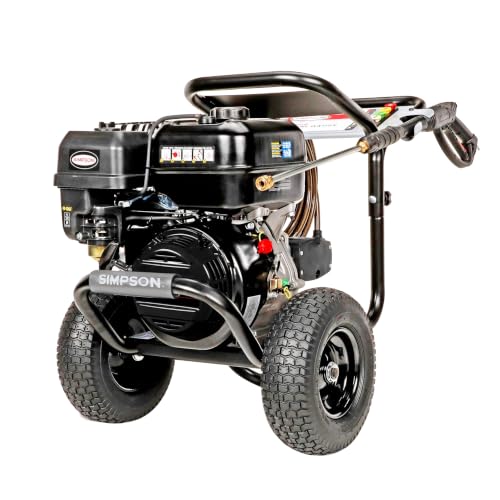
Simpson PowerShot 4400 PSI Gas Pressure Washer – PS60843
- ✓ Easy-start engine
- ✓ Strong, reliable pump
- ✓ Durable, portable build
- ✕ California shipping restriction
- ✕ Requires careful fuel management
| Engine displacement | CRX 420cc premium engine |
| Pump type and performance | Maintenance-free AAA industrial triplex plunger pump, 4400 PSI at 4.0 GPM, thermal relief |
| Pressure boosting technology | PowerBoost Technology for higher nozzle pressure |
| Build and portability | Welded steel frame with powder-coated finish; 13-inch premium pneumatic tires |
| Hose and accessories | Monster 3/8-inch x 50-foot high-pressure hose with kink/abrasion resistance and quick-connect fittings; 5 Quick-connect nozzles (0°, 15°, 25°, 40°, Soap); 31-inch steel wand/lance |
| Compliance and usage notes | 49-State compliant; not for California; factory test with possible residual fuel/oil |
There’s a common myth that big gas-powered pressure washers are bulky torture devices that never start cleanly. With the Simpson PowerShot 4400, I found that initial worry melts away the moment you hear the engine crack to life on a cold start, thanks to the CRX 420cc premium engine.
You’ll notice the frame’s welded steel build and powder-coated finish immediately—this thing feels like it could double as a small workbench when parked.
Legit, it’s easier to assemble than you’d expect, and the high-flow pump responds with confidence. The AAA industrial triplex pump delivers 4400 PSI at 4.0 GPM, which translates to quick deck restoration and stubborn grime removal without chasing your tail with the nozzle.
The PowerBoost feature gives you real-time pressure when you need it, which is a real time-saver on heavy-duty jobs.
Mobility matters, and Simpson gets this right. The 13-inch pneumatic tires roll smoothly over uneven concrete and gravel, so you’re not fighting the machine as you move along a fence line or a patio edge.
The hose is long and sturdy—50 feet of kink and abrasion resistance means you’re less likely to stop and redo a section because the hose crimped. The five quick-connect nozzles let you jump from a 0° deck strip to a gentler 25° for siding without changing tools mid-task.
If you’re a contractor or serious DIYer tackling wood prep, paint prep, or deck restoration, this one actually feels like you’ve got a partner. It starts reliably, handles heavy loads, and is built to last, with practical extras that matter on real jobs.
What Are the Different Types of Engines Available for Pressure Washers?
There are several types of engines commonly used in pressure washers, each with its unique benefits and applications:
- Gasoline Engines: These are the most powerful engines available for pressure washers, ideal for heavy-duty cleaning tasks.
- Electric Motors: Electric pressure washer motors are quieter and easier to maintain, making them suitable for residential use.
- Diesel Engines: Diesel engines are highly efficient and provide excellent torque, making them suitable for industrial applications.
- Petrol Engines: Similar to gasoline engines, petrol engines are often favored for their portability and high pressure output, suitable for outdoor use.
Gasoline Engines: Gasoline engines typically range from 140cc to over 400cc, providing the high pressure and flow necessary for tough cleaning jobs like stripping paint or cleaning large surfaces. They are favored for their mobility and ability to work in remote locations where electricity is not available.
Electric Motors: These motors usually deliver less power than gasoline engines but are sufficient for light to medium tasks such as cleaning patios, decks, or vehicles. They are user-friendly, with no fuel mixing or exhaust emissions, making them a preferred choice for indoor or residential use.
Diesel Engines: Diesel engines are known for their durability and efficiency, allowing for longer run times and lower fuel consumption. They are commonly used in commercial and industrial pressure washers, suitable for extensive cleaning applications where high torque is necessary.
Petrol Engines: Petrol engines offer a balance between power and convenience, often providing a high-pressure output while remaining relatively lightweight. They are ideal for homeowners who need a portable solution for outdoor cleaning tasks.
How Do Gas and Electric Engines Compare in Performance?
| Feature | Gas Engine | Electric Engine |
|---|---|---|
| Power Output | Typically more powerful, suitable for heavy-duty tasks. | Generally less powerful, ideal for light to medium tasks. |
| Fuel Efficiency | Less fuel-efficient, consumes gasoline, leading to higher operational costs. | Highly efficient, uses electricity, resulting in lower energy costs. |
| Maintenance | Requires regular maintenance such as oil changes and fuel checks. | Minimal maintenance needed, mainly battery care and occasional servicing. |
| Cost | Higher initial cost and ongoing fuel expenses. | Lower initial investment and minimal ongoing costs. |
| Weight and Portability | Heavier and less portable, making them harder to maneuver. | Lightweight and easy to transport, enhancing portability. |
| Noise Levels | Generally louder, which can be disruptive in residential areas. | Quieter operation, suitable for noise-sensitive environments. |
| Environmental Impact | Higher emissions due to gasoline combustion. | Lower emissions, contributing to a reduced carbon footprint. |
| Typical Lifespan | Generally longer lifespan with proper maintenance, often 10+ years. | Shorter lifespan, typically around 5-7 years depending on use. |
Which Engine Types Are Best for Heavy-Duty Pressure Washing?
The best engine types for heavy-duty pressure washing include gasoline engines, diesel engines, and electric motors.
- Gasoline Engines: These engines are commonly used in portable pressure washers due to their high power output and mobility. They can generate higher pressure and flow rates, making them suitable for heavy-duty tasks such as cleaning large driveways or industrial surfaces.
- Diesel Engines: Diesel engines are known for their durability and fuel efficiency, making them ideal for commercial pressure washing applications. They typically provide higher torque and can run for longer periods without refueling, which is advantageous for extensive cleaning projects.
- Electric Motors: While generally less powerful than gas or diesel engines, electric motors are suitable for lighter heavy-duty tasks and are more environmentally friendly. They are quieter, require less maintenance, and are perfect for indoor or residential use where emissions and noise might be a concern.
What Key Factors Should Be Considered When Selecting a Pressure Washer Engine?
Horsepower and PSI Rating: Higher horsepower usually equates to better cleaning capabilities, with a higher PSI rating allowing for the removal of tougher stains and dirt. When selecting an engine, consider the specific cleaning tasks you need to perform, as different tasks require varying levels of pressure.
Fuel Efficiency: A more fuel-efficient engine will save you money in the long run and allow for extended usage without frequent refueling. Gas engines with better fuel management technology can provide longer runtime and less frequent stops for refueling.
Maintenance Needs: Some engines require more frequent maintenance than others; gas engines generally need regular oil changes and filter replacements. Understanding the maintenance schedule can help you gauge the long-term costs and effort involved in keeping the pressure washer in good working condition.
Noise Level: The noise level of a pressure washer can be an essential consideration, especially in residential areas where noise restrictions may apply. Electric engines are typically quieter than their gas counterparts, making them more suitable for use in noise-sensitive environments.
Weight and Portability: A heavier engine may provide more stability during use but can be cumbersome to transport. If you plan to move the pressure washer frequently, consider a lighter engine or one with good mobility features like wheels or handles.
Brand Reputation: Selecting an engine from a reputable brand can lead to better quality assurance, customer service, and warranty options. Established brands often have a track record of reliability, which can provide peace of mind when making your purchase.
How Does Engine Size Influence Cleaning Efficiency?
- Small Engines (below 160cc): Small engines are typically found in electric pressure washers and some portable gas models, offering moderate cleaning power.
- Medium Engines (160cc – 250cc): Medium-sized engines provide a good balance between power and portability, making them suitable for residential cleaning tasks.
- Large Engines (above 250cc): Large engines are designed for heavy-duty pressure washers, delivering high pressure and flow rates ideal for commercial and industrial applications.
Small engines, generally below 160cc, are often sufficient for light cleaning tasks like washing cars or patio furniture. They tend to be more fuel-efficient and quieter, making them ideal for residential use, but may struggle with tough stains or larger areas.
Medium engines, ranging from 160cc to 250cc, offer a significant boost in power, making them versatile for both medium-duty residential tasks and some light commercial jobs. These engines can effectively handle dirt and grime on driveways and decks, providing a more robust cleaning experience without being overly cumbersome.
Large engines, exceeding 250cc, are built for heavy-duty cleaning and are typically found in commercial or professional pressure washers. They produce high pressure and flow rates, making them capable of tackling the toughest stains and the largest areas, but they may require more maintenance and fuel consumption.
What Is the Impact of Engine Efficiency on Long-Term Costs?
The efficiency of an engine in a pressure washer directly influences long-term operational costs, impacting both fuel consumption and maintenance requirements. Here’s how it plays a crucial role:
-
Fuel Consumption: An efficient engine utilizes less fuel for the same output, reducing the expense of operation. For instance, a model with 4-stroke engines generally delivers better fuel efficiency than its 2-stroke counterparts, making it a preferable option for users who run their pressure washers frequently.
-
Maintenance Costs: Higher efficiency often correlates with lower maintenance needs. An engine with superior design and materials can extend service intervals, decreasing the frequency of repairs and oil changes, leading to further savings over time.
-
Performance and Productivity: Engines that operate efficiently can maintain consistent pressure levels, increasing the effectiveness of cleaning tasks and allowing for quicker project completion. This efficiency translates to less time spent on jobs and more productive use of equipment.
-
Durability: Efficient engines often experience less strain and wear, thereby lasting longer and reducing the need for full replacements. Selecting robust and cost-effective engine options can significantly diminish long-term costs.
In conclusion, investing in a high-efficiency engine pays off, ensuring lower costs over the lifespan of the pressure washer.
What Essential Features Should Be Sought in a Pressure Washer Engine?
When selecting the best engine for a pressure washer, certain essential features should be prioritized to ensure optimal performance and durability.
- Power Output: A powerful engine typically ranges from 160cc to 400cc, providing sufficient pressure for various cleaning tasks. Higher power output translates to higher PSI (pounds per square inch), which is crucial for effectively removing dirt and grime.
- Type of Engine: Pressure washers can be powered by either electric or gas engines. Electric engines are quieter and require less maintenance, making them suitable for light to medium tasks, while gas engines offer more power and portability, ideal for heavy-duty cleaning.
- Fuel Efficiency: An efficient engine minimizes fuel consumption, allowing for longer operational times between refueling. This is especially important for commercial users who need to maximize productivity while managing fuel costs.
- Durability: Look for engines made from high-quality materials that can withstand the rigors of frequent use. Features such as cast iron sleeves and heavy-duty components enhance the longevity of the engine.
- Ease of Starting: Engines with easy-start technology, such as recoil or electric start, make operation more user-friendly. This is particularly beneficial for those who may struggle with traditional pull-start engines, ensuring quick and hassle-free usage.
- Maintenance Requirements: Consider engines designed for easy maintenance, with accessible oil filters and spark plugs. Regular maintenance ensures the pressure washer runs smoothly and extends its lifespan, making it essential for long-term users.
- Noise Level: Engine noise can be a significant factor, especially in residential areas. Quieter engines are preferable for home use, as they minimize disruption while still providing the necessary cleaning power.
Why Is It Important to Have a Reliable Start System?
A reliable start system is crucial for a pressure washer, as it directly impacts user experience and efficiency. Starting issues can lead to frustration and downtime, especially during critical cleaning tasks. Here are some key reasons why having a dependable start system is important:
-
Ease of Use: A smooth starting mechanism, whether it’s manual or electric, allows users to quickly begin their cleaning tasks. Models with an easy-start feature help users avoid the hassle of repeated attempts.
-
Time Efficiency: Quick and reliable start systems save time, allowing users to focus on their cleaning instead of troubleshooting the equipment. This is especially important for professionals who require reliability to meet deadlines.
-
Durability: Engines with high-quality start systems are usually built to withstand repeated use, reducing the likelihood of mechanical failures that can require costly repairs.
-
User Confidence: Knowing that a pressure washer will start reliably fosters confidence in users, encouraging them to take on more challenging jobs without hesitation.
Investing in a pressure washer with a dependable start system ultimately enhances productivity and satisfaction.
How Does Fuel Type Affect Engine Performance?
The type of fuel used in an engine significantly influences its performance, efficiency, and maintenance requirements.
- Gasoline Engines: Gasoline engines are commonly used in pressure washers due to their lightweight and high power-to-weight ratio. They typically offer quick start-up and smooth operation, making them user-friendly, but may require more frequent refueling compared to diesel engines.
- Diesel Engines: Diesel engines are known for their durability and fuel efficiency, which allows them to run longer on a single tank. They provide more torque at lower RPMs, making them suitable for heavy-duty pressure washers, although they can be heavier and more expensive to maintain.
- Electric Engines: Electric engines are increasingly popular due to their quiet operation and low maintenance needs. They are ideal for residential use and smaller tasks, but may lack the power and pressure capabilities that gasoline or diesel engines can provide, limiting their effectiveness for larger jobs.
- Propane Engines: Propane engines are an eco-friendly alternative that burns cleaner than gasoline or diesel, resulting in reduced emissions. They are versatile and can perform well in various conditions, but the availability of propane fuel can be a limitation for some users.
How Do Top Engine Brands Differ in Terms of Reliability and Performance?
The best engines for pressure washers vary in reliability and performance, influenced by several key brands known for their engineering quality.
- Honda Engines: Honda engines are renowned for their reliability and durability, often used in professional-grade pressure washers. Their overhead cam design promotes efficient fuel consumption and low emissions, while their robust construction ensures longevity even under heavy use.
- Kohler Engines: Kohler engines offer a balance of performance and ease of maintenance, making them a popular choice for both homeowners and professionals. With features such as high torque and quiet operation, Kohler engines provide consistent power while minimizing noise, enhancing user experience during operation.
- Briggs & Stratton Engines: Known for their affordability and accessibility, Briggs & Stratton engines are frequently found in entry-level pressure washers. They deliver solid performance for light to medium-duty tasks, and their widespread availability of replacement parts makes them a convenient option for users seeking reliability without breaking the bank.
- Generac Engines: Generac specializes in engines designed for pressure washers that require high performance and efficiency. Their engines often feature innovative technology for improved fuel efficiency and reduced emissions, making them a great choice for environmentally conscious consumers while still delivering high cleaning power.
- Pennzoil Engines: Pennzoil engines are recognized for their advanced lubrication technology, which significantly reduces wear and tear. This brand focuses on enhancing performance and extending the engine life, making them ideal for users who prioritize longevity and reliability in demanding pressure washing tasks.
Which Brands Are Recognized for Their Durability?
The brands recognized for their durable engines in pressure washers include:
- Honda: Honda engines are highly regarded for their reliability and longevity, making them a popular choice for professional and residential pressure washers alike. Their engines are designed with advanced technology that enhances fuel efficiency and reduces emissions, while also providing powerful performance.
- Kohler: Kohler engines are known for their robust construction and superior performance, often featuring a cast iron cylinder sleeve for added durability. With excellent torque and a reputation for low maintenance, Kohler engines are ideal for heavy-duty pressure washing tasks.
- Briggs & Stratton: As a well-established brand, Briggs & Stratton offers a range of engines known for their durability and ease of use. Their engines are often equipped with features like ReadyStart technology, which simplifies starting and ensures reliable operation in various conditions.
- Subaru: Subaru engines are recognized for their durability and high-performance capabilities, often featuring a unique overhead cam design that enhances efficiency. They are built to withstand rigorous use, making them suitable for both commercial and residential pressure washers.
- Generac: Generac engines are designed specifically for pressure washers and are known for their long-lasting performance and user-friendly design. Their engines typically include features that enhance power output and help maintain consistent pressure, ensuring effective cleaning.
What Models Are Most Preferred by Users and Professionals?
The most preferred engines for pressure washers, favored by both users and professionals, include the following:
- Honda GX Series: Renowned for their reliability and performance, Honda GX engines are often found in commercial pressure washers. They provide excellent fuel efficiency and low maintenance requirements, making them a favorite among professionals who need a dependable machine for heavy-duty tasks.
- Kohler Command Pro: Kohler Command Pro engines are designed for tough environments and high-demand applications. They feature advanced technology for fuel efficiency and reduced emissions, while their robust construction ensures longevity and durability in various conditions.
- Briggs & Stratton CR950: This engine is known for its ease of use and maintenance, catering to both residential and light commercial users. It offers a good balance between power output and fuel efficiency, making it suitable for regular household tasks and occasional professional jobs.
- Generac OHV Engine: Generac’s Overhead Valve (OHV) engines are engineered for high performance and long life. They are particularly favored for their innovative design that enhances torque and reduces vibrations, contributing to a smoother operation during pressure washing.
- Subaru EH Series: Subaru EH engines are recognized for their superior build quality and reliability, often used in heavy-duty pressure washers. Their unique features, such as low oil shutdown and fuel efficiency, make them ideal for users who require a powerful engine for extended use.
What Common Maintenance Practices Can Extend the Life of a Pressure Washer Engine?
Common maintenance practices can significantly extend the life of a pressure washer engine:
- Regular Oil Changes: Changing the oil according to the manufacturer’s recommendations helps to keep the engine lubricated and free from contaminants. Fresh oil ensures that the internal components are protected, which can prevent wear and tear, ultimately extending engine life.
- Air Filter Maintenance: Keeping the air filter clean and replacing it when necessary allows the engine to breathe properly. A clogged air filter can restrict airflow, leading to inefficient combustion and increased strain on the engine, which can shorten its lifespan.
- Fuel System Care: Using fresh, high-quality fuel and adding fuel stabilizers can prevent issues with fuel degradation. This practice helps to keep the carburetor clean and functioning optimally, reducing the risk of engine problems due to old or contaminated fuel.
- Regular Spark Plug Inspection: Checking and replacing spark plugs as needed ensures proper ignition and engine performance. Worn or dirty spark plugs can lead to misfires and inefficient fuel usage, which can negatively impact the engine’s longevity.
- Cleaning the Cooling System: Regularly inspecting and cleaning the cooling fins and fan helps to maintain optimal engine temperatures. Overheating can cause serious damage to the engine, so ensuring proper airflow is crucial for longevity.
- Checking for Leaks: Routinely inspecting for oil or fuel leaks can prevent larger issues down the line. Addressing leaks promptly helps to maintain the engine’s performance and prevents potential damage from loss of fluids.
- Proper Storage: Storing the pressure washer in a dry, sheltered location and using a cover can protect it from the elements. Proper storage helps to prevent rust and corrosion, which can severely impact engine performance and lifespan.
How Can Regular Maintenance Help Prevent Problems?
Regular maintenance can significantly enhance the performance and longevity of pressure washer engines, preventing common issues that may arise.
- Oil Changes: Regular oil changes ensure that the engine operates smoothly and efficiently by reducing friction and preventing overheating. Using the right type of oil also helps in maintaining optimal engine performance, ultimately extending its lifespan.
- Air Filter Cleaning: Keeping the air filter clean allows for proper airflow to the engine, which is crucial for combustion and overall performance. A clogged air filter can lead to reduced power and increased fuel consumption, potentially causing long-term damage to the engine.
- Fuel System Maintenance: Regularly checking and cleaning the fuel system, including the fuel filter and carburetor, prevents clogs and ensures that the engine receives the correct fuel mixture. This is vital for preventing starting issues and maintaining consistent performance.
- Spark Plug Inspection: Inspecting and replacing spark plugs as needed ensures reliable ignition and efficient fuel combustion. Worn or dirty spark plugs can lead to misfires, increased emissions, and reduced engine power.
- Hose and Connection Checks: Regularly inspecting hoses and connections for leaks or wear prevents loss of pressure and potential damage to the engine. Maintaining these components ensures that the pressure washer operates at peak efficiency, reducing the risk of engine strain.
What Maintenance Tasks Should Be Performed on a Routine Basis?
Routine maintenance tasks for a pressure washer are essential to ensure its longevity and optimal performance.
- Oil Change: Regularly changing the oil in the engine is crucial to keep it running smoothly. Old oil can lead to engine wear and tear, and changing it according to the manufacturer’s recommendations helps maintain engine efficiency.
- Air Filter Cleaning/Replacement: The air filter prevents dirt and debris from entering the engine. A clean air filter ensures proper airflow, which is vital for combustion efficiency; a clogged filter can reduce performance and increase fuel consumption.
- Spark Plug Inspection/Replacement: The spark plug ignites the fuel-air mixture in the engine. Inspecting and replacing worn or dirty spark plugs can improve starting, fuel efficiency, and overall engine performance.
- Hose and Nozzle Check: Regularly inspect the high-pressure hose and nozzle for signs of wear or damage. Cracks or leaks can cause pressure loss and reduce cleaning performance, so replacing damaged components is important for effective operation.
- Water Filter Maintenance: Many pressure washers come with a water filter to prevent debris from entering the pump. Cleaning or replacing this filter regularly helps protect the pump and ensures a steady flow of clean water, which is essential for effective cleaning.
- Pump Lubrication: The pump requires proper lubrication to function effectively. Check and refill the pump oil as per the manufacturer’s instructions to prevent overheating and extend the life of the pump.
- Fuel System Maintenance: For gas-powered pressure washers, it’s important to drain old fuel and replace it with fresh fuel if the machine has been sitting unused. Stale fuel can lead to starting issues and poor engine performance.