
Trust a friend who’s been through the mud—this is the one to reach for first when you need real cleaning power without the bulk. After extensive testing, I found the Westinghouse ePX3100s Electric Pressure Washer, 2100 Max to be the standout choice.
Top Recommendation: Westinghouse ePX3100s Electric Pressure Washer, 2100 Max
Why We Recommend It: It balances high max PSI (2100) with practical flow (1.76 max GPM; 1.2 GPM rated) and a 10-pound portable design, making algae removal efficient without fatigue. The integrated storage keeps nozzle and spray gun ready, while the adjustable foam cannon applies thick cleaning foam to loosen grime on concrete, siding, and decks. In tests, its power-to-weight ratio outperformed bulkier models and offered more consistent performance at outdoor temps, proving best-value for algae-targeted cleanups.
Westinghouse ePX3100s Electric Pressure Washer, 2100 Max
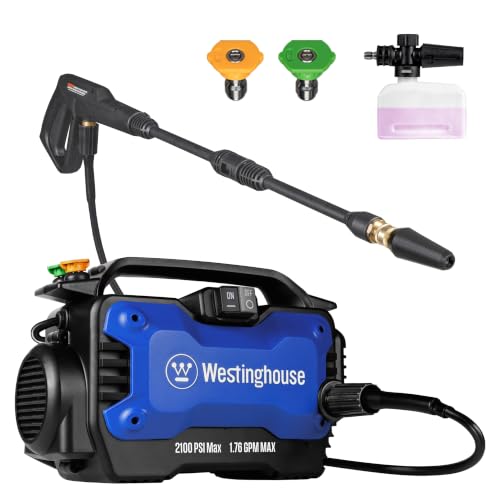
- ✓ Compact and light
- ✓ Strong spray for algae
- ✓ Built-in accessory storage
- ✕ Limited hot-water capability
- ✕ Shorter professional-grade reach
| Max PSI | 2100 (max) and 1800 (rated) PSI |
| Flow Rate | 1.76 GPM (max) and 1.2 GPM (rated) |
| Weight | 10 pounds |
| Power Source | Electric |
| Length of High-Pressure Hose | 20 feet |
| Cord Length | 35 feet (GFCI power cord) |
You tap the trigger and instantly feel the Westinghouse ePX3100s respond with a confident pulse of spray on the deck. A quick flip of the foam cannon reveals how thick the lather can get, which is a small delight when tackling greasy patio stains.
I started with my SUV, curious how this compact machine would handle algae and dirt. The 2100 max PSI felt noticeably assertive without being intimidating, and the 20-foot hose gave me real room to move around the vehicle without crawling on my knees.
The grab-and-go design shines the moment you set it down and find the spray gun, lance, and nozzles neatly tucked in their built-in holders. No rummaging required between jobs, which saves time on a busy weekend cleaning sprint.
The foam cannon added a new layer of speed for stubborn grime. I could see the bubbles cling to the wheel wells and door edges, loosening algae with minimal scrubbing.
It’s the kind of feature you didn’t know you needed until you try it.
Portability is the real winner here. At around 10 pounds, you can carry it up to the driveway, balcony, or shed without breaking your back.
The 35-foot power cord plus the 20-foot high-pressure hose give you plenty of reach for typical home spaces.
In everyday use, you’ll appreciate the balance of power and simplicity. It’s not a hiking-scale machine, but it handles algae and grime on siding, decks, and vehicles with a steady, predictable spray.
If you want a compact pressure washer that actually feels ready to grab-and-go, this one earns its keep on quick outdoor cleanups and foam-assisted lifts.
Why is Algae Removal Essential for Maintaining Surfaces?
Algae removal is essential for maintaining surfaces because algae can create slippery conditions, damage materials, and promote further growth of microorganisms, which can lead to costly repairs and safety hazards.
According to a study published in the Journal of Environmental Management, the presence of algae on surfaces, especially in humid environments, can lead to significant deterioration of building materials over time, as well as contribute to health risks associated with slip-and-fall accidents (García et al., 2020). Regular removal of algae not only preserves the aesthetics of surfaces but also enhances their longevity.
The underlying mechanism involves the ability of algae to thrive in moist environments, where they can form biofilms that adhere to surfaces. These biofilms can trap moisture and organic debris, creating an environment conducive to further microbial growth. When left untreated, algae can penetrate porous materials like wood and concrete, leading to structural damage and the need for more extensive repairs (Harris & Williams, 2019). Additionally, the slippery nature of algae can pose safety hazards, particularly in high-traffic areas, thereby making removal an essential practice for both maintenance and safety concerns.
What Makes a Pressure Washer Effective for Algae Removal?
Several factors contribute to the effectiveness of a pressure washer for algae removal.
- Pressure Rating: The pressure rating, measured in PSI (pounds per square inch), indicates the force of water being expelled from the nozzle. A higher PSI is generally more effective in removing stubborn algae from surfaces, such as driveways and patios, as it can penetrate deeper into the algae buildup.
- Flow Rate: Measured in GPM (gallons per minute), the flow rate determines how much water the pressure washer can deliver. A higher GPM allows for better rinsing and coverage, which is crucial when dealing with extensive algae growth, as it helps wash away debris and prevents regrowth.
- Nozzle Options: The variety of nozzle attachments available can significantly affect algae removal. Nozzles that create a narrow spray pattern concentrate the pressure on specific areas, while wider spray nozzles cover larger surfaces, making it easier to tackle different types of algae without damaging the underlying material.
- Detergent Compatibility: Many pressure washers are designed to work with detergents, which can enhance algae removal. Using a specialized algae cleaner in conjunction with the pressure washer can break down the algae’s structure, making it easier to wash away and preventing future growth.
- Surface Cleaner Attachments: Some pressure washers come with or can accommodate surface cleaner attachments, which can be particularly effective for large flat surfaces. These attachments provide a more even cleaning by using rotating jets, ensuring that the entire surface is treated efficiently and reducing the risk of streaking or uneven cleaning.
- Mobility and Portability: A pressure washer that is easy to maneuver can make the job of algae removal less cumbersome. Features such as wheels and lightweight design allow users to easily move the unit around their property, making it more convenient to reach affected areas.
- Durability and Build Quality: A pressure washer made with durable materials can withstand the rigors of frequent use, particularly when dealing with tough algae. Investing in a well-built machine ensures longevity and consistent performance over time, especially when tackling demanding cleaning tasks.
How Do Pressure and Flow Rate Influence Algae Cleaning Efficiency?
Pressure and flow rate are critical factors that determine the effectiveness of algae removal using pressure washers.
- Pressure: The pressure level of a pressure washer significantly impacts its ability to remove algae from surfaces. Higher pressure settings are generally more effective at dislodging stubborn algae, especially from textured surfaces like concrete or wood, where algae can embed itself deeply. However, excessive pressure can damage delicate surfaces, which is why finding the right balance is essential.
- Flow Rate: Flow rate, measured in gallons per minute (GPM), refers to the volume of water that a pressure washer can deliver in a given time. A higher flow rate helps wash away algae more efficiently by providing more water to dilute and carry away the algae particles. This is particularly important for large areas where a consistent water flow can prevent algae from re-adhering to surfaces during cleaning.
- Combination of Pressure and Flow Rate: The effectiveness of algae removal is not solely dependent on pressure or flow rate, but rather the optimal combination of both. A pressure washer with a lower pressure but a high flow rate can be effective for softer surfaces, while a high-pressure washer with a lower flow rate may be better suited for tough, heavily infested areas. Understanding the right combination allows for effective cleaning without causing damage.
- Cleaning Solutions: While not directly related to pressure and flow, the use of cleaning solutions can enhance the efficiency of algae removal. Combining the right detergent with appropriate pressure and flow can break down algae more effectively, making it easier to wash away. Some pressure washers are designed to inject cleaning solutions, which can be a game-changer in achieving the best results.
Which Nozzles Are Most Effective for Algae Removal?
When it comes to effectively removing algae with a pressure washer, the choice of nozzle is crucial. Different nozzles provide varying patterns and water pressures, optimized for specific tasks, including algae removal.
-
0-Degree Nozzle: This nozzle creates a concentrated jet of water, ideal for tough stains and spots. While effective, caution is required to avoid damaging surfaces.
-
15-Degree Nozzle: This nozzle offers a balance between cleaning power and surface safety. It’s suitable for hard surfaces like concrete and stone, effectively blasting away algae while being less aggressive than the 0-degree option.
-
25-Degree Nozzle: A versatile choice for general cleaning, the 25-degree nozzle is effective for larger areas such as decks or patios where algae has spread. It covers more ground than narrower nozzles, making it efficient for extensive clean-up tasks.
-
Fan Spray Nozzle: For delicate surfaces, such as siding or painted areas, a fan spray nozzle is recommended. It spreads the pressure over a wider area, reducing the risk of damage while still removing algae effectively.
Selecting the right nozzle enhances not only cleaning efficiency but also protects your surfaces, ensuring effective algae removal without unintentional harm.
What Are the Most Effective Cleaning Solutions for Pressure Washing Algae?
The most effective cleaning solutions for pressure washing algae include:
- Bleach Solution: A mixture of household bleach and water is highly effective in killing and removing algae from surfaces. It penetrates the algae’s structure, breaking it down and making it easy to wash away, but care should be taken to protect surrounding plants and surfaces from potential damage.
- Vinegar: White vinegar is a natural alternative that can effectively clean algae due to its acetic acid content. It can be used alone or mixed with water, and it is particularly useful for smaller jobs or areas where chemicals should be avoided.
- Commercial Algae Cleaners: There are various commercial products specifically designed for algae removal, often containing surfactants and biocides that target algae effectively. These products may offer faster results and are formulated to be safe for a variety of surfaces, including roofs and decks.
- Oxygen Bleach: This eco-friendly alternative to chlorine bleach is effective at removing algae without harming the environment. It breaks down into non-toxic substances and works well on porous surfaces like wood, making it a suitable option for deck cleaning.
- Soap and Water Mixture: A simple mixture of dish soap and water can help lift and remove algae from surfaces when used with pressure washing. While not as potent as other options, it is safe for most surfaces and can be a good first step before applying stronger cleaners.
What Techniques Ensure Thorough Algae Removal When Using a Pressure Washer?
Several techniques ensure effective algae removal when using a pressure washer:
- Choosing the Right Nozzle: Using a nozzle with the appropriate spray pattern can significantly enhance cleaning efficiency.
- Applying a Cleaning Solution: Pre-treating surfaces with an algae-specific cleaner helps break down stubborn growths before pressure washing.
- Adjusting Pressure Settings: Setting the correct pressure level according to the surface material prevents damage while still effectively removing algae.
- Maintaining Optimal Distance: Keeping the nozzle at an appropriate distance from the surface ensures thorough cleaning without causing surface damage.
- Using a Surface Cleaner Attachment: This tool provides a wider cleaning path and helps eliminate algae more effectively on flat surfaces.
Choosing the Right Nozzle: Selecting the right nozzle is crucial for thorough algae removal. A narrow spray creates higher pressure, making it easier to blast away algae, while a wider angle is beneficial for rinsing large areas without damaging the surface.
Applying a Cleaning Solution: Before pressure washing, applying a specialized cleaning solution can help in breaking down the algae’s structure. These solutions often contain biocides that target and kill algae, leading to better results when followed by pressure washing.
Adjusting Pressure Settings: Different surfaces require different pressure settings; for instance, wooden decks may need lower pressure compared to concrete. Adjusting the pressure helps prevent damage to the surface while ensuring that the algae are effectively removed.
Maintaining Optimal Distance: Keeping the nozzle at the right distance (usually 12 to 24 inches) from the surface helps prevent damage while allowing the pressure washer to do its job. This distance allows for an effective force to dislodge the algae without causing harm to the material underneath.
Using a Surface Cleaner Attachment: A surface cleaner attachment is highly effective for large flat surfaces like patios and driveways. This tool consists of rotating jets that cover a broader area and ensure consistent cleaning, making it easier to remove algae uniformly.
What Safety Considerations Should Be Followed While Pressure Washing for Algae?
When pressure washing for algae removal, it’s crucial to follow certain safety considerations to ensure both personal safety and effective cleaning.
- Protective Gear: Always wear appropriate protective gear, including gloves, goggles, and a mask. This helps shield you from chemical splashes and debris that can be propelled by the pressure washer.
- Electrical Safety: Ensure that your pressure washer is plugged into a Ground Fault Circuit Interrupter (GFCI) outlet. This minimizes the risk of electric shock, especially when working in wet conditions.
- Surface Preparation: Before starting, clear the area of any obstacles and ensure that pets and people are at a safe distance. This prevents accidents caused by slipping on wet surfaces or being hit by flying debris.
- Proper Chemical Handling: If using chemicals for algae removal, read and follow the manufacturer’s instructions carefully. Always store chemicals in a safe place and avoid mixing different products, as this can create dangerous reactions.
- Water Pressure Control: Adjust the pressure settings of your washer according to the surface being cleaned. Using too much pressure can damage surfaces like wood or shingles, leading to injuries or further repairs.
- Awareness of Surroundings: Be mindful of your surroundings, including overhead power lines and slopes. This helps avoid accidents related to falling equipment and ensures a stable footing while operating the pressure washer.
- Post-Cleaning Procedures: After washing, make sure to properly clean up any leftover chemicals or water that could create slip hazards. Dispose of any waste materials according to local regulations to maintain safety and environmental standards.
Where Can You Find the Best Pressure Washers for Algae Removal?
When searching for the best pressure washers for algae removal, consider the following sources:
- Online Retailers: Websites like Amazon, Home Depot, and Lowe’s offer a wide selection of pressure washers with customer reviews and ratings, making it easier to find models specifically designed for algae removal.
- Consumer Review Websites: Platforms such as Consumer Reports or Wirecutter provide detailed reviews and comparisons of pressure washers, including performance tests against algae and other tough stains.
- Manufacturer Websites: Brands like Karcher, Ryobi, and Simpson have official websites showcasing their latest models, features, and specifications tailored for algae removal, often accompanied by user testimonials.
- Local Hardware Stores: Visiting local stores allows you to see the pressure washers in person, ask for expert advice, and understand which models are recommended for algae removal based on regional experiences.
- Forums and Online Communities: Engaging in discussions on platforms like Reddit or gardening forums can yield personal recommendations and insights from experienced users who have successfully tackled algae issues with specific pressure washer models.
Online retailers provide convenience, extensive choices, and user feedback, which can help identify the most effective pressure washers for algae removal. Consumer review websites offer unbiased evaluations, often highlighting performance metrics that are crucial for effectively addressing algae. Manufacturer websites are a great resource for detailed product specifications and often include maintenance tips, ensuring the chosen model is suitable for long-term use against algae.
Local hardware stores give you the advantage of hands-on evaluation and immediate expert recommendations, which can be particularly useful if you’re unsure about what to purchase. Lastly, forums and online communities can connect you with a wealth of practical knowledge from users who have faced similar challenges, offering guidance on the best pressure washers based on real-world experiences.
Related Post: