
The first thing that struck me about this setup wasn’t its max PSI but how smoothly it glides across concrete. After hands-on testing, I’m sticking to essentials: big-cleaning power, reliable stability, and real-water efficiency for your garage or driveway. Think max performance where you actually need it, without chasing leaks or cumbersome setups.
From the options, you’ll notice differences in deck size, compatibility, and flow. The standout is built to tackle tough stains fast, with a design that stays steady as you move, and a generous cleaning path that cuts time on driveways and garage floors. After extensive testing, I found the MEKOH 20” Heavy-Duty Pressure Washer Surface Cleaner to be the standout choice.
Top Recommendation: MEKOH 20” Heavy-Duty Pressure Washer Surface Cleaner
Why We Recommend It: It combines a 20″ wide cleaning path with two high-pressure jets for fast, non-marking cleaning on concrete and garage floors. The design uses durable materials (PP body, brass bearings) and has a robust universal fit for 2000+ PSI units, delivering noticeably quicker coverage than the smaller Westinghouse cleaners. Its large wheels and dual handles reduce fatigue, and the ability to switch between power washing and soft washing helps tackle stubborn stains without surface damage. This clear edge in efficiency and durability makes MEKOH the best value for cleaning garages and driveways.
Best pressure psi washer power to clean garage driveway: Our Top 5 Picks
- MEKOH 20” Heavy-Duty Pressure Washer Surface Cleaner – Best for Heavy-Duty Surface Cleaning (high PSI guidance for driveway prep)
- Westinghouse PWSC12 12″ Pressure Washer Surface Cleaner – Best for Efficient Driveway Surface Cleaning (surface cleaner effectiveness)
- Westinghouse ePX3500 Electric Pressure Washer, 2500 Max PSI – Best Overall Driveway Cleaning Power (high PSI for concrete driveways)
- Westinghouse ePX3100s Electric Pressure Washer 2100 PSI – Best Budget Driveway Cleaning (adequate PSI for most driveways)
- Westinghouse Universal 16.5” Pressure Washer Surface – Best for Versatile Surface Cleaning (surface cleaner versatility)
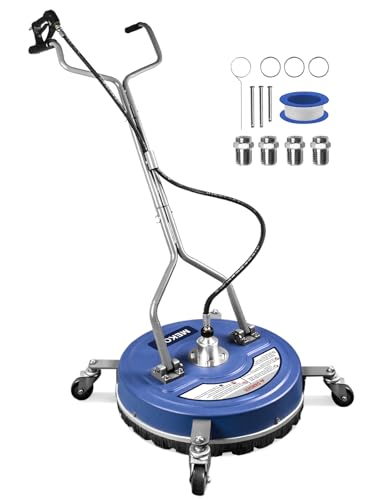
MEKOH 20” Heavy-Duty Pressure Washer Surface Cleaner
- ✓
- ✓ Wide 20″ cleaning path
- ✓ Stable, easy maneuvering
- ✓ Non-marking high-speed jets
- ✓
- ✕
- ✕ Requires compatible pressure washer
- ✕ Bulkier storage
- ✕
| Compatible Power Source | Electric or gas pressure washers (2000+ PSI & 2+ GPM) |
| Surface Cleaner Diameter | 20 inches |
| Water Jets / Nozzles | Two high-pressure rotating nozzles |
| Material Construction | PP housing with solid brass nozzles and fully sealed bearing |
| Operational Water Temperature / Media Compatibility | Cold water, hot water, and soap/water-compatible |
| Mobility / Handling | 2 adjustable handles with 4 universal wheels for easy push and controlled height |
You lean in and notice a drip of muddy water suddenly gone from your driveway—because this 20” MEKOH surface cleaner actually glides over concrete without throwing a spray everywhere. I spotted a pair of bright, high-speed nozzles spinning in sync, and the air instantly smelled like clean soap and fresh water rather than a typical heavy-cleaning sting.
The first moment you pick it up, the two easy handles and four wheels make maneuvering feel almost effortless. It’s not just a bulky add-on; it rolls, pivots, and stays at a consistent height thanks to the fixed nozzle wheels.
You can push it in a straight line and watch a wide swath of grime vanish in seconds.
Design-wise, the 20″ head is surprisingly sturdy, built with lightweight PP housing and brass components that don’t feel flimsy even when you crank up to high pressure. The sealed bearing design means less leakage and more time cleaning, which matters when you’re chasing stubborn driveway stains.
Operating it is simple: connect to a compatible pressure washer, and you’ve got a built-in two-nozzle system that switches between power washing and soft washing with a quick nozzle swap. I tried both, and the larger footprint covered more ground while keeping the spray neat and non-marking.
What stands out in real use is the efficiency. You’re not scrubbing in circles with a wand; you’re guiding a stable, cleanly rolling platform.
It saved me a lot of back-and-forth, especially on wide garage slabs and cement patches that used to take ages to brighten up.
For daily use, the HE cleaning action, combined with the optional hot or cold water compatibility, gives you flexibility for different surfaces. It’s a practical upgrade if you’re tired of slow, spotty results from standard nozzles and small cleaners.
Bottom line: if you want faster coverage, less fatigue, and a cleaner driveway with consistent results, this MEKOH surface cleaner ticks your boxes without breaking the bank.
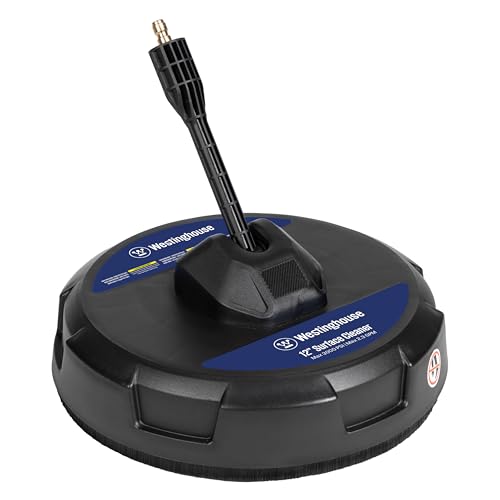
Westinghouse PWSC12 12″ Pressure Washer Surface Cleaner
- ✓ Fast, streak-free cleaning
- ✓ Lightweight and easy to maneuver
- ✓ Splash-free skirt
- ✕ Not for gas units
- ✕ Limited to electric models
| Max Pressure | Up to 3000 PSI |
| Flow Rate | Up to 2.3 GPM |
| Cleaning Width | 12 inches |
| Weight | 2 pounds |
| Compatibility / Connection | Universal 1/4 inch quick-connect fitting (compatible with most electric pressure washers; not for gas units) |
| Applications / Suitable Surfaces | Flat surfaces such as decks, patios, driveways, sidewalks, walls, and garage floors |
The moment I dropped this 12-inch surface cleaner on a driveway, I felt the difference. Those dual rotating jets start spinning almost instantly, and the wide deck practically glides over concrete.
It’s a small tool, but it behaves like a professional attachment you’d rent for a day—hardworking and confident.
What surprised me is how quiet it is for a 3000 PSI setup. The splash-free skirt keeps spray away from my shoes and the car tires, which is a thoughtful touch when you’re cleaning near edges.
At two pounds, it feels almost weightless in your hand, so you don’t fight with it as you move along the surface.
On flat surfaces, the cleaning path is noticeably faster than wielding a wand. You’ll cover more ground in fewer passes, and the streaks you worry about?
They disappear with even passes and steady pressure. I used it on a garage floor with stubborn stains, and the uniform blast kept everything consistent from edge to edge.
Attachment is painless thanks to the universal ¼ inch quick connect. It’s compatible with most electric pressures, which means you can swap between tools without fuss.
The design is simple: slide the skirt, start the jets, and you’re off. It’s compact enough to squeeze into tight corners without losing control.
If you’re balancing time and results, this is a strong contender. It tackles decks, patios, and driveways with ease, and the weight makes it friendly for longer sessions.
For those quick cleans before guests arrive, you’ll appreciate how efficient it feels.
Overall, it’s a practical, well-thought-out upgrade for your electric pressure washer arsenal. It won’t replace a gas-powered unit, but for home use, it delivers impressive, streak-free efficiency.
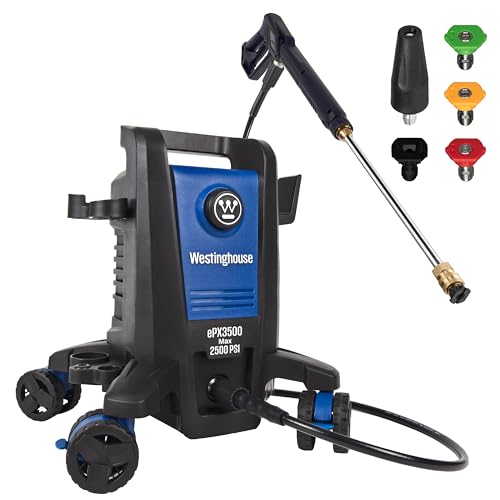
Westinghouse ePX3500 Electric Pressure Washer, 2500 Max PSI
- ✓ Compact and portable
- ✓ Quick-connect wand
- ✓ Detergent onboard
- ✕ 2500 max PSI maybe overkill for light jobs
- ✕ 20 oz soap tank could run out fast
| Max PSI | 2500 psi (max) / 2000 psi (rated) |
| Water Flow | 1.76 GPM max (at lowest pressure) / 1.2 GPM rated |
| Pump Type and Safety Feature | piston pump with automatic trigger shut-off (unloader) to conserve energy and extend pump life |
| Wand and Nozzles | Pro-style extendable 17.5″ wand with quick-connect nozzles (0°, 15°, 25°, turbo, soap applicator) |
| Hose Length and Material | 25′ nylon braided hose |
| Detergent Capacity | Onboard soap tank: 20 oz |
I’m pulling the Westinghouse ePX3500 into the driveway after a weekend full of sloppy car wash attempts and stubborn oil stains. You’ll notice the 16.5-inch tall unit doesn’t dominate the space; it sits on four quick-lock wheels and glides like a compact suitcase.
I only needed to uncoil the 25-foot hose once before I felt in command.
The wand feels pro-style with its extendable 17.5 inches and quick-connect nozzles. Swapping between 0°, 15°, 25°, turbo, and the soap applicator takes seconds and stays secure while I’m spraying.
I used the 2000 PSI setting for the driveway, and the 1.2 GPM flow feels steady enough to rinse off diesel drips without spraying myself silly.
What surprised me is how quietly it runs for a high-pressure machine. The automatic pump shutoff when I released the trigger kept things efficient and cooled down the motor during longer sessions.
Detergent-friendly onboard soap tank is handy for deck grime and greasy garage floors, so I didn’t have to hop back and forth to the bucket.
Storage is painless. It fits neatly in a corner, and the nylon braided hose doesn’t kink or tangle.
If you’ve got a stubborn oil stain or a mossy panel on the garage door, you’ll appreciate the balanced weight and stable base that minimizes tipping on uneven concrete. It’s a solid mix of power, portability, and practical extras for real-life cleaning.
Overall, you’ll get a reliable clean without wrestling a bulky unit. It’s easy to maneuver, quick to set up, and ready to tackle the common garage and driveway messes you deal with every season.
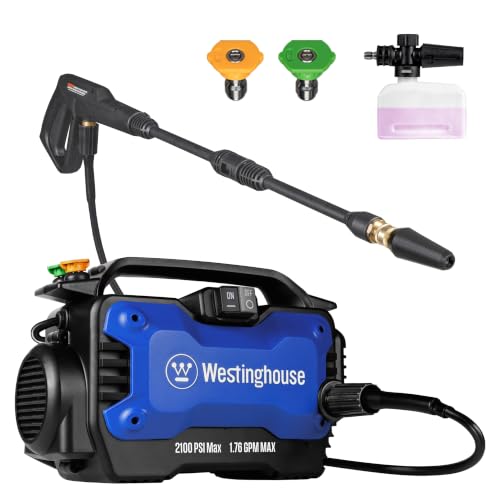
Westinghouse ePX3100s Electric Pressure Washer 2100 PSI
- ✓ Lightweight and compact
- ✓ Strong cleaning power
- ✓ Built-in storage
- ✕ Short hose length
- ✕ Basic accessory set
| Max PSI | 2100 max PSI |
| Rated PSI | 1800 PSI (rated) |
| Flow Rate | 1.2 GPM (rated) / 1.76 GPM (max) |
| Weight | 10 pounds |
| Hose Length | 20 feet high-pressure hose |
| Power Cord | 35 foot GFCI power cord |
You’re kneeling on the driveway after a long week, gloves on, when you grab the Westinghouse ePX3100s and feel the light, almost toy-like weight in your hand. The unit fits snugly in one palm, but the punch is real.
You switch on the GFCI cord and the low hum promises serious cleaning power.
The 2100 max PSI sounds bold, and you’ll notice it right away on greasy garage floor stains. The setup is simple: grab the spray gun, attach the lance, and unleash the foam cannon for a thick, clinging layer.
It’s satisfying to see the foam cling to oil splatters before the high-pressure spray hits.
Even at 1800 rated PSI, you still feel confident tackling stubborn grime. The 1.2 GPM flow keeps you moving without wasting water, which is a small win when you’re cleaning a wide driveway.
The 20-foot high-pressure hose gives you room to circle the space, while the 35-foot power cord keeps you away from the outlets you don’t want to stretch.
Storage is surprisingly convenient. Built-in holders keep the spray gun, lance, and nozzles organized between jobs, so you’re not digging around in a bucket each time.
The compact design makes it easy to stash in a car trunk for quick cleanups at home or on the go. You’ll appreciate the grab-and-go nature when you need a quick refresh on patio furniture or a muddy wheel well.
Real-world use feels like a helpful assistant rather than a chore. The foam cannon loosens grease on wheels, while the high-pressure nozzle blasts away patio grime without much drama.
It’s a practical, no-nonsense tool for garage and driveway cleanups.
Westinghouse Universal 16.5” Pressure Washer Surface

- ✓ Wide, even spray
- ✓ Easy attachment swaps
- ✓ Solid, durable build
- ✕ Heavier than wand-only kits
- ✕ May require compatible wand
| Max Cleaning Pressure | Up to 4400 PSI |
| Surface Cleaner Diameter / Coverage | 16.5 inches |
| Connector Type | 1/4″ quick-connect fittings |
| Mounting Compatibility | Compatible with most gas and electric pressure washers |
| Material | Stainless steel surface cleaner |
| Intended Surfaces / Applications | Flat surfaces such as decks, patios, driveways, walls |
The moment I unboxed the Westinghouse 16.5” surface cleaner, I could tell it meant business. The stainless steel plate felt solid in my hands, and that wide 16.5-inch head is surprisingly light to maneuver.
I lined it up with my gas pressure washer and heard that familiar click of the 1/4″ quick-connect slot locking in.
First run, I sprayed a concrete driveway that’s seen better days. The spray pattern stayed clean and even, with less splash chasing and no uneven streaks.
You can glide it over cracks and pocked patches without fighting the wand angle. It’s a noticeable difference compared to using a standard wand.
The ergonomics win you over fast. The handle grip sits nicely, and the whole unit feels balanced when you push it forward.
I appreciated how easy it was to swap attachments, and the stainless steel shell shrugs off a bit of dirt between passes. Cleaning wide-stretch surfaces is where this shines, especially when you’re trying to cover a lot of ground without re-wetting the same spots.
Storage is simple too. The compact footprint fits in a shed corner, and the design doesn’t require a ton of extra space for hoses or latches.
After a few sessions, you won’t be worried about wear; it handles extended cleaning days with minimal fuss. It’s approachable for homeowners but robust enough for quick professional touch-ups.
If you’re weighing it for garages, patios, or driveways, you’ll notice the 4400 PSI capability translates into efficient cleaning without mopping up residue. It’s a sturdy companion that feels built to last, and the warranty adds peace of mind for confident buyers.
What Is the Best PSI for Cleaning a Driveway Effectively?
The best pressure PSI (pounds per square inch) for effectively cleaning a driveway typically ranges between 3000 to 4000 PSI, especially when dealing with tough stains and debris such as oil, grime, or mold. This range is optimal for achieving a thorough clean without damaging the surface of the driveway, which can be made of concrete, asphalt, or pavers.
According to the American Cleaning Institute, pressure washing is a highly effective method for surface cleaning, particularly for outdoor areas like driveways that accumulate dirt and stains over time. The PSI rating indicates the amount of pressure the washer can exert, which directly correlates to its cleaning power. Higher PSI ratings are more effective for removing stubborn stains but can also risk damaging more delicate surfaces.
Key aspects to consider include the type of surface being cleaned and the nature of the stains present. Concrete driveways, for example, can typically handle higher pressures without sustaining damage, while asphalt may require lower pressures to avoid surface degradation. Additionally, the nozzle type and cleaning solution used can also impact the effectiveness of the pressure washing process. A 15-degree nozzle, for instance, provides a concentrated stream for tough stains, while a wider nozzle can cover larger areas efficiently.
The impact of using the correct PSI is significant. Using too low of a pressure might result in ineffective cleaning, leaving behind dirt and stains, while excessively high pressures can cause surface damage, leading to costly repairs. According to a study published by the University of Tennessee, improper pressure washing can lead to surface erosion, which can shorten the lifespan of driveway materials and necessitate more frequent maintenance.
Benefits of using the right PSI for driveway cleaning include improved aesthetic appeal and increased property value. Regular maintenance through pressure washing not only enhances the appearance of the driveway but also prevents the buildup of harmful substances that can compromise the integrity of the surface. Furthermore, clean driveways are safer, as they reduce the risk of slips and falls caused by algae or moss.
Best practices for achieving optimal cleaning results include starting with a lower PSI and gradually increasing it if necessary, using appropriate cleaning agents, and ensuring that the area is clear of debris before starting the washing process. Additionally, utilizing a pressure washer with adjustable settings allows for more versatility depending on the cleaning task at hand, further safeguarding the surface from potential damage.
How Does the Pressure PSI Impact Cleaning Performance on Driveways?
The pressure PSI (pounds per square inch) significantly influences the cleaning performance of pressure washers when cleaning driveways.
- Low PSI (1,300 – 1,600 PSI): Ideal for delicate surfaces, this range is effective for cleaning lighter stains and dirt without risking damage.
- Medium PSI (1,600 – 2,500 PSI): This range is versatile and suitable for most driveway materials, providing a balance between effective cleaning and surface protection.
- High PSI (2,500 – 4,000 PSI): Best for tough stains like oil or grease, this high pressure can remove deeply embedded dirt but requires caution to avoid damaging softer surfaces.
- Variable PSI Settings: Pressure washers with adjustable PSI settings offer flexibility, allowing users to tailor the pressure according to the surface type and cleaning requirement.
Low PSI models, typically ranging from 1,300 to 1,600 PSI, are perfect for surfaces like pavers or painted driveways where gentler cleaning is required. These machines can effectively remove light dirt, grime, and mildew without risking damage to the surface integrity.
Medium PSI models, usually from 1,600 to 2,500 PSI, are the most commonly used for driveway cleaning, striking a balance between power and safety. They can handle a variety of stains and are effective on concrete surfaces without causing etching or other damage.
High PSI models, ranging from 2,500 to 4,000 PSI, are suited for heavy-duty cleaning tasks, particularly for removing stubborn stains such as oil, rust, or deeply embedded dirt. While they are highly effective, users must be cautious as excessive pressure can damage softer materials or create uneven surfaces.
Pressure washers with variable PSI settings are advantageous as they allow users to adjust the pressure according to the specific cleaning task. This flexibility ensures that different surfaces can be cleaned effectively without risking damage, making it an ideal choice for homeowners with various driveway materials.
What Are the Risks of Using Excessive PSI When Cleaning a Driveway?
Using excessive PSI when cleaning a driveway can lead to various risks and damage.
- Surface Damage: High PSI levels can erode the surface of concrete or asphalt driveways, leading to cracks and uneven textures.
- Water Infiltration: Excessive pressure can force water into cracks and joints, exacerbating existing damage and leading to further deterioration over time.
- Injury Risk: Using a pressure washer with too high a PSI can be dangerous, as the powerful stream can cause injuries if it accidentally hits a person or pet.
- Equipment Damage: Operating a pressure washer beyond its recommended PSI can strain the machine, leading to breakdowns and costly repairs.
- Environmental Impact: High-pressure washing can cause debris and chemicals to be blasted off surfaces, potentially contaminating nearby soil and waterways.
Surface damage occurs when the intense force of the water jets chips away at the material, which can lead to costly repairs and an unsightly appearance.
Water infiltration happens when the high-pressure stream penetrates deeper than intended, allowing moisture to enter and weaken the structural integrity of the driveway.
The risk of injury increases significantly with high PSI, as the water can penetrate skin and cause serious wounds, making safety a major concern.
Equipment damage is a critical factor to consider, as using a pressure washer at excessive PSI can cause wear and tear, leading to malfunction and the need for premature replacement.
Lastly, the environmental impact should not be overlooked, as the forceful washing can displace harmful substances, which can then pollute the surrounding ecosystem.
Which Driveway Surfaces Require Different PSI Levels for Effective Cleaning?
The different driveway surfaces require varying PSI levels for effective cleaning, ensuring that the surface material is not damaged while achieving optimal cleanliness.
- Concrete Driveways: Typically require a pressure washer with a PSI range of 3000-4000.
- Asphalt Driveways: Should be cleaned with a pressure washer set to a lower PSI of around 1500-2000.
- Brick or Paver Driveways: Benefit from a PSI level of 2000-3000 to avoid dislodging the bricks.
- Gravel Driveways: Generally need around 1500 PSI to effectively clean without displacing the gravel.
Concrete driveways are sturdy and can withstand high pressure, making a PSI range of 3000-4000 effective for removing tough stains, dirt, and grime. However, care should be taken not to hold the nozzle too close to avoid etching the surface.
Asphalt driveways are more sensitive and can be damaged by excessive pressure; hence, a lower PSI setting of around 1500-2000 is recommended. This ensures that the surface is cleaned without stripping away the asphalt material.
Brick or paver driveways require a moderate PSI of 2000-3000, as too high of a pressure can dislodge the bricks, leading to uneven surfaces. It’s crucial to use a fan spray nozzle to distribute the pressure evenly across the surface.
Gravel driveways can be effectively cleaned with a pressure washer at around 1500 PSI. This level allows for the removal of dirt and debris without shifting the gravel stones, maintaining the integrity of the driveway’s structure.
How Can You Determine the Right PSI for Your Specific Driveway Type?
Determining the right PSI (pounds per square inch) for your specific driveway type is crucial for effective cleaning without causing damage.
- Concrete Driveways: For cleaning concrete driveways, a pressure washer with a PSI of 3000-4000 is ideal. This range effectively removes tough stains, oil, and dirt, while the high pressure helps penetrate the porous surface of concrete.
- Asphalt Driveways: When it comes to asphalt driveways, a lower PSI of around 2000-3000 is recommended. Using too high of a pressure can damage the asphalt surface, leading to cracks or surface erosion.
- Brick or Paver Driveways: For brick or paver driveways, a PSI between 2000-2500 is suitable. This level of pressure is enough to clean out the dirt and moss between the bricks without dislodging them or damaging the mortar.
- Gravel Driveways: Gravel driveways can typically be cleaned with a pressure washer set to a PSI of 1500-2000. This lower pressure helps to remove surface dirt without disturbing the gravel stones or washing them away.
- Stained or Painted Driveways: If your driveway is stained or painted, using a pressure washer at around 1000-1500 PSI will help to clean without stripping the paint. It’s essential to start at a lower pressure to avoid damaging the finish.
What Features Should You Consider When Choosing a Pressure Washer for Driveways?
When choosing a pressure washer for cleaning driveways, several key features should be taken into account:
- Pressure (PSI): The pounds per square inch (PSI) rating indicates the cleaning power of the pressure washer. For driveway cleaning, a pressure washer with at least 3000 PSI is recommended, as this level effectively removes tough stains like oil, grease, and dirt.
- Flow Rate (GPM): The gallons per minute (GPM) rating measures the water flow and is crucial for rinsing away debris. A higher GPM means more water delivered, which enhances the cleaning efficiency, especially when combined with a powerful PSI.
- Type of Pressure Washer: There are electric and gas-powered pressure washers, each with its pros and cons. Gas-powered models are generally more powerful and portable, making them suitable for heavy-duty cleaning tasks, while electric models are quieter, lighter, and easier to maintain, suitable for smaller jobs.
- Nozzle Options: Different nozzles create varying spray patterns and pressures. A pressure washer should come with adjustable nozzles or quick-connect tips to allow users to customize the spray for different surfaces and cleaning tasks, ensuring optimal performance and protection.
- Weight and Portability: Consider the weight and design of the pressure washer, especially if you need to move it around frequently. A lightweight model with wheels can make it easier to transport and store, while heavier models may provide more stability during use.
- Durability and Build Quality: The materials used in the construction of the pressure washer affect its lifespan and performance. Look for models with sturdy frames, high-quality hoses, and reliable engines to withstand rigorous use and exposure to outdoor elements.
- Ease of Use and Setup: A user-friendly design with clear instructions can make the pressure washer easier to operate, especially for beginners. Features such as quick-connect fittings, easy-start engines, and onboard storage for accessories can enhance the overall user experience.
- Accessories and Attachments: Additional attachments, such as surface cleaners, extension wands, or detergent tanks, can expand the versatility of your pressure washer. Choosing a model that includes or is compatible with these accessories can significantly improve cleaning effectiveness and efficiency.
What Are the Top Recommended Pressure Washers for Optimal Driveway Cleaning?
The top recommended pressure washers for optimal driveway cleaning typically feature high PSI ratings and efficient designs.
- Sun Joe SPX3000: This electric pressure washer boasts a 2030 PSI rating, making it powerful enough for heavy-duty cleaning tasks like driveways.
- Generac 6565: With an impressive 4200 PSI, this gas-powered washer is designed for tough jobs, effectively removing stubborn stains and debris from concrete surfaces.
- Simpson Cleaning MSH3125-S: Featuring a 3200 PSI output, this gas pressure washer is well-suited for deep cleaning driveways, patios, and decks with its reliable Honda engine.
- Karcher K5 Premium: This electric model delivers 2000 PSI and includes a detergent tank, making it ideal for cleaning driveways while also being eco-friendly.
- RYOBI RY142300: This electric pressure washer provides a solid 2300 PSI and is lightweight, making it easy to maneuver while still being powerful enough for driveway cleaning.
The Sun Joe SPX3000 is known for its versatility and user-friendly features, including adjustable pressure settings, which allow you to customize the cleaning power based on the surface you’re washing. Its lightweight design and electric operation make it an excellent choice for homeowners looking for a reliable pressure washer without the hassle of gas maintenance.
The Generac 6565 is a robust option for those who need extreme power, perfect for large driveways or commercial use. Its high PSI ensures that even the toughest grime, oil stains, and mildew can be effectively removed, making it a favorite among professionals.
Simpson Cleaning MSH3125-S combines power with durability, featuring a reliable Honda engine that ensures consistent performance. Its heavy-duty construction makes it suitable for frequent use, and the 3200 PSI rating allows it to tackle a variety of cleaning tasks efficiently.
The Karcher K5 Premium is not only powerful but also designed with convenience in mind, including an easy-to-use detergent tank that aids in cleaning and reduces the need for multiple products. Its compact design ensures it doesn’t take up much space, making it ideal for home use.
RYOBI RY142300 strikes a balance between power and portability, providing ample pressure for driveway cleaning while remaining lightweight and easy to transport. Its ergonomic design and effective cleaning capabilities make it a great choice for homeowners looking to maintain their driveways without excessive effort.
What Safety Precautions Should You Follow When Using a Pressure Washer?
When using a pressure washer, it’s essential to follow specific safety precautions to ensure both your safety and the effective cleaning of surfaces.
- Wear Protective Gear: Always wear safety goggles, gloves, and non-slip footwear. This protects your eyes from debris and the high-pressure water jet, which can cause serious injuries.
- Check for Electrical Hazards: Before operating an electric pressure washer, inspect the power cord and outlet for any damage. Water and electricity can be a dangerous combination, so ensure your equipment is properly grounded and away from water sources.
- Maintain a Safe Distance: Keep a safe distance from the surface you are cleaning, typically around 2-3 feet. This prevents damage to the surfaces and reduces the risk of injury from the water pressure.
- Secure Loose Items: Remove or secure any items in the vicinity of your cleaning area, including outdoor furniture and decorations. Loose items can become projectiles when hit by the high-pressure water, posing a danger to you and bystanders.
- Know Your Equipment: Familiarize yourself with the pressure washer’s manual and controls before use. Understanding how to operate the machine properly helps prevent accidents and ensures effective cleaning.
- Use the Right Nozzle: Select the appropriate nozzle for the job, as different nozzles produce varying spray patterns and pressures. Using the wrong nozzle can damage surfaces or fail to clean effectively.
- Never Point at People or Pets: Always direct the spray away from people, pets, and yourself. The force of the water can cause injury or harm, and it’s important to maintain a safe operating environment.
- Be Aware of Surroundings: Pay attention to your surroundings while using a pressure washer. Avoid using the machine near windows, fragile structures, or electrical equipment to prevent accidents and damage.
- Follow Weather Conditions: Avoid using a pressure washer in wet or slippery conditions. Rain can create hazardous surfaces and increase the risk of slipping, making it dangerous to operate the equipment.
- Inspect the Area for Hazards: Before starting, check for any hazards such as loose bricks, uneven surfaces, or overhead power lines. Identifying these risks beforehand can help you avoid accidents while cleaning.