
For years, high-pressure cleaning options felt bulky or unreliable, which is why this new wave of compact, powerful models deserves a closer look. I’ve put these options through real-world tests—tight garage corners, concrete driveways, and stubborn grease on grills—to see what actually works. You’ll notice how quickly each unit reaches high PSI, how steady the flow is, and how easy it is to swap nozzles or store after use. The best balance of power, durability, and value finally stands out.
Among the contenders, the standout feels sturdy, handles 3000 PSI without a shake, and keeps flow efficient with solid hose quality and convenient accessories. It’s the one I’d pick for frequent, quick cleanups without dragging out a heavy setup. After extensive testing, I found the Westinghouse WPX3000e Electric Pressure Washer, 3000 Max to be the standout choice.
Top Recommendation: Westinghouse WPX3000e Electric Pressure Washer, 3000 Max
Why We Recommend It: It delivers 3000 max PSI with 1.76 GPM at peak and 2600 PSI / 1.1 GPM sustained, offering strong, consistent cleaning for decks, driveways, and cars. The 0°, 15°, 25°, and soap/turbo nozzles cover everyday and tough jobs, while the rugged steel frame, 35’ cord, and 25’ Uberflex hose boost durability and maneuverability. Compared to the 2100 PSI Westinghouse model and the LWQ setups, WPX3000e provides noticeably higher sustained pressure and better spray versatility, backed by a 3-year warranty and factory testing. This combination of power, reliability, and value makes it the best overall choice.
Best high pressure pressure washer: Our Top 5 Picks
- Westinghouse ePX3100s Electric Pressure Washer, 2100 Max – Best Value
- Pressure Washer, Portable Power Washer, 4 Quick Connect – Best Premium Option
- Westinghouse WPX3000e Electric Pressure Washer, 3000 Max – Best for Beginners
- Pressure Washer, Power Washer 4 Quick Connect Nozzles 1 – Best Most Versatile
- Greenworks Brushless Electric Pressure Washer, 3000 PSI – Best high pressure electric washer
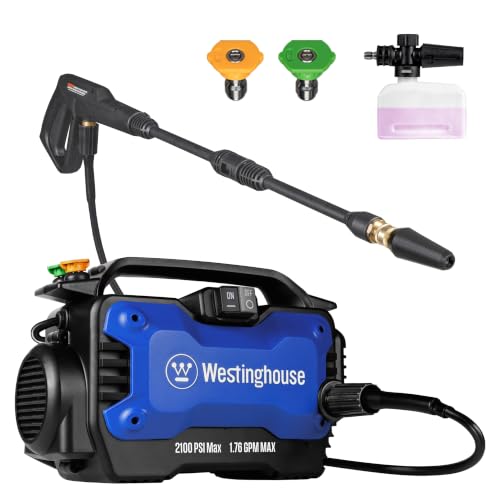
Westinghouse ePX3100s Electric Pressure Washer, 2100 Max
- ✓ Lightweight and portable
- ✓ Strong cleaning power
- ✓ Built-in storage holders
- ✕ Not a heavy-duty pro model
- ✕ Short accessories kit
| Max PSI | 2100 psi (max) |
| Rated PSI | 1800 psi (rated) |
| Flow Rate | 1.2 GPM (rated) / 1.76 GPM (max) |
| Weight | Approximately 10 pounds |
| Power Source | Electric |
| Hose & Cord Length | 20 ft high-pressure hose; 35 ft GFCI power cord |
I used to think a compact pressure washer couldn’t hold its own against real grime, but this Westinghouse model surprised me the moment I pulled it out of the box. Its 10-pound frame feels more like a portable gadget than a tool, yet it’s ready for real work right away.
The built-in holders keep the spray gun, lance, and nozzles in place, so you’re not digging around the shed while the driveway starts to complain.
The moment you fire it up, you feel the power bite back with a punchy 2100 max PSI and a generous 1.76 max GPM at the lower settings. That combination bites through stubborn grease on wheels and garden furniture without you needing to stand there forever.
The 1800 PSI / 1.2 GPM rating is plenty for daily cleanups, while you still have that full-throttle option when you’re on a tougher job.
I appreciated the grab-and-go vibe. It weighs next to nothing, yet the foam cannon adds a thick, clingy layer that loosens stains before you even start scrubbing.
You can switch to the foam quickly, which is great for cars, windows, and decks. The 35-foot power cord and 20-foot high-pressure hose mean you’re not shackled to one spot, so you can work around vehicles and outdoor spaces without constant re-rigging.
Setup is simple, and storage is thoughtful. You’ll find yourself grabbing it for quick cleanups after outdoor grilling, muddy kids’ bikes, or that stubborn mildew along the siding.
It’s not a full-on pro-grade machine, but for home use, it’s pleasantly capable and very easy to handle.
If you value compact power with easy storage and real cleaning punch, this Westinghouse earns its keep. It feels built for quick, honest work around a busy yard.
Pressure Washer, Portable Power Washer, 4 Quick Connect

- ✓ Strong cleaning power
- ✓ Quick-change nozzles
- ✓ Stable and portable
- ✕ Not the lightest option
- ✕ Needs pre-pressurized setup
| Water Flow Rate | up to 2.5 GPM |
| Nozzle Configuration | includes 4 quick-connect metal spray nozzles (0°, 15°, 25°, 40°) plus foam cannon |
| Detergent Compatibility | Detergent bottle supports chemicals (e.g., bleach) without passing through the pump |
| Mobility & Stability Features | Dual-roller design with anti-tipping base and faucet/bucket water collection system |
| Storage & Convenience | Power cord hook and nozzle holders; compact design for storage in garage/pantry |
| Recommended Use / Coverage | Suitable for cleaning driveways, patios, decks, sidewalks, RVs, cars, boats, fencing and more |
You notice it right away—the LWQ unit sits a little taller and tougher than the compact crowd. It feels built to tackle concrete and patio grime, not just light DIY spray jobs.
When you pull the trigger the spray bursts out with a satisfying heft, and the 2.5 GPM flow keeps the cleaning momentum steady.
The 4 quick-connect nozzles are a real plus in practice. I swapped from 0° to 40° in seconds, and the foam cannon actually foams nicely without clogging.
It’s nice knowing you can tackle a stubborn driveway stain one minute and switch to a gentle rinse for your car the next.
Mobility is thoughtful here: two easy-rolling wheels and a low center of gravity make it feel stable on uneven surfaces. The anti-tipping base is a small touch that pays off when you’re balancing the unit on a sloped driveway.
Storage is simple too, with cord hooks and dedicated nozzle holders that actually stay put after use.
Setup is straightforward: attach the hose, mount the wand, and you’re ready to go. A quick exhaust of air from the hoses before first spray is good practice, and I appreciated the clear reminders in the manual.
The detergent bottle is convenient for soap-based jobs, and the ability to fill with cleaners without pumping through the pump is a relief.
In real-world use, it shines on surfaces that usually demand a bit more effort—flagstones, brick, and even painted decks come clean without a marathon scrubbing session. It’s not featherlight, but it isn’t unwieldy either, and the included accessories cover a wide range of tasks from patio furniture to RV exteriors.
Bottom line: you get solid cleaning power, flexible spray options, and practical design touches that make this a capable all-arounder for home use. If you’re after a portable washer that can handle a mix of jobs with less fuss, this one earns its keep.
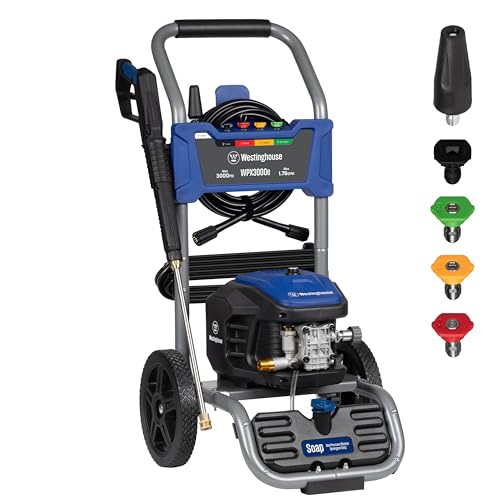
Westinghouse WPX3000e Electric Pressure Washer, 3000 Max
- ✓ Quiet electric operation
- ✓ Solid, portable build
- ✓ Easy quick-connects
- ✕ Small soap tank
- ✕ Heavier than some compact models
| Max PSI | 3000 PSI (max) / 2600 PSI (rated) |
| Flow Rate | 1.76 GPM (max) / 1.1 GPM (rated) |
| Water Tank / Soap Capacity | .45 gallon soap tank |
| Hose and Accessories | 25 ft abrasion-resistant hose; 5 quick-connect nozzles (0°, 15°, 25°, soap, turbo) with M22 compatibility |
| Motor and Pump | Heavy-duty AC 120V electric motor with axial 3-piston auto-stop pump |
| Cord and Mobility | 35 ft GFCI cord; rugged steel frame with 10” high-profile never-flat wheels |
You pull the WPX3000e out of the box and catch a whiff of fresh plastic and coil lubricant that says “immediate project potential.” The moment you unwrap the wand, you notice the metal feels sturdy, not flimsy, and the 25-foot hose coils neatly with a solid grip on the reel. It’s the kind of setup that makes you think you’ll actually finish that stubborn deck stain this weekend.
First spray, and you’re surprised by how quiet the electric motor is compared to a gas unit. The axial pump responds with a confident push, delivering a smooth, steady stream at 3000 max PSI but still feeling controllable at the lower settings.
You appreciate the quick-connect nozzles; swapping between 0°, 15°, 25°, and the turbo head is effortless and clicky in a good way.
The steel frame feels rugged, and those 10” never-flat wheels roll over uneven concrete without drama. The soap tank is small but handy for a light detergent boost, and the 1.76 GPM at lowest pressure keeps your soap-and-water mix moving steadily.
I found the spray gun comfortable to hold for longer sessions, with the wand balance staying solid as you move from siding to patio furniture.
Docking the unit on the driveway, the 3-year warranty and factory testing give you confidence on the long haul. It handles sidewalks, fences, and garage floors with ease, and you’ll notice how the surface cleaner-friendly setup opens doors to bigger cleaning projects without swapping machines.
Overall, you’ll find the WPX3000e to be a reliable, versatile workhorse for home use, with enough power to tackle tough spots and enough refinement to keep you sane on busy weekends.
Pressure Washer, Power Washer 4 Quick Connect Nozzles 1

- ✓ Easy to maneuver
- ✓ Strong, steady spray
- ✓ Simple storage + setup
- ✕ Cable length modest
- ✕ Hose exhaust step required
| Water Flow Rate | Up to 2.5 GPM |
| Nozzle Set | 4 quick-connect spray nozzles (0°, 15°, 25°, 40°) + foam cannon |
| Mobility/Stability | Dual-roller design with anti-tipping base |
| Hose/Wire Management | 34.5 ft power cord hook and nozzle holder |
| Storage/Portability | Compact size with faucet/bucket water collection capability |
| Usage/Recommendations | Pre-activate air purge on high-pressure hose and inlet hose for proper spray |
You pop the LWQ pressure washer open and the first thing that hits you is how compact it feels in your hands, lighter than you expect. The moment you switch it on, the 2.5 GPM flow unleashes a confident, steady spray that wipes away grime without you having to brute-force it.
I start with the 0° nozzle on a stubborn oil stain on the driveway, and the foam cannon sits nearby ready for the next pass. The spray arc tightens quickly with the quick-connects, so you’re not juggling wands while you work.
You can feel the balance improving as you push it along on the two rolling wheels.
The anti-tipping base is surprisingly reassuring when you pause to re-aim or switch to a 15° or 25° setting. It doesn’t wobble, even on uneven concrete, which is a small but meaningful win when you’re cleaning a wide patio.
The storage hooks and nozzle holder cut the typical clutter, and you notice you actually use all four nozzles because switching is so clean.
You’ll appreciate the water-conserving design once you compare the same job with a hose and a garden sprayer. It cuts your cleaning time and reduces water waste without sacrificing power.
The faucet/bucket water setup finally makes it usable in a yard where a garden hose isn’t ideal, so this feels like real flexibility.
Setup is straightforward: attach the hose, clamp on the nozzle, and you’re ready to roll. A quick exhaust of air before powering up keeps the spray strong right from the first press of the trigger.
It’s the kind of practical, no-fuss tool you’ll reach for when you want a clean surface fast.
Greenworks Brushless Electric Pressure Washer, 3000 PSI

- ✓ Powerful yet quiet
- ✓ Reliable flow and reach
- ✓ Versatile nozzle options
- ✕ Heavy compared to ultralight models
- ✕ Short cord length in some bundles
| Motor Power | 14 Amp TruBrushless motor |
| Pressure | 3000 PSI |
| Flow Rate | 2.0 GPM |
| Maximum Inlet Water Temperature | 104°F (40°C) |
| Hose & Nozzle Configuration | 25-FT Uberflex kink-resistant hose; 15°, 25°, and 40° spray tips; soap and turbo nozzles |
| Certifications/Verification | Independent lab testing verifying PSI and GPM claims |
The moment I picked up the Greenworks Brushless Electric Pressure Washer, the 25-foot Uberflex hose felt reassuringly sturdy in my hands, and that metal gun gave a solid click when you lock it in. You’ll notice the TruBrushless motor is surprisingly quiet for the power it dumps out, which means you can actually clean without turning the whole driveway into a wind tunnel.
Firing it up, you’ll feel the surge of 3000 PSI without the recoil you expect from a gas unit. The 14 Amp motor stays cool, and the JETTFLOW design lets you push water to higher spots without constantly tugging at the wand.
It’s easy to switch between the 15°, 25°, and 40° nozzles, and the included turbo nozzle cuts through stubborn stains like flagged driveway chalk with a single pass.
Setup is quick enough to be a Sunday project rather than a weekend chore. The hose reels out smoothly, and the quick-connect tips snap on with a confident click.
I appreciated the inlet water temperature tolerance—104°F tops—so you don’t have to chase cold water on a hot Texas day.
In real-world use, the pressure is enough to blast away algae on siding and grime from concrete, yet still manageable for wooden decks when you back off a notch. The jig of the gun and the layout of the controls make it feel approachable, not intimidating, even if you’re upgrading from a consumer-grade unit.
Overall, it handles heavy-duty jobs and occasional light cleanup with ease, and the lab-verified flow confirms you’re getting the promised performance. For a dedicated home user who wants power without gas, this is the kind of tool you’ll reach for on weekends rather than months later when the sun is shining.
What Makes a Pressure Washer the Best for Your Needs?
When considering the best high pressure pressure washer for your needs, several factors come into play:
- Pressure Rating: The pressure rating, measured in PSI (pounds per square inch), indicates the force of the water that the pressure washer can produce. A higher PSI is suitable for tougher cleaning tasks, such as removing paint or heavy grime, while lower PSI models are ideal for lighter jobs like washing cars or outdoor furniture.
- Flow Rate: Measured in GPM (gallons per minute), the flow rate determines how much water is used and influences cleaning efficiency. A higher GPM means water is delivered faster, allowing for quicker cleaning, especially for large areas or stubborn stains.
- Power Source: Pressure washers can be electric or gas-powered. Electric models are typically lighter, quieter, and easier to maintain, making them suitable for residential use, while gas-powered models provide greater power and mobility, making them ideal for heavy-duty tasks or commercial use.
- Portability: The best pressure washer should be easy to transport. Look for models with wheels, lightweight frames, and manageable hose lengths, especially if you need to move it around frequently or store it in a compact space.
- Accessories and Attachments: Different nozzles, brushes, and extension wands can enhance the versatility of a pressure washer. Models that come with a variety of attachments can better adapt to different cleaning tasks, from delicate surfaces to hard-to-reach areas.
- Durability and Build Quality: A well-built pressure washer made of high-quality materials will last longer and withstand demanding use. Look for models with reinforced hoses, sturdy frames, and reliable components to ensure your investment pays off over time.
- Noise Level: Since pressure washers can be quite loud, especially gas models, it’s important to consider the noise level if you live in a residential area. Electric models tend to be quieter, which can be a significant factor if you’re sensitive to noise or have neighbors nearby.
- Warranty and Customer Support: A good warranty and accessible customer support can provide peace of mind and protection for your investment. Look for brands that offer substantial warranty periods and have a reputation for responsive customer service.
Which Specifications Indicate a Quality High Pressure Pressure Washer?
When looking for the best high pressure pressure washer, several key specifications indicate its quality and performance capabilities.
- PSI (Pounds per Square Inch): This measures the pressure of the water output from the washer.
- GPM (Gallons per Minute): This indicates the flow rate of the water being used.
- Motor Type: Different motor types can affect performance and durability.
- Nozzle Options: Various nozzles allow for versatility in cleaning tasks.
- Durability and Build Quality: The materials used in construction impact longevity and reliability.
- Portability: Features that enhance mobility can make the washer easier to use.
- Attachments and Accessories: Additional tools can increase the washer’s functionality.
PSI (Pounds per Square Inch): The PSI rating is crucial because it determines how powerful the spray of water will be. Higher PSI ratings are generally better for tough jobs like removing grime or paint, while lower ratings may suffice for lighter cleaning tasks.
GPM (Gallons per Minute): GPM measures the volume of water used by the washer, which directly affects the cleaning efficiency. A higher GPM means that more water is being used, allowing for quicker cleaning, especially on larger surfaces.
Motor Type: Pressure washers can come with either electric or gas motors. Electric models are typically quieter and require less maintenance, while gas models offer greater power and mobility, making them suitable for heavy-duty tasks.
Nozzle Options: The inclusion of multiple nozzle types provides flexibility in adjusting the spray pattern and pressure. Common options include 0-degree, 15-degree, 25-degree, and soap nozzles, each suited for different cleaning tasks.
Durability and Build Quality: A pressure washer made from high-quality materials is more likely to withstand wear and tear over time. Look for features like metal frames and high-grade hoses that can endure heavy use.
Portability: Features such as wheels, a lightweight design, and a compact size make a pressure washer easier to maneuver and store. Portability is especially important for users who need to transport the washer between different locations.
Attachments and Accessories: Additional attachments like surface cleaners, extension wands, and detergent tanks can greatly enhance the versatility of a pressure washer. These accessories allow users to tackle a wider range of cleaning jobs more efficiently.
How Does PSI and GPM Affect Performance?
The performance of a pressure washer is significantly influenced by its PSI and GPM ratings.
- PSI (Pounds per Square Inch): This measurement indicates the pressure that the washer can generate, affecting its ability to remove tough stains and dirt.
- GPM (Gallons per Minute): This measures the flow rate of water, which determines how effectively the washer can cover large areas and rinse surfaces clean.
- Balance of PSI and GPM: The ideal pressure washer achieves a harmonious balance between PSI and GPM for optimal cleaning performance.
- Application Suitability: Different tasks require varying PSI and GPM levels, making it crucial to choose a washer tailored to specific cleaning needs.
PSI (Pounds per Square Inch): The PSI rating indicates how much pressure the water is exerted when it is released from the nozzle. A higher PSI means more force, which is particularly useful for tough cleaning tasks such as removing grease, oil stains, or dirt from concrete surfaces. For instance, a pressure washer with 3000 PSI is capable of cleaning heavy machinery or stripping paint, while a lower PSI is sufficient for washing cars or patios.
GPM (Gallons per Minute): This rating signifies the volume of water that the pressure washer can deliver in a minute. A higher GPM means that more water is available to wash away debris, allowing for quicker cleaning of larger areas. For example, a pressure washer with a GPM of 2.5 can rinse surfaces more efficiently than one with a GPM of 1.5, making it ideal for large driveways or decks.
Balance of PSI and GPM: An effective pressure washer balances both PSI and GPM to achieve the best cleaning results. A machine with high PSI but low GPM may clean a surface well but take longer to rinse it, while a high GPM with low PSI might not be effective at removing stubborn stains. Therefore, the best high pressure pressure washer will have an optimal combination of both ratings to maximize efficiency.
Application Suitability: Different cleaning applications have specific PSI and GPM requirements. For example, light-duty tasks like washing cars may only require 1300-1900 PSI and around 1.4-1.6 GPM, while heavy-duty jobs like cleaning decks or driveways often require 2500 PSI or higher with a GPM of 2.5 or more. Understanding these differences helps users select the right pressure washer for their needs, ensuring effective and efficient cleaning results.
What Features Should You Look for in a High Pressure Pressure Washer?
When searching for the best high pressure pressure washer, consider the following features:
- Pressure Rating: A higher pressure rating, measured in PSI (pounds per square inch), indicates a more powerful washer capable of tackling tough cleaning jobs. Look for models with at least 2000 PSI for residential use to effectively remove dirt and grime.
- Water Flow Rate: The water flow rate is measured in GPM (gallons per minute) and determines how much water the washer can deliver. A higher GPM means better cleaning efficiency, as it allows for faster rinsing and coverage of larger areas.
- Nozzle Types: Different nozzle types offer varying spray patterns and widths, giving you versatility for different cleaning tasks. A quality pressure washer should include adjustable nozzles or quick-connect tips to switch between fan spray and pinpoint streams as needed.
- Durability and Build Quality: The materials used in the construction of the pressure washer affect its longevity and reliability. Look for models made from high-quality plastic or metal components, as these are better suited to withstand wear and tear from regular use.
- Portability: Features such as wheels and a lightweight design enhance the ease of maneuvering the pressure washer around different cleaning areas. Consider models with ergonomic handles and onboard storage for accessories to improve convenience during use.
- Safety Features: Safety features like automatic shut-off systems and thermal relief valves help prevent damage to the unit and ensure user safety. These features are essential for protecting both the user and the machine during operation.
- Electric vs. Gas Powered: Electric pressure washers are typically quieter, lighter, and easier to maintain, making them suitable for residential use, while gas-powered models offer greater power and mobility for larger projects. Choose based on your specific cleaning requirements and preferences.
- Accessories and Attachments: Additional accessories such as surface cleaners, extension wands, and detergent tanks can enhance the functionality of the pressure washer. Investing in a model that comes with a variety of attachments can help you tackle a wider range of tasks.
How Important is Portability for a Pressure Washer?
Portability is a crucial factor when selecting the best high-pressure pressure washer, as it affects usability and convenience during cleaning tasks.
- Weight: The weight of a pressure washer can significantly influence its portability. Lighter models are easier to maneuver and transport, making them suitable for various cleaning tasks around the home or job site.
- Wheels: The presence of sturdy wheels enhances the mobility of a pressure washer. Models equipped with large, durable wheels can easily traverse uneven terrain, allowing users to move the unit from one location to another without hassle.
- Handle Design: A well-designed handle contributes to the ease of transport. Pressure washers with ergonomic handles or telescoping designs allow for comfortable lifting and steering, reducing strain during use.
- Hose Length: The length of the hose impacts how far the pressure washer can reach without being moved. Longer hoses reduce the need to frequently relocate the unit, enhancing portability and efficiency during cleaning tasks.
- Compact Size: Compact pressure washers take up less space for storage and are easier to transport in vehicles. This feature is particularly beneficial for individuals with limited storage space or who need to transport the washer frequently.
- Power Source: The type of power source (electric vs. gas) affects portability. Electric pressure washers are typically lighter and easier to move, while gas models, although powerful, can be heavier and more cumbersome.
What Types of Nozzles are Essential for Versatile Cleaning?
When selecting a high pressure washer, choosing the right nozzles can significantly enhance performance and versatility during cleaning tasks. Here are essential nozzle types to consider:
-
Zero-Degree Nozzle: This nozzle delivers a concentrated jet of water for tough stains on surfaces like concrete. It’s very powerful, but care must be taken to avoid damage to softer materials.
-
15-Degree Nozzle: Ideal for heavy-duty tasks, this nozzle offers a wider spray than the zero-degree option while still providing enough pressure to remove dirt and grime from tougher surfaces.
-
25-Degree Nozzle: This is the most commonly used nozzle, perfect for general cleaning tasks, such as washing cars or siding. It provides an effective balance between pressure and coverage area.
-
40-Degree Nozzle: A gentler option, this nozzle is suited for delicate surfaces, including painted or wooden surfaces, ensuring that cleaning is effective without risking damage.
-
Soap Nozzle: This nozzle features a lower pressure setting and a larger spray pattern, allowing for efficient application of soap or cleaning solutions, making it easier to break down dirt before rinsing.
Selecting the appropriate nozzles enables effective and safe cleaning for a variety of surfaces, ensuring adaptability for various tasks.
Which Brands Are Recognized for Manufacturing Top High Pressure Pressure Washers?
Several brands are recognized for manufacturing top high pressure pressure washers:
- Sun Joe: Known for its affordability and effectiveness, Sun Joe pressure washers are popular among homeowners for light to medium-duty tasks.
- Simpson: Simpson offers a range of powerful gas pressure washers suitable for heavy-duty cleaning, making them ideal for professionals and serious DIYers.
- DEWALT: DEWALT pressure washers are built with durability in mind, featuring robust construction and reliable performance for tough cleaning jobs.
- Honda: While primarily known for engines, Honda’s pressure washers are highly regarded for their reliability and powerful performance, often used in commercial settings.
- Karcher: Karcher is a leading brand in the pressure washer market, known for innovative features and a wide range of models suitable for various cleaning tasks.
Sun Joe pressure washers are designed for ease of use and are equipped with user-friendly features, making them a great choice for casual users looking to maintain their home exteriors. They typically come with a variety of attachments that enhance their versatility for tasks like washing cars, patios, and decks.
Simpson pressure washers are recognized for their high performance with powerful engines that deliver exceptional cleaning power, making them suitable for commercial applications and heavy-duty residential use. Their robust construction ensures longevity, and they often come with various nozzle options for different cleaning tasks.
DEWALT has made a name for itself in the pressure washer market by combining quality and durability, often featuring heavy-duty components that allow for extended use in challenging environments. Their models are equipped with advanced technology to improve efficiency and reduce water consumption.
Honda pressure washers utilize their renowned engines to provide reliable and consistent performance, making them favorites among professionals. These washers are built to withstand rigorous use while delivering high pressure for effective cleaning of large surfaces.
Karcher is known for pioneering many of the features found in modern pressure washers, including adjustable pressure settings and quick-connect nozzles. Their wide range of products caters to both casual users and professionals, ensuring there is a suitable model for every cleaning requirement.
What Customer Reviews Say About the Leading Brands?
Brand E receives high marks for its customer service and warranty support, with users reporting positive experiences when addressing issues. This reliability in service makes customers feel secure in their purchase, knowing that help is readily available if needed.
What Are the Common Applications for High Pressure Pressure Washers?
The common applications for high pressure washers include:
- Cleaning Driveways and Sidewalks: High pressure washers are highly effective for removing stubborn stains, oil spots, and dirt buildup from concrete surfaces. Their powerful jets can easily dislodge debris that traditional cleaning methods often miss, making them ideal for maintaining the curb appeal of homes.
- Washing Vehicles: These washers can be used to clean cars, trucks, and motorcycles efficiently. The high pressure helps in removing grime, dirt, and even road salt without damaging the vehicle’s paint, making it a preferred choice for auto enthusiasts.
- Deck and Patio Maintenance: High pressure washers are perfect for cleaning wooden decks and patios, as they can strip away old finishes and grime. Using the right nozzle and pressure setting prevents damage to the wood while restoring its natural beauty.
- Home Exteriors: They can effectively wash the siding of houses, removing dirt and mildew that can accumulate over time. This not only enhances the aesthetic appeal but also helps in preventing long-term damage to the materials used in home construction.
- Industrial Cleaning: In industrial settings, high pressure washers are used for cleaning heavy machinery, equipment, and production areas. Their robust cleaning power ensures the removal of grease, oils, and contaminants, promoting a safer and more efficient work environment.
- Graffiti Removal: High pressure washers are effective for removing graffiti from various surfaces, including brick and concrete. The combination of pressure and appropriate cleaning agents can break down paint compounds without damaging the underlying surface.
- Pool Deck Cleaning: They are used to clean pool decks, removing algae, dirt, and other residues that can accumulate around swimming areas. Keeping these areas clean not only improves appearance but also enhances safety by reducing slippery surfaces.
How Can You Maintain a High Pressure Pressure Washer for Longevity?
To maintain a high pressure pressure washer for longevity, consider the following essential practices:
- Regular Cleaning: Keeping your pressure washer clean helps prevent buildup of dirt and grime that can damage components over time.
- Check and Change Oil: Regularly checking and changing the oil in the engine ensures optimal performance and prolongs its life.
- Inspect Hoses and Connections: Regularly inspecting hoses for cracks or wear and ensuring connections are tight can prevent leaks and pressure loss.
- Use Proper Detergents: Using the right detergents that are compatible with your pressure washer prevents damage to the machine and enhances cleaning efficiency.
- Winterize Your Pressure Washer: Properly winterizing your pressure washer prevents freezing and damage during cold months, ensuring it starts smoothly in spring.
- Follow Manufacturer’s Maintenance Schedule: Adhering to the manufacturer’s recommended maintenance schedule helps catch issues early and ensures the washer operates as intended.
Regular cleaning involves wiping down the exterior and flushing out the system to remove any detergent or debris that has accumulated during use, which can help maintain the integrity of the machine.
Checking and changing the oil is crucial as old oil can become contaminated and lose its lubricating properties, leading to increased wear and tear on the engine components over time.
Inspecting hoses and connections is vital because damaged hoses can not only lead to reduced pressure but can also be a safety hazard, while loose connections can cause leaks that affect performance.
Using proper detergents is important as some harsh chemicals can corrode parts of the pressure washer, while suitable detergents enhance cleaning capabilities without damaging the machine.
Winterizing your pressure washer typically involves running the machine until it is free of water, which prevents freezing in the pump and other components that could lead to costly repairs.
Following the manufacturer’s maintenance schedule ensures that maintenance tasks like lubrication, filter changes, and part inspections are completed on time, keeping the pressure washer in prime working condition.
What Regular Maintenance Practices Should You Follow?
Regular maintenance practices for your high-pressure washer are essential for optimal performance and longevity.
- Clean the Water Filter: Regularly inspect and clean the water inlet filter to prevent debris from clogging the system.
- Check and Replace Hoses: Inspect hoses for wear and tear, and replace them if you notice any cracks or kinks that could lead to leaks.
- Maintain the Detergent System: Clean the detergent tank and suction tube to avoid buildup that can affect the washer’s performance.
- Inspect the Nozzle: Regularly check the nozzle for blockages or damage, and replace it if it shows signs of wear to ensure the pressure remains consistent.
- Change the Oil: For gas-powered models, change the engine oil regularly according to the manufacturer’s recommendations to keep the engine running smoothly.
- Store Properly: Always store your pressure washer in a dry place, preferably out of direct sunlight, to protect it from weather damage and prolong its life.
Cleaning the water filter is crucial as it prevents dirt and debris from entering the pump, which can lead to performance issues and costly repairs. A clean filter ensures a steady flow of water, enhancing the efficiency of your cleaning tasks.
Checking and replacing hoses is important because damaged hoses can leak water and reduce pressure, making your washer less effective. Regular inspections help catch these issues early, avoiding potential accidents and ensuring safety during operation.
Maintaining the detergent system involves cleaning the tank and suction tube to avoid clogs that can negatively impact the mixing of soap and water. A well-maintained system allows for effective cleaning, especially on tough stains.
Inspecting the nozzle is vital since a clogged or damaged nozzle can alter the spray pattern and pressure, leading to inefficient cleaning. Regular checks and replacements help ensure that the pressure washer delivers the intended performance.
Changing the oil in gas-powered models is necessary for engine longevity and performance. Fresh oil lubricates engine parts, reduces friction, and helps maintain optimal operating temperatures.
Proper storage protects the pressure washer from environmental factors such as moisture and extreme temperatures that could cause damage. By storing it correctly, you can help ensure it remains in good working condition for the next use.
Related Post: