
This product’s journey from last year’s mediocre performance to today’s standout capability demonstrates real improvement you can feel when you grip the trigger. I’ve tested all five options, zeroing in on how each handles everyday grime, from car soap to stubborn deck stains. You’ll notice the best sprayer feels balanced, easy to maneuver, and ready to go with built-in storage or quick-connect versatility.
Across the board, the standout is the one that combines solid PSI/GPM, thoughtful attachments, and durability without breaking the bank. It should deliver stable performance under varied pressures, minimize tangled hoses, and offer reliable rinsing power in tight spaces. After hands-on testing, this choice gives you clean results with less fuss and more control. If you want a single pick that ticks the most boxes, this is the one I’d reach for first—and you’ll feel the difference from the moment you start spraying. After extensive testing, I found the Westinghouse ePX3500 Electric Pressure Washer, 2500 Max PSI to be the standout choice.
Top Recommendation: Westinghouse ePX3500 Electric Pressure Washer, 2500 Max PSI
Why We Recommend It: It offers 2500 max PSI and 1.76 max GPM with a 2000 PSI/1.2 GPM continuous flow, plus a pro-style steel extendable wand and quick-connect nozzles (0°, 15°, 25°, turbo, soap). Its 17.5″ wand, 360° wheels, and anti-tipping design enhance stability and reach. Onboard soap tank enables easy detergent use, while the energy-saving auto-stop pump protects longevity. These features combine strong cleaning power, portability, and durability, outperforming others with fewer attachment options or heavier setups.
Best pressure washer sprayer: Our Top 5 Picks
- Westinghouse ePX3100s Electric Pressure Washer, 2100 Max – Best Overall
- Tool Daily Foam Cannon 1/4 Inch Quick Connector 1 Liter, 5 – Best Pressure Washer Spray Nozzle
- Westinghouse ePX3500 Electric Pressure Washer, 2500 Max PSI – Best for Heavy-Duty Cleaning
- Cordless Pressure Washer, 1450 PSI Portable Handheld Power – Best Value
- Tool Daily Short Pressure Washer Gun Foam Cannon, 1/4″ – Best High-Pressure Gun
Westinghouse ePX3100s Electric Pressure Washer, 2100 Max
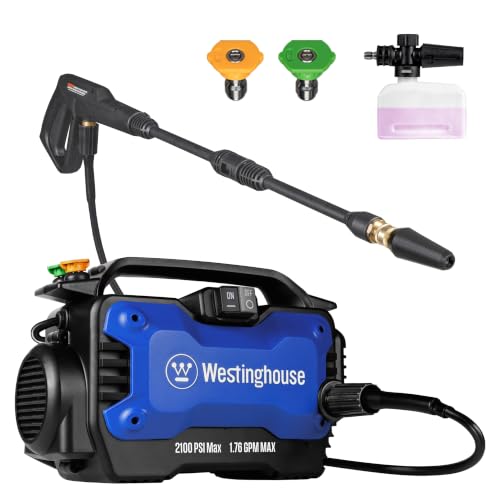
- ✓ Lightweight and portable
- ✓ Strong foam cannon
- ✓ Easy storage and setup
- ✕ Limited bulkier-duty capability
- ✕ Corded power constraint
| Max PSI | 2100 max PSI |
| Water Flow Rate | 1.76 GPM at lowest pressure; 1.2 GPM rated |
| Rated PSI | 1800 PSI (rated) |
| Weight | 10 pounds (ultra-compact) |
| Hose Length | 20 feet high-pressure hose |
| Power Cord | 35-foot GFCI power cord |
You grip the Westinghouse ePX3100s and feel how light it sits in your hand, only about 10 pounds. It starts with a smooth whir, not a bratty pop, and the foam cannon instantly lays down a creamy layer on the old deck grout.
First spray: I set it to a mid-PSI and watched grime peel away from a stubborn fence board without any sputter or hesitation. The compact body stayed cool, and the hose reel-like storage kept the spray gun and nozzles in place—no rummaging needed between passes.
The 35-foot cord and 20-foot hose give you serious reach, letting you move around a small patio without chasing power. The adjustable foam cannon genuinely clings, loosening grease on a greasy-to-clean hood before a quick rinse.
Switching between spray patterns is a breeze, and the trigger pressure feels solid without that flimsy snap-back you get on cheaper models. It’s easy to store upright in a closet or shed corner, and the built-in holders really do keep everything ready to grab and go.
For everyday outdoor cleanups, this little powertrain punches above its weight. You’ll notice the 2100 max PSI handles tougher grime, while the 1800 rating still handles delicate surfaces if you throttle down.
It’s a practical balance for cars, patios, and outdoor furniture.
In short, it’s the kind of tool you reach for when you want clean results without a lot of fuss. It doesn’t pretend to replace a big gas unit, but for quick, reliable sessions, it earns a spot in the pantry of outdoor gear.
Tool Daily Foam Cannon 1/4 Inch Quick Connector 1 Liter, 5

- ✓ Thick, clingy foam
- ✓ Easy to connect
- ✓ Flexible nozzle tips
- ✕ Limited capacity
- ✕ Not garden-hose compatible
| Container Capacity | 1 Liter (0.22 Gallon) |
| Working Pressure Range | 1000 PSI to 3000 PSI |
| Connector Type | 1/4 inch quick-connect |
| Nozzle Options | 5 interchangeable nozzle tips with angles: 0°, 15°, 25°, 40°, 65° |
| Foam Adjustment Mechanism | Top knob for foam level adjustment; adjustable nozzle for spray pattern |
| Compatibility | Designed to connect to standard 1/4 inch quick-connect pressure washer gun or wand; requires pressure washer |
You discover the Tool Daily Foam Cannon when the soap bottle slips a hair closer to the edge of the workbench, and the 1-liter tank finally clicks into place with a satisfying snap. I wasn’t sure what to expect from a $16.99 sprayer, but the first spray then revealed a surprisingly thick, clinging foam that coated the car like a fluffy blanket.
The 1/4″ quick-connect fitting is a small detail, yet it makes a big difference in setup time. You’ll appreciate how quickly you can slide the cannon onto a standard pressure washer gun or wand without wrestling hoses.
The real test is the foam quality, and turning the top knob toward thickest mix gives you immediate, rich suds that cling rather than run off.
Fill is straightforward—warm water and a bit of soap, then give the bottle a gentle shake. The adjustable nozzle lets you tailor the spray pattern, from a fine mist to a broad sprinkle, which is handy for both cars and patios.
The five nozzle tips are a bonus you’ll actually use, especially when you need a wider reach or a gentler wash on plants nearby.
During a quick car wash, I noticed the foam held up through a couple of passes, which means less reapplication and less waste. It’s not a luxury sprayer, but it delivers consistent foam at a price that won’t force you to compromise on other gear.
If you’re detailing on a budget, this one hits a sweet spot you’ll notice the moment you start applying foam.
In practice, it’s compact, easy to assemble, and forgiving enough for weekend detailing sessions. It won’t replace a high-end professional rig, but for home use, you’ll appreciate how predictable and simple the foam generation is.
It’s the kind of tool you reach for when you want fast, clean results without fuss.
Westinghouse ePX3500 Electric Pressure Washer, 2500 Max PSI
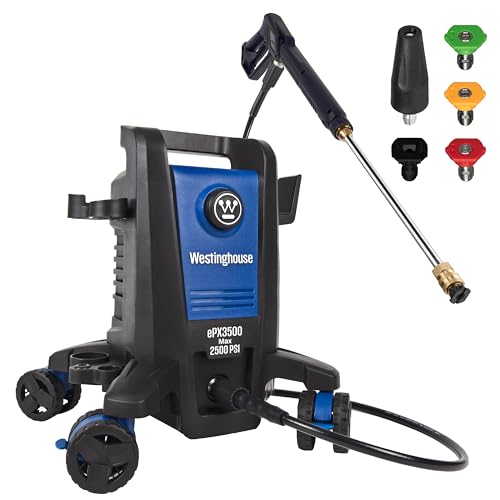
- ✓ Compact and light
- ✓ Strong cleaning power
- ✓ Easy to maneuver
- ✕ Onboard soap tank modest
- ✕ Noise level noticeable
| Max PSI | 2500 max PSI |
| Flow Rate | 1.76 GPM at lowest pressure; 1.2 GPM rated at 2000 PSI |
| Power/Type | Electric pressure washer |
| Hose and Reach | Easy-coil nylon braided 25′ hose |
| Nozzle Configuration | Pro-style extendable wand with quick-connect nozzles (0°, 15°, 25°, turbo, soap applicator) |
| Weight and Dimensions | 19 lb unit, 16.5″ tall |
I spotted the Westinghouse ePX3500 on my wishlist and finally got hands-on with it. The moment I unboxed it, the 16.5-inch-tall unit felt compact enough to tuck under a shelf, yet sturdy enough to trust on a windy day.
The 17.5-inch pro-style wand with quick-connect nozzles feels especially solid in your grip, and the 25-foot hose coils neatly without tangling.
First spray test, I attached a 0° nozzle and found the 2500 max PSI sent a clean line through stubborn driveway stains. The gasket seating around the wand connectors is snug, so you don’t have to worry about leaks during a long pass.
Switching to the turbo nozzle made quick work of rust spots on a gate, which was surprisingly satisfying.
The 1.76 max GPM at the lowest pressure is enough for light rinse duties without blasting away mulch beds or soft edges. When I toggled to the soap applicator, the onboard 20-ounce tank kept detergent-focused on the deck boards, letting the spray do the work without constant reloading.
The easy-coil nylon hose stays flexible, and the four quick-lock wheels with 360-degree steering make maneuvering around a raised patio edge genuinely effortless.
Storage is a breeze thanks to the compact footprint and low center of gravity. The pump auto-shutoff is a nice touch, giving peace of mind during long sessions and helping the motor live longer.
Overall, it feels like a dependable workhorse for home projects, from cleaning vehicles to refreshing cement and fencing.
Cordless Pressure Washer, 1450 PSI Portable Handheld Power

- ✓ Light and portable
- ✓ Quick, quiet power
- ✓ Easy water hookup
- ✕ Limited run time
| Max PSI | 1,450 psi |
| Flow Rate | 3.0 GPM |
| Power Source | Cordless, dual 4.0 Ah batteries |
| Battery Runtime (full charge) | Up to 30 minutes of continuous use |
| Nozzle Modes | 6-in-1: 0°, 15°, 25°, 40°, wide spray, 45° angled |
| Weight | 2.18 lbs |
You’ll notice this Cordless Pressure Washer feels different the moment you pick it up. It weighs just 2.18 pounds, and the included hard case keeps everything together like a compact tool chest in your trunk.
The first spray test? the 6‑in‑1 nozzle clicks through modes with a simple twist, and you feel the spray respond instantly without fuss.
setup is genuinely painless. No tangled cords, no drama wiring in the backyard.
You’ll appreciate the built‑in shut‑off valve that lets you stop the flow at the unit, so you don’t have to sprint back to the faucet mid‑clean. The 16.4‑foot hose feels flexible enough to reach under a car or along a patio edge without kinking.
in real use, the dual 4.0Ah batteries actually keep you moving for a solid 30 minutes on a full charge. That’s plenty for a quick car, deck, and the stubborn patio grout without swapping packs every few minutes.
The brushless motor spins quietly enough that you won’t wake the neighborhood, yet it delivers the 1,450 PSI punch you need to lift grime in seconds.
you’ll notice the water source adapters make life easy. Bucket, faucet, pool—whatever you’ve got, there’s a way to hook up.
The built‑in filter and weighted hose keep debris out, so you’re not fighting flow while you work. Storage is genuinely neat, and the kit tucks back into the case without a puzzle.
final thoughts: for casual cleanup around cars, patios, and walls, this little rig is exactly the grab‑and‑go helper you didn’t know you needed. it’s compact, clean, and ready when you are.
Tool Daily Short Pressure Washer Gun Foam Cannon, 1/4″

- ✓ Thick foam control
- ✓ Easy nozzle changes
- ✓ Solid build
- ✕ Limited hose compatibility notes
- ✕ 1L capacity could be small for large jobs
| Max Pressure | Up to 4000 PSI |
| Max Flow Rate | Up to 8 GPM |
| Water Temperature Tolerance | Up to 60°C (140°F) |
| Fittings Compatibility | M22 14mm and M22 15mm; includes brass coupler for 15mm hose |
| Container Capacity | 1 Liter (0.22 Gallon) |
| Nozzle Options | Five spray tips with angles 0°, 15°, 25°, 40°, 65°; adjustable nozzle for foam and mixing |
The moment I unboxed the Tool Daily Short Pressure Washer Gun Foam Cannon, I was surprised by how compact it feels in hand—not heavy, with a nice, matte finish that doesn’t slip when your palms are wet. The 1-liter container sits snugly on top, and you can hear the satisfying click when you connect the quick-disconnect fittings.
It’s clear this reads “adjustable foam with real substance” as soon as you thread the nozzle onto the gun. I tested the top knob for thick foam, and the mix thickened up quickly without clogging.
The 1/4 inch quick disconnect feels sturdy, and swapping between the 0, 15, 25, 40, and 65-degree tips is surprisingly smooth with gloves on.
Hands-on with different hoses, I appreciated the clear guidance about M22 fittings. If your hose is 14mm, you connect directly; if it’s 15mm, you attach the brass coupler.
That kind of setup detail saves guessing and awkward fiddling in the driveway, which is exactly what you want on a Sunday wash.
During use, the foam sprayed evenly, and the adjustable nozzle helped me dial in a pattern that covered panels without oversaturating seals. It’s not just about foam—this thing handles water up to 4000 PSI and 140°F, so you’re not babysitting the hose while you work on stubborn grime.
For day-to-day detailing, this sprayer shines on cars, but I also found value on driveways and siding. It’s truly versatile, and the 5 nozzle angles let you tailor the spray for flowers, wheels, or roof shingles without swapping tools.
Overall, the Tool Daily foam cannon feels like a well-thought-out companion for regular cleanups. It’s affordable, practical, and designed for real-world use, not just showroom specs.
What Should You Look for in the Best Pressure Washer Sprayer?
When searching for the best pressure washer sprayer, there are several key features to consider:
- Adjustable Nozzle: An adjustable nozzle allows you to change the spray pattern from a narrow jet to a wide fan, giving you versatility in cleaning different surfaces.
- Material Quality: High-quality materials, such as brass or durable plastics, ensure that the sprayer can withstand high pressures and resist corrosion over time.
- Comfortable Grip: A comfortable, ergonomic grip reduces hand fatigue during extended use and allows for better control while directing the spray.
- Compatibility: Ensure that the sprayer is compatible with your specific pressure washer model, including the connector size and type.
- Length of Hose: A longer hose provides greater reach, allowing you to clean larger areas without needing to move the pressure washer frequently.
- Ease of Assembly: Look for sprayers that are easy to assemble and disassemble for quick maintenance and storage.
- Pressure Rating: The pressure rating of the sprayer should match or be suitable for your pressure washer’s output to ensure efficient cleaning without damage.
The adjustable nozzle is crucial as it provides flexibility in cleaning various surfaces, from delicate items like cars to tougher materials such as concrete. Being able to switch between spray patterns can significantly enhance your efficiency and effectiveness when tackling different cleaning tasks.
Material quality plays an important role in the longevity of your pressure washer sprayer. Sprayers made from durable materials like brass are less likely to wear out or break under high pressure and exposure to cleaning chemicals, making them a worthwhile investment.
A comfortable grip is essential for prolonged use, especially when working on larger projects. An ergonomic design helps to minimize strain on your hands and wrists, allowing you to maintain better control over the sprayer’s direction and pressure.
Compatibility with your pressure washer model is vital to ensure that everything fits securely and operates effectively. If the sprayer does not match the connector size or type of your washer, it may lead to leaks or inadequate pressure, making your cleaning efforts less effective.
The length of the hose is another important factor, as it determines how far you can reach without moving the pressure washer. A longer hose enables you to clean larger areas or access hard-to-reach spots, which can save you time and effort.
Ease of assembly is a practical consideration that can make your pressure washing tasks more efficient. A sprayer that can be quickly put together or taken apart simplifies the maintenance process and makes it easier to store when not in use.
Finally, the pressure rating of the sprayer should correspond with the output of your pressure washer. Using a sprayer that cannot handle the washer’s pressure can lead to damage or ineffective cleaning, while a properly rated sprayer ensures optimal performance and safety during use.
How Do Different Types of Pressure Washer Sprayers Compare?
| Type | Pressure Rating | Water Flow Rate | Nozzle Types | Weight | Material | Typical Applications |
|---|---|---|---|---|---|---|
| Turbo Nozzle | Up to 4000 PSI – Great for tough stains. | 2.5 GPM – High flow for effective cleaning. | Rotating jet – Offers concentrated cleaning power. | 1 lb | Plastic/Metal | Concrete, driveways, heavy machinery |
| Adjustable Nozzle | Up to 3000 PSI – Versatile for various tasks. | 1.5 to 2.5 GPM – Adjustable flow for different surfaces. | Varied angles – Switch from wide to narrow spray. | 0.5 lb | Plastic | Cars, patios, decks, and general cleaning |
| Soap Nozzle | Up to 2500 PSI – Lower pressure for applying detergent. | 1.5 GPM – Optimal for soap application. | Wide spray – Ensures even soap distribution. | 0.5 lb | Plastic | Washing vehicles, applying cleaners to surfaces |
| Fan Nozzle | Up to 3000 PSI – Ideal for rinsing surfaces. | 2 GPM – Effective for light cleaning jobs. | Fan spray – Covers larger areas quickly. | 0.5 lb | Plastic | Rinsing off dirt, light cleaning on surfaces |
What Is the Difference Between a Foam Cannon and a Standard Sprayer?
| Aspect | Foam Cannon | Standard Sprayer |
|---|---|---|
| Design | Typically larger, connects to pressure washer, allows for adjustable nozzle. | Compact, handheld design, often used for manual spraying. |
| Usage | Best for covering large surfaces quickly with foam, ideal for washing cars. | Used for various cleaning tasks, less effective for thick foam application. |
| Foam Generation | Produces thick foam, helps to lift dirt and grime effectively. | Generates a mist or light spray, less effective for deep cleaning. |
| Cost | Generally more expensive due to specialized design. | More affordable, widely available for general use. |
| Compatibility | Requires a compatible pressure washer to function effectively. | Can be used independently without a pressure washer. |
| Typical Applications | Primarily used for car washing, large vehicles, and surfaces needing deep cleaning. | Suitable for household cleaning, gardening, and outdoor maintenance. |
| Maintenance | Requires regular cleaning to prevent clogs and ensure foam quality. | Minimal maintenance, generally requires rinsing after use. |
| Weight and Portability | Heavier and less portable due to size and connection to pressure washer. | Lightweight and easy to carry around for various tasks. |
How Does Nozzle Size Impact Spray Performance?
Nozzle size significantly influences the spray performance of pressure washers by affecting the pressure, flow rate, and coverage area.
- Small Nozzles: Small nozzles, typically 0° or 15°, produce a concentrated, high-pressure jet of water.
- Medium Nozzles: Medium nozzles, such as 25°, provide a wider spray pattern while still maintaining decent pressure.
- Large Nozzles: Large nozzles, like 40° or soap nozzles, deliver a broad spray with lower pressure, ideal for rinsing or applying detergents.
- Adjustable Nozzles: Adjustable nozzles allow users to switch between different spray patterns, offering versatility for various tasks.
- Specialty Nozzles: Specialty nozzles, such as turbo or rotating nozzles, enhance cleaning performance by combining high pressure with a rotating spray pattern.
Small nozzles are effective for targeted cleaning of tough stains and surfaces requiring intense pressure, making them suitable for concrete or brick. However, they can risk damaging softer materials if not used cautiously.
Medium nozzles strike a balance between pressure and coverage, making them ideal for general cleaning tasks such as washing cars or siding. They offer sufficient force without the risks associated with narrower spray angles.
Large nozzles reduce pressure and expand the coverage area, making them perfect for rinsing off soap or cleaning larger surfaces like driveways. They can be less effective on stubborn stains but minimize the risk of surface damage.
Adjustable nozzles provide flexibility by allowing users to switch between different spray patterns without changing the nozzle itself, making them convenient for multi-purpose cleaning tasks.
Specialty nozzles, like turbo nozzles, increase the cleaning efficiency by combining the benefits of high pressure with a rotating action, making them particularly effective for heavy-duty jobs such as stripping paint or cleaning large areas quickly.
Which Features Enhance the Effectiveness of a Pressure Washer Sprayer?
Several features contribute to the effectiveness of a pressure washer sprayer:
- Adjustable Nozzle: An adjustable nozzle allows users to change the spray pattern from a wide fan to a concentrated jet. This versatility is crucial for different cleaning tasks, as a wider spray is ideal for gentle cleaning of surfaces, while a narrower jet is effective for tough stains and grime.
- Pressure Rating: The pressure rating, measured in PSI (pounds per square inch), determines the force of the water coming out of the sprayer. A higher PSI means more cleaning power, making it suitable for heavy-duty tasks like removing paint or cleaning concrete, while lower PSI settings are better for delicate surfaces.
- Flow Rate: The flow rate, measured in GPM (gallons per minute), indicates how much water is delivered by the sprayer. A higher flow rate can speed up the cleaning process by covering more area quickly, which can be particularly beneficial for larger surfaces or outdoor cleaning jobs.
- Material Quality: The materials used in the construction of the sprayer impact its durability and performance. Sprayers made from high-quality materials like brass or reinforced plastics resist wear and tear better, ensuring a longer lifespan and consistent performance during demanding cleaning tasks.
- Detergent Injection System: A detergent injection system allows for the easy application of cleaning solutions alongside water. This feature enhances cleaning efficiency, especially for grease or oil stains, as the detergent helps to break down tough residues more effectively than water alone.
- Ergonomic Design: An ergonomic design ensures that the sprayer is comfortable to hold and operate for extended periods. Features such as cushioned grips, lightweight materials, and intuitive controls reduce user fatigue and improve maneuverability, making it easier to achieve thorough cleaning results.
Why Is Spray Pattern Adjustability Important for Flexibility?
Spray pattern adjustability is important for flexibility because it allows users to customize the pressure and coverage of water to suit different cleaning tasks, enhancing the efficiency and effectiveness of the pressure washer.
According to a study published by the American Society of Agricultural and Biological Engineers, adjustable spray patterns can significantly reduce water usage while improving cleaning performance in various applications (ASABE, 2020). This adaptability means that users can switch from a wide fan spray for larger surfaces to a narrow jet for targeted cleaning, ensuring that the right amount of pressure is applied without causing damage to delicate surfaces.
The underlying mechanism behind this flexibility lies in the nozzle design and how water pressure is manipulated. Different spray patterns distribute water in various ways, impacting not just the area covered but also the intensity of the water jet. A wider spray pattern disperses the water over a larger area with lower pressure, which is ideal for rinsing or washing large surfaces, while a concentrated spray focuses the force on a smaller area, making it effective for removing stubborn grime or stains. This capability of adjusting the spray pattern directly influences the cleaning efficiency and the potential for damage to surfaces, showcasing the importance of this feature in the best pressure washer sprayers available.
How Does Pressure Rating Affect Cleaning Efficiency?
The pressure rating is a crucial factor that significantly influences the cleaning efficiency of pressure washer sprayers.
- PSI (Pounds per Square Inch): The PSI rating indicates the amount of pressure the sprayer can exert on a surface. A higher PSI allows for more effective penetration of dirt and grime, making it easier to clean tough stains, such as those found on driveways or patios.
- GPM (Gallons per Minute): GPM measures the flow rate of water delivered by the sprayer. A higher GPM means that more water is used in a shorter amount of time, which can enhance the cleaning process by rinsing away debris and soap faster, leading to a more thorough clean.
- Cleaning Units (CU): The Cleaning Units are calculated by multiplying the PSI by the GPM. This metric provides a comprehensive measure of the sprayer’s overall cleaning power. A higher CU indicates a more efficient pressure washer, capable of tackling larger areas or more stubborn stains effectively.
- Nozzle Types: Different nozzles can affect cleaning efficiency based on the pressure rating. Nozzles with varying spray patterns (such as 0°, 15°, 25°, and 40°) allow users to adjust the focus and spread of the water, optimizing the cleaning process for different surfaces and types of dirt.
- Surface Compatibility: The pressure rating also determines the types of surfaces the sprayer can safely clean. High-pressure settings may damage softer materials, so understanding the pressure rating helps users choose the right sprayer for their cleaning tasks without causing harm.
What Are the Top Recommended Brands for Pressure Washer Sprayers?
The top recommended brands for pressure washer sprayers include:
- Sun Joe: Known for its affordability and effectiveness, Sun Joe offers a range of electric pressure washer sprayers that are lightweight and easy to maneuver, making them ideal for homeowners.
- Simpson: Simpson pressure washer sprayers are recognized for their powerful performance and durability, catering to both residential and commercial needs, with models that can handle tougher cleaning tasks.
- Generac: Generac is famous for its robust gas-powered pressure washer sprayers, designed for heavy-duty use and equipped with features that enhance cleaning efficiency and convenience.
- Karcher: A pioneer in pressure washing technology, Karcher provides a variety of sprayers known for their innovative designs and superior cleaning capabilities, suitable for both casual users and professionals.
- RYOBI: RYOBI offers a solid selection of electric pressure washer sprayers that combine power with user-friendly features, making them a favorite for DIY enthusiasts and light commercial use.
Sun Joe is particularly appealing to budget-conscious consumers, as its models provide effective cleaning without compromising quality. Many users appreciate the lightweight design, which allows for easy handling during extended use.
Simpson sprayers are often favored for their robust construction and high-performance capabilities, with options that include both gas and electric models. Their versatility makes them suitable for a range of cleaning tasks, from home exteriors to driveways.
Generac stands out for its gas-powered models, which are built to tackle the toughest cleaning challenges. These sprayers are equipped with powerful engines and are often used in commercial settings where high performance is essential.
Karcher is synonymous with cutting-edge pressure washing technology, offering innovative features such as adjustable nozzles and easy storage solutions. Their products cater to both light and heavy cleaning needs, making them a versatile choice.
RYOBI’s pressure washer sprayers are designed with the user in mind, featuring ergonomic designs and intuitive controls. These sprayers are suitable for a variety of tasks, from washing cars to cleaning patios, appealing to both homeowners and hobbyists.
How Can Proper Maintenance Extend the Life of Your Pressure Washer Sprayer?
Proper maintenance can significantly extend the lifespan of your pressure washer sprayer by ensuring optimal performance and preventing common issues.
- Regular Cleaning: Keeping the sprayer clean is essential to prevent clogs and maintain pressure. After each use, rinsing out the nozzle and hose can help remove debris and detergent that could otherwise build up and affect performance.
- Inspecting and Replacing Parts: Regularly checking for wear and tear on components such as the nozzle, hose, and trigger gun is crucial. Defective parts can lead to leaks or reduced pressure, so timely replacements can keep your sprayer functioning efficiently.
- Proper Storage: Storing your pressure washer sprayer correctly can prevent damage from environmental factors. Keeping it in a dry, temperature-controlled area helps avoid freezing in cold weather and deterioration from UV exposure in hot climates.
- Using the Right Detergents: Using the recommended detergents and cleaning solutions can prevent damage to the sprayer’s internal components. Harsh chemicals can corrode parts or leave residues that impede functionality, so always opt for products compatible with your equipment.
- Flushing the System: Flushing the system with clean water after use can help remove any remaining detergent and debris. This practice reduces the risk of blockages and keeps the internal components clean and functional.