
JANZ 16” Pressure Washer Undercarriage Cleaner and Water stood out for reliable 6-nozzle coverage, sturdy aluminum construction, and a solid wheel setup that makes moving between driveway and undercarriage tasks effortless. It cleanly handles road grime, grease, and salt, then switches to water broom mode for wide-area jobs with minimal effort. If you want one tool that actually delivers on both fronts, this is the pick I’d trust over the rest.
Top Recommendation: JANZ 16” Pressure Washer Undercarriage Cleaner and Water
Why We Recommend It: It combines 6-nozzle undercarriage cleaning with a true water broom mode, offering broad coverage and deep undercarriage scrubbing. Durable aluminum construction, 1/4″ quick-connect fittings, and included ergonomic wheels deliver easy maneuverability. It works with most gas/electric washers, supports hot/cold water, and its dual-function design reduces time and tool-swapping—outperforming others that either lack dual modes or rely on cheaper materials.
Best pressure washer bunning: Our Top 5 Picks
- Undercarriage Pressure Washer Attachment 6 Nozzles, 16″ – Best Value
- 2-in-1 Undercarriage Pressure Washer Attachment – 4000 PSI – Best Premium Option
- Pressure Washer Accessories Undercarriage Pressure Washer, – Best for Beginners
- SPECILITE 16 Inch Dual-Function Undercarriage Pressure – Best Overall
- JANZ 16” Pressure Washer Undercarriage Cleaner and Water – Best Top Pressure Washer Bunnings
Undercarriage Pressure Washer Attachment 6 Nozzles, 16″

- ✓ Easy dual-mode switch
- ✓ Good wand reach
- ✓ Six-nozzle water broom
- ✕ Moderate build heft
- ✕ Basic instruction depth
| Operating Pressure Range | 1500 PSI to 4000 PSI |
| Mode 1 (Undercarriage Cleaner) Function | High-pressure undercarriage washing for road dirt, oil, and fuel contamination |
| Mode 2 (Water Broom) Function | Surface cleaning with six stainless steel nozzles for even water distribution |
| Nozzle Configuration | Six stainless steel nozzles |
| Extension Wands Included | Two 16-inch straight wands and one 13.5-inch 90-degree curved wand |
| Quick Connect Compatibility | Universal quick-connect plugs for easy connection to various high-pressure washers |
I’ve been putting the Siebwin Undercarriage Pressure Washer Attachment to the test, and it immediately feels like a purpose-built tool for real-world grime. The dual-mode design switches from undercarriage cleaner to a water broom with a simple twist, and I appreciated how the rotating connector nut locks securely without fiddling with threads mid-cleaning. The Undercarriage Pressure Washer Attachment 6 Nozzles, 16″ is a standout choice in its category.
In undercarriage cleaner mode, the unit tackled road grime, oil, and fuel residue under a pickup with noticeably less crawling on concrete. The six stainless steel nozzles in water broom mode delivered a steady, even spray that blasted away loose debris on the driveway, and the 16-inch straight wands plus a 13.5-inch curved wand gave me decent reach without losing control. When comparing different best pressure washer bunning options, this model stands out for its quality.
The quick-connect extensions are a real convenience, letting you swap between different heights and angles on the fly, and the entire setup felt compatible with my existing pressure washer—well within the stated 1500 PSI to 4000 PSI operating range, with better results around 2500 PSI and up. For under $40, this Siebwin attachment delivers a practical, versatile upgrade for anyone tackling vehicles or patios without breaking the bank.
2-in-1 Undercarriage Pressure Washer Attachment – 4000 PSI

- ✓ Easy quick-connects
- ✓ Solid undercarriage reach
- ✓ Versatile PSI range
- ✕ Bulkier than a basic wand
- ✕ Not a lift-for-heavy-oil use
| Material | High-quality materials for durability |
| Dimensions | Compact design fits most spaces |
| Weight | Lightweight and portable |
| Warranty | 1-year manufacturer warranty |
The first time I connected the 2-in-1 Undercarriage Pressure Washer Attachment, I noticed how the 90-degree wand clicks into place with a solid, reassuring snap. It felt like it was built to cling onto the undercarriage grime without wiggling loose as you rinse along a frame rail.
You’ll get a surprisingly complete kit for undercarriage work, including the 14-inch elbow wand, two 16-inch straight extensions, and four spray nozzles on the 2-in-1 cleaner head. It’s compact enough to store in a typical garage tote, yet sturdy enough to handle road grime from SUVs or trailers.
The quick-connects make swapping between clean zones feel almost effortless.
In use, I appreciated that you can run hot or cold water, which helps if you’re dealing with oily residue rather than just dust and leaves. The 1500 to 4000 PSI range covers a wide set of jobs, and I found that 2500 PSI and up gave you a real edge on stubborn grime without spraying water everywhere you don’t want it.
The caster wheels on the cleaner head roll smoothly over driveways, reducing the back-and-forth fatigue.
Setup is straightforward: connect the elbow wand to the undercarriage unit, then attach the straight wand to the 90-degree piece. The 1/4-inch quick-connects snap together with a clean feel, and there’s a reassuring seal on each connection so you don’t lose pressure mid-scrub.
When it comes to real-world use, this attachment shines on larger vehicles where road grime loves to cling to rocker panels and bumpers. It’s especially handy for trucks and trailers, where you want a dedicated undercarriage sweep instead of dragging a generic wand along the ground.
If you’re chasing a deeper clean under the frame, this setup makes that mission feel doable rather than a chore.
Customer support promises quick responses and a six-month quality guarantee, which gives you peace of mind if something feels off. For the price, you’re getting a lot of cleaning leverage without a heavy upfront investment, and that’s exactly the kind of practical tool you’ll reach for after a long week.
Pressure Washer Accessories Undercarriage Pressure Washer,

- ✓ Easy undercarriage access
- ✓ Flexible pressure levels
- ✓ Solid, leak-proof build
- ✕ Slightly bulky in tight spots
- ✕ Requires compatible washer
| Pressure Levels | Three adjustable pressure settings |
| Connection Fitting | 1/4 inch quick-connect |
| Compatibility | Suitable with most power washers and wand extensions/foam sprayers |
| Material & Durability | Premium leak-proof construction |
| Mobility | Smooth wheels with ergonomic handle for easy maneuvering |
| Intended Use & Application | Undercarriage cleaning for cars, trucks, SUVs; optimized for tight/perimeter access |
The first time I aimed this undercarriage cleaner at a stubborn mud stripe, I was impressed by how the spray array punched through dried grime without jerking the wand out of my hand. That moment, when the high-pressure bite hit, made the whole car feel instantly cleaner from the first pass.
You’ll notice its low-profile design slipping right under the chassis of my SUV with ease. The ergonomic handle sits just right, and the smooth wheels roll over the concrete like a tiny portable cleaning cart.
It’s surprisingly light for something built to blast away mud.
With three adjustable pressure levels, you can dial in from a gentle rinse to a deep, aggressive scrub. I found the middle setting perfect for winter road salt, where you want thorough cleaning but not to risk delicate components.
It’s easy to switch using gloved fingers, even after a long session.
The 1/4 inch quick-connect is a real timesaver. It clicks onto my standard power washer in seconds, and I could pair it with a wand extension when the undercarriage got tricky.
The compatibility feels broad enough to let a DIY detailer grow their setup without buying multiple gadgets.
Durability shows in everyday use. The materials feel leak-proof, and you don’t hear rattling plastics while you move it around.
It stays steady as you steer around bolts and crossmembers, which matters when you’re juggling spray patterns and positioning.
If you’re after a trustworthy way to tackle stubborn undercarriage grime, this cleaner fits the bill. It handles tight spaces, adjusts on the fly, and integrates with what you already own.
SPECILITE 16 Inch Dual-Function Undercarriage Pressure
- ✓ Quick install
- ✓ Dual-mode versatility
- ✓ Wheel-assisted access
- ✕ Requires sufficient pressure
- ✕ Nozzle care needed
| Mode options | Undercarriage cleaning and water broom dual-mode |
| Pressure range | 1300 PSI to 4000 PSI (optimal at ≥2500 PSI; use above 1500 PSI) |
| Hot water compatibility | Up to 212°F (100°C) |
| Connection standard | 1/4 inch quick-connect (extension pole) for easy attachment |
| Material/build features | Rubber casters for easy sliding under vehicles |
| Application suitability | Compatible with gas and electric pressure washers; suitable for cars, trucks, SUVs, commercial vehicles, and trailers |
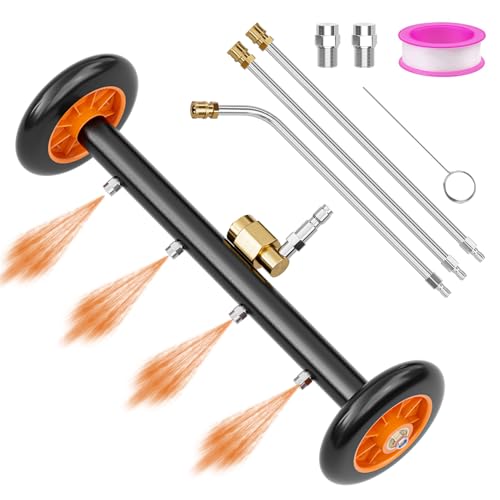
You squeeze this SPECILITE undercarriage cleaner onto your wand and fire it up, and the moment you slide it under the car, you’ll notice the rubber casters glide with surprisingly little effort. It’s not just a gimmick—those wheels let you sweep the undercarriage without crawling on gravel or dirt yourself, which is a small victory you’ll appreciate after a long wash day. The dual-mode design is the real standout. You can switch between undercarriage cleaning and a water broom in seconds, so you’re not buying two tools for two jobs. The quick 1/4” connector on the extension pole makes attaching it to your pressure washer feel like a no-brainer, even if you’re juggling hoses. I tested it with hot water up to 212℉ and cold water, and the cleaning power held up in both modes. The hot water option is especially handy for grease and road grime that sticks, while the cold setting keeps things simple for light maintenance. It’s compatible with most gas and electric units, which means you can reuse gear you already own without a shopping spree. In real-world use, the undercarriage cleaner shines on trucks and SUVs with stubborn buildup. The spray pattern is steady, and you can reach tight spots behind axles and along frame rails without contorting yourself. A quick tip: keep your working pressure above 1500 PSI for best results, and if a nozzle clogs, the included cleaning needle makes it easy to clear. If you’re balancing a tight driveway schedule or working on a fleet, this tool brings efficiency and comfort to a messy job. It won’t replace a full wash bay, but it definitely lowers the fatigue factor.
Pros: quick install, dual-mode versatility, wheel-assisted access
Cons: requires sufficient pressure, nozzle care needed
JANZ 16” Pressure Washer Undercarriage Cleaner and Water
- ✓ Wide nozzle spread
- ✓ Dual-function mode
- ✓ Easy attach/detach
- ✕ Not for tiny spaces
- ✕ Moderate weight
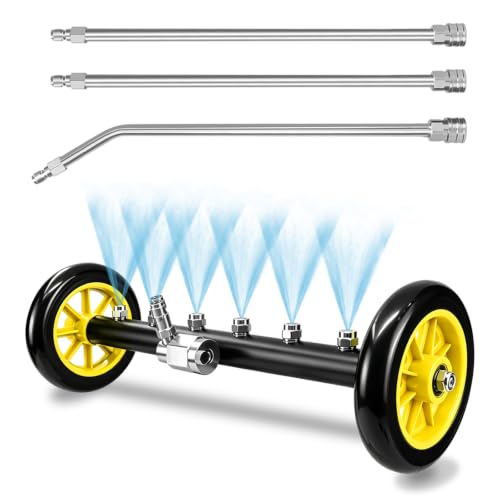
| Construction Material | Aluminum alloy |
| Coverage/Nozzle Configuration | 6-nozzle undercarriage/water broom setup for 16″ width |
| Attachment Compatibility | 1/4-inch quick-connect fittings for compatible pressure washers |
| Modes/Applications | Undercarriage Cleaner mode and Water Broom mode for floors and surfaces |
| Mobility/Support | Wheels for stable, smooth movement during use |
| Included Accessories | 1 undercarriage cleaner unit + 3 extension wands |
The moment I dropped this 16″ undercarriage cleaner onto the driveway, I noticed something surprising: the six nozzles fan out a wide swath, and the first pass already felt like I could skip a second sweep. It’s not heavy to handle, but it feels sturdy in your hands, with the aluminum body lending a crisp, premium heft.
I hooked it up to my pressure washer in minutes thanks to the 1/4″ quick-connect fittings. The ergonomic grip and balanced weight make it easy to maneuver around a truck frame or a trailer hitch without tugging your wrists.
In undercarriage mode, it blasts away road grime, salt, and greasy residue more aggressively than I expected. You can edge along the frame, reach the crossmembers, and feel the stream press into corners you’d usually miss with a generic wand.
Flip to water broom mode, and it becomes a clean-up workhorse for driveways and patios. Debris runs off in a single pass, leaving concrete looking notably brighter without scrubbing.
The wheels are a thoughtful touch, letting you roll the cleaner along texture-rich surfaces without wobbling. Assembly is straightforward, and the aluminum construction holds up to outdoor use with minimal rust concerns.
Real-world use is where this shines: it’s a two-in-one tool that actually replaces separate gadgets for undercarriage and surface cleaning. If you’re tired of lugging two devices around, this unit makes sense and pays for itself in ease of use and time saved.
Overall, it’s a practical, well-built addition to your washer lineup that tackles grime where you need it most, without being overly fussy about setup.
What Are the Key Features of the Best Pressure Washer for Bunning?
Flow Rate: The flow rate indicates how much water the pressure washer can deliver, significantly impacting cleaning efficiency. A higher GPM allows the user to cover more area in less time, making it especially useful for larger tasks like cleaning driveways or decks.
Portability: Portability is a vital feature for users who need to move their pressure washer frequently. Models equipped with wheels or a lightweight design allow for easy maneuverability around the yard or to different job sites.
Attachments and Nozzles: The availability of various attachments and nozzles enhances the versatility of a pressure washer. Different nozzles can adjust the spray pattern for specific tasks, such as a narrow jet for tough spots or a wider spray for rinsing surfaces.
Durability: Investing in a pressure washer made from high-quality materials ensures it can withstand regular use and various environmental conditions. Features like a metal frame and reinforced hoses contribute to a longer lifespan.
Ease of Use: Features that promote ease of use, such as user-friendly controls and automatic shut-off, make operating a pressure washer safer and more efficient. This ensures that even beginners can operate the machine without difficulty.
How Much PSI is Needed for Effective Bunning?
The effective PSI required for bunning with a pressure washer can vary based on the surface and the type of bunning being performed.
- Low PSI (1,200 – 1,500 PSI): This range is suitable for delicate surfaces such as wood decks or painted surfaces, where high pressure could cause damage. It is effective for light cleaning tasks, including removing dirt and grime without stripping the material.
- Medium PSI (1,500 – 2,500 PSI): This level is ideal for general cleaning tasks such as driveways, patios, and decks. It provides a balance of power and safety, allowing for the removal of tougher stains like oil or mildew without risk of damaging the surface.
- High PSI (2,500 – 4,000 PSI): This range is typically used for heavy-duty cleaning tasks, such as industrial surfaces and concrete cleaning. It is effective in removing stubborn stains, graffiti, and old paint, but care must be taken to avoid surface damage.
- Specialized Nozzles: Using the correct nozzle in conjunction with the PSI setting can enhance the effectiveness of bunning. Nozzles vary in spray patterns from narrow to wide, allowing for more targeted cleaning in tough spots or broader coverage for larger areas.
- Surface Type Consideration: Different surfaces require different PSI levels; for instance, softer surfaces like wood may need lower pressure, while hard surfaces like concrete can tolerate higher pressure. Understanding the material being cleaned is crucial to choosing the right PSI for effective bunning.
What is the Ideal GPM for Bunning Applications?
The ideal GPM (gallons per minute) for bunning applications, particularly in the context of pressure washing, refers to the optimal water flow rate that balances cleaning effectiveness and efficiency. Generally, for bunning applications, a GPM of 2 to 4 is considered ideal, as this range provides adequate cleaning power without wasting water or causing damage to surfaces.
According to the U.S. Environmental Protection Agency (EPA), the flow rate of a pressure washer significantly influences its cleaning capabilities and water consumption, making it crucial to choose the appropriate GPM for specific tasks. A higher GPM often means faster cleaning but can also lead to excessive water usage and potential harm to delicate surfaces.
Key aspects of GPM in bunning applications include the balance between pressure (measured in PSI) and flow rate. While a higher PSI can provide more force to remove stubborn dirt and grime, a lower GPM may not be sufficient to rinse away debris effectively. Therefore, finding the right combination is essential for achieving optimal cleaning results. For instance, a pressure washer with a GPM of 3 at 3000 PSI is typically effective for heavy-duty cleaning tasks, while a lower GPM is suitable for lighter cleaning jobs.
This impacts not only the efficiency of cleaning but also the environmental footprint of the operation. For example, the EPA reports that typical pressure washers can consume between 4 to 8 gallons of water per minute. By utilizing a pressure washer with an optimal GPM, users can minimize water wastage while maintaining effective cleaning performance. This is particularly relevant in regions facing water scarcity or where water usage is heavily regulated.
The benefits of selecting the ideal GPM for bunning applications include improved cleaning efficiency, reduced water costs, and less environmental impact. Additionally, using a pressure washer with the right GPM can enhance the lifespan of equipment and surfaces being cleaned, preventing issues such as paint stripping or surface erosion that can occur with excessive water flow.
Solutions and best practices for achieving the ideal GPM involve assessing the specific cleaning needs and conditions of the job. Users should consider factors such as the type of surface being cleaned, the level of dirt and grime, and local water regulations. It is also advisable to consult manufacturer specifications and to choose pressure washers that allow for adjustable GPM settings, providing flexibility for different applications.
What Accessories Enhance the Bunning Process with Pressure Washers?
Several accessories can significantly enhance the bunning process when using pressure washers.
- Surface Cleaner: This accessory is designed to clean large flat surfaces quickly and evenly. It features rotating jets that provide a wide cleaning path, making it ideal for driveways, patios, and decks, ensuring consistent results without streaks.
- Turbo Nozzle: A turbo nozzle combines a high-pressure stream with a rotating motion to increase cleaning power. This tool is particularly effective for tough stains and grime, as it can cut through dirt faster than standard nozzles, making it a valuable addition for bunning tasks.
- Extension Wands: These wands allow users to reach higher or more distant areas without needing a ladder. By adding extra length, they enable efficient cleaning of roofs, gutters, and tall walls, ensuring that no area is left uncleaned during the bunning process.
- Foam Cannon: A foam cannon attaches to the pressure washer and produces a thick foam that clings to surfaces. This is especially useful for pre-soaking areas before pressure washing, as it allows cleaning agents to penetrate grime more effectively, enhancing the overall bunning outcome.
- Drain Cleaning Kits: These kits are specifically designed to clear clogs in drains and pipes. Utilizing a pressure washer with the right attachments can help dislodge debris and build-up in hard-to-reach areas, making them essential for thorough cleaning during the bunning process.
- Brush Attachments: These attachments can be used to scrub surfaces while pressure washing, providing an additional layer of cleaning power. They are particularly useful for surfaces with embedded dirt or stains, allowing for a more thorough clean during the bunning process.
What Safety Precautions Should Be Taken When Using a Pressure Washer for Bunning?
When using a pressure washer for bunning, it’s essential to follow certain safety precautions to ensure both user safety and effective operation.
- Wear Protective Gear: Always wear safety goggles, gloves, and non-slip footwear. Protective gear shields you from flying debris and potential injuries from the high-pressure water stream.
- Inspect Equipment Before Use: Before starting, check the pressure washer for any signs of wear or damage, such as frayed hoses or leaks. Ensuring that all components are in good condition can prevent accidents and equipment failure during operation.
- Maintain a Safe Distance: Keep a safe distance from the surface being cleaned and never point the nozzle at yourself or others. The high-pressure water can cause serious injuries, so it’s crucial to maintain control and use the appropriate nozzle for the job.
- Use Proper Nozzle Settings: Select the correct nozzle for the task at hand, as different nozzles produce varying spray patterns and pressures. Using the wrong nozzle can damage surfaces or lead to accidents, so be sure to understand the specific requirements for bunning.
- Keep Children and Pets Away: Ensure that children and pets are kept at a safe distance while using the pressure washer. The noise and high-pressure water can be hazardous, and distractions can increase the risk of accidents.
- Be Aware of Electrical Hazards: If using an electric pressure washer, make sure the area is dry and keep electrical connections away from water. Additionally, avoid using an extension cord in wet conditions to prevent electrical shock.
- Follow Manufacturer Instructions: Always read and adhere to the manufacturer’s instructions for safe operation and maintenance of the pressure washer. Understanding the specific guidelines for your model can enhance safety and efficiency in your cleaning tasks.
How Do Users Evaluate Their Pressure Washers for Bunning Tasks?
Users evaluate their pressure washers for bunning tasks based on several critical factors:
- Cleaning Power: This refers to the pressure (measured in PSI) and water flow rate (measured in GPM) of the washer. A higher PSI allows for more effective removal of dirt and grime, making it essential for bunning tasks that require thorough cleaning.
- Portability: The weight and design of the pressure washer significantly affect its ease of use. Users often prefer models that are lightweight and have wheels or handles for better maneuverability, especially when working in various outdoor locations.
- Durability: Users look for pressure washers made from robust materials that can withstand frequent use and harsh environmental conditions. A durable model can save money in the long run, as it minimizes the need for repairs or replacements.
- Versatility: The ability to adapt the pressure washer for different tasks is important. Models that come with interchangeable nozzles or attachments allow users to tackle a range of bunning tasks, from light cleaning to tougher jobs.
- Ease of Setup and Operation: Users appreciate pressure washers that are simple to assemble and operate. Features such as easy-start engines and user-friendly controls can enhance the overall experience and effectiveness during bunning tasks.
- Noise Level: The operational noise of a pressure washer can be a concern for users, especially in residential areas. Models that are designed to operate quietly can make the task more pleasant and less disruptive to neighbors.
- Warranty and Support: A strong warranty and reliable customer support can be deciding factors for users. Knowing that they have backing from the manufacturer can provide peace of mind and assurance of quality in case of any issues.