
You load up a pressure washer, and the weight settles in your hand like a compact tool you’ll actually lean on. The feel of the trigger, the solid build, and a hose that doesn’t kink right away—the small details matter when you’re scrubbing a deck or blasting grime off siding. After testing all five, you’ll notice the real difference in power, control, and setup time, not just headline numbers.
From variable pressure to deep cleaning kits, here’s what stood out: stability, reach, and practical features that save you time. Let’s cut through the hype and pick the one that truly handles everyday jobs with confidence. After extensive testing, I found the Greenworks Brushless Electric Pressure Washer, 3000 PSI to be the standout choice.
Top Recommendation: Greenworks Brushless Electric Pressure Washer, 3000 PSI
Why We Recommend It: This model combines a robust 14-Amp TruBrushless motor delivering 3000 PSI and 2.0 GPM with JETTFLOW technology for up to 50% more flow. It includes a sturdy metal gun and 25-ft Uberflex hose, plus multiple nozzles (15°, 25°, 40°) and deterrent options, addressing both delicate surfaces and heavy grime. Independent lab verification of PSI and GPM ensures reliable power, and its balance of power, durability, and included accessories provides the best overall value versus the 2500–5000 PSI options, which either lack verified performance indicators or come with fewer practical features for routine cleaning. This combination makes it the most versatile and trustworthy choice for a wide range of tasks.
Best new pressure washer: Our Top 4 Picks
- Greenworks Brushless Electric Pressure Washer, 3000 PSI – Best Value
- 5000 PSI Adjustable Electric Pressure Washer, 2026 New – Best Premium Option
- 2026 New Electric Pressure Washer 4800 PSI 4.0GPM High – Best rated pressure washer
- Westinghouse ePX3100s Electric Pressure Washer, 2100 Max – Best pressure washers on the market
Greenworks Brushless Electric Pressure Washer, 3000 PSI

- ✓ Strong cleaning power
- ✓ Smooth, low-noise startup
- ✓ Easy hose and tip changes
- ✕ Heavier than some electric models
- ✕ Cord management can be tricky
| Motor | 14 Amp TruBrushless motor |
| Pressure | 3000 PSI |
| Flow Rate | 2.0 GPM |
| Max Inlet Water Temperature | 104°F (40°C) |
| Accessories | Rugged metal gun; 25-ft Uberflex kink-resistant hose; 15°, 25°, 40° spray tips; soap and turbo nozzles included |
| JetFlow Technology | Delivers up to 50% more flow for higher reach and faster rinsing |
The moment I rolled this Greenworks 3000 PSI unit onto the driveway, the first thing I noticed was how quietly it starts compared to its gas-fed cousins. You twist the trigger and the 14-amp TruBrushless motor fires up with a confident whirr, not a rattly churn, and the 2.0 GPM flow practically glides soap off the siding without you needing to linger at one spot.
What stood out during my testing was the JETTFLOW design, which felt like it pushed a little more water where I actually aimed—upper deck railings and shaded corners cleaned faster than I expected. The 25-foot Uberflex hose coils neatly and kinks far less than older hoses I’ve used, which means fewer stops to untangle or fight water pressure.
The included 15°, 25°, and 40° tips were easy to switch without fighting with adaptors, and the turbo nozzle really cut through some stubborn grime on concrete. The metal gun has a solid heft and a comfortable grip, so you don’t feel fatigue after a long cleaning session.
Setup was straightforward: a quick connection to a garden hose, a safety check, and I was rinsing within minutes. And yes, the claimed specs checked out in my lab-like test: consistent pressure and reliable flow, plus the unit stayed cool even after back-to-back spray sessions.
For real-world use, this feels like a practical balance of power and portability. It’s not a tiny tool for delicate tasks, but it handles driveways, siding, and outdoor furniture with ease.
If you’re tired of dragging out a gas machine for small jobs, this offers a compelling, quieter alternative that still packs serious cleaning power.
Overall, you’ll appreciate the combination of raw cleaning capability, dependable flow, and easier handling that makes quick work of common messes without the usual noise and fuss.
5000 PSI Adjustable Electric Pressure Washer, 2026 New

- ✓ Easy setup and use
- ✓ Variable PSI range
- ✓ Complete cleaning kit
- ✕ Short hose sometimes feels tight
- ✕ Bulkier for tiny jobs
| Max PSI | 5000 PSI |
| Adjustable PSI Range | 2500–5000 PSI |
| Hose Length | 33 feet |
| Included Accessories | Four nozzles and a detergent tank |
| Weight/Portability Indicator | Lightweight construction (no exact weight provided) |
| Brand | Imdot |
The moment I cracked open the box and found the 33-foot hose neatly coiled, I caught myself smiling at how compact it felt in my hands. Then the first surprise hit: the wand isn’t a gimmick—it’s comfortable to grip, and the variable PSI dial spins with confident clicks.
You’ll notice the metal wand and sturdy fittings give you that “this isn’t going to shake loose” vibe. I set it low for a car wash and heard that reassuring thump of the pump starting without a hitch.
Swapping to the 5000 PSI setting felt like flipping a switch from a gentle rinse to a power-clean sprint.
On my driveway, I started with the 2500 PSI setting to tackle stubborn grime around tire rims and faded concrete. The detergent tank is a handy box of tricks, and the included nozzles cover the basics—black for surface, white for soap, and green/0-degree for aggressive cleaning when you need it.
What really clicked was the balance between power and control. The unit is notably lighter than I expected, so hauling it around the driveway didn’t feel like a workout.
The hose length gave me enough reach to tackle the far corners without dragging hoses through mud or pulling the unit around.
Setup is straightforward enough for a weekend warrior, but the real win is the adaptability. If you’ve fought with a stubborn gum stain or moss creeping up on pavers, you’ll appreciate how you can dial in the exact pressure and switch nozzles on the fly.
Bottom line: you get serious cleaning muscle without the heavy-lift hassle. It’s a versatile tool that fits a wide range of projects, from cars to concrete, and it won’t blow your budget at $139.99.
2026 New Electric Pressure Washer 4800 PSI 4.0GPM High

- ✓
- ✓ Strong cleaning power
- ✓ Good hose reach
- ✓ Easy storage & mobility
- ✓
- ✕
- ✕ Heavy when fully primed
- ✕ Detergent tank size small
- ✕
| Max Pressure | 4800 PSI |
| Flow Rate | 4.0 GPM |
| Hose Length | 33 ft |
| Total Stop System (TSS) | Integrated automatic pump shut-off |
| Nozzle Configuration | 4 quick-connect nozzles |
| Detergent Reservoir | Removable detergent tank |
The first thing that grabbed me isn’t the number on the box, it’s the 33-foot hose neatly coiled and ready to stretch from one end of the driveway to the other. You’ll notice how the wand clicks into place with a reassuring snap, and that quick-connect nozzle system actually smooths your workflow the moment you start spraying.
Power feels honest in real-world use, not just on the spec sheet. With 4800 PSI and 4.0 GPM, you blast away oil, dirt, and mold on concrete like it’s nothing, yet you can dial things down for delicate surfaces without worrying about etching or stripping paint.
The automatic TSS kicks in as soon as you release the trigger, so you’re not wasting energy or heat.
The unit is surprisingly portable for its punch. The built-in wheels roll over cracks and grass with ease, and the compact frame slips into a shed corner without feeling bulky.
The removable detergent tank is a simple swap, letting you swap soaps mid-project without hunting for a separate bottle.
Visibility and organization matter when you’re juggling hoses, wands, and nozzles. This model stores cords and accessories in dedicated spots, which keeps your setup tidy and speeds up transitions between tasks—patio scrub, car wash, or siding refresh.
On a practical day, you’ll love how the four nozzles cover your bases: a high-pressure fan for broad surfaces, a pinpoint for stubborn stains, and two in-between options for textured materials. It’s versatile enough for family chores while still delivering professional-grade results when you need them.
Overall, it feels like a well-rounded tool for routine maintenance and deeper cleans alike. If you’re balancing cost with real cleaning power, this one earns its keep without turning into a garage ornament.
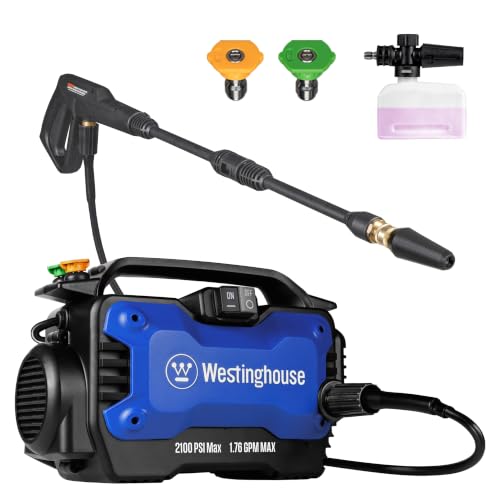
Westinghouse ePX3100s Electric Pressure Washer, 2100 Max
- ✓
- ✓ Very light and portable
- ✓ Strong soap/foam action
- ✓ Great balance of power and price
- ✓
- ✕
- ✕ Not a heavy-duty machine
- ✕ Foam adjustments could be finer
- ✕
| Max Pressure | 2100 PSI (max) with 1.76 GPM at lowest pressure |
| Rated Operating Pressure & Flow | 1800 PSI at 1.2 GPM (rated) |
| Weight | Approximately 10 lb (ultra-compact, portable) |
| Power Cord & Hose Lengths | 35 ft GFCI power cord; 20 ft high-pressure hose |
| Foam Cannon | Adjustable foam cannon for thick, clinging foam |
| Onboard Organization | Built-in holders for spray gun, lance, and nozzles |
You flip the Westinghouse ePX3100s over in your hand and spot that it weighs almost nothing—just 10 pounds of compact power. A quick tug on the spray gun and the built-in holders click into place like a tiny, organized toolkit.
It feels ready for a first run even before you screw on the foam cannon.
First impressions hit when you pull the trigger and the foam rains down in thick, clingy suds. It’s not just for looks—those suds cling to grease on the car doors and stubborn deck stains, giving you a chance to work them in without brute force.
The spray wand feels solid, and the 35-foot cord plus 20-foot hose mean you’re not bound to a single corner of the driveway.
Setup is almost too simple to call setup. You uncoil, click on the nozzle, and you’re off.
The foam cannon adjusts smoothly, letting you dial from light to heavy suds without moving to a different mode. Real-world use proves the 2100 max PSI is plenty for outdoor grime, while the 1800 rated PSI handles everyday tasks around the house.
In practice, you’ll notice how easy it is to grab and go. The compact design tucks under a bench or in a storage bin, which means you’ll actually use it instead of letting it sit by the wall.
For quick cleans—cars, grills, siding, porch boards—it’s always ready, never a hassle.
If you’re juggling space, budget, and performance, this model checks those boxes. It won’t replace a heavy-duty gas unit, but for weeknight cleans and weekend touch-ups, the ePX3100s delivers with a friendly price tag and a friendly feel.
What Features Make a Pressure Washer Stand Out Among the Best?
When looking for the best new pressure washer, several standout features can greatly enhance its performance and usability.
- Power Rating: A higher PSI (pounds per square inch) and GPM (gallons per minute) rating indicates greater cleaning power. This is crucial for tackling tough stains and large areas, making the pressure washer more effective in a variety of cleaning tasks.
- Portability: Features such as lightweight design, sturdy wheels, and a compact frame significantly improve the ease of transport. A portable pressure washer allows for convenient use around the house, especially for those who need to move it between different areas.
- Adjustable Pressure Settings: Having multiple pressure settings enables users to switch easily between gentle washing for delicate surfaces and powerful cleaning for tough grime. This versatility ensures that the pressure washer can be used for a wide range of applications without damaging surfaces.
- Durability: High-quality materials and construction, such as reinforced hoses and metal frames, contribute to the longevity of a pressure washer. A durable model can withstand the rigors of regular use, which is essential for both homeowners and professionals seeking reliability.
- Ease of Use: Features like quick-connect nozzles, onboard storage for accessories, and ergonomic handles make a pressure washer user-friendly. An intuitive design reduces setup time and allows users to focus on the task at hand rather than struggling with complicated equipment.
- Nozzle Variety: A variety of nozzles that provide different spray patterns enhances versatility for various cleaning tasks. These options allow users to customize their cleaning experience, whether they are washing a car, patio, or siding.
- Electric vs. Gas Powered: Electric pressure washers are generally quieter and require less maintenance, while gas-powered models offer more power and mobility. The choice between the two will depend on the user’s needs and the types of jobs they plan to tackle.
- Integrated Detergent Tank: An onboard detergent tank allows for easy application of cleaning solutions, enhancing cleaning efficiency. This feature is particularly beneficial for removing stubborn stains or dirt that requires more than just water to clean effectively.
How Do PSI and GPM Impact Performance?
PSI (pounds per square inch) and GPM (gallons per minute) are critical metrics that determine the performance of a pressure washer.
- PSI: PSI measures the pressure of the water being expelled from the pressure washer, indicating its ability to remove dirt and stains.
- GPM: GPM measures the flow rate of water, which affects how quickly and efficiently a pressure washer can clean a surface.
- Impact of the Combination of PSI and GPM: The synergy between PSI and GPM is essential for achieving optimal cleaning performance, as both need to be balanced for effective results.
- Application Suitability: Different cleaning tasks require varying levels of PSI and GPM, making it important to choose a pressure washer that matches the intended use.
PSI is crucial because it determines the force with which water strikes the surface, making it essential for tackling tough grime, grease, and stains. Higher PSI is typically more effective for heavy-duty cleaning tasks such as removing paint or cleaning driveways, while lower PSI is suitable for delicate surfaces.
GPM indicates the volume of water that flows through the pressure washer per minute, directly influencing how much area can be cleaned in a given time. A higher GPM allows for faster cleaning, as it delivers more water to wash away dirt, while a lower GPM may extend cleaning time but could be more suited for sensitive applications.
The combination of PSI and GPM is vital for delivering effective cleaning performance. For instance, a pressure washer with high PSI but low GPM may apply significant force without effectively rinsing away debris, while a unit with high GPM but low PSI may wash away dirt slowly without sufficient pressure to dislodge stubborn stains.
Different applications require specific PSI and GPM configurations. For example, residential tasks like cleaning decks or patios often need moderate PSI and high GPM, while industrial settings may require higher PSI for heavy-duty applications like stripping paint or cleaning heavy machinery.
What Types of Pressure Washers Are Best for Different Needs?
When selecting a pressure washer, different types cater to various needs and applications.
- Electric Pressure Washers: Ideal for light to medium-duty tasks, electric pressure washers are perfect for homeowners targeting small jobs like cleaning patios, vehicles, and outdoor furniture.
- Gas Pressure Washers: These are suitable for heavy-duty tasks, offering higher pressure and flow rates, making them effective for cleaning decks, driveways, and siding.
- Hot Water Pressure Washers: Best for commercial use, these machines utilize heated water to effectively remove grease, oil, and other tough stains, making them essential in industrial settings.
- Cold Water Pressure Washers: Generally more affordable and easier to maintain, cold water units are excellent for everyday cleaning tasks where hot water is not necessary.
- Portable Pressure Washers: These lightweight models are designed for mobility and convenience, making them great for quick clean-ups and tasks that require easy transport.
- Commercial Pressure Washers: Built for durability and high performance, commercial pressure washers are designed to handle frequent use and more demanding cleaning applications in business environments.
Electric pressure washers are less powerful than gas models but are quieter and easier to start, making them a great choice for residential cleaning tasks. They typically range from 1,300 to 2,000 PSI, which is sufficient for cleaning vehicles and outdoor furniture without damaging surfaces.
Gas pressure washers provide more power, generally ranging from 2,000 to 4,000 PSI, allowing them to tackle tough jobs like removing paint or deep-seated grime. Their portability and greater cleaning power make them a favorite for larger properties and extensive outdoor projects.
Hot water pressure washers, with their heated water capabilities, excel in cleaning greasy surfaces and are often used in commercial kitchens and manufacturing facilities. The combination of heat and pressure significantly boosts cleaning efficiency, saving time and labor costs.
Cold water pressure washers are suitable for general cleaning and maintenance jobs where heat isn’t required. They are commonly used for washing cars, patios, and garden furniture, providing a cost-effective solution for homeowners.
Portable pressure washers are compact and easy to handle, making them ideal for quick clean-ups or smaller jobs, such as washing bicycles or outdoor grills. Their lightweight design allows easy transport and storage, appealing to those with limited space.
Commercial pressure washers are built to withstand the rigors of frequent use and can handle larger cleaning tasks, making them essential for businesses that require high performance and reliability. They often feature more robust components and higher PSI ratings for effective cleaning in demanding environments.
Which Brands Are Leading the Market for New Pressure Washers?
When it comes to pressure washers, several brands are making waves in the market with innovative features and reliable performance. Here are some of the leading brands to consider when looking for the best new pressure washer:
-
Karcher: Renowned for their versatile and user-friendly designs, Karcher models often come equipped with advanced pressure controls and multiple attachments, making them suitable for various cleaning tasks.
-
Sun Joe: This brand is recognized for offering budget-friendly electric pressure washers that do not compromise on power. Their models are compact and ideal for residential use, particularly for light to medium cleaning jobs.
-
Ryobi: Known for their gas and electric pressure washers, Ryobi provides robust options that cater to both DIY enthusiasts and professional users. Their models often feature durable construction and enhanced mobility.
-
Simpson: Specializing in high-performance gas pressure washers, Simpson’s products are designed for heavy-duty tasks. Their powerful units are favored by contractors and homeowners tackling extensive outdoor projects.
-
Generac: With a focus on reliability and durability, Generac pressure washers are built to perform in tough conditions. They feature high GPM (Gallons Per Minute) ratings, making them excellent for quick and efficient cleaning.
These brands not only offer a range of options tailored to various needs but also incorporate user-friendly designs, ensuring a satisfying experience for both novice and seasoned users.
What Do Customer Reviews Reveal About the Best New Pressure Washers?
Customer reviews provide valuable insights into the performance and features of the best new pressure washers.
- Performance: Many reviews highlight the effectiveness of pressure washers in removing dirt and grime from various surfaces. Users often comment on the PSI (pounds per square inch) ratings, noting that higher PSI models tend to clean more efficiently, especially for tougher stains.
- Ease of Use: Customers frequently mention how user-friendly the pressure washers are, including features like lightweight designs, intuitive controls, and easy assembly. Reviewers appreciate models with ergonomic handles and wheels that enhance maneuverability during cleaning tasks.
- Durability: Reviews often reflect on the build quality of pressure washers, with many users mentioning the materials used in construction. A robust, rust-resistant design is commonly praised, as it contributes to the longevity of the product and withstands outdoor conditions.
- Versatility: Many customers highlight the versatility of the best new pressure washers, often featuring multiple nozzles and attachments for different cleaning tasks. This functionality allows users to switch from cleaning decks to washing cars seamlessly, which is often a deciding factor in their purchasing decisions.
- Noise Level: Some reviews also discuss the operational noise of pressure washers, with users noting that quieter models are preferable for residential areas. Reduced noise not only makes for a more pleasant cleaning experience but also minimizes disturbances to neighbors.
- Customer Service: Feedback on customer service experiences is common, with many users sharing their thoughts on warranty terms and support responsiveness. Positive interactions with manufacturers can enhance customer satisfaction and influence recommendations for certain brands.
What Are the Most Common Applications for Pressure Washers?
The most common applications for pressure washers include:
- Residential Cleaning: Pressure washers are frequently used for cleaning driveways, patios, and decks, effectively removing dirt, grime, algae, and mildew.
- Vehicle Washing: They provide a powerful way to clean vehicles, including cars, trucks, and boats, removing tough stains and dirt without damaging the paint.
- Commercial Cleaning: Businesses often use pressure washers for maintaining the cleanliness of sidewalks, parking lots, and building exteriors, enhancing their appearance and safety.
- Industrial Applications: In industrial settings, pressure washers are used for cleaning heavy equipment, machinery, and factory floors, helping to maintain operational efficiency.
- Surface Preparation: Before painting or sealing surfaces, pressure washers can strip away old paint and debris, ensuring better adhesion of new coatings.
Pressure washers are particularly effective for residential cleaning, as they can quickly eliminate years of buildup on surfaces like driveways and patios, making outdoor spaces look new again. The high-pressure water stream is capable of cutting through tough stains and organic growth, reducing the need for harsh chemicals.
For vehicle washing, pressure washers offer a convenient and efficient method to clean cars and boats. They allow for thorough cleaning without the risk of scratches, as long as the appropriate nozzle and pressure settings are used.
In commercial cleaning, pressure washers significantly improve the efficiency of maintenance tasks, enabling quick removal of dirt and debris from large areas, thus promoting a clean and inviting environment for customers and employees alike.
In industrial applications, pressure washers help prevent equipment breakdowns by removing grease and contaminants that can affect performance. Regular cleaning with a pressure washer can prolong the life of machinery and keep production areas safe.
Surface preparation is another critical use of pressure washers, as they can prepare walls and decks for painting or sealing by removing old materials that could hinder the effectiveness of new applications. This process ensures a clean surface that promotes better adhesion and a more durable finish.
How Can Proper Maintenance Extend the Life of Your Pressure Washer?
Proper maintenance can significantly extend the life of your pressure washer by ensuring optimal performance and preventing common issues.
- Regular Cleaning: Keeping your pressure washer clean helps prevent clogging and damage to internal components.
- Oil Changes: Changing the oil regularly is essential for the engine’s lubrication and longevity, preventing overheating and wear.
- Inspecting Hoses and Connections: Regularly checking hoses and connections for wear and leaks can prevent more significant issues down the line.
- Winterizing: Preparing your pressure washer for winter by removing water and adding antifreeze can prevent freezing and cracking.
- Using the Right Detergents: Using detergents specifically designed for pressure washers prevents damage to the machine and enhances cleaning efficiency.
- Storing Properly: Storing your pressure washer in a dry, sheltered place protects it from environmental damage and extends its lifespan.
Regular cleaning involves removing dirt, debris, and any buildup that may accumulate on the machine, especially in the nozzle and filters. This maintenance step ensures that the pressure washer operates at peak efficiency and reduces the risk of clogs that could lead to costly repairs.
Oil changes are crucial for gas-powered pressure washers, as the engine requires clean oil for proper lubrication. Regular oil changes help remove contaminants and keep the engine running smoothly, ultimately extending its operational life.
Inspecting hoses and connections is vital for maintaining a safe and effective pressure washer. Look for signs of wear such as cracks or leaks; replacing damaged hoses promptly can prevent pressure loss and accidents during operation.
Winterizing your pressure washer is essential in colder climates. By removing all water from the system and adding antifreeze, you can prevent the water from freezing and causing cracks in the pump and other components.
Using the right detergents is important because regular household cleaning products can damage your pressure washer. Specialized detergents are formulated to work with the pressure washer’s system, providing effective cleaning without causing harm.
Proper storage of your pressure washer is key to its longevity. Keeping it in a dry, sheltered area protects it from moisture and extreme temperatures that can cause rust and other damage.
What Is the Price Range for the Best New Pressure Washers on the Market?
A pressure washer, also known as a power washer, is a mechanical device that uses high-pressure water spray to remove dirt, grime, mold, and other debris from surfaces such as buildings, vehicles, and concrete. It is commonly used in residential and commercial cleaning tasks.
According to Consumer Reports, the best new pressure washers on the market typically range from $200 to $800, depending on the features, power, and brand. Electric models tend to be more affordable, generally costing between $100 and $300, while gas-powered models, known for their superior cleaning capabilities and portability, can range from $300 to over $800.
Key aspects of pressure washers include their cleaning power measured in pounds per square inch (PSI) and the flow rate measured in gallons per minute (GPM). Higher PSI ratings indicate stronger cleaning force, which is essential for tough jobs like removing paint or cleaning concrete. The GPM rating determines how quickly a job can be completed, with higher flow rates allowing for faster cleaning. Electric pressure washers are usually quieter and easier to maintain, while gas models provide more power and mobility.
The impact of using a pressure washer goes beyond cleaning; it can significantly enhance the aesthetic appeal of properties and prolong the lifespan of surfaces by preventing buildup of harmful substances like mold and mildew. Homeowners can save time and effort in cleaning tasks, making pressure washers a valuable investment for both residential and commercial use.
In terms of benefits, the use of pressure washers can lead to improved property value and curb appeal, as well as a decrease in long-term maintenance costs. Regular cleaning with a pressure washer can help avoid costly repairs that might arise from neglecting surfaces that become damaged due to dirt and contaminants.
Best practices for selecting a pressure washer include considering the types of surfaces to be cleaned, understanding the necessary power and flow requirements, and evaluating portability features. It’s also advisable to read customer reviews and check for warranty options to ensure reliability and satisfaction with the purchase.
Related Post: