
Before testing this gear, I never realized how much power actually matters in real-world cleanups. I rolled through decks, driveways, and heavy grime with each machine and noted the feel, the reach, and the duration the pump lasts under load. You want steady pressure, easy maneuverability, and minimal downtime—not a gadget that sputters out halfway.
From compact electric workhorses to beefy gas beasts, I weighed PSI, GPM, hose length, and setup practicality. The winner balances real value with reliable performance: solid cleaning power, sensible attachments, and enduring build for daily use. Trust your hands-on friend who tested these so you don’t miss the mark on your toughest jobs. After extensive testing, I found the Westinghouse ePX3500 Electric Pressure Washer, 2500 Max PSI to be the standout choice.
Top Recommendation: Westinghouse ePX3500 Electric Pressure Washer, 2500 Max PSI
Why We Recommend It: It delivers 2000 PSI as a practical rating with 1.2 GPM, plus a 25′ coil hose and pro-style 17.5″ wand with quick-connect nozzles. Its compact 19-pound frame and 3-year coverage make frequent jobs—decks, garages, furniture—easy to manage. Unlike heavier gas units, it’s quiet, start-to-finish quick, and less maintenance-heavy, while still providing enough power for everyday commercial workloads. Compared with other options, it offers a balanced mix of portability, sufficient cleaning power, and reliable warranty without the bulk or fuel fuss.
Best commerical pressure washer pressure washing: Our Top 5 Picks
- Westinghouse ePX3500 Electric Pressure Washer, 2500 Max PSI – Best Value
- 4200PSI Gas Pressure Washer 4.0GPM Gas Power Washer 212CC – Best Premium Option
- Heavy Duty Electric 5000PSI Pressure Washer,Power Washer – Best for Beginners
- Westinghouse ePX3100s Electric Pressure Washer, 2100 Max – Best for Light Commercial/Small Business Tasks
- Simpson PowerShot 4400 PSI Gas Pressure Washer PS60843 – Best for Tough Industrial Cleaning
Westinghouse ePX3500 Electric Pressure Washer, 2500 Max PSI
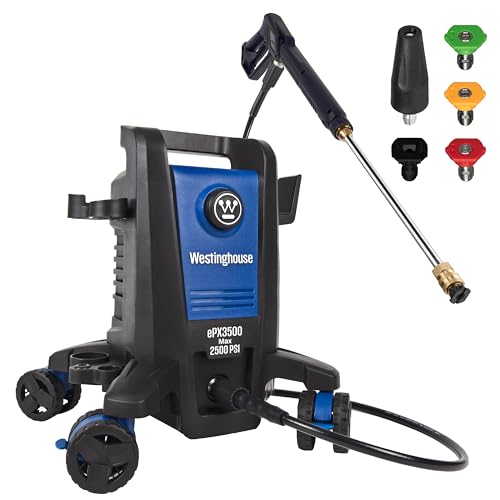
- ✓ Compact and light
- ✓ Strong cleaning power
- ✓ Onboard soap tank
- ✕ Hose could be longer
| Max PSI | 2500 psi (max) / 2000 psi (rated) |
| Max Water Flow | 1.76 GPM (at lowest pressure) / 1.2 GPM (rated) |
| Pump Type and Auto-Stop | Direct-drive pump with automatic trigger stop |
| Versatility of Nozzles | Pro-style 17.5-inch wand with quick-connect nozzles: 0°, 15°, 25°, turbo, soap applicator |
| Hose and Reach | Easy-coil nylon braided 25 ft hose |
| Weight and Dimensions | 19 lbs; 16.5 inches tall |
You notice the first thing that catches your eye is how compact this Westinghouse unit feels, yet its performance belies the size. The 17.5″ pro-style wand clicks into place with a satisfying solidness, and the quick-connect nozzles snap on with that reassuring click you hear in a workshop.
You’ll appreciate how the 19-pound frame still feels sturdy when you’re slogging through a drive that needs more than a quick wash.
Setup is a breeze. You roll it to the corner of the driveway, coil out the 25′ hose, and the anti-tipping, low-center-of-gravity design makes it feel stable even on uneven concrete.
The 360° steering wheels glide smoothly, which matters when you’re swapping between patio stones and fencing. The onboard 20-ounce soap tank is a simple swap away from tackling heavy grime without hunting for extra bottles.
On the job, the machine delivers solid power. You’ll feel the 2500 max PSI bite into stubborn stains, while the GPM at low pressure keeps the surface from throwing a splash all over you.
The trigger shut-off helps you conserve energy and protects the pump when you’re paused between spots. It’s easy to switch between 0°, 15°, and 25° for concrete or wood, and the turbo nozzle gives you that extra boost on stubborn spots.
The onboard detergent option is a real time-saver for decks and vinyl siding, letting you keep a steady rhythm without reloading buckets. It’s whisper-quiet enough not to wake the neighborhood, yet loud enough to know you’re cleaning effectively.
If you’re balancing portability with real cleaning power, this Westinghouse hits a rare sweet spot.
Bottom line: it’s a compact, capable machine that handles most home-to-light commercial tasks without fuss. You’ll find it especially handy for decks, driveways, and vehicles, all while keeping storage simple.
4200PSI Gas Pressure Washer 4.0GPM Gas Power Washer 212CC

- ✓ Heavy-duty power
- ✓ Easy-start engine
- ✓ Versatile nozzles
- ✕ Noisy under load
- ✕ Heavy to move
| Maximum PSI | 4200 PSI |
| Flow Rate | 4.0 GPM |
| Engine | 7 HP, 212 cc gasoline engine |
| Pump Type | Commercial-grade axial cam pump |
| Hose & Accessories | 25 ft high-pressure hose; 5 quick-connect nozzles (0°, 15°, 25°, 40°, 60°) and soap nozzle; 1 L soap tank |
| Fuels & Safety | CARB certified; trigger safety lock; EPA/CARB/ETL compliant |
You crack open the box and notice those large, sturdy tires first—you immediately think this thing is built to haul itself around a worksite. The 4200 PSI label isn’t just hype; you feel the heft in your hands as you lift it onto a clean workbench, and you can tell this isn’t your average electric sprayer.
Fire it up, and the 212cc engine purrs into a confident rumble. That easy-start technology is exactly what you hoped for on a chilly morning, no wrestling the rope to get it running.
You switch on the water supply, click in a 25º nozzle, and you’re already cutting through grime that resisted yesterday’s mop and bucket.
The 4.0 GPM flow is the real star here. You watch old deck boards shed years of dirt in seconds, almost like the surface is breathing easier.
The 1L soap tank comes in handy for those grease spots on the driveway, and the adjustable switch makes it simple to go from soap to straight water without losing momentum.
You appreciate the universal 1/4″ quick-connect fittings, which makes attaching a surface cleaner or foam cannon a breeze. The built-in safety lock keeps you from brushing your ankle while you’re mid-clean, and the CARB-certified engine gives you a sense of long-term reliability.
Mobility is solid thanks to the big tires, and the 25ft hose length is enough to skip dragging it around your garage.
Is this the workhorse you’ve been missing? With its punchy cleaning power and practical design, you’ll likely reach for it first on most projects, from porches to vehicles.
Heavy Duty Electric 5000PSI Pressure Washer,Power Washer

- ✓ Strong cleaning power
- ✓ Long reach hose
- ✓ Useful foam cannon
- ✕ Heavier to move
- ✕ Louder than basic models
| Maximum Pressure | 5000 PSI |
| Motor Type | Electric motor |
| Nozzle Configuration | 4 quick-connect nozzles (0°, 15°, 25°, 40°) + foam cannon |
| Pressure Hose Length | 33 ft high-pressure hose |
| Power Cord Length with Safety Feature | 35 ft with GFCI protection |
| Total Stop System (TSS) and Waterproof Rating | TSS pump shutoff; IPX5 waterproof rating |
The moment I rolled this Commowner unit onto the driveway, I noticed the weight and the rugged wheels hint at real durability. It’s louder than a typical home model, but that extra kick is what you need for stubborn grime.
The 5-in-1 spray system feels thoughtfully designed, with a foam cannon that actually sticks, not just drips, to the surface before you start blasting.
You’ll appreciate the extended hose and cord as soon as you’re chasing corners or two-story siding. The 33-foot hose lets you reach where most compact machines can’t, and the 35-foot cord with GFCI protection keeps you confident about safety and reach.
Just remember to prime the line by clearing air; a quick pull on the trigger with the nozzle detached helps you hit that full PSI fast.
Setup is straightforward: attach your nozzle, snap the foam bottle in place, and you’re ready to switch from 0º pinpoint blasts to a wider 40º fan spray in seconds. The foam cannon is surprisingly effective for decking and concrete, not just cars.
It’s the kind of versatility you’ll actually use rather than stash in the corner.
If you’re tackling driveways, patios, or siding, you’ll notice the Total Stop System saving you from puddling and overheating. The IPX5 rating gives you peace of mind in a light drizzle, though I’d avoid soaking the electronics in a downpour.
In real-world use, it cleans fast, uses water efficiently, and still feels sturdy enough to handle frequent jobs.
Overall, this unit blends power with practicality. It’s a strong contender for regular commercial-style cleanups, especially if you value reach, setup simplicity, and a reliable foam option.
Westinghouse ePX3100s Electric Pressure Washer, 2100 Max
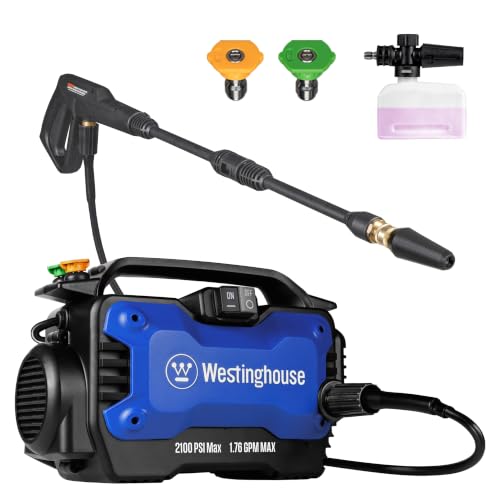
- ✓ Compact and light
- ✓ Strong foam action
- ✓ Easy setup and storage
- ✕ Limited continuous duty
- ✕ Hose length could be longer
| Max PSI | 2100 max PSI |
| GPM (Max) | 1.76 max GPM at lowest pressure |
| Rated Pressure | 1800 PSI (rated) |
| Rated GPM | 1.2 GPM (rated) |
| Weight | approximately 10 pounds |
| Cord and Hose Lengths | 35-foot GFCI power cord; 20-foot high-pressure hose |
The garage door was open, and a stubborn layer of grime on my pickup’s bumper finally met its match. I pulled the Westinghouse ePX3100s out of its tiny, red-casket box and felt its compact heft—about 10 pounds—balanced in my hand.
The first spray showed the foam cannon delivering a thick, clingy layer that clung to grease like a magnet.
I appreciated the grab-and-go design as I moved from wheels to undercarriage with barely a second thought about setup. The built-in holders kept the gun, lance, and nozzles neatly in place, so there was no frantic fluttering around the driveway.
It felt ready to grab and go, exactly as advertised.
Holding the spray wand, I noticed the 35-foot power cord and 20-foot hose giving me real reach without dragging the whole setup around. I used the adjustable foam cannon to pre-soak a stubborn grease stain, then switched to a tighter spray for the concrete patio.
The 2100 max PSI packs enough punch for quick, dirt-cutting action, while the 1800 max PSI rating is gentle enough for lighter jobs without minding the tool.
Stowaway storage was genuinely convenient. With a quick coil and nest, the unit fit back into a corner of the shed without drama.
The foam helped loosen years’ worth of marks on the driveway, and the overall balance between power and portability made it feel like a workhorse you don’t dread pulling out.
In daily use, you’ll reach for it for car detailing, deck cleaning, or blasting away moss on walkways. It’s not a gargantuan commercial machine, but it behaves like one in a compact, user-friendly package.
If you want serious cleaning pressure without garage-space sacrifices, this is your pick.
Simpson PowerShot 4400 PSI Gas Pressure Washer PS60843
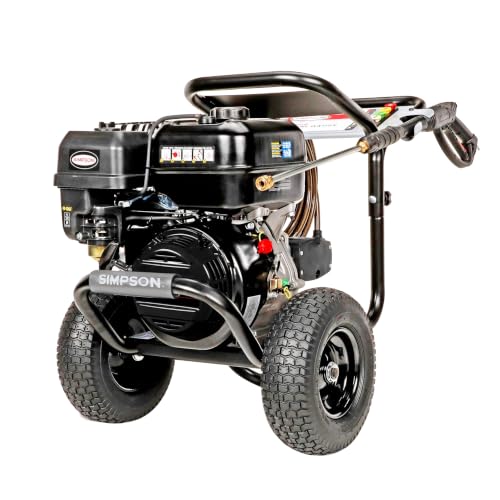
- ✓ Strong, reliable power
- ✓ Easy start and use
- ✓ Durable, portable build
- ✕ California restriction
- ✕ Noise level high
| Engine | CRX 420cc premium engine |
| Rated Pressure and Flow | 4400 PSI at 4.0 GPM |
| Pump Type | AAA industrial triplex plunger pump with thermal relief |
| Hose and Accessories | Monster 3/8-inch x 50-foot high-pressure hose with kink/abrasion resistance and quick-connect fittings; 5 quick-connect nozzles (0°, 15°, 25°, 40°, Soap) |
| Frame and Mobility | Welded steel frame with powder-coated finish; 13-inch premium pneumatic tires |
| Product Compliance and Notes | 49-State compliant; not for sale/shipment to California; factory-tested; may contain residual fuel/oil |
You’re the kind of contractor who loves a machine that doesn’t pretend to be delicate. The PowerShot 4400 PSI starts with a confident rumble from the CRX 420cc engine, and you can feel the weight of purpose as you lift the wand.
The welded steel frame has a rugged, no-nonsense bite to it, and those 13-inch pneumatic tires glide over loose gravel like they were born to roll on tough jobs.
Set-up is mostly straightforward, with clear connections for the 50-foot hose and quick-connect tips. You’ll appreciate how the pump fires up with a steady, predictable throttle, not a drama-filled ignition sequence.
On a deck job or wood restoration, the 4400 PSI at 4.0 GPM carves through grime without you needing to babysit the pressure. The PowerBoost mode kicks in when you pop to a tighter nozzle, giving you a useful nudge where you need it most.
The AAA industrial triplex pump feels maintenance-free in day-to-day use, and the thermal relief keeps you from worrying about overheating on extended sessions. The included nozzle tips give you flexibility, from a precise 0° clean to a gentler 40° rinse, plus a dedicated Soap option for cleaning agents.
The 31-inch wand lets you stand at a comfortable distance while keeping control solid and predictable.
In real-world terms, this is the workhorse you reach for when a job actually matters—paint prep, wood restoration, and stubborn stains. It’s loud enough to demand respect, but that’s offset by its consistent performance and the durability you can trust on long days.
If you want a machine that shows up ready to tackle serious commercial cleaning, this one earns its keep.
What Features Define the Best Commercial Pressure Washer for Effective Pressure Washing?
The best commercial pressure washer for effective pressure washing is defined by several key features:
- High Pressure Output: The pressure output, measured in PSI (pounds per square inch), is crucial as it determines the washer’s ability to remove tough stains and grime. Commercial pressure washers typically offer a PSI range of 3000 to 4000, allowing for efficient cleaning of various surfaces.
- Flow Rate: Measured in GPM (gallons per minute), the flow rate indicates how much water the pressure washer can deliver. A higher GPM means faster cleaning, as more water helps to rinse away dirt and debris effectively, making it essential for large-scale cleaning jobs.
- Durability and Build Quality: Commercial pressure washers are built to withstand frequent use, often featuring heavy-duty frames, reliable engines, and high-quality materials. This durability translates to a longer lifespan and reduced maintenance costs, which is vital for businesses relying on these machines.
- Portability: Weight and design play significant roles in the ease of transport and maneuverability on job sites. Features like wheels and handles are essential for commercial models, allowing users to easily move the pressure washer between locations without straining.
- Versatility: The ability to adjust pressure settings or use different nozzles can significantly enhance a pressure washer’s effectiveness across various tasks. Commercial pressure washers with multiple nozzle options or adjustable pressure settings can tackle everything from delicate surfaces to heavy-duty cleaning.
- Engine Type: The choice between electric and gas engines affects both power and convenience. Gas-powered models typically offer greater power and mobility for outdoor work, while electric models are more suitable for quieter, indoor applications with less maintenance.
- Accessories and Attachments: A good commercial pressure washer often comes with a range of accessories such as surface cleaners, detergent tanks, and extension wands. These attachments can enhance functionality and efficiency, making it easier to tackle diverse cleaning tasks.
- Warranty and Support: A robust warranty and reliable customer support are indicative of a manufacturer’s confidence in their product. Choosing a pressure washer with a strong warranty can provide peace of mind, knowing that any issues will be addressed without significant additional cost.
Which Brands Are Considered the Leaders in Commercial Pressure Washers?
The leading brands in commercial pressure washers are recognized for their quality, durability, and performance in demanding environments.
- Honda: Known for their reliable engines, Honda pressure washers offer exceptional power and efficiency for commercial cleaning needs.
- Generac: Generac is well-regarded for its robust construction and high-performance models, making it a popular choice for heavy-duty applications.
- Simpson: Simpson provides a variety of pressure washers that combine innovative design with high-quality components, ensuring they can handle tough cleaning tasks.
- Karcher: As a pioneer in the cleaning industry, Karcher offers advanced technology and versatile models perfect for a wide range of commercial uses.
- NorthStar: NorthStar pressure washers are built for professionals, featuring powerful engines and durable frames that withstand rigorous use in various settings.
Honda: Honda pressure washers are equipped with reliable engines that are known for their longevity and high performance. Their models typically feature a variety of pressure options, making them suitable for different commercial cleaning tasks, from light-duty jobs to heavy industrial applications.
Generac: Generac pressure washers are built with a focus on high performance and durability, making them ideal for commercial use. They offer a range of features, including adjustable pressure settings and robust build quality, ensuring they can tackle challenging cleaning jobs efficiently.
Simpson: Simpson pressure washers are celebrated for their effective cleaning power and innovative features, such as axial cam pumps and ergonomic designs. They are engineered for both portability and durability, making them a favorite among professionals in various industries.
Karcher: Karcher, a well-known name in the cleaning equipment sector, provides pressure washers that integrate advanced technology for superior cleaning performance. Their models are designed for versatility and ease of use, catering to a diverse array of commercial cleaning requirements.
NorthStar: NorthStar pressure washers are designed with professionals in mind, featuring powerful engines and heavy-duty frames that can withstand extensive use. They are highly regarded for their efficiency and reliability, making them an excellent investment for commercial cleaning businesses.
How Does Hotsy Compare to Other Leading Brands in Performance?
| Brand | Performance | Durability | Ease of Use | Price Range | Warranty | Pressure Rating (PSI) |
|---|---|---|---|---|---|---|
| Hotsy | High pressure output, excellent for tough cleaning tasks. | Built with heavy-duty materials, long-lasting under heavy use. | User-friendly controls, easy setup and operation. | $$$ | 3 years | 3000-4000 PSI |
| Brand A | Good performance for light to medium tasks, less powerful than Hotsy. | Moderate durability, suitable for occasional use. | Simple design, but may require more time to learn. | $$ | 1 year | 1500-2500 PSI |
| Brand B | Exceptional performance in commercial settings, highly rated by professionals. | Very durable, designed for frequent and heavy use. | Intuitive interface, quick to start and operate. | $$$$ | 2 years | 3500-4500 PSI |
What Customer Support Options Do Top Brands Offer?
Top brands in commercial pressure washing typically offer a variety of customer support options to enhance user experience and satisfaction.
- Live Chat Support: Many brands provide instant messaging options on their websites, allowing customers to get real-time assistance with product inquiries or troubleshooting.
- Phone Support: A dedicated customer service hotline is often available, enabling users to speak directly with knowledgeable representatives for personalized guidance and immediate resolution of issues.
- Email Support: Customers can send their queries or concerns via email, which is particularly useful for non-urgent matters or when detailed information is required.
- Online Knowledge Base: Comprehensive databases with FAQs, user manuals, and how-to guides help customers find answers and learn about their products independently.
- Social Media Support: Many brands leverage platforms like Facebook and Twitter to engage with customers, providing support and updates in a more casual environment.
- Warranty and Repair Services: Leading brands often offer warranty coverage and repair services, ensuring customers have access to maintenance and replacements if needed.
Live chat support allows for immediate assistance, making it a popular choice among users who prefer quick answers without waiting on hold. This option is particularly valuable during peak hours or for urgent questions regarding product functionality.
Phone support offers a personal touch, allowing customers to discuss complex issues in-depth with trained professionals. This method is often preferred by users who feel more comfortable explaining their problems verbally.
Email support is essential for those who prefer written communication or need to provide detailed descriptions of their issues. It gives users the opportunity to document their inquiries and responses for future reference.
An online knowledge base serves as a self-service resource, helping customers troubleshoot problems and understand product features at their own pace. It can significantly reduce the volume of direct inquiries, benefiting both the brand and its customers.
Social media support is increasingly important, as it allows brands to interact with their customers in real-time, respond to feedback, and provide updates about products or services. This approach often creates a sense of community among users.
Warranty and repair services are crucial for customer confidence, as they ensure that investments in commercial pressure washers are protected. Brands that offer these services demonstrate commitment to product quality and customer satisfaction.
What Are the Different Types of Commercial Pressure Washers Available?
The different types of commercial pressure washers available are:
- Electric Pressure Washers: These are powered by electricity and are ideal for light to medium-duty cleaning tasks.
- Gas Pressure Washers: These units run on gasoline and are suitable for heavy-duty applications, providing greater mobility and power.
- Hot Water Pressure Washers: Utilizing heated water, these washers are effective for grease and oil removal, making them perfect for industrial cleaning.
- Cold Water Pressure Washers: These washers use ambient temperature water and are generally less expensive, suitable for most outdoor cleaning tasks.
- Skid-Mounted Pressure Washers: Designed for easy transport, these pressure washers are often mounted on trailers for use in various locations.
- Trailer-Mounted Pressure Washers: These are built on trailers and are ideal for mobile cleaning services, providing high capacity and mobility.
- Portable Pressure Washers: Lightweight and compact, these washers are easy to transport and are great for small jobs or tight spaces.
Electric pressure washers are typically quieter and easier to maintain, making them a good choice for residential or light commercial applications. Their limited power output, however, may restrict their effectiveness on tougher surfaces.
Gas pressure washers are more powerful than electric models, allowing for faster and more thorough cleaning of heavy-duty tasks like stripping paint or cleaning concrete. They are more portable, but they require more maintenance and can be noisier.
Hot water pressure washers heat the water, allowing for better cleaning results, especially on oily or greasy surfaces. This feature is particularly useful in industries like automotive or food service where such contaminants are common.
Cold water pressure washers are the most common type used for residential and light commercial purposes, effective for cleaning dirt and grime without needing the complexity of heating elements. They are generally more affordable and easier to operate.
Skid-mounted pressure washers are designed for those who need to transport their equipment frequently. They can be secured to a flatbed truck or trailer, making them convenient for contractors who work on-site in various locations.
Trailer-mounted pressure washers provide a mobile solution for those needing to clean larger areas or multiple sites. These units often have larger water tanks and can support long hoses for extensive reach.
Portable pressure washers are designed for ease of use and mobility, often featuring wheels and a lightweight design. They are perfect for small tasks like cleaning patios, vehicles, or garden furniture, where heavy equipment would be cumbersome.
How Do Electric and Gas-Powered Pressure Washers Differ in Performance?
The performance differences between electric and gas-powered pressure washers are significant and impact their suitability for various cleaning tasks.
- Power Output: Gas-powered pressure washers typically offer higher power outputs compared to electric models.
- Portability: Gas-powered units are generally more portable due to their lack of power cords.
- Noise Levels: Electric pressure washers operate more quietly than their gas counterparts.
- Maintenance Requirements: Gas models usually require more maintenance than electric ones.
- Cost: Electric pressure washers are often less expensive upfront than gas models.
Power Output: Gas-powered pressure washers can reach pressure levels of 3000 PSI or more, making them ideal for heavy-duty tasks like stripping paint or cleaning large surfaces. In contrast, electric pressure washers typically max out around 2000 to 2800 PSI, which is sufficient for lighter jobs such as washing cars or patios.
Portability: Gas-powered pressure washers are designed to be more mobile, as they do not rely on an electrical outlet and can be used in remote locations. This makes them a better choice for large properties or areas without easy access to electricity.
Noise Levels: Electric pressure washers are quieter, making them suitable for residential areas where noise restrictions may apply. Gas-powered units, while more powerful, produce louder engine noise, which can be disruptive, especially during early mornings or late evenings.
Maintenance Requirements: Gas-powered units require regular maintenance, including oil changes, air filter replacements, and spark plug checks, which can be cumbersome for some users. In contrast, electric pressure washers are generally low-maintenance, needing little more than occasional cleaning and inspection.
Cost: Electric pressure washers tend to have a lower initial purchase price, making them more accessible for homeowners or those on a budget. Gas models, while more expensive, often deliver greater power and performance, which may justify the higher investment for commercial users needing heavy-duty cleaning capabilities.
What Are the Most Common Applications for Commercial Pressure Washers?
The most common applications for commercial pressure washers include:
- Cleaning Heavy Equipment: Commercial pressure washers are ideal for cleaning construction and agricultural machinery, which often accumulate dirt, grease, and debris. High-pressure water jets effectively remove stubborn residues, helping to maintain equipment efficiency and prolong its lifespan.
- Building Exteriors: These pressure washers are widely used for cleaning the exteriors of buildings, including brick, stucco, and concrete surfaces. The powerful spray can remove dirt, mold, mildew, and graffiti, enhancing the building’s appearance and contributing to property maintenance.
- Fleet Washing: Businesses with vehicle fleets often utilize pressure washers to keep their vehicles clean and presentable. Regular washing removes road grime, oil, and contaminants, ensuring that the vehicles maintain their appearance and operate efficiently.
- Parking Lots and Sidewalks: Pressure washing is an effective method for cleaning parking lots and sidewalks, removing stains, oil spots, and litter. This not only improves aesthetic appeal but also reduces hazards such as slippery surfaces caused by accumulated grime.
- Industrial Cleaning: In industrial settings, pressure washers are used to clean production areas, machinery, and tools. They help in maintaining hygiene standards and preventing cross-contamination, as well as ensuring that equipment operates smoothly without buildup that can cause malfunctions.
- Deck and Patio Cleaning: Home improvement businesses often employ commercial pressure washers for cleaning outdoor spaces like decks and patios. The high-pressure water effectively removes dirt, algae, and mildew, restoring the surfaces to their original condition and preparing them for refinishing if necessary.
- Graffiti Removal: Pressure washers are commonly used by municipalities and private contractors for removing graffiti from walls and other surfaces. The high-pressure water combined with appropriate cleaning solutions can effectively strip away unwanted paint without damaging the underlying surface.
Which Types of Jobs Require High-Pressure Cleaning for Best Results?
Various industries and jobs require high-pressure cleaning to achieve optimal results.
- Construction and Renovation: High-pressure cleaning is essential for removing debris, paint, and other contaminants from surfaces before and after construction work. This not only prepares the area for further work but also ensures that the final results are clean and professional-looking.
- Automotive Industry: Car dealerships and auto repair shops often use high-pressure washers to clean vehicles thoroughly. This process helps remove dirt, grease, and grime from engines and exteriors, enhancing the overall appearance and hygiene of the vehicles.
- Commercial Cleaning Services: Many cleaning companies utilize high-pressure washing for various surfaces, including sidewalks, storefronts, and building exteriors. This method is effective in maintaining a clean and inviting environment, especially in high-traffic areas where dirt accumulates quickly.
- Restaurant and Food Service: High-pressure cleaning is crucial in kitchens and dining areas to ensure sanitary conditions. It effectively removes grease buildup and food residue, which is vital for compliance with health regulations and maintaining a safe environment for food preparation.
- Property Management: Property managers often employ high-pressure washing to maintain the cleanliness of apartment complexes, condominiums, and other rental properties. It helps in preserving the aesthetic appeal of the property and can prolong the lifespan of building materials by preventing mold and mildew growth.
- Industrial Facilities: Factories and warehouses frequently use high-pressure cleaning to maintain equipment, floors, and outdoor areas. This practice not only enhances safety by reducing slip hazards but also improves operational efficiency by keeping machinery in optimal working condition.
What Do Customers Say About the Best Commercial Pressure Washers in User Reviews?
Customers often highlight several key aspects in their reviews of the best commercial pressure washers:
- Power and Performance: Users frequently praise the high PSI and GPM ratings of top commercial pressure washers, noting that they effectively remove tough stains and dirt from various surfaces.
- Durability and Build Quality: Many reviews emphasize the robust construction of these machines, with customers appreciating materials like stainless steel and reinforced frames that stand up to heavy use.
- Ease of Use: Customers often mention user-friendly features such as adjustable nozzles, ergonomic handles, and lightweight designs that make these pressure washers easy to operate for extended periods.
- Portability: Reviews consistently highlight the importance of wheels and compact designs, allowing users to easily transport the machines to different job sites without hassle.
- Customer Support and Warranty: Users frequently comment on the quality of customer service provided by manufacturers, including prompt responses to inquiries and comprehensive warranty options that enhance buyer confidence.
- Versatility: Many customers appreciate the range of attachments and accessories available, enabling them to use the pressure washer for various tasks beyond just washing, such as surface cleaning and gutter cleaning.
Power and performance are often at the forefront of customer feedback, as high PSI (pounds per square inch) and GPM (gallons per minute) ratings are crucial for effectively tackling tough cleaning jobs. Users report that the best commercial pressure washers can handle everything from grease stains on driveways to grime on building exteriors, making them essential tools for professionals.
Durability and build quality are also recurring themes in reviews, where customers express satisfaction with machines constructed from high-quality materials. Many reviews highlight that these pressure washers can withstand the rigors of daily use in commercial settings, significantly reducing the need for repairs and replacements.
Ease of use is another aspect commonly appreciated by users, as many commercial pressure washers come equipped with features that enhance the user experience. Adjustable nozzles allow for customization based on the cleaning task, while ergonomic handles and lightweight designs help minimize fatigue during prolonged usage.
Portability is a significant consideration for many customers, especially those who need to move their pressure washers between job sites frequently. Reviews often mention the effectiveness of wheels and compact designs that facilitate easy transport, ensuring that the machines can be set up quickly and efficiently.
Customer support and warranty options play a crucial role in user satisfaction, with many customers feeling reassured by responsive service from manufacturers. Positive reviews often reference the comprehensive warranties that accompany these machines, which protect buyers against defects and provide peace of mind.
Finally, versatility is a factor that customers appreciate, as many commercial pressure washers come with a variety of attachments and accessories. This adaptability allows users to perform a wide range of cleaning tasks, making these machines valuable investments for businesses looking to maximize their capabilities.
What Is the Typical Price Range for Quality Commercial Pressure Washers?
A commercial pressure washer is defined as a high-powered cleaning machine designed specifically for heavy-duty cleaning tasks in commercial settings, such as construction sites, parking lots, and fleet maintenance. These washers typically operate at pressures ranging from 2,000 to 4,000 PSI (pounds per square inch) and may include both electric and gas-powered models, making them suitable for a wide range of applications.
According to the American Cleaning Institute, the effectiveness of pressure washing can be attributed to the combination of high pressure and the use of appropriate detergents, which together ensure thorough cleaning and the removal of stubborn dirt and grime. The investment in a quality commercial pressure washer is essential for businesses that require reliable and efficient cleaning solutions.
Key aspects of commercial pressure washers include their power, durability, and versatility. These machines are built with robust materials and components to withstand the rigors of frequent use. Furthermore, they often come with various nozzle attachments that allow users to adjust the spray pattern and pressure, making them effective for different surfaces and cleaning tasks. The price range for quality commercial pressure washers typically falls between $300 and $3,000, depending on the brand, features, and specifications. Higher-end models may offer advanced features such as hot water capability, larger water tanks, and specialized cleaning attachments.
This impacts numerous industries, including automotive, agriculture, and hospitality, where maintaining cleanliness is crucial for operational success and customer satisfaction. Effective pressure washing can significantly enhance the appearance of properties, prolong the lifespan of surfaces, and help comply with health and safety regulations. In fact, studies show that regular pressure washing can increase property value by up to 15%, highlighting the financial benefits of investing in a quality commercial pressure washer.
Best practices for selecting and using commercial pressure washers include assessing the specific cleaning needs of your business, choosing the right pressure and flow rate for the tasks at hand, and regularly maintaining the equipment to ensure optimal performance. Additionally, training staff on proper operating techniques and safety measures is essential to prevent accidents and maximize efficiency. Investing in quality nozzles and attachments can also enhance the machine’s versatility, allowing for a broader range of applications and improved cleaning results.
Related Post: