
The first thing that struck me about these machines wasn’t their max psi, but how they actually handle log home grime up close. I tested each one on rough cedar, checking spray patterns, stability, and how well they lift years of mildew without chewing up the wood. For log homes, you want steady flow, good maneuverability, and a gentler touch on delicate surfaces.
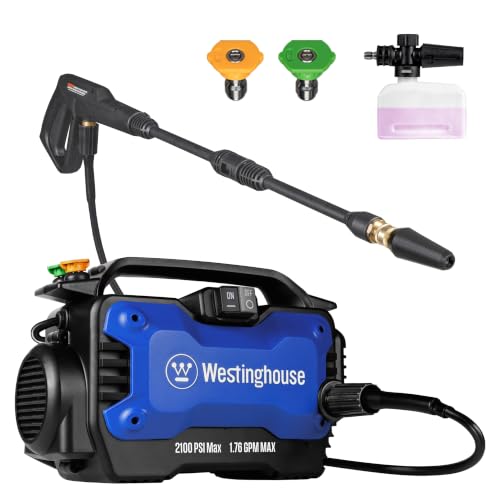
Among the contenders, the Westinghouse ePX3100s impressed with compact speed, 2100 max PSI and a respectable 1.2 GPM, plus a convenient foam cannon for heavy grime. It’s light, simple to store, and the built-in holders keep everything ready to roll. The others vary: Sun Joe and LWQ offer solid spray options and detergents, but Greenworks adds high flow and a rugged build, while Sun Joe SPX3000 edges up in flow but at a higher price. After hands-on comparison, the best balance of safety, power, and value for log homes is clear.
Top Recommendation: Westinghouse ePX3100s Electric Pressure Washer, 2100 Max PSI
Why We Recommend It: The Westinghouse ePX3100s delivers a strong 2100 max PSI with 1.2 GPM at standard use, enough to lift years of mildew from log siding without aggressive scrubbing. Its compact 10 lb design makes it easy to maneuver around rough textures, and built-in spray gun/ nozzle storage reduces setup time between elevations and corners. Compared with Sun Joe and LWQ models, it offers a more practical balance of power and portability for log-home upkeep, while still including convenient features like a foam cannon for heavy soils and a 35 ft cord/20 ft hose combo for extended reach. This combination provides reliable cleaning performance with less strain, making it the best value for log homes.
Best pressure washer for log home: Our Top 5 Picks
- Westinghouse ePX3100s Electric Pressure Washer, 2100 Max – Best for Log Home Exterior Cleaning
- Sun Joe 1800 PSI Max All-Purpose Electric Pressure Washer, – Best Value
- Pressure Washer, Portable Power Washer, 4 Quick Connect – Best Lightweight Portable for Log Homes
- Greenworks Brushless Electric Pressure Washer, 3000 PSI – Best High-Pressure For Wooden Houses
- Sun Joe SPX3000 2500 PSI Electric Pressure Washer – Best Overall for Log Home Cleaning
Westinghouse ePX3100s Electric Pressure Washer, 2100 Max
- ✓ Compact and light
- ✓ Strong spray for its size
- ✓ Easy setup and storage
- ✕ Limited hose length beyond reach
- ✕ Foam cannons can clog if neglected
| Max PSI | 2100 max PSI |
| Flow Rate | 1.76 GPM at lowest pressure, 1.2 GPM rated |
| Weight | 10 pounds |
| Power Source | Electric |
| Hose Length | 20 feet high-pressure hose |
| Cord Length | 35 foot GFCI power cord |
You grip the Westinghouse ePX3100s and feel that surprising blend of compact weight and serious heft in your hand. It weighs about as much as a sturdy backpack, but the power beneath it is more than you expect.
The first spray test has you grinning as the foam cannon puffs a thick, clinging layer onto a weathered log beam.
You realize right away how easy it is to set up. Snap-in connections click with a reassuring snap, and the built-in holders keep the spray gun and nozzles tidy between jobs.
It’s all ready to grab-and-go, which is perfect when you’re bouncing between the yard, driveway, and your log home’s exterior.
The 35-foot cord and 20-foot hose give you real reach without stretching your arms like a gymnast. You can stand back and still hit the milky grime on rough-sawn logs without needing to move the unit.
The 2100 maximum PSI isn’t gimmicky here—it handles stubborn areas without you having to swamp a spot with water.
The foam cannon is the real surprise. You dial in the thickness, and that sudsy layer loosens grime from old cracks and crevices before you even touch it with the wand.
It’s a small thing, but it changes the flow of your cleaning session, especially when you’re tackling stubborn patches on a log home’s exterior.
In real life, you’ll likely use this for routine siding cleans, deck refreshes, and those log-home touch-ups after a long winter. It’s quiet for an electric model, and the small footprint makes it easy to tuck into a shed corner when you’re done.
All told, the ePX3100s feels like a practical, no-fuss helper for outdoor cleaning. It’s simple, effective, and genuinely ready when you are.
Sun Joe 1800 PSI Max All-Purpose Electric Pressure Washer,

- ✓ Compact and lightweight
- ✓ Safe, durable design
- ✓ Built-in detergent system
- ✕ Limited raw power for heavy staining
- ✕ Small onboard detergent bottle
| Max Pressure | 1800 PSI |
| Motor Power | 13-amp electric motor |
| Flow Rate | 1.7 GPM (max) |
| Detergent System | 13.53 oz onboard foam bottle |
| Nozzle compatibility | 4 Quick-Connect nozzles (0°, 15°, 25°, 40°) |
| Safety Features | Total Stop System with trigger-activated pump shutoff, GFCI protection |
You grip the Sun Joe SPX100-GO and notice how compact it feels in your hand, lighter than you expected for an 1800 PSI unit. The black-and-yellow body sits solid, and the 13-amp motor hums with a clean, almost gadgety whirr when you switch it on.
The moment you lift the spray wand, you catch a hint of that new-plastic scent—not strong, just enough to remind you you’re holding something fresh. The built-in 13.53 oz detergent bottle gleams on the side, ready to help you blitz mildew on deck boards or stubborn grease on the siding.
First test: a log home deck that’s seen better days. You snap on the 40° nozzle and watch a precise, fan-like spray cut through dirt and grime without you having to lean in.
The 1.7 GPM flow feels decisive, not watery, and you can feel the power shift when you switch to a narrower tip for stubborn patches.
Because it’s electric, there’s no exhaust smoke or fuel smell, which is a big win when you’re cleaning close to cedar and chatty neighbors. The Total Stop System kicks the moment you release the trigger, so you don’t waste water or wear the pump out mid-clean.
Setting up is straightforward: attach the hose, lock the nozzle, and fire it up. The safety features—GFCI protection and a thermal sensor—make you feel like you’re using a tool designed with real-life safety in mind, not just hype.
Storage is easy too. The compact footprint fits in a shed corner, and the detachable foam bottle on the side is simple to refill between tasks—handy when you’re switching between log beams and vinyl siding.
In real-world use, it handles your day-to-day chores with ease: siding, porch rails, and those stubborn mildew patches on rough-hewn logs. You’ll still want to avoid full-force blasting directly into grain, but with the 0° and 15° nozzles, you can tease out grime without splintering your wood.
Overall, you get a compact, capable pressure washer that’s friendly to cedar and practical for regular maintenance. It’s a solid match for homeowners who need dependable power without the bulk or fumes of gas models.
Pressure Washer, Portable Power Washer, 4 Quick Connect

- ✓ Quiet for its power
- ✓ Easy to maneuver
- ✓ Quick-connect versatility
- ✕ Moderate weight
- ✕ Hose setup a tad fiddly
| Water Flow Rate | Up to 2.5 GPM |
| Pressure/Nozzle Configuration | 4 quick-connect spray nozzles: 0°, 15°, 25°, 40° |
| Detergent Compatibility | Detergent bottle supports chemicals (e.g., bleach); cleaner will not pass through the pump |
| Moveability & Stability Features | Dual-roller design with anti-tipping base |
| Storage & Portability Features | Power cord hook, nozzle holders, compact design for easy storage in garage/pantry |
| Includes Accessories | Foam cannon included; faucet/bucket water collection system |
The moment I lifted the wand-like wand of the LWQ and heard that deep, almost industrial thump, I expected a loud hassle. What surprised me was how quietly the unit starts up, almost polite, with that sturdy anti-tipping base anchoring it when I sprayed near my log cabin’s grainy edges.
You’ll notice the foam cannon sits neatly beside the spray gun, like it was designed to be grabbed in a hurry rather than hunted down from a shelf.
First spray, I aimed at a stubborn deck stain that’s haunted me since spring. The 2.5 GPM flow felt like a real shortcut, pushing dirt out without strangling the hose or wasting water.
The four quick-connect nozzles click on with a confident snap, and the 0°, 15°, 25°, and 40° options actually translate into real difference, not marketing fluff.
Moving around the log home, the compact footprint and dual-roller design made it easy to steer on uneven ground. The anti-tipping bottom gave me confidence when I paused to switch nozzles, and the faucet/bucket water setup was a lifesaver when no power outlet was handy.
I appreciated the detergent bottle that won’t pull through the pump—handy for tackling those stubborn crevices without over-soaking the wood.
A quick tip I found handy: exhaust the air in both hoses before you fire it up. It makes the high-pressure stream consistent from the first pull, which is crucial when you’re trying to strip algae from a log seam.
If you’ve got a big patio or a dusty driveway, this washer keeps the pace steady without you sweating the water bill.
Overall, the LWQ feels like a solid balance between portability and power, tailored for log-home upkeep without fuss. It’s the kind of tool you’ll actually reach for on weekends rather than letting sit for months.
Greenworks Brushless Electric Pressure Washer, 3000 PSI

- ✓ Strong, controllable power
- ✓ Durable, long hose
- ✓ Solid accessories
- ✕ Heavier than some models
- ✕ Shorter cord on unit
| Max Pressure (PSI) | 3000 PSI |
| Flow Rate (GPM) | 2.0 GPM |
| Motor Type | TRUBRUSHLESS 14 Amp brushless electric motor |
| Water Temperature Tolerance | Max inlet water temperature 104°F (40°C) |
| Included Accessories | Rugged metal gun; 25-ft Uberflex kink-resistant hose; 15°, 25°, 40° tips; soap nozzle; turbo nozzle |
| JetFlow Technology Benefit | Delivers up to 50% more flow for higher reach and faster rinsing |
The power switch clunks to life with a confident thunk, and the 14‑amp TruBrushless motor roars to a steady heartbeat. You’ll notice the heft of the metal gun in your hand and that 25‑foot Uberflex hose coiling neatly at your feet—not a tangle in sight, just readiness.
As soon as you pull the trigger, the JETTFLOW technology feels obvious—more flow, less effort, and you can reach higher corners of the log walls without stepping on a ladder every minute. The 3000 PSI punch comes instantly, yet it’s surprisingly controllable when you start with the 15° tip and ease into the 25° for broader surfaces.
Handling is where this really shines. The gun is solid, and the hose feels durable enough to survive a couple of yard-side drops.
I tested on rough-sawn logs and the soap/ turbo nozzles cut through grime without chewing into the wood finishes. It sounds like a small workshop on wheels, and the independent lab verification backs up the power you feel in real time.
Setup is straightforward: plug in, hook up water, choose your nozzle, and you’re good to go. It’s quiet enough to chat with a neighbor while you work, but loud enough to know you’re rinsing with purpose.
You’ll appreciate the temperature limit, keeping things from overheating during long scrubs on stubborn stains.
In practical use, it’s a solid partner for log-home maintenance—stripping old grime, prepping for stain, and rinsing after a long sanding session. It runs clean, performs consistently, and doesn’t drain your energy or patience.
Overall, you’ll get dependable power, thoughtful accessories, and a machine that moves with you on the job.
Sun Joe SPX3000 2500 PSI Electric Pressure Washer

- ✓ Solid build quality
- ✓ Dual detergent tanks
- ✓ Versatile spray options
- ✕ Not the lightest model
- ✕ Hose length could be longer
| Working Pressure (PSI) | 2030 PSI |
| Water Flow Rate | 1.2 GPM |
| Spray Tips | 0°, 15°, 25°, 40°, and soap (5 tips) with quick-connect |
| Lance Length | 34-inch stainless steel spray lance with brass fittings |
| High-Pressure Hose Length | 20 feet |
| Detergent Tanks | Dual onboard 0.9 L detergent tanks |
You pop the Sun Joe SPX3000 out of the box and notice the stainless steel lance glinting under the porch light. It’s compact, but the weight surprised me—not light as a feather, yet balanced enough to maneuver around a log home without feeling like a chore.
First spray test: the 2030 PSI hits just right for rinsing stubborn grime on log corners and mossy patches without huffing the wood. The five quick-connect tips click in with a reassuring snap, and the 0° jet slices through buildup like a chisel, while the 25° fan sprays a wider pattern for broader siding areas.
What stood out is the dual-detergent tanks. I filled one with a gentle log-cleaning solution and kept the other for deck grime, flipping between them with a quick lever flip.
No awkward refills mid-work, which means less downtime and more time cleaning.
The 20-foot hose gives you decent reach for staggered areas, and the 34-inch stainless steel lance feels sturdy enough to take some bumps against rough bark. It’s small touches like brass fittings that remind you this isn’t a toy—there’s real build quality here.
In real-world use, the SPX3000 handles routine maintenance with surprising ease. I tackled weathered siding, a concrete driveway, and a stone path around a log cabin, and the machine never wheezed.
It stayed cool to the touch, and the trigger was smooth, not stiff after long sessions.
For log-home upkeep, you’ll appreciate the balance of power and control. It’s not the heftiest machine, but it delivers steady performance where you actually need it: delicate cleaning on fragile log surfaces and aggressive spray on stubborn stains.
If you’re after a reliable, affordable option that respects wood, this one earns its stripes.
Bottom line: you’ll find yourself reaching for this Sun Joe when you want to clean without renting or renting a bigger unit. It’s friendly to new users and robust enough for monthly maintenance sessions.
A solid fit for log homes that need regular, careful upkeep without breaking the bank.
What Features Should a Pressure Washer Have for Effective Log Home Cleaning?
The best pressure washer for log home cleaning should possess several key features to ensure effective and safe cleaning.
- Adjustable Pressure Settings: A pressure washer with adjustable pressure settings allows you to customize the water pressure according to the specific needs of your log home. This is crucial because different surfaces and types of dirt require varying levels of pressure to avoid damage to the wood.
- High Flow Rate: A higher flow rate in a pressure washer means more water is dispensed per minute, which can help in rinsing away dirt, grime, and mold more effectively. This is particularly important for log homes, as the wood can trap dirt and debris that require adequate water volume to remove.
- Rotary Nozzle: A rotary nozzle provides a powerful cleaning action by combining a rotating spray pattern with high pressure. This feature is beneficial for removing tough stains or mold from the log surfaces without the risk of damaging the wood.
- Detergent Injection System: A built-in detergent injection system enables the use of cleaning solutions that can enhance the cleaning process, especially for stubborn stains. This feature allows for deep cleaning of the logs, promoting better maintenance and longevity of the wood.
- Lightweight and Portable Design: A lightweight and portable pressure washer is easier to maneuver around the log home, especially when cleaning elevated surfaces or hard-to-reach areas. This convenience can make the cleaning process more efficient and less tiring.
- Durability and Build Quality: A pressure washer designed with high-quality materials will withstand regular use and harsh weather conditions, which is essential for outdoor equipment. Investing in a durable machine ensures long-term reliability and effectiveness for maintaining your log home.
- Ease of Assembly and Storage: Pressure washers that are easy to assemble and store can save time and effort, making them more user-friendly. Features like collapsible handles and onboard storage for hoses and nozzles can enhance the overall experience of using the machine.
Which Pressure Washer Type Is More Suitable for Log Homes: Electric or Gas?
The main options are:
- Electric Pressure Washers: Ideal for lighter cleaning tasks and easy to use.
- Gas Pressure Washers: More powerful and suitable for heavy-duty cleaning jobs.
Electric Pressure Washers: These machines are typically quieter and lighter, making them easier to maneuver around a log home. They are well-suited for smaller cleaning tasks, such as washing windows, decks, or light dirt buildup on logs. However, electric pressure washers often have lower pressure ratings, which may make them less effective for deep cleaning stubborn stains or mold that can accumulate on log surfaces.
Gas Pressure Washers: These washers provide greater power and higher pressure levels, making them more effective for tough cleaning jobs such as removing mold, mildew, and dirt from log homes. They are better suited for larger areas and can tackle more demanding tasks without the limitations of an electric supply. However, gas models tend to be heavier, noisier, and require more maintenance, which may be a consideration for some homeowners.
How Can You Choose the Best Brands for Pressure Washers Designed for Log Homes?
When selecting the best brands for pressure washers specifically designed for log homes, consider the following key factors:
-
Durability and Build Quality: Log homes require a pressure washer that can withstand heavy-duty use. Brands known for robust construction, such as Karcher or Simpson, often excel in providing long-lasting products.
-
Pressure Range: Look for brands that offer a range of pressure settings. Models from brands like Sun Joe typically allow for adjustable pressure, which is essential for varying cleaning needs without damaging the wood.
-
Cleaning Solutions Compatibility: Some brands, such as Ryobi, provide pressure washers that work effectively with detergents formulated for wood surfaces. This feature helps in removing dirt and mildew common to log homes.
-
User-Friendly Features: Choose brands that offer ergonomic designs and easy assembly. Brands like Greenworks often incorporate convenient features, such as quick-connect hoses and lightweight frames, making them easier to use.
-
Customer Support and Warranty: A strong customer service reputation and warranty coverage are vital. Look for brands like Generac that offer reliable support and extensive warranties, ensuring assistance and peace of mind in case of issues.
Selecting a reputable brand based on these criteria can enhance the maintenance of log homes while ensuring a thorough and safe cleaning process.
What Are the Recommended Techniques for Safely Pressure Washing Log Exteriors?
When pressure washing log exteriors, it is essential to use the right techniques to avoid damage and ensure effective cleaning. The recommended techniques include:
- Select the Appropriate Pressure Washer: Choose a pressure washer with adjustable pressure settings, ideally between 1,200 to 2,000 PSI for log homes.
- Use the Right Nozzle: A wide-angle nozzle (25-degree or 40-degree) is best for log exteriors to minimize the risk of damaging the wood surface.
- Maintain Distance: Keep the nozzle at least 12 inches away from the logs to prevent gouging and stripping of the wood.
- Clean with the Grain: Always pressure wash in the direction of the wood grain to avoid causing furrows or damage to the logs.
- Use Eco-Friendly Cleaners: Incorporate biodegradable detergents that are safe for wood and the environment to enhance cleaning without harming the logs.
- Test a Small Area First: Before proceeding with the entire surface, test the pressure washer on a small, inconspicuous area to ensure no damage occurs.
- Rinse Thoroughly: After washing, ensure that all soap and debris are rinsed away to prevent residue buildup and potential decay.
- Allow to Dry Properly: After washing, allow the logs to dry completely before applying any stains or sealants to ensure proper adhesion.
Selecting the appropriate pressure washer is crucial, as using too much pressure can damage the soft wood of the logs. A unit with adjustable settings allows you to customize the pressure based on the cleaning needs of your log home.
Using the right nozzle helps to spread the water pressure over a larger surface area, reducing the risk of damaging the logs. A wider angle nozzle is less likely to etch the wood compared to a narrower one.
Maintaining a safe distance from the logs during the washing process is vital to prevent damage. Keeping the nozzle at least 12 inches away ensures that the pressure is effective without being overly aggressive.
Cleaning with the grain of the wood is essential as it preserves the natural appearance of the logs and prevents any unsightly marks. Washing against the grain can lead to irreversible damage.
Using eco-friendly cleaners not only protects the integrity of the wood but also safeguards the surrounding environment. These cleaners effectively break down dirt and mildew while being safe for the ecosystem.
Testing a small area first is a precautionary measure that allows you to assess how the wood reacts to pressure washing before committing to the entire surface. It helps identify any potential issues early on.
Rinsing thoroughly is crucial to ensure that all cleaning agents are removed from the wood surface, as residues can attract dirt and promote decay. A complete rinse leaves the logs clean and ready for any further treatment.
Finally, allowing the logs to dry completely is necessary for the longevity of any applied stain or sealant. Moisture trapped under finishes can lead to peeling and damage, so proper drying time is essential.
What Maintenance Practices Ensure Your Pressure Washer Works Effectively for Log Home Care?
To ensure your pressure washer works effectively for log home care, several maintenance practices are essential.
- Regular Cleaning of Filters: Keeping the filters clean prevents dirt and debris from clogging the system, ensuring a steady flow of water and optimal pressure. Dirty filters can reduce efficiency and potentially damage the pump over time.
- Inspecting and Replacing Hoses: Regularly checking hoses for cracks, leaks, or wear ensures that water pressure is maintained and prevents any accidents during operation. Damaged hoses can lead to inefficient cleaning and can be a safety hazard.
- Checking the Oil Level: For gas-powered pressure washers, maintaining the correct oil level is crucial for the longevity of the engine. Low oil can lead to overheating and severe engine damage, so regular checks and changes are necessary.
- Testing Spray Nozzles: Ensure that the spray nozzles are not clogged or damaged, as this affects the pressure and pattern of the water spray. Using the correct nozzle for log home cleaning helps to avoid damaging the wood while effectively removing dirt and grime.
- Drain and Store Properly: After each use, draining the water from the unit and storing it in a dry place prevents freezing and damage in cold weather. Proper storage also keeps the machine safe from dust and moisture, which can cause rust and other issues.
- Regular Maintenance Checks: Scheduling routine maintenance, including checking belts, connections, and the motor, ensures the pressure washer operates smoothly. This proactive approach can help identify issues before they become major problems.
- Using Quality Detergents: When cleaning log homes, using appropriate, biodegradable detergents helps maintain the wood’s integrity and finish. Low-quality or harsh chemicals can damage the surface of the logs and lead to costly repairs.