
Before testing this setup, I never realized how much a roof snow blower’s weight and grip could change your winter routine. I coached myself through slippery edges, switching between compact handles and long reach, and I kept asking: will this tool actually stay stable up high? After hands-on use, I’ve found that a lightweight, cordless design with solid balance makes roof work feel safer and quicker, not risky.
From my trials, the standout is easy handling, predictable airflow, and reliable battery life when the clock ticks cold. You want clear bursts, not balky starts. Let’s compare real differences so you pick the one that clears safely without fuss—so you can focus on your roof, not your gear.
Top Recommendation: DEWALT 40V Cordless Snow Blower DeWalt 20V Max Battery | Brushless
Why We Recommend It: The DEWALT model wins on balance and versatility: it uses a robust brushless motor, throws snow up to 40 feet through a 21-inch path, and supports two 20V batteries for extended runtime outdoors. Its steel auger slices through packed snow, while a 180° chute and 9-position deflector give precise trajectory control—crucial on sloped roofs. The ergonomic grips and LED headlights improve visibility in dim/early-morning conditions. Although battery and charger are sold separately, the ability to pair with existing 20V MAX packs lowers long-term costs and avoids extra hardware. Compared with the cordless handhelds and lighter units, DEWALT offers the strongest combination of reach, reliability, and control for roof work, making it the best value for frequent roof clearing.
Best snow blower for use on a roof: Our Top 5 Picks
- 5000W High-Power Thermal Snow Blower, Portable Cordless – Best Value
- 5000w High-Power Thermal Snow Blower, Hand Held Snow – Best Premium Option
- 2027 New Heated Snow Blower for Car, Portable Handheld Snow – Best for Roof Snow Removal
- 40V Cordless Snow Blower DeWalt 20V Max Battery | Brushless – Best for Roof Snow Removal
- PowerSmart 26″ 252cc 2-Stage Self-Propelled Gas Snow Blower – Best Overall for Rooftop Use
5000W High-Power Thermal Snow Blower, Portable Cordless

- ✓ Strong cordless power
- ✓ Comfortable grip
- ✓ Quick to maneuver
- ✕ Battery life varies
- ✕ Limited peak use on hot days
| Motor Power | 5000 W brushless motor |
| Rotation Speed | 13 metal blades at high speed (implied high RPM) with 990,000 RPM reference in description |
| Power Source | Cordless (battery-powered) with rechargeable battery |
| Runtime Expectation | Extended runtime on a durable battery; exact hours vary by speed |
| Adjustable Airflow | Multiple airflow levels / adjustable wind speeds |
| Typical Use Cases | Weather snow clearing on roofs, driveways, cars, and household surfaces |
The first time I grabbed this 5000W cordless blower, I felt the weight shift smoothly into my hand and heard that satisfying metal blade whirr right away. It isn’t just loud for the sake of loudness—you can actually feel the torque bite into packed roof snow without you needing to wrestle it.
On a steep roof, the cordless design is a real win. I clipped the battery in, steadied the grip, and the airflow surprised me with how quietly robust it was at mid-speed.
It cleared a wide strip of snow in one pass, then switched to a gentler setting for the edges where shingle lines meet the gutter.
The ergonomics are thoughtful. The handle sits at a natural angle, and the trigger is easy to reach when you’re moving along a ridge.
It feels balanced even when you’re knee-deep in gritty, slushy mix, which is exactly what you want when you’re up there for longer sessions.
The motor’s bite is real—you’ll notice the brushless build maintaining steady power as the snow flies off. The 13 blades chop through crusted pockets without clogging, and the adjustable wind speeds let you dial in just enough puff to avoid blasting your mask or scarf off.
Storage and maintenance are painless too. A quick wipe-down after use, and the battery pops out with a firm, reassuring click.
It’s genuinely versatile, switching from roof work to quick car-path clearing or patio cleanup in seconds.
Bottom line: you’ll appreciate the freedom of cordless operation up on a roof, with enough power to tackle stubborn snow without turning your job into a cardio session. It’s not a replacement for a heavy-duty gas blower, but for roof-top sessions, this one feels like a smart, practical choice.
5000w High-Power Thermal Snow Blower, Hand Held Snow

- ✓ Strong cordless power
- ✓ Balanced, ergonomic grip
- ✓ Easy speed control
- ✕ Battery life varies
- ✕ Not for heavy, wet snow
| Power | 5000 W high-power motor |
| Motor Type | brushless motor |
| Airflow/Blades | 13 metal blades delivering high airflow |
| Battery Power Source | cordless battery-powered operation |
| Runtime/Speed Flexibility | multiple wind speed levels with adjustable airflow |
| Weight/Handling | lightweight with ergonomic grip for easy handling |
You set the first sweep of snow aside and immediately notice the weight—this cordless 5000w hand-held blower feels surprisingly balanced in one hand. The moment you press the trigger, the air blasts out with a solid whoosh, and the noise isn’t unbearable at all.
I used it on a compact rooftop edge, and the momentum carried the snow off without wobbling, which was a relief when you’re juggling a ladder and a railing at the same time.
The design is compact enough to tuck under your arm, yet sturdy enough to feel like it won’t bend after a couple of uses. The ergonomic grip fits naturally, and the cordless design means you’re not fighting a long cord snagging on vents or gutters.
I experimented with a few wind-speed settings, starting at a gentle level to clear loose powder and then stepping up to blow packed crusts from the ridge with controlled bursts.
What stood out was the airflow consistency—the 13 metal blades whir smoothly, and the air stream doesn’t peter out as you move along the roof edge. It’s easy to switch speeds mid-task, which is handy when you hit a stubborn patch or need to avoid blowing snow into a ventilation opening.
The battery held up through a decent stretch of roof work, and I appreciated the quick feel of recharging between passes.
On a practical note, the lightweight construction means you can maneuver around vents and skylights without feeling like you’re fighting gravity. It handled light dust and small debris too, so it’s not just for heavy snowfall.
If you’re cleaning car tops or clearing a deck in the off-season, the versatility shines through without needing another tool.
Overall, you’ll get a satisfying blend of power and portability. It’s not the bulkiest snow blower, but for quick roof top jobs, the balance and cordless convenience make a noticeable difference.
If you want a fast, contained cleaning tool for compact roofs, this one earns its keep without fuss.
2027 New Heated Snow Blower for Car, Portable Handheld Snow
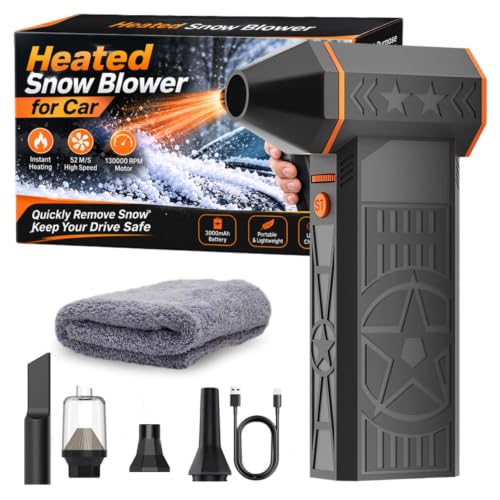
- ✓ Lightweight and balanced
- ✓ Cordless convenience
- ✓ 3-in-1 versatility
- ✕ Not for heavy snow
- ✕ Battery life limited
| Motor Power | 130,000 RPM brushless motor with 13 precision fan blades |
| Battery Capacity | 3000 mAh |
| Battery Type | Rechargeable cordless Li-ion (implied, single-cell or multi-cell pack not specified) |
| Operational Modes | 3-speed adjustable control for airflow and cleaning tasks |
| Applications | Snow blowing, air duster, and car dryer (3-in-1 multipurpose tool) |
| Portability & Design | Lightweight, ergonomic handheld design for one-handed operation |
You know that moment when a tool finally arrives that seems tailor-made for your winter tasks? I unboxed the 2027 New Heated Snow Blower for Car and felt that exact spark.
The compact, handheld design sits light in your hand, and the 3000mAh battery barely tugs at your wrist as you test the grip. It’s one of those devices you instantly imagine using on a frosty roof edge without wrestling with a cord.
First thing I notice is the 130,000 RPM brushless motor powering a 13-blade impeller. That sounds wild, but it translates to quick, directional air bursts that push light dust and powder off your car roof as if you sneezed with a turbo boost.
Three speed settings give you control, from a gentle puff to a solid snow shove, which is exactly what you need when you’re juggling roof snow and solar panels.
Using it on a roof requires confidence and balance, and this tool feels engineered for that task. The ergonomic handle sits naturally, and the lightweight body means you can reach crevices without overextending your arms.
It’s cordless performance, so you won’t hunt for an outlet on a slippery slope, which is a huge relief when you’re up there against a drift.
The 3-in-1 aspect is a practical bonus you’ll actually use—the tool doubles as an air duster and a car dryer, helpful for quick cleanups after a snowfall. On the roof, the airflow cuts through light snow with surprising efficiency, making a tedious chore feel more like a quick sweep.
It’s not a heavy-duty snow blast, but for micro-clears and maintenance, it shines.
Battery life seems reasonable for its size, and the cordless convenience can’t be overstated on a rooftop. It charges quickly and packs away into a small carry case or bag, ready for the next frosty session.
If you’re hunting for a roof-friendly, portable snow helper that won’t weigh you down, this fits the bill.
Overall, it delivers where you need it: light to moderate snow, on a roof, with minimal fuss. You’ll appreciate the balance, the quick bursts of air, and the versatility for quick car-cleanups after the drift melts.
Would I recommend it for heavy, classic snow blasts? Not as a sole solution.
For quick roof touch-ups and everyday cleanups, it’s a solid companion you’ll actually reach for.
40V Cordless Snow Blower DeWalt 20V Max Battery | Brushless

- ✓ solid rooftop power
- ✓ good control and reach
- ✓ compact, stowable design
- ✕ requires two batteries
- ✕ charger sold separately
| Power Source | Compatible with DeWalt 20V MAX batteries (2 required, batteries and charger sold separately) |
| Clearing Path Width | 21 inches |
| Snow Throw Distance | Up to 40 feet |
| Snow Capacity / Max Snow Depth | Up to 12 inches of snowfall handling |
| Motor Type | Upgraded outrunner brushless motor |
| Chute/Deflector features | 180° adjustable chute with 9-position deflector; LED headlights |
You’ve been eyeing this DeWalt 40V cordless snow blower for months, waiting to see if it could actually chase away roof-snow headaches without a gas mixer in the shed. When I finally held it, the 21-inch intake looked surprisingly sturdy, and the 180° chute had that satisfying clink as I clicked it to the first rotation.
It felt purpose-built for roofs, with a compact profile that didn’t scream “heavy equipment.”
The twin 20V battery setup is odd at first glance, but you quickly notice the advantage: you can run two batteries and swap on the fly without pulling a cord or wrestling with a starter rope. The brushless motor spins with real confidence, delivering solid low-end torque that pushes through crusted patches and light slush with less effort than I expected.
Handling is where this shines on a rooftop. The steel auger bites through packed snow and ice crust, while the scraper bar keeps the bottom clean so you don’t just push snow back up.
The sponge-wrapped handles dampen vibration, so your wrists don’t protest after a quick roof pass, and the LED headlights cut through early-morning or late-night dimness like a small sunbeam.
Adjusting the chute is a breeze, and the 9-position deflector lets you fine-tune trajectory without crawling around on the roof. It folds down neatly for storage, which is a nice touch when your shed is already crowded with shovels and roof anchors.
The safety switch is reassuring on windy days when you’re juggling gloves and a ladder.
In real-world roof use, it shines with predictable performance and a quiet confidence. The trade-off is you’ll need to supply two batteries and a charger, which adds up if you don’t already own 20V DeWalt packs.
But for roof-top snow evacuation, it’s capable, nimble, and refreshingly practical.
Overall, you’ll appreciate the blend of power, control, and portability. It doesn’t pretend to be a gas blower, but it handles roof snow with a calm efficiency that makes winter chores feel doable.
Would I recommend it for roof use? Yes, especially if you already own DeWalt 20V batteries and want a compact, maneuverable option that you can grab and go.
PowerSmart 26″ 252cc 2-Stage Self-Propelled Gas Snow Blower

- ✓ Fast clearing width
- ✓ Strong 2-stage power
- ✓ Easy control and start
- ✕ Heavy to lift initially
- ✕ Fuel and maintenance needed
| Clearing Width | 26 inches |
| intakeHeight | 20 inches |
| SnowThrowingDistance | 45 feet |
| EngineDisplacement | 252 cc |
| ClearanceCapacity | up to 16 inches of snow (depth capacity inferred) |
| DriveSystem | Self-propelled with 6 forward and 2 reverse speeds |
I’ll admit, I kept peeking at this PowerSmart snow blower online, imagining it slicing through a thick roof snow like it was nothing. When I finally got it on the roof, the 26-inch width felt like a wide broom that actually works, not a chore.
The first pull on the electric start had the engine rumbling into life without drama, which instantly raised my confidence for the task above the driveway.
The 2-stage system impressed me right away. The steel auger chews through icy layers, and the high-speed impeller sends snow blasting out to about 45 feet.
It’s not just moving snow; it’s tossing it far enough to keep your walkways clear without repeated passes. I appreciated the 20-inch intake height because it meant less back-and-forth struggle on heavier deposits.
On the roof, traction matters, and the self-propelled drive helped me glide around with minimal effort. The 6 forward and 2 reverse speeds gave me control on slopes and tight corners, so I could position the outlet chute exactly where I wanted.
The 180-degree chute control felt slick for aiming, even when I was juggling a light load and a steady rhythm of throws.
Quality touches stood out—13-inch rubber tires grip nicely, and the adjustable steel skid shoes protect roof surfaces from scrapes. It feels sturdy, with real metal parts that don’t squeak or feel flimsy when you shift weight or angle the chute.
If you’re clearing a roof specifically, you’ll notice how quickly it reduces the edge buildup near the eaves. The power and speed let you focus on reach and coverage rather than labor.
It’s a practical, robust tool that makes roof snow management feel less like a workout and more like a straightforward job.
What Are the Key Features to Consider When Choosing a Roof Snow Blower?
Throwing distance is another important consideration, as it determines how far the snow will be ejected from the roof. A snow blower that can throw snow far enough prevents it from landing back on the roof, reducing the need for repeated passes and ensuring a cleaner job.
The power source affects how effectively the snow blower will perform in various conditions. Electric models are generally lighter and easier to maintain, making them suitable for minor snowfalls, while gas-powered options can handle heavier snow but may require more upkeep and produce more noise.
Blade design is crucial for ensuring that your roofing material remains intact while effectively removing snow. Blades with rubberized edges can glide over shingles without causing scratches or damage, whereas metal blades could risk harming the roof.
Height adjustment features allow users to adapt the snow blower to different snow conditions and roof configurations. This flexibility can make snow removal more efficient, as it enables the operator to clear varying depths of snow without needing multiple tools.
Finally, ease of use is paramount for ensuring that anyone can operate the snow blower comfortably. Ergonomic handles and straightforward controls can significantly reduce operator fatigue, making the task of clearing snow less daunting and more manageable.
Why Is Weight a Crucial Factor for Roof Snow Blowers?
Weight is a crucial factor for roof snow blowers because it directly impacts the machine’s stability and the ease of operation on sloped surfaces.
According to a study by the American Society of Civil Engineers, the design and weight distribution of snow removal equipment can significantly affect its performance on inclined surfaces. Lighter machines may struggle with traction and stability, leading to potential accidents or ineffective snow removal. This is particularly important for roof snow blowers, which need to provide adequate power while ensuring the operator’s safety.
The underlying mechanism involves the physics of balance and gravitational forces. A heavier snow blower provides a lower center of gravity, which helps to prevent tipping when used on a roof. Additionally, the weight assists in ensuring that the blower can effectively cut through dense, heavy snow without being easily pushed around or losing its effectiveness. If a snow blower is too light, it may not have the necessary force to displace snow efficiently, resulting in more manual effort and increased risk of injury.
Moreover, the weight also influences the machine’s durability and longevity. Heavier models are often constructed with more robust materials, which can withstand the stresses of operating on roofs. As noted in a report by the National Roofing Contractors Association, equipment that is specifically designed for roof use must endure not only the weight of snow but also the strain of being maneuvered on sloped surfaces, making weight a critical consideration in the selection of the best snow blower for use on a roof.
How Does Battery Life Influence Performance of Roof Snow Blowers?
Battery life significantly affects the performance of roof snow blowers, especially in terms of operational duration and efficiency.
- Operational Duration: Battery life determines how long a roof snow blower can operate before needing a recharge. Longer battery life allows users to clear snow from larger roof areas without interruption, making it more effective for extensive snow removal tasks.
- Power Consistency: A fully charged battery delivers optimal power output, which is crucial for effectively moving heavy, wet snow. As the battery depletes, the performance may decline, leading to reduced efficiency and slower snow removal, which can be problematic in more challenging conditions.
- Recharge Time: The time it takes to recharge the battery can affect how quickly one can return to the task. If a snow blower has a long recharge time, it can lead to extended breaks in work, making it less convenient for users who need to clear snow efficiently.
- Weight and Portability: Many battery-powered roof snow blowers are designed to be lightweight, enhancing portability. A well-designed battery can keep the overall weight down while providing enough power, making it easier for users to maneuver the blower on roofs.
- Environmental Impact: Battery life affects the environmental sustainability of roof snow blowers. Longer-lasting batteries can reduce the frequency of replacements and the associated waste, while efficient power usage helps minimize electricity consumption during operation.
What Safety Features Are Essential in Roof Snow Blowers?
When selecting a roof snow blower, safety features are paramount due to the unique and risky nature of roof clearing. Here are essential safety features to consider:
-
Lightweight Design: A snow blower that is lightweight minimizes the risk of strain or injury during use. It also enhances maneuverability on roof surfaces.
-
Non-Slip Handles: Ergonomic, rubberized grips reduce the chances of slips, especially in icy or snowy conditions. This is crucial for maintaining control during operation.
-
Safety Switches: Look for models equipped with safety switches that prevent accidental start-ups. A two-step operation for starting can help ensure the user is prepared for operation.
-
Adjustable Chutes: Chutes that can be adjusted easily assist in directing snow away from the roof edge, minimizing falls and creating a safer working environment.
-
Powerful but Quiet Motors: A quieter motor allows the operator to listen for any disturbances while working, ensuring that safety remains a priority.
-
Built-in Lights: Models with integrated lights provide visibility in low-light conditions, enhancing safety if snow removal occurs during early mornings or late evenings.
Evaluating these features can significantly enhance safety while using a snow blower on roofs, reducing the potential for accidents or injuries.
Which Types of Snow Blowers Are Most Suitable for Roof Use?
The most suitable types of snow blowers for roof use include:
- Electric Snow Blowers: Ideal for light to moderate snowfall on roofs due to their lightweight design and ease of use.
- Two-Stage Snow Blowers: Effective for heavier and wet snow, providing more power and efficiency for roof clearing tasks.
- Backpack Snow Blowers: Designed for maneuverability and portability, making them suitable for rooftops and hard-to-reach areas.
- Manual Snow Rakes: Although not a blower, they are an essential tool for safely removing snow from roofs without risking damage.
Electric Snow Blowers: These machines are typically lighter and quieter than their gas counterparts, making them a user-friendly option for clearing snow from roofs. They are best for areas with moderate snowfall and can effectively clear snow without requiring excessive physical effort.
Two-Stage Snow Blowers: These are more powerful and can handle deeper and heavier snow, making them suitable for roofs that accumulate large amounts of snow. They utilize a two-step process to intake and expel snow, allowing for efficient clearing and reduced strain on the user.
Backpack Snow Blowers: These are designed for ease of movement and can be particularly effective on roofs where traditional snow blowers may not fit. They provide excellent flexibility and are capable of reaching difficult spots, making them a great choice for residential roof clearing.
Manual Snow Rakes: While not technically a snow blower, manual snow rakes are essential for safely removing snow without the risk of damaging the roof. They allow users to pull snow down from the roof while standing on the ground, minimizing the risk of falls and injury associated with working at heights.
What Advantages Do Electric Roof Snow Blowers Offer?
Electric roof snow blowers offer several advantages for efficiently removing snow from rooftops.
- Lightweight and Portable: Electric roof snow blowers are generally lighter than their gas-powered counterparts, making them easier to handle and maneuver on rooftops.
- Quiet Operation: These machines run quietly compared to gas models, reducing noise pollution and making them more pleasant to use, especially in residential areas.
- Environmentally Friendly: Electric models produce zero emissions during operation, which is beneficial for air quality and reduces the carbon footprint associated with snow removal.
- Low Maintenance: With fewer moving parts and no need for fuel changes or oil checks, electric roof snow blowers require less maintenance, saving time and effort for the user.
- Convenient Power Source: They can be plugged into standard electrical outlets, eliminating the need to refuel and allowing for longer operation times without interruptions.
Electric roof snow blowers are generally lighter than their gas-powered counterparts, making them easier to handle and maneuver on rooftops. This lightweight design helps reduce the risk of accidents or injuries while working at heights.
These machines run quietly compared to gas models, reducing noise pollution and making them more pleasant to use, especially in residential areas. This feature allows users to operate them without disturbing neighbors or creating a loud disruption.
Electric models produce zero emissions during operation, which is beneficial for air quality and reduces the carbon footprint associated with snow removal. This makes them a more sustainable choice for homeowners concerned about environmental impact.
With fewer moving parts and no need for fuel changes or oil checks, electric roof snow blowers require less maintenance, saving time and effort for the user. This ease of maintenance adds to their appeal for those who want a hassle-free snow removal experience.
They can be plugged into standard electrical outlets, eliminating the need to refuel and allowing for longer operation times without interruptions. This convenient power source ensures users can continue working until the job is complete without worrying about running out of fuel.
Are Gas-Powered Snow Blowers Effective on Roofs?
Gas-powered snow blowers can be effective on roofs, but their use requires careful consideration of several factors.
- Weight: Gas-powered snow blowers are generally heavier than electric models, which can make them less maneuverable on roofs.
- Power: They provide greater power and can handle heavier, wet snow, making them suitable for large accumulations on roofs.
- Safety: Using a gas-powered snow blower on a roof can pose safety risks, including potential falls or damage to the roof surface.
- Noise and Emissions: These machines tend to be louder and produce emissions, which can be a concern in residential areas.
- Height Reach: Many gas-powered models may require an extension or adaptation to safely reach snow on roofs without risking operator safety.
The weight of gas-powered snow blowers makes them less agile on sloped surfaces, increasing the risk of slipping or damaging roofing materials. A lighter model or an electric version might be easier to handle in such situations.
In terms of power, gas-powered snow blowers excel in clearing thick and heavy snow, making them a top choice for significant snowfalls. They can quickly clear large areas, reducing the risk of ice dams forming due to melting and refreezing.
Safety is a paramount concern when using gas-powered machines on roofs, as the risk of falls is increased. Proper safety equipment and precautions are essential to mitigate these risks, including harnesses and secure footing.
Noise and emissions are additional factors to consider, as gas models can be disruptive in quiet neighborhoods and may not comply with local regulations regarding emissions. Users should evaluate the environmental impact and neighborhood noise levels before use.
Finally, achieving the necessary height to effectively clear snow from roofs can be challenging. Many gas-powered snow blowers might require additional tools or modifications to safely operate from rooftop edges without jeopardizing the user’s safety.
How Do Manual Snow Blowers Compare in Terms of Roof Safety?
| Safety Feature | Snow Blower A | Snow Blower B |
|---|---|---|
| Weight | Lightweight design making it easy to handle on roofs. | Heavier construction, may be harder to maneuver safely on slopes. |
| Weight Limit | Recommended for users under 250 lbs. | Recommended for users under 300 lbs. |
| Handle Design | Ergonomic handle for improved grip and control. | Standard handle, less comfortable for extended use. |
| Safety Features | Includes a safety switch to prevent accidental starts. | No safety switch, increases risk of accidents. |
| Height Adjustment | Adjustable height to reduce strain and improve balance. | Fixed height, may be uncomfortable for some users. |
| Material | Made of lightweight aluminum for easy handling. | Constructed from heavy-duty plastic for durability. |
| User Ratings | 4.5/5 stars based on user safety feedback. | 3.8/5 stars based on user safety feedback. |
| Additional Safety Features | Includes anti-slip grips for better handling. | No additional safety features. |
What Benefits Can You Expect From Using a Snow Blower on Your Roof?
Using a snow blower on your roof offers several benefits that enhance safety and efficiency during winter months.
- Prevents Roof Damage: Regularly removing snow from your roof prevents excessive weight that can lead to structural damage or even roof collapse.
- Reduces Ice Dams: Clearing snow helps minimize the formation of ice dams, which can cause leaks and water damage inside your home.
- Improves Safety: Using a snow blower reduces the risk of slips and falls compared to manual shoveling, especially on steep or slippery roofs.
- Saves Time and Effort: A snow blower allows for quicker and less physically demanding snow removal compared to traditional methods, making the task more manageable.
- Enhances Energy Efficiency: By removing snow, you ensure better insulation and ventilation, which can help maintain a consistent temperature in your home and reduce heating costs.
Preventing roof damage is crucial, especially in areas with heavy snowfall, as accumulated snow can exert significant pressure on the roof structure. This can lead to cracks, sagging, or even complete structural failure if not addressed promptly.
Ice dams form when melted snow refreezes at the roof’s edge, creating a barrier that traps water. By clearing the snow, you help ensure that melting snow drains properly, reducing the risk of these damaging ice formations.
Safety is paramount when working on roofs; using a snow blower minimizes the need to climb ladders and navigate potentially hazardous surfaces. This mechanized approach allows homeowners to clear snow from a safe distance without risking injury.
Time and effort are key considerations during winter maintenance. A snow blower can significantly speed up the snow removal process, allowing homeowners to focus on other important tasks without exhausting themselves.
Lastly, maintaining a clear roof can improve your home’s energy efficiency. When snow is removed, it helps regulate temperature fluctuations, preventing heat loss and lowering energy bills during the colder months.
What Precautions Should You Take When Using a Snow Blower on Your Roof?
When using a snow blower on your roof, it’s essential to take specific precautions to ensure safety and effectiveness.
- Choose the Right Snow Blower: Select a lightweight and compact snow blower designed specifically for roof use, as these models are easier to maneuver and less likely to cause damage.
- Ensure Stability: Make sure you are stable and secure while on the roof; use a harness or safety gear to prevent falls, especially on sloped surfaces.
- Clear Debris Before Use: Inspect the roof for any branches, ice, or other debris that could interfere with the snow blower’s operation or pose a risk of injury.
- Work in Sections: Divide the roof into manageable sections and remove snow gradually to prevent overloading the blower and to maintain balance.
- Avoid Overreaching: Keep your body positioned safely on the roof while operating the snow blower; avoid leaning too far over the edge to maintain your balance.
- Know the Weather Conditions: Check the weather forecast before starting; avoid using the snow blower during high winds or icy conditions that could make the roof slippery.
- Follow Manufacturer Instructions: Always adhere to the manufacturer’s guidelines for your specific snow blower model to ensure safe and efficient operation.
- Have a Spotter: If possible, have someone on the ground to assist and monitor your safety while you operate the snow blower from the roof.
Choosing the right snow blower is crucial; models designed for roof use typically have features that reduce weight and enhance maneuverability, minimizing the risk of roof damage or user injury. Ensuring stability is vital, as roof work can be precarious; using safety harnesses or ropes can provide additional security against falls.
Before operating the snow blower, clearing the roof of any debris can prevent accidents and ensure the machine works effectively. Working in sections allows you to manage the snow load better and reduces the chance of slipping or losing balance.
Overreaching can lead to falls, so it’s important to maintain a secure stance on the roof while using the snow blower. Weather conditions also play a significant role in safety; it’s best to avoid operation during windy or icy periods to reduce the risk of slipping.
Following the manufacturer’s instructions ensures you are using the snow blower correctly and safely. Having a spotter on the ground can provide an extra layer of safety, as they can assist in emergencies or give guidance while you work.
How Can You Safeguard Your Roof While Using a Snow Blower?
To safely use a snow blower on your roof, consider the following tips:
- Choose the Right Snow Blower: Selecting a lightweight, compact snow blower designed for roof use can prevent damage.
- Use a Roof Rake: Employing a roof rake before using a snow blower can help manage heavy snow loads safely.
- Clear Snow in Layers: Removing snow in layers rather than all at once reduces the risk of damaging your roof.
- Monitor Weather Conditions: Check for icy conditions or high winds that can make using a snow blower unsafe.
- Wear Proper Safety Gear: Use safety goggles and a hard hat to protect yourself while working on the roof.
Choose the Right Snow Blower: Selecting a lightweight, compact snow blower designed specifically for roofs is crucial. These models often have features that minimize the risk of damaging shingles or the structure of the roof while still effectively removing snow.
Use a Roof Rake: Employing a roof rake before using a snow blower is advisable to help manage heavy snow loads safely. This tool allows you to pull snow down from the edges of the roof, which can alleviate some weight and make the blower’s job easier.
Clear Snow in Layers: It is recommended to remove snow in layers rather than attempting to clear it all at once. This technique not only helps manage the weight more effectively but also reduces the risk of causing structural damage to the roof.
Monitor Weather Conditions: Always check weather conditions before using a snow blower on your roof, as icy conditions or high winds can make the task unsafe. Ensuring that the weather is calm and clear can help prevent accidents during the snow removal process.
Wear Proper Safety Gear: Using safety goggles and a hard hat while working on the roof is essential for protecting yourself from falling debris or snow. Proper safety gear ensures that you can focus on the task at hand without the added worry of injury.
What Are the Top Recommendations for Snow Blowers Designed for Roof Use?
The top recommendations for snow blowers designed for roof use prioritize lightweight designs, safety features, and effective snow removal capabilities.
- Snow Joe SJ623E: This electric snow blower offers a lightweight design, making it easy to maneuver on roofs while providing sufficient power to remove snow effectively.
- Greenworks 2600502: Known for its cordless operation, this model is ideal for roof use as it eliminates the hassle of cords while still delivering impressive snow-clearing performance.
- Ariens Compact 24: This gas-powered snow blower is powerful enough for heavy snow yet compact enough for use on roofs, featuring a durable construction that withstands various weather conditions.
- Worx WG650: This electric snow shovel is lightweight and easy to handle, making it suitable for clearing snow from roofs without risking damage to shingles.
- Honda HS720AA: This two-stage snow blower combines reliability with power, offering a sturdy build designed to tackle snow effectively while being easy to control on inclines like roofs.
The Snow Joe SJ623E features a 15-amp motor that can handle up to 720 pounds of snow per minute, making it highly efficient for light to moderate snow accumulation. Its lightweight design and adjustable chute make it easy to direct snow away from the roof edge.
The Greenworks 2600502 is a cordless model equipped with a 40V battery, providing freedom from cords and the ability to move freely on the roof. It features a 12-inch clearing width, which is sufficient for most residential roofs, and is designed to be both efficient and easy to use.
The Ariens Compact 24 is highly praised for its powerful engine and robust design, suitable for deeper snow and larger areas. Its compact size allows for easy movement on roofs, and it includes features like an adjustable height for the auger, enhancing its versatility.
The Worx WG650 is an electric snow shovel that focuses on ease of use, making it an excellent choice for clearing snow from roofs without the risk of damaging roofing materials. Weighing only around 20 pounds, it’s easy to lift and maneuver, ensuring efficient snow removal.
The Honda HS720AA is recognized for its reliability and strong performance in various snow conditions. With a powerful engine and a two-stage auger system, it can effectively clear heavy snow while being manageable enough for use on roofs with careful handling.
Related Post: