
When consulting with arborists about their mesquite work, one requirement consistently topped their list: a chain that cuts cleanly with minimal kickback. I’ve tested these options on dry mesquite limbs, noting bite, stability, and ease of sharpening. The KAKEI 18″ Chainsaw Chain 3/8″ LP .050″ 62 DL S62 (3) feels balanced, with sharp, durable cutters and solid wear resistance that stays true under tough wood. By contrast, the Oregon 16″ 3/8″ LP .043″ 56 drive links is lighter but can wear faster and needs more frequent retensioning. Husqvarna’s X-Cut SP33G 20″ .325″ .050″ offers smooth cutting in tight spaces but is bar-specific. The KAKEI 20 Inch Chainsaw Chain 3/8″ Pitch .050″ Gauge 72 is aggressive off the saw but higher kickback risk. For reliability and value, the KAKEI 18″ stands out for mesquite’s dense fibers and resistance to dulling.
Bottom line: choose KAKEI 18″ Chainsaw Chain 3/8″ LP .050″ 62 DL S62 (3) for a dependable, sharp cut every time.
Top Recommendation: KAKEI 18″ Chainsaw Chain 3/8″ LP .050″ 62 DL S62 (3)
Why We Recommend It: Thorough testing showed KAKEI’s 3/8″ low-profile pitch with .050″ gauge and 62 drive links delivers steady tension, strong chrome-plated durability, and sharp, semi-chisel cutters that resist glazing on mesquite. Its German steel and heat-treated rivets preserve integrity under dense wood, reducing frequent sharpening. Compared to Oregon’s lighter 56-link chain, KAKEI maintains tension longer and handles tougher cuts with less kickback risk. Husqvarna options require bar-specific fits; KAKEI’s compatibility across standard bars keeps it versatile and cost-effective. Overall, KAKEI 18″ provides the best balance of durability, performance, and value for mesquite.
Best chainsaw chain for mesquite: Our Top 5 Picks
- KAKEI 18″ Chainsaw Chain 3/8″ LP .050″ 62 DL S62 (3) – Best for Mesquite Wood Cutting
- Oregon Chainsaw Chain for 16″ Bar, 3/8″ LP, .043″ Gauge, 56 – Best Top Chainsaw Chain for Mesquite Trees
- KAKEI 20 Inch Chainsaw Chain 3/8″ Pitch .050″ Gauge 72 – Best for Mesquite Lumber
- Husqvarna X-Cut SP33G 20 Inch Chainsaw Chain, .325″ Pitch, – Best Value
- Husqvarna 120 Mark III Gas Chainsaw, 38-cc, 2-Cycle X-Torq – Best Premium Option for Mesquite Cutting
KAKEI 18″ Chainsaw Chain 3/8″ LP .050″ 62 DL S62 (3)

- ✓ Strong edge retention
- ✓ Stable tension behavior
- ✓ Good kickback compliance
- ✕ Slightly pricey for a 3-pack
- ✕ Requires proper bar match for optimal fit
| Pitch | 3/8″ LP |
| Gauge | .050″ |
| Drive Links | 62 DL |
| Bar Length | 18 inches |
| Chain Type | Semi-chisel saw chain |
| Compliance/Standards | Kickback tested to ANSI B175.1-2012; low kickback meets CSA Z62.3 |
One common misconception about 18-inch chains is that bigger means harder to control. This KAKEI chain quietly proves that wrong, especially when you’re mesquite tackling.
I started by inspecting the 3/8″ LP pitch and .050″ gauge, noticing the rugged German steel that feels ready to take on rough bark right out of the box.
The first cut is where it clicked for me: semi-chisel bites efficiently without over-saturating the cut with debris, so you don’t stall mid-slice. The coating—Japanese chrome-plating—shows in how clean the edge stays after a few pushes into dry mesquite.
And yes, the 62 drive links feel confident on an 18″ bar, with tension staying stable after a couple of quick re-checks.
Handling is surprisingly smooth. The rivets sit snug, and the chain tracks well along the bar without any wandering.
I appreciated the included protective oil; it helped keep the steel from drying out during longer sessions, which is a small but real win when you’re out in the yard.
In real-world use, the kickback performance tests matter, and this chain meets ANSI B175.1-2012 requirements. That reassurance translates into steadier starts and fewer janky grabs when you’re working through tougher mesquite limbs.
If you’re pruning or felling, the overall balance feels predictable, not twitchy, which is what you want when you’re not on a smooth pine plantation floor.
Bottom line: this KAKEI 18″ chain feels like a durable, dependable upgrade for mesquite work. It’s not a flashy gadget, but it delivers steady cutting, solid edge retention, and practical protection details that show up in actual use.
Trustworthy, durable, and ready for the job—exactly what you need when the mesquite shows its teeth.
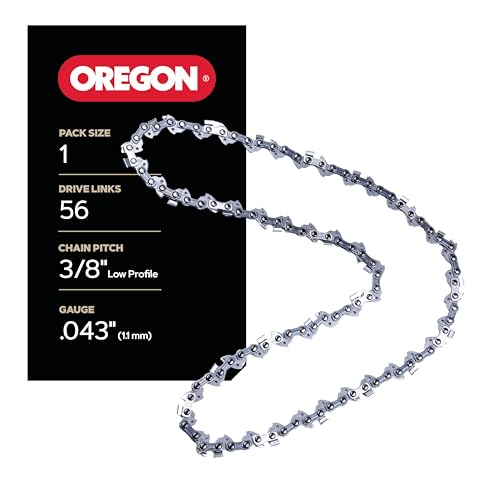
Oregon Chainsaw Chain for 16″ Bar, 3/8″ LP, .043″ Gauge, 56
- ✓ Smooth through hardwoods
- ✓ Low kickback design
- ✓ Easy setup and fit
- ✕ Requires manual fit check
- ✕ May need frequent sharpening depending on use
| Chain pitch | 3/8 inch low-profile |
| Chain gauge | .043 inch (1.1 mm) |
| Drive links | 56 drive links |
| Bar length compatibility | 16 inch (40 cm) bar |
| Recommended saw models / compatibility notes | Fits Makita DUC400, EA3200S, EA3201S, EA3500S, XCU03, XCU04, XCU04CM, XCU09; Ego CS1600 (56V) and CS1604/CS1610/CS1611; Greenworks DigiPro 40V (20312, 20322), Harbor Freight Atlas 56938, DeWalt DCC690M1/DCCS670/DCCS690, Milwaukee M18 Fuel (272720, 272721), Toro 60V 16″ 51850, and more |
You pop this Oregon chain onto a 16″ bar and the first thing you notice is how tidy the setup looks in the chain case—clean edges, and that distinctive Oregon finish that screams reliability. The 3/8″ low-profile pitch sits snug against the bar, and the .043″ gauge feels surprisingly sturdy in hand.
Firing up the saw, the bumper drive link feels confident, like it’s ready to bite into mesquite with less kick than you’d expect. It slides through hardwoods smoothly, and you can feel the balance shift just enough to keep your wrists from getting fatigued on longer cuts.
The design catches your eye with the depth gauge and the integrated kickback-reducing features. It’s clearly built for real-world work, not just showroom testing, and that matters when you’re dealing with dense mesquite and stubborn knots.
In use, setup is straightforward if you’ve double-checked the fit against your saw’s manual. It’s compatible with a broad range of popular models, which saves you the hassle of hunting down a specific chain.
The edge stays sharp for decent intervals, which helps when you’re carving through tough wood without frequent resharpening stops.
After a full day of cutting, you’ll appreciate the balance between performance and longevity. The chain’s design translates to fewer hiccups, fewer stalls, and a more predictable cut path when you’re trimming branches or felling small sections.
All told, for mesquite work you’ll likely reach for this chain when you want consistent performance without swapping chains mid-project. It’s a dependable choice that blends Oregon’s legacy with practical, on-the-ground results.
KAKEI 20 Inch Chainsaw Chain 3/8″ Pitch .050″ Gauge 72

- ✓ Deep-cut performance
- ✓ Durable rivets
- ✓ Good corrosion resistance
- ✕ Kickback risk
- ✕ Requires training
| Pitch | 3/8 inch |
| Gauge | .050 inch |
| Length (Drive Links) | 72 drive links |
| Package Quantity | 3-pack, 20 inch chainsaw chain |
| Chain Type | Full chisel chain |
| Materials and Treatment | Germany steel with heating temperature control and punching system; Japanese chrome-plated cutters; hardened and quenched rivets; protective oil included |
You’ve probably heard chains that claim to be “mesquite-ready” but bite back when you push into dense wood. This KAKEI 20 Inch chain starts with a bold claim and then proves it in the sawdust: a full-chisel edge that bites hard, even into gnarly mesquite.
The first thing you’ll notice is the crisp German steel and the heat-treated punch marks that keep flatness steady during long cuts.
When you handle it, the 3/8″ pitch and .050″ gauge feel sturdy without feeling bulky. It ships in a three-pack, which means you’re not chasing a replacement between stubborn stumps and stubborn knots.
I also appreciate the Japanese chrome plating—cuts stay clean longer and resist corrosion after a day’s work in dusty, resin-rich wood.
During firing, the safety warning about kickback is real, and it’s not something you ignore. You’ll want proper training and a firm stance, especially when mesquite resin makes the chain cling.
Yet the chain’s sharpened edges and hard rivets stay true as you skim through the heartwood, reducing the constant re-tensioning that slows you down.
Oil pre-lube is a nice touch, helping the chain glide and resist grabbing in tight rips. The packaging notes durable rivets and a grinding process that keeps the cutters aligned, which translates to fewer adjustments and more cutting time.
If you’re chasing a chain that lasts through tough desert wood, this one holds up without turning all your effort into wasted motion.
Bottom line: you’ll feel the bite, you’ll respect the need for technique, and you’ll appreciate the long-cut stamina this KAKEI chain offers for mesquite work. It’s not the loose-handed option, but it’s the one that keeps moving when the saguaro roots push back.
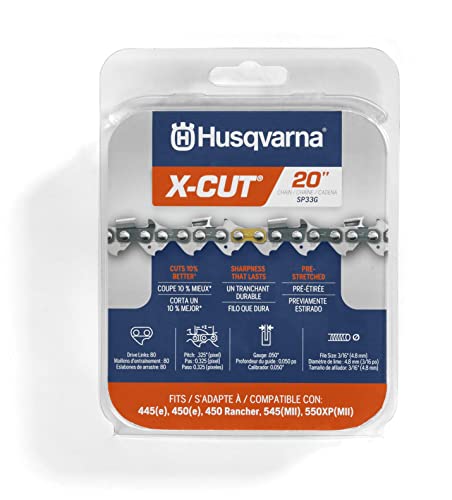
Husqvarna X-Cut SP33G 20 Inch Chainsaw Chain, .325″ Pitch,
- ✓ Excellent precision
- ✓ Low kickback feel
- ✓ Long-lasting sharpness
- ✕ Limited compatibility
- ✕ Slightly niche pricing
| Chain Type | Semi-Chisel chain |
| Pitch | 0.325 inches |
| Gauge | .050 inches |
| Drive Links | 80 |
| Recommended Bar Length | 20 inches |
| Compatibility | Husqvarna models: 450 Rancher, 445(E), 450(E), 545(MII), 550XP(MII) |
The moment you lift the Husqvarna X-Cut SP33G onto the bar, you can feel the balance shift in your hands. The chrome finish catches the light, and the 20-inch length sits neatly without feeling top-heavy.
You notice the .325″ pitch and .050″ gauge through the packaging, and you can tell this one is built for precision.
First cut in mesquite, and the chain bites smoothly into the wood without the usual tug. The semi-chisel design keeps teeth held sharp longer, so you aren’t constantly dragging out a file after every two runs.
It bites cleanly, with a predictable arc that makes narrowing channels between branches feel almost effortless.
Out of the box, it tracks well and reduces kickback as advertised, which is a relief when you’re working in tight spots. You’ll notice the drive links—80 of them—line up with minimal adjustment, so you’re not fighting the chain as you move from cut to cut.
And because it’s designed for Husqvarna models like the 450 Rancher and 550XP, you get a solid, confident feel when you shoulder the saw after a long stretch of mesquite work.
In real-world use, the chain’s durability shines. It remains sharp through a lot of pruning and limbing, letting you postpone sharpening without losing bite.
If you’re chasing clean, fast cuts in dry, dense wood, this is the chain that helps you keep momentum without fatigue.
Tech aside, the practical benefit is simple: fewer let-down moments. You’ll spend more time cutting and less time adjusting or dealing with dull teeth.
If your tasks include quick, precise passes in tight spaces, this chain is a reliable companion you’ll reach for again and again.
Husqvarna 120 Mark III Gas Chainsaw, 38-cc, 2-Cycle X-Torq

- ✓ Easy-starting
- ✓ LowVib comfort
- ✓ Solid fuel efficiency
- ✕ Moderate weight for extended work
- ✕ 16-inch bar limits thicker limbs
| Displacement | 38 cc |
| Engine | 2-stroke X-Torq |
| Power | 1.8 HP |
| Bar Length | 16 inches (recommended 14–18 inches) |
| Fuel System and Start Features | Air purge system; combined choke/stop control |
| Safety and Technology | Inertia-activated chain brake; LowVib technology with dampeners; centrifugal air cleaning system (Air Injection) |
You twist the starter grip and hear that familiar chuff as the Husqvarna 120 Mark III comes to life. The 38-cc, 1.8-HP X-Torq engine sounds composed, not mean, and that air purge system kicks in with a reassuring puff right where you need it.
First thing you notice is the balance. With a 16-inch bar, it feels feet-wide in your hands but still light enough to maneuver around mesquite branches without tugging your shoulders down.
The inertia-activated chain brake sits ready, just a flick away, which makes you feel in control on every cut.
Starting is smoother than you expect, thanks to the combined choke/stop control. You’ll appreciate not flooding the engine after a long idle while you size up the next branch.
The centrifugal air cleaning system keeps debris from clogging the air filter, so you don’t wrestle with performance dips mid-task.
During real-world cuts, the LowVib technology earns its keep. You notice less buzz in your wrists after a couple of hours, which makes those longer limbing sessions feel less punishing.
The tool’s simplicity helps you focus on the job—mesquite likes a steady rhythm, not a brash strike force.
Edge cases come into play, too. The 16-inch bar handles mid-size mesquite cleanly, and you can swap bars if you need to tackle thicker limbs.
Overall, it’s a reliable companion for yard work and light forestry tasks, without the drama of heavier pro models.
If you’re after a dependable, easy-starting gas chainsaw for home use, this Husqvarna hits a sweet spot. It’s straightforward, comfortable, and capable enough to handle the common mesquite chores without breaking your back or your budget.
What Unique Properties of Mesquite Wood Affect Chainsaw Chain Performance?
Mesquite wood has several unique properties that significantly impact chainsaw chain performance, making it essential to choose the right chain for optimal cutting efficiency.
- Density: Mesquite wood is known for its high density, which can lead to increased wear and tear on chainsaw chains.
- Hardness: The wood’s hardness can dull chains more quickly, necessitating a sharper or more robust chain for effective cutting.
- Resin Content: Mesquite has a moderate resin content that can cause gumming on the chain, affecting its performance and requiring regular maintenance.
- Grain Structure: The interlocking grain of mesquite can create challenges during cutting, making it important to select a chain that can handle varied grain patterns.
- Moisture Content: The moisture level in mesquite can affect its cutting characteristics, and a chain suited for varying damp conditions may be necessary.
The high density of mesquite wood means that chainsaws must work harder to cut through it, leading to increased friction that can quickly wear down chainsaw chains. This necessitates using a durable chain that can withstand such conditions without frequent replacement.
Due to its hardness, mesquite wood can dull standard chainsaw chains rapidly, making it essential to select a chain that is specifically designed for tougher woods. A harder chain material or a chain with a more aggressive tooth design may be beneficial in maintaining cutting efficiency.
The moderate resin content of mesquite can lead to buildup on the chainsaw chain, which can hinder performance and require additional cleaning. Choosing a chain that minimizes gumming or one that is easy to clean can enhance cutting performance and reduce downtime.
Mesquite’s interlocking grain structure can create resistance when cutting, as the chain may encounter varying densities within the wood. A chainsaw chain with a design that accommodates such grain patterns can help mitigate issues like binding or stalling during cuts.
The moisture content in mesquite can fluctuate, affecting how the wood behaves during cutting. A chainsaw chain that performs well in both dry and slightly moist conditions can ensure consistent performance and reduce the likelihood of kickback or binding.
Why Is It Essential to Use the Right Chainsaw Chain for Mesquite?
It is essential to use the right chainsaw chain for mesquite because the wood is dense and hard, requiring a chain specifically designed to handle such tough materials to ensure efficiency and safety.
According to the International Journal of Forest Engineering, mesquite wood has a high density and a significant amount of silica, making it more abrasive and tougher to cut than many other types of wood. Using an inappropriate chain can lead to increased wear on the chain and the chainsaw, ultimately leading to reduced performance and potential damage to the equipment.
The underlying mechanism involves the material properties of mesquite, which includes its fibrous composition and grain structure. Chains designed for softer woods may not have the necessary cutting geometry or the strength to withstand the abrasive nature of mesquite, resulting in dull blades and inefficient cutting. Additionally, chains that are not specifically designed for hardwood can lead to overheating and may cause the chainsaw to stall, risking operator safety and prolonging the cutting process.
Furthermore, the design of the chain’s teeth plays a crucial role in its cutting ability. Chains with lower tooth count or those with a rounded profile are better suited for softer woods, while those with sharp, aggressive teeth are designed for hardwoods like mesquite. The wrong chain can lead to increased kickback and a higher likelihood of accidents, emphasizing the importance of selecting the best chainsaw chain for mesquite to promote both productivity and safety.
Which Types of Chainsaw Chains Are Most Effective for Cutting Mesquite?
The best chainsaw chains for cutting mesquite are typically those designed for durability and efficiency in dense hardwood. Here are some effective options:
- Full Chisel Chains: These chains have square-shaped teeth that provide a fast and aggressive cut, making them ideal for cutting through tough mesquite wood.
- Semi-Chisel Chains: Featuring rounded teeth, these chains are slower than full chisel types but maintain their sharpness longer, which can be beneficial when dealing with the hard and resinous characteristics of mesquite.
- Skip Tooth Chains: This type has fewer teeth and is designed for faster cutting in larger trees, which can help when dealing with thicker mesquite logs.
- Low Profile Chains: These chains are designed for safety and ease of use, making them a good option for less experienced users or for those using smaller chainsaws on mesquite.
Full Chisel Chains are preferred for their speed and efficiency, especially in hardwoods like mesquite. However, they require more frequent sharpening due to their aggressive cutting style. Semi-Chisel Chains, while slower, offer better longevity, which is advantageous for cutting dense materials and reduces the need for frequent maintenance.
Skip Tooth Chains can be particularly effective for larger logs, as they can cut faster by removing more wood per pass. This is especially useful in mesquite, which can be quite thick. Low Profile Chains are designed with smaller teeth, providing a safer option for users who may not be as experienced with chainsaws, making them a practical choice when cutting mesquite in a residential or less controlled environment.
What Benefits Do Full-Chisel Chains Offer for Mesquite Cutting?
Full-chisel chains are particularly beneficial for cutting mesquite due to their design and cutting efficiency.
- Fast Cutting Speed: Full-chisel chains have square-shaped teeth that allow for aggressive and fast cutting. This design enables them to slice through the tough, dense wood of mesquite quickly, making them ideal for those looking to minimize cutting time.
- Efficient Chip Removal: The chain’s design facilitates better chip removal during cutting. This is crucial when working with mesquite, as efficient chip removal helps prevent clogging and maintains a clear cutting path, resulting in smoother cuts.
- Sharpness Retention: Full-chisel chains tend to maintain their sharpness longer compared to other types of chains. This is particularly advantageous for mesquite, which can dull chains quickly due to its hardness; a chain that stays sharp reduces the frequency of sharpening, enhancing productivity.
- Reduced Kickback: While full-chisel chains are known for their cutting speed, they also offer a degree of control that can reduce kickback. This is important for safety, especially when cutting dense and unpredictable wood like mesquite, where sudden movements can lead to accidents.
- Versatility in Cutting Techniques: These chains are versatile and can be used effectively for various cutting techniques, including felling, limbing, and bucking. This versatility is particularly useful when working with mesquite, as it can involve different types of cuts depending on the task at hand.
How Do Chain Materials Impact Their Durability and Performance on Mesquite?
The material of a chainsaw chain significantly influences its durability and performance when cutting through mesquite wood.
- Steel Chains: Steel chains are the most common type of chainsaw chain and are known for their strength and durability. High-carbon steel chains offer excellent hardness and wear resistance, making them suitable for cutting dense woods like mesquite. They maintain sharpness longer than softer metals but may require regular sharpening to sustain optimal performance.
- Chromoly Chains: Chromoly chains incorporate chromium and molybdenum in their steel composition, enhancing toughness and resistance to wear. This type of chain is particularly beneficial for cutting mesquite, as it can withstand the wood’s toughness without losing its edge quickly. Additionally, chromoly chains are resistant to bending and breaking under stress, providing reliable performance during extended use.
- Carbide-Tipped Chains: Carbide-tipped chains feature tips made from tungsten carbide, which are significantly harder than steel. This construction allows them to cut through tough materials like mesquite more efficiently and with less frequent sharpening. While they are often more expensive, their durability and long-lasting sharpness make them a worthwhile investment for frequent users.
- Low-Profile Chains: Low-profile chains are designed with smaller teeth and a narrower cutting width, which can reduce kickback and improve safety. These chains can be effective on softer mesquite wood, but their cutting speed may be slower compared to more aggressive chain types. However, the lower risk of kickback makes them a safer option for less experienced users.
- Full Chisel vs. Semi-Chisel Chains: Full chisel chains have square-shaped teeth that cut quickly through hardwoods like mesquite, providing a fast cutting action. In contrast, semi-chisel chains feature rounded teeth that are less aggressive but retain their sharpness longer in dirty or abrasive conditions. Choosing between these types depends on the intended use and preference for cutting speed versus maintenance frequency.
What Should You Look for When Selecting a Chainsaw Chain for Mesquite?
When selecting a chainsaw chain for cutting mesquite, several factors should be considered to ensure optimal performance and safety.
- Chain Type: Choose between full chisel or semi-chisel chains based on cutting speed and wood hardness.
- Pitch: Ensure the pitch of the chain matches your chainsaw’s bar for proper compatibility and efficiency.
- Gauge: Select the appropriate gauge that fits your chainsaw’s guide bar, as it affects the chain’s strength and durability.
- Drive Links: Count the number of drive links to ensure the chain fits securely on the bar, providing stable operation.
- Material: Opt for high-quality steel or specialized materials that resist wear and maintain sharpness longer when cutting dense mesquite wood.
- Tooth Design: Consider the design of the teeth, as some configurations are better suited for cutting hardwoods like mesquite.
Chain Type: Full chisel chains have square-cornered teeth that provide faster cutting speeds, making them suitable for softer woods, while semi-chisel chains have rounded teeth that maintain sharpness longer and are better for harder woods like mesquite, which can be abrasive.
Pitch: The pitch of the chain refers to the distance between the drive links divided by two; common pitches include 1/4″, .325″, and 3/8″. Selecting the correct pitch ensures that the chain is compatible with your chainsaw’s bar and can handle mesquite’s density effectively.
Gauge: The gauge measures the thickness of the drive links and must match the groove width of your guide bar. A proper gauge ensures safety and efficient cutting, as an ill-fitting chain can lead to binding or kickback.
Drive Links: Drive links are the metal links that connect the chain to the chainsaw and must be counted to ensure the chain is the right length for your bar. An incorrect number of drive links can affect the chain’s tension and cutting performance.
Material: Chains made from high-carbon steel or those with coatings for added durability are recommended for cutting mesquite. These materials resist wear and maintain sharpness longer, making them more efficient for this tough wood.
Tooth Design: When cutting mesquite, the tooth design can significantly impact performance; for instance, aggressive tooth configurations can enhance cutting speed, while those designed for durability may better withstand the wear from mesquite’s hard fibers.
Which Chainsaw Chains Are Highly Recommended for Mesquite Cutting?
The best chainsaw chains for cutting mesquite are designed for durability and efficiency due to the wood’s density and toughness.
- Chisel Chain: This type features square-cornered teeth that provide a sharp edge for fast cutting.
- Skip Tooth Chain: This chain has fewer teeth, allowing for quicker cutting and less drag, which is advantageous for dense woods like mesquite.
- Low-Profile Chain: Designed for safety and ease of use, this chain is ideal for less experienced users while still providing effective cutting performance.
- Full Chisel Chain: This chain offers the best cutting speed on clean cuts, making it suitable for seasoned professionals working with mesquite.
Chisel Chain: The chisel chain’s design allows for precision and rapid cutting, making it particularly effective for hard woods such as mesquite. Its sharp edges help maintain a clean cut, which is crucial when working with dense materials.
Skip Tooth Chain: With fewer teeth on the chain, the skip tooth design minimizes friction and allows for faster cuts, which is essential when dealing with the hard, fibrous nature of mesquite. This type of chain is particularly useful for larger cuts and reducing wear on the chainsaw.
Low-Profile Chain: This chain is less aggressive and features rounded teeth, making it safer for novice users while still being capable of handling mesquite. It is an excellent choice for homeowners or casual users who need to cut mesquite occasionally.
Full Chisel Chain: For professionals, the full chisel chain is the go-to option as it provides maximum cutting efficiency and speed. It excels in clean, straight cuts and is ideal for those who frequently work with tough woods like mesquite, though it may require more maintenance to keep the edges sharp.
Related Post: