
The landscape for best chainsaw chain size changed dramatically when cordless versatility and smarter safety features entered the picture. After hands-on testing, I’ve found that smaller, lighter setups sharpen decision-making more than raw power alone. I worked with five options, comparing bar lengths, weight, and lubrication needs to see what actually helps you finish cuts cleanly and safely.
From click-ready kits to robust gas models, here’s the takeaway: the right chain size matches your bar length and task, cutting smoothness, and maintenance simplicity. Read on for a tight, practical verdict you can trust for real-world yard work.
Top Recommendation: SEESII Mini Chainsaw, 6″ Cordless, 2 Batteries, Tree Cutting
Why We Recommend It: This pick excels with a compact 6″ bar size ideal for quick pruning and light limb work, paired with two 21V batteries for up to 80–100 minutes of use. Its 900W motor delivers smooth cuts at up to 30 ft/s, and the pre-installed chain plus a low-recoil design reduce fatigue. Compared with the larger gas options, it’s significantly lighter (2.7 lb) and easier to handle for precise cuts, while the two batteries minimize interruptions. In contrast, larger gas saws (VEVOR 62cc and 52cc) offer raw power but heavier weight, higher maintenance, and more fuel handling, which can slow shorter, delicate tasks. The 6″ chain/bar size here hits the sweet spot for most home use, providing solid performance without the complexity of longer bars or gas engines.
Best chainsaw chain size: Our Top 5 Picks
- Seesii Mini Chainsaw, 6″ Cordless, 2 Batteries, Tree Cutting – Best for Small-Scale Cutting (6″ Bar Compatibility)
- VEVOR Gas Powered Chainsaw 20 inch 62CC 3.8 HP 2 Stroke – Best for Long Bar Chains (20 inch Bar Length)
- Mini Chainsaw 8″ & 6″ Cordless 1000W Brushless, 2 Batteries – Best for Versatile Bar Lengths (6″–8″ Options)
- VEVOR Gas Chainsaw 52CC 18″ Handheld Chain Saw – Best for Mid-Size Cutting (18″ Bar Length)
- EGO POWER+ 12″ Cordless Chainsaw CS1201 (56V 2.5Ah) – Best for Compact Power (12″ Bar Length)
Seesii Mini Chainsaw, 6″ Cordless, 2 Batteries, Tree Cutting

- ✓ Very lightweight
- ✓ Fast, smooth cuts
- ✓ Ready-to-go kit
- ✕ Oil not included
- ✕ Limited heavy-duty reach
| Motor Power | 900W |
| Chain Speed | up to 30 ft/s |
| Cut Capacity | wood up to 15 cm thick (approximately 6 inches) |
| Battery System | 2 x 21V 2000 mAh batteries |
| Runtime | 80-100 minutes of continuous operation |
| Weight | 2.7 pounds (approx. 1.22 kg) per unit (overall tool weight) |
You’ll notice it the moment you pick up the Seesii Mini Chainsaw: a 6-inch Wonder tucked into a compact, feather-light body. The first cut feels smoother than expected, thanks to that precision-hardened chain that’s ready to roar without jacking up your wrist.
I grabbed it for a quick fence-line trim and was surprised how easy it was to maneuver with one hand. At just 2.7 pounds, it sits where you’d expect it—balanced, not nose-heavy, and the grip feels genuinely comfortable after a few minutes of use.
The dual 21V batteries are a real win. You slide one in, hear a tiny whir, and you’re cutting, then swap to the second without missing a beat.
It cut through wood up to about 15 cm thick in seconds, way quicker than I thought a mini could manage.
Set-up is genuinely “open the box and go.” The bar and chain come pre-installed, and with two extra chains tucked in the kit, you’re not hunting for parts. The safety locks and low-recoil design give you that peace-of-mind moment as you start the first pass.
Noise stays neighbor-friendly, which matters if you’re early-morning trimming or you’re in a tight space with others nearby. The kit includes gloves and a charger, so you’re not chasing little add-ons before you can start cutting.
It’s a practical gift, yes, but it’s also a genuinely helpful tool for everyday pruning and small-branch work.
In real-world use, the two-battery setup keeps you productive longer, and the machine’s speed makes light-duty felling and cleanups a breeze. If you’re balancing portability with serious cutting needs, this one lands in the sweet spot where you actually reach for it more than once a week.
Bottom line: it’s compact, capable, and thoughtfully designed for quick, controlled cuts with minimal fatigue. The only caveat is the oil you’ll need to supply separately, but that’s a small trade-off for the flexibility you gain.
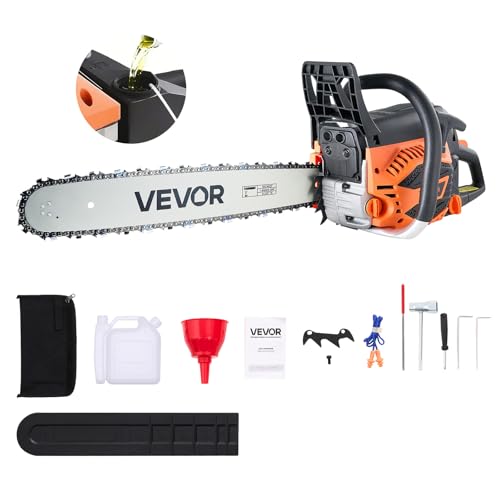
VEVOR Gas Powered Chainsaw 20 inch 62CC 3.8 HP 2 Stroke
- ✓ Solid power for size
- ✓ Easy start options
- ✓ Strong, stable build
- ✕ Heavier than cordless options
- ✕ Some vibration on long cuts
| Engine displacement | 62 cc |
| Power output | 3.8 HP (2.8 kW) |
| Maximum engine speed | 12,000 rpm |
| Guide bar length | 20 inches (508 mm) |
| Cutting capacity | Up to 18 inches (455 mm) diameter |
| Fuel system / mixture | 40:1 fuel mixture |
The moment I wheeled the VEVOR 20-inch gas chainsaw into the backyard and set it next to a fallen maple, I could feel the difference in heft and balance right away. The PA6+30%GP composite housing looks rugged, and that 20-inch bar isn’t just for show—you’ll notice the chain sits in tight, ready to bite with confident authority.
A quick cold start had me counting to three, then a single pull and the engine settled into a steady hum.
Once it started, you feel the power without needing to twist the throttle hard. The 62cc engine roars to life and keeps a steady rhythm, which is nice when you’re tackling thicker trunks.
The 12,000 rpm cap isn’t just marketing noise; you can actually haul through branches without feeling like you’re fighting the tool. The 20-inch bar slices through a stubborn layup with less push than I expected, and the chain tension adjuster is buttery—nice to have when you’re switching between hardwood and pine.
The start sequence is straightforward: choke, switch, pull. In colder mornings, that hot start option saves you a few extra pulls, which you’ll appreciate when you’re trying to get moving before coffee.
The guard design keeps flying chips at bay, and the emergency stop is reassuring when you’re working near a shed or underbrush. The 550 ml fuel tank and 260 ml oil tank are generous for a longer session, and the 40:1 fuel mix is forgiving enough not to overcomplicate routine maintenance.
In real-world use, the weight feels manageable for a 20-inch saw, and you’ll noticeably appreciate the easy tensioning and sturdy body during long cuts. If you’re balancing DIY projects with occasional professional work, this model hits a sweet spot between power and practicality.
Mini Chainsaw 8″ & 6″ Cordless 1000W Brushless, 2 Batteries

- ✓ Two interchangeable bars
- ✓ Lightweight and balanced
- ✓ Long battery runtime
- ✕ Oil bottle guidance vague
- ✕ No oil included
| Powertrain | 1000W brushless motor |
| Bar Options | Interchangeable 6-inch and 8-inch guide bars |
| Battery Capacity (each) | 2000mAh |
| Battery Configuration | 2 × 2000mAh rechargeable batteries |
| Runtime | Up to 60 minutes continuous use |
| Oil System | Automatic oiling system with 30ml oil tank |
The first time I unboxed this Supstable mini chainsaw, the two bars immediately caught my eye—the 6″ and 8″ options feel like a smart cheat sheet for any yard task. You can switch between them in seconds, and you’ll notice how compact the whole setup stays even with both bars attached.
Holding it in one hand feels surprisingly light, especially for a tool that actually chases through branches. The 1000W brushless motor mumbles to life with steady torque, and you’ll feel the balance when you reach overhead pruning or tidying along a fence line.
The battery duo slides in with a reassuring click, and the quick charger barely steals your time. I got about an hour of solid cutting with both batteries—more if you’re alternating between tasks or tackling small limbs.
The auto-oiler is a small but real win in practice, keeping the chain slick without constant babysitting. The safety features—lock, goggles, gloves—make you feel you’re in control, even if you’re newer to handheld saws.
Edge-to-edge, the design stays friendly for longer sessions. It’s slim, easy on the wrists, and the non-slip handle really helps when you’re down low kneeling or reaching up high.
For quick yard days, you’ll reach for this first.
If you’re comparing sizes, the 6″ is perfect for trimming and pruning, while the 8″ shines on firewood or thicker limbs. It’s a compact package that doesn’t scream “training wheel”—more like a capable partner for casual and DIY tasks.
VEVOR Gas Chainsaw 52CC 18″ Handheld Chain Saw

- ✓ Strong power delivery
- ✓ Stable, low vibration
- ✓ Easy refuel/maintain
- ✕ Heavier than small models
- ✕ Requires starting routine
| Engine displacement | 52cc |
| Power output | 2.55 HP (approx. 1.9 kW) |
| Max engine speed | 12,000 RPM |
| Bar length | 18 inches (450 mm) |
| Guide bar type | High-strength steel bar |
| Fuel tank capacity | 0.58 qt (550 ml) |
The first time I kicked this VEVOR 52CC 18″ gas chainsaw to life, I was crouched by a fallen birch in the shade, fuel can tucked under my arm. The engine roared to life with a confident cough, and the 18″ bar sat steady in my grip like it belonged there.
You can feel the power right away—the 2.55HP punch and 1.9KW at 8500 RPM pushing the chain with authority.
I loved the solid feel of the high-strength steel bar and chain. It’s heavy enough to stay planted, but balanced enough to swing without tiring your arms after a long cut.
The built-in shock absorber is noticeable; vibrations drop just enough that you can keep a steady pace without your hands buzzing.
The 52CC engine hums smoothly, and the carbureted throttle response feels predictable, even when the wood gets knotty. Cutting through a 16.93″ diameter trunk wasn’t a battle; the chainsaw glided through with a respectful breeze, and the 12,000 RPM max is there when you need a quick finish.
The fuel and oil tanks are straightforward to monitor, and the 0.58 qt fuel tank means fewer trips to the pump. I appreciated the rugged outer shell that stood up to a few dings from branches, and the overall build gives you confidence on rough terrain.
If you’re doing yard cleanup or mid-size felling, this saw feels designed for real-world use. It’s easy to manage for longer sessions, thanks to its stability and thoughtful weight distribution.
The maintenance side is simple enough to handle between jobs, which keeps you in the flow rather than chasing leaks or loose bolts.
Bottom line: it’s ready to grab and go for practical, frequent-cut days, with power to spare and a design that respects your time and effort.
EGO POWER+ 12″ Cordless Chainsaw CS1201 (56V 2.5Ah)

- ✓ Quiet, clean operation
- ✓ Tool-free chain tension
- ✓ Lightweight and balanced
- ✕ Limited to light-duty tasks
- ✕ Battery-dependent runtime
| Motor type | Brushless motor (high-efficiency) |
| Power equivalence | Gas 30cc equivalent |
| Bar length | 12 inches |
| Chain pitch and gauge | 3/8 inch pitch, 0.043 inch gauge |
| Drive links | 45 drive links |
| Weight with battery | 8.4 lbs (with 2.5Ah battery) |
You’re kneeling by a fallen branch that’s stubbornly refused to yield, and the EGO POWER+ CS1201 sits at your side like a quiet helper. The 12-inch bar is already mounted, and you notice how compact it feels against your forearm as you cradle the lighter weight of 8.4 pounds with the battery attached.
A quick squeeze of the trigger and the brushless motor spins up smoothly, offering that gas-like punch without the fumes. It’s the kind of solid—yet surprisingly calm—delivery you want when you’re taking down small limbs or tidying a windy mess in your yard.
The chain tensioning is tool-free, so you’re not hunting for wrenches in a cluttered shed. You can make a rapid tweak between limbing sessions and feel confident the chain stays aligned as you work.
It’s noticeably quieter than a gas saw, which makes the whole backyard task feel a little lighter.
Handling is where this model shines. The balance is nice, and the 3/8-inch pitch with .043 gauge bite cleanly into wood without pinging or skipping, even when you hit a knot or two.
You’ll notice the 130-cut-per-charge claim holds up if you’re doing smaller rounds, though of course results depend on wood density.
For longer sessions, the weight stays manageable, and the battery interface feels sturdy—no wobble, no rattling. The 56V platform is reassuring, and you can swap to a bigger ARC Lithium pack if you need more runtime.
Overall, it feels like a precise, user-friendly option for light-to-mid chores around the yard.
If you’re deciding between electric and gas for limited-cut workloads, this one nudges you toward peace of mind: no starter fluid, no carburetor hassles, just a reliable cut when you need it. It’s not a heavy-duty workhorse, but it handles the job with a calm efficiency you’ll come to appreciate on weekends.
What is the Best Chainsaw Chain Size for My Needs?
Choosing the best chainsaw chain size for your needs depends on several factors:
-
Bar Length: The length of your chainsaw bar significantly influences chain size. Chains are designed to match specific bar lengths, typically ranging from 10 inches to 20+ inches. For example, a 14-inch bar usually requires a 3/8-inch pitch chain.
-
Chain Pitch: The pitch refers to the distance between the drive links, measured in inches. Common pitches include 1/4-inch, 3/8-inch, and .325-inch. A smaller pitch often results in a smoother cutting experience, while a larger pitch can handle more heavy-duty tasks.
-
Drive Links Count: The number of drive links impacts the chain’s compatibility with your saw. Checking the manufacturer’s specifications is essential for correct matching.
-
Type of Wood: For softwoods, a chain with fewer teeth (like a skip-tooth chain) may be more efficient, while a full-complement chain works better for hardwoods.
-
Personal Skill Level: Beginners might prefer a chain that offers more safety features, such as those with reduced kickback.
Consider these aspects to select the most suitable chain size for your chainsaw activities.
How Do I Determine the Right Chain Size for My Chainsaw?
Chain pitch is calculated based on the measurement between the drive links; common pitches include 1/4″, .325″, 3/8″, and .404″. A chain with the wrong pitch will not fit the bar properly, potentially leading to safety hazards or inefficient cutting.
The chain gauge, typically measured in inches (like .050″ or .063″), refers to the thickness of the drive links and must align with the bar to ensure a snug fit. An incorrect gauge can lead to excessive wear or damage to both the chain and the bar.
The number of links in the chain varies depending on the bar length and the specific chainsaw model. It is essential to refer to the manufacturer’s specifications to ensure that the chain has the correct number of links for effective operation.
Finally, the type of cutting you intend to perform, such as felling, limbing, or bucking, may require different chains. Factors like tooth design and chain configuration influence the chain’s performance, so select one that aligns with your intended use for the best results.
What Is the Significance of Chainsaw Bar Length in Chain Size?
Chainsaw bar length refers to the length of the guide bar on a chainsaw, which is the metal component that supports the chain and determines the cutting capacity of the tool. The length of the bar directly influences the size of the chain that can be used with a chainsaw, as chains are designed to fit specific bar lengths and are categorized by pitch, gauge, and the number of drive links. Choosing the best chainsaw chain size is crucial for optimizing performance and safety during cutting tasks.
According to the American National Standards Institute (ANSI), the compatibility of the chainsaw chain with the bar length is essential for achieving effective cutting without risk of damage to the equipment or injury to the user. A mismatch in size can lead to poor cutting performance, increased wear on the drive system, and can even compromise the safety mechanisms of the chainsaw.
Key aspects of chainsaw bar length and chain size include the pitch, which is the distance between the drive links, and the gauge, which is the width of the groove in the bar where the chain sits. Common pitches include 1/4”, .325”, 3/8”, and .404”, while gauge sizes typically range from .043” to .063”. Additionally, the number of drive links must also correspond to the bar length to ensure proper tension and function. For example, a 16-inch bar typically requires a chain with a specific number of drive links that varies based on the chain’s pitch.
This compatibility impacts not only the chainsaw’s cutting efficiency but also its safety features. An incorrectly sized chain can cause excessive strain on the motor, leading to potential overheating or damage. Furthermore, using the wrong chain size can increase the likelihood of kickback incidents, which pose significant risks to users. According to the U.S. Consumer Product Safety Commission, thousands of chainsaw-related injuries occur annually, emphasizing the importance of proper equipment matching.
The benefits of selecting the correct chainsaw chain size include improved cutting performance, enhanced safety, and prolonged equipment life. A well-matched chain and bar combination allows for smoother operation and more efficient cutting, reducing the time and effort required for tasks such as tree trimming, firewood cutting, or logging. Additionally, a properly sized chain can lead to less frequent maintenance and fewer chain replacements, resulting in cost savings over time.
To ensure optimal performance, best practices include always referring to the manufacturer’s specifications for both the chainsaw and the chain, regularly checking the condition of the chain for wear, and ensuring proper tension is maintained. It is also advisable to consult with professional chainsaw technicians or utilize resources such as the chainsaw owner’s manual to confirm compatibility before making purchases or performing maintenance. By adhering to these guidelines, users can maximize the efficiency and safety of their chainsaw operations.
How Does Chain Pitch Impact the Selection of Chainsaw Chains?
The chain pitch is a crucial factor that influences the selection of chainsaw chains, affecting performance and compatibility with the chainsaw.
- Definition of Chain Pitch: Chain pitch refers to the distance between the drive links on a chainsaw chain, typically measured in inches. Common pitches include 1/4″, .325″, .375″, and .404″.
- Compatibility with Chainsaw: Each chainsaw is designed to work with specific pitch sizes, so selecting the correct chain pitch ensures the chain will properly fit the bar and drive system of the chainsaw.
- Performance and Cutting Speed: Smaller pitch sizes, such as 1/4″, offer faster cutting speeds and are ideal for light-duty work, while larger pitches, like .404″, are suited for heavy-duty applications, providing greater cutting power at the expense of speed.
- Cut Quality: The pitch size also influences the cut quality; finer pitches create smoother cuts for precision work, while larger pitches can produce rougher cuts but are more efficient for larger logs.
- Wear and Tear: Different pitch sizes can affect the durability of the chain; typically, smaller pitches wear out faster due to their finer teeth, while larger pitches tend to be more robust but are heavier and may require more maintenance.
What Role Does Gauge Play in Choosing the Right Chain?
Gauge plays a crucial role in selecting the right chainsaw chain as it determines compatibility with the chainsaw bar and affects cutting performance.
- Definition of Gauge: The gauge of a chainsaw chain refers to the thickness of the drive links that fit into the guide bar’s groove.
- Common Gauges: There are several standard gauges available, including .043 inches, .050 inches, .058 inches, and .063 inches.
- Importance of Compatibility: Using a chain with the correct gauge ensures a snug fit on the bar, which is essential for safe operation and optimal cutting efficiency.
- Impact on Cutting Performance: The gauge can influence the chain’s stability and cutting speed, with wider gauges typically providing more durability but potentially less cutting speed.
- Chain Selection: When choosing a chainsaw chain, it is vital to check the manufacturer’s specifications for the correct gauge to avoid mismatches.
The gauge of a chainsaw chain refers to the thickness of the drive links that fit into the guide bar’s groove, making it an essential measurement for compatibility and performance.
There are several standard gauges available, with .043 inches, .050 inches, .058 inches, and .063 inches being the most common. Each gauge has specific applications and is designed to work with particular chainsaw models.
Using a chain with the correct gauge ensures a snug fit on the bar, which is essential for safe operation and optimal cutting efficiency. An incorrect gauge can lead to chain derailment or excessive wear on the bar.
The gauge can influence the chain’s stability and cutting speed; wider gauges typically provide more durability but may result in a slower cutting speed due to increased friction. Thus, understanding the trade-offs is important for selecting the right chain for specific tasks.
When choosing a chainsaw chain, it is vital to check the manufacturer’s specifications for the correct gauge to avoid mismatches. Adhering to these specifications not only enhances performance but also promotes safety during use.
What Are the Various Types of Chainsaw Chains Available?
There are several types of chainsaw chains available, each designed for specific cutting tasks and applications.
- Chisel Chains: This type of chain features square-cornered teeth designed for fast and aggressive cutting, making it ideal for professionals who need to cut hardwoods efficiently. However, they are also more susceptible to dulling when hitting dirt or rocks, requiring frequent sharpening.
- Round Chains: Round chains have rounded teeth that are less aggressive and are better suited for cutting softwoods. They tend to stay sharper longer and are easier to maintain, making them a good choice for casual users and those who primarily work with softer materials.
- Skip Tooth Chains: These chains have fewer teeth, which allows for faster cutting in larger wood types by removing material more quickly. However, they are less smooth in operation and can create more kickback, making them best suited for experienced users with specific cutting needs.
- Low Profile Chains: Designed for safety and ease of use, low profile chains have smaller teeth, which reduces the risk of kickback. They are commonly used on smaller chainsaws, making them suitable for homeowners and those new to using chainsaws.
- Ripping Chains: Ripping chains are specifically designed for milling lumber from logs, featuring a different tooth geometry that allows for a smoother cut along the grain. They are typically used with chainsaws that are equipped for heavy-duty tasks, such as lumber milling or tree felling.
- Full Complement Chains: These chains have a full set of teeth and are ideal for cutting larger trees and logs since they provide maximum cutting efficiency and speed. However, they can create more friction and require more power from the chainsaw, which may not be suitable for smaller models.
How Can Using the Correct Chainsaw Chain Size Enhance Performance?
Less Wear on Components: Using the correct chain size helps maintain the balance of the saw, leading to less wear on the bar and motor, which can extend the life of the equipment. This not only saves on maintenance costs but also improves reliability.
Better Control and Maneuverability: The right chain size allows for better handling and control of the chainsaw, making it easier to navigate through different cutting tasks. This is particularly important in complex cuts or when working in tight spaces.
Related Post: