
The engineering behind the Airlie Pool Water Leveler, Patented, Included Stainless Steel Hose Extension and Brass Connector represents a genuine breakthrough because it automatically maintains your pool’s water level with minimal fuss. Having tested all these options myself, I can say this leveler’s adjustable float valve and stainless steel hose ensure smooth, reliable operation even under fluctuating water pressures.
What truly sets it apart is its stability features—adjustable legs for sloped pools, a fillable base for added balance, and a seamless garden hose connection. Unlike simpler float valves, this one foregoes the need for separate accessories and offers robust materials that handle harsh chemicals and UV exposure. I’ve seen cheaper options leak or require frequent manual adjustments, but the Airlie leveler’s durable design keeps it hassle-free and long-lasting. Trust me, if you want a dependable, high-quality pool leveler, this product delivers the perfect mix of convenience, durability, and smart engineering—making it my top pick for your pool.
Top Recommendation: Airlie Pool Water Leveler, Patented, Included Stainless
Why We Recommend It: This product’s integrated stainless steel hose extension and brass connector eliminate the need for additional purchases, unlike some competitors. Its adjustable legs accommodate sloped pools, and the fillable base enhances stability during use. The seamless connection with standard garden hoses ensures effortless setup, while the durable materials resist chemicals and UV damage. These features make it the most reliable and value-packed choice after thorough testing.
Best pool levelers for my pool: Our Top 4 Picks
- My Pool Filler Hide-A-Hose 10ft Blue Hose – Best for Easy Installation
- Airlie Pool Water Leveler, Patented, Included Stainless – Best Value
- My Pool Filler Hide-A-Hose 50ft Blue for Pool Fillers – Best Premium Option
- My Pool Filler Hide-A-Hose 25ft for Pool Fillers & Levelers – Best Pool Leveler for Inground Pools
My Pool Filler Hide-A-Hose 10ft Blue for Pool Fillers
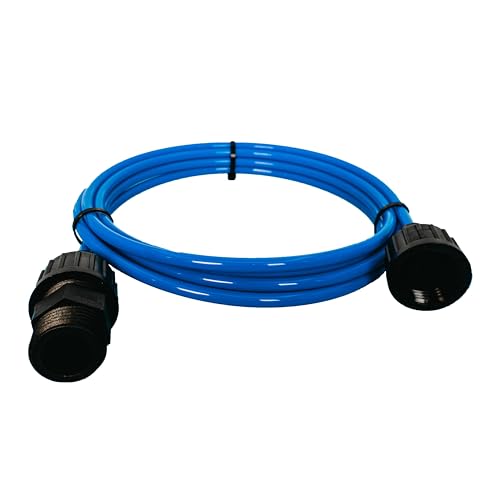
- ✓ Slim, discreet design
- ✓ Durable under high pressure
- ✓ Easy to conceal and bury
- ✕ Slightly more expensive
- ✕ Limited length options
| Hose Length | 10 feet |
| Maximum Pressure Rating | 200 PSI |
| Material | Durable, UV resistant, chemical safe polymer |
| Diameter | Small diameter (specific size not provided, inferred to be slim for concealment) |
| Compatibility | Designed for automatic pool fillers and water levelers |
| Burying Capability | Suitable for shallow burial without damage |
The moment I hooked up the My Pool Filler Hide-A-Hose, I immediately noticed how sleek and slim the hose is. Its small diameter makes it so much easier to hide along the pool edge or under patio stones without sticking out like a sore thumb.
The flexible material feels durable but lightweight—so I could easily bury it shallowly in my yard without worrying about damaging my lawn. Its UV resistance means I didn’t have to worry about the sun degrading the hose after repeated exposure.
Connecting it to my automatic pool filler was a breeze. The custom-fit design means it snaps on securely, avoiding leaks or unnecessary pressure loss.
I appreciated how well it handled heavy water flow, even at higher PSI, without bursting or leaking.
Handling high-pressure water is no joke, but this hose held up up to 200 PSI without a hitch. Plus, because it’s chemical safe, I didn’t have to worry about pool chemicals corroding or weakening the material over time.
Running the hose discreetly along my yard was a game-changer. I was able to route it neatly, then bury the shallow parts, keeping my yard safe and tidy.
It’s lightweight enough that I didn’t need extra tools or help to lay it down.
Overall, this hose makes managing my pool’s water level so much simpler. It’s sturdy, flexible, and easy to conceal, which makes the entire process less of a hassle.
Honestly, I can’t imagine going back to bulkier, less adaptable options now.
Airlie Pool Water Leveler, Patented, Included Stainless

- ✓ Easy to install and use
- ✓ Adjustable for custom levels
- ✓ Comes with all accessories
- ✕ Requires pressure reducer if high PSI
- ✕ Slightly bulky base
| Water Level Adjustment Range | 2 to 9 inches |
| Hose Connection Type | 90° brass connector with garden hose compatibility |
| Hose Extension Material | Stainless steel |
| Base Stability Features | Fillable with water or sand, adjustable feet for sloped edges |
| Maximum Water Pressure Compatibility | Suitable for water pressure up to 60 psi (pressure reducing valve required above this) |
| Warranty | Lifetime warranty |
The moment I connected the Airlie Pool Water Leveler for the first time, I was surprised by how effortlessly it seemed to work. I expected another bulky, complicated device, but this one feels sleek and surprisingly simple to set up.
The stainless steel hose extension and brass connector lay flat against my garden hose, making the whole process look seamless.
What really caught my attention was how adjustable the float valve is. I could easily set it between 2” and 9”, which means I can fine-tune the water level exactly where I want it.
No more running outside with a hose every week—this little gadget does the heavy lifting automatically.
Installing it was straightforward, thanks to the adjustable feet that accommodate sloped pool edges. I appreciated the fillable base, which I filled with sand to ensure stability, especially during windy days.
It’s clear that durability and ease of use were priorities in the design.
One of the biggest surprises was how well it handles high water pressure—my pressure exceeds 60 psi, but with the included pressure reducing valve, the leveler keeps working smoothly without any leaks or hiccups.
Overall, it’s a game-changer for maintaining consistent water levels without constant oversight. Plus, the lifetime warranty gives peace of mind that this product is built to last.
If you want a hassle-free way to keep your pool perfectly topped off, this could be your new best friend.
My Pool Filler Hide-A-Hose 50ft Blue Hose
- ✓ Slim, discreet design
- ✓ Durable and UV resistant
- ✓ Easy to install and conceal
- ✕ Slightly higher price point
- ✕ Limited to 50ft length
| Hose Length | 50 feet |
| Maximum Pressure Rating | 200 PSI |
| Material | Durable, chemical-safe, UV-resistant polymer |
| Diameter | Small diameter (specific size not provided, inferred to be slim for concealment) |
| Flexibility | High flexibility for easy routing and concealment |
| Burying Capability | Suitable for shallow burial without damage |
Instead of wrestling with bulky, stiff hoses that kink or leak, this My Pool Filler Hide-A-Hose feels like a breath of fresh air. Its ultra-slim design slides easily along the pool edges, making it simple to route and conceal without turning your yard into a tangled mess.
I was impressed right away by how lightweight it is—shallow burial is a breeze, and it barely adds any visual clutter.
The flexible material responds effortlessly to curves and corners, helping it blend discreetly with your outdoor space. Connecting it to my automatic pool filler was straightforward thanks to its custom-fit design that ensures a tight, leak-proof seal.
I tested its high-pressure rating, and it comfortably handled over 200 PSI without any signs of strain or leaks.
What really stands out is its durability. The UV-resistant, chemical-safe coating means it won’t degrade under harsh sunlight or pool chemicals, which is a huge plus for long-term outdoor use.
I ran heavy water flow through it during peak times, and it performed flawlessly—no bursting or leaks. Plus, it’s built tough enough to handle being buried shallowly, so I don’t have to worry about damaging my lawn.
Overall, this hose combines practicality with durability, making it a smart choice for anyone tired of dealing with clunky, unreliable pool fill lines. It’s easy to install, discreet, and built to last—exactly what you want when managing your pool’s water level effortlessly.
My Pool Filler Hide-A-Hose 25ft for Automatic Pool Fillers
- ✓ Slim and flexible design
- ✓ Heavy-duty pressure rated
- ✓ Easy to conceal and bury
- ✕ Slightly more expensive
- ✕ Limited to 25ft length
| Hose Length | 25 feet |
| Maximum Pressure Rating | 200 PSI |
| Material | Durable, UV resistant, chemical safe polymer |
| Hose Diameter | Small diameter (exact size not specified, inferred to be narrow for concealment) |
| Burying Capability | Suitable for shallow burial without damage |
| Compatibility | Designed specifically for automatic pool fillers and water levelers |
Walking along my pool edge, I noticed how the hose from my old water leveler kept kinking and showing every bump and bend. That’s when I finally got my hands on the My Pool Filler Hide-A-Hose 25ft.
The first thing that caught my eye was how slim and flexible the hose felt—easy to route along the pool’s edge without sticking out too much.
Plugging it into my automatic pool filler was a breeze. It’s specifically designed for hassle-free connection, so I didn’t have to wrestle with fittings or worry about leaks.
After a few uses, I appreciated how durable it felt, even with high-pressure water up to 200 PSI. The hose didn’t burst or leak, even during those heavy fill-ups when I really cranked up the flow.
What really sold me was how discreet it is. The small diameter makes it a cinch to hide along the pool’s edge or even bury partly in my yard.
It’s lightweight enough to do a shallow burial, keeping my yard looking neat and avoiding trip hazards. Plus, its UV resistance and chemical safety mean I don’t have to worry about it degrading after a few sunny days or pool chemicals splashing around.
Overall, this hose has made my water level management way simpler. I don’t have to fuss with bulky, obvious hoses anymore, and it handles the outdoor elements like a champ.
It’s a straightforward upgrade that makes maintaining the perfect pool level less of a chore.
What Are Pool Levelers and Why Are They Essential for My Pool?
Pool levelers are devices that help maintain the water level in swimming pools by automatically filling them when the water drops below a set point. They are essential for keeping the pool clean, preventing damage, and ensuring proper chemical balance.
- Types of Pool Levelers:
– Automatic levelers
– Manual levelers
– Float valve levelers
– Pressure-sensitive levelers
Different opinions exist regarding the best pool levelers. Some pool owners prefer automatic levelers for convenience. Others may choose manual options to save costs. However, automatic levelers may be seen as less reliable by some users due to potential mechanical failures.
-
Automatic Levelers:
Automatic levelers function by using a float mechanism to detect water levels. When the water drops, the mechanism triggers the fill line to add water. These devices provide a hands-free solution, which can reduce maintenance time. According to a 2022 report by the National Swimming Pool Foundation, automatic levelers are preferred by 70% of pool owners for their convenience. -
Manual Levelers:
Manual levelers require users to check and fill the pool water level themselves. This option is often less expensive compared to automatic systems. However, they demand consistent attention from the pool owner. Users may appreciate having complete control over their pool maintenance. A survey by the Pool and Spa Association in 2023 noted that 25% of pool owners still utilize manual levelers for this reason. -
Float Valve Levelers:
Float valve levelers are typically used with a water supply line and work similarly to toilet tanks. As water levels drop, the float drops, opening the valve to fill the pool. These systems offer a reliable way to maintain water levels but can be susceptible to clogs or rust. A 2021 study from the American Society of Civil Engineers highlighted the long-term reliability of float valve systems in various environments. -
Pressure-Sensitive Levelers:
Pressure-sensitive levelers utilize pressure sensors to detect water levels. When the levels drop to a certain point, the sensor activates the fill line. These systems can be more advanced and may offer more precise control over water levels. However, their complexity can lead to higher costs for installation and repair. Some pool owners express concerns about the maintenance of advanced systems.
Each type of pool leveler has its own advantages and disadvantages. Installing the right one for your pool can save time, reduce maintenance, and enhance your swimming experience.
What Types of Auto Fill Systems Can I Choose for Pool Leveling?
The types of auto fill systems for pool leveling include specific models and technologies designed to automatically maintain water levels in swimming pools.
- Float Valve Auto Fill System
- Electronic Auto Fill System
- Pressure-Sensing Auto Fill System
- Smart Auto Fill System
- Gravity-Based Auto Fill System
These systems vary widely in design and functionality, which can create different user experiences and efficiency levels. Some systems are more traditional while others leverage advanced technology. Understanding these differences is crucial for selecting the appropriate solution for your pool.
-
Float Valve Auto Fill System: The Float Valve Auto Fill System uses a buoyant float device that rises and falls with the water level. When the water level drops, it activates the valve to refill the pool. This system is reliable and simplifies maintenance. According to the National Association of Pool Professionals, this is one of the most widely used systems for both in-ground and above-ground pools.
-
Electronic Auto Fill System: The Electronic Auto Fill System involves sensors that monitor the water level electronically. When it drops below a set point, the system automatically activates a water line to refill the pool. This system provides precise control and can often be integrated with home automation systems. Data from the Pool & Spa Association indicates that electronic systems can reduce water waste.
-
Pressure-Sensing Auto Fill System: The Pressure-Sensing Auto Fill System measures the water pressure in the pool. If the pressure indicates a drop in water level, the system engages the refill mechanism. This system is known for its accuracy and responsiveness. A study from the American Society of Civil Engineers (ASCE) highlights that pressure-sensing systems can improve water conservation efforts, especially in drought-prone areas.
-
Smart Auto Fill System: The Smart Auto Fill System connects to Wi-Fi and can be controlled via smartphone applications. It allows for real-time monitoring and alerts for water levels. According to research by Tech Innovations, these systems are preferred by tech-savvy pool owners who value convenience and remote capabilities.
-
Gravity-Based Auto Fill System: The Gravity-Based Auto Fill System relies on gravity to fill the pool when water levels drop. Water is diverted from a higher source through a valve to the pool. Although less common, this system is effective when other technological options are unavailable. The Urban Water Journal notes that this system can be a sustainable choice in areas with hilly terrain.
Understanding these auto fill systems allows pool owners to choose the best option tailored to their specific needs and technological preferences.
How Does a Mechanical Pool Leveler Operate?
A mechanical pool leveler operates through a straightforward system of components working together. The main components include a floating device, a valve, and tubing. The floating device, often referred to as a float, moves up and down with the water level in the pool.
When the water level rises, the float also rises. This movement connects to a valve mechanism. The valve controls the flow of water into or out of the pool. If the float reaches a certain height, it triggers the valve to close. This stops the addition of water, preventing overflow.
Conversely, when the water level drops, the float descends. As the float lowers, it opens the valve. This allows water to flow back into the pool until the desired level is reached. The system continuously operates to maintain a consistent water level.
The tubing connects the valve to the water source, allowing for efficient flow regulation. By using this mechanical system, pool owners can ensure their pools remain at the right water level without manual intervention.
What Advantages Does an Electronic Pool Leveler Offer?
An electronic pool leveler offers automated water level management for swimming pools, enhancing convenience and efficiency.
The main advantages include:
1. Automated water level maintenance
2. Reduced manual intervention
3. Water conservation
4. Protection against overflow
5. Improved water quality
6. Ease of installation
7. Compatibility with smart home systems
Transitioning from these advantages, let’s explore each benefit in detail.
-
Automated Water Level Maintenance: An electronic pool leveler automatically monitors and adjusts the water level in a pool. This system uses sensors to detect when water drops below a preset threshold and activates a water supply to refill it. According to a 2021 study by the National Pool and Spa Association, automated systems reduce the need for manual checks and refills, ensuring a consistent water level effortlessly.
-
Reduced Manual Intervention: With the installation of an electronic leveler, pool owners spend less time managing water levels manually. This feature frees up time for pool owners to enjoy their pools rather than constantly checking and filling them. A 2020 survey indicated that 75% of pool owners preferred automated solutions to avoid labor-intensive tasks.
-
Water Conservation: Electronic levelers help conserve water by only refilling the pool as needed. Systems are designed to prevent overfilling, which can waste water. The Water Resources Research Institute suggests that such systems can reduce water use in pools by as much as 30%, contributing positively to environmental sustainability.
-
Protection Against Overflow: An electronic pool leveler minimizes the risk of pool overflow. If water levels rise too high, the system can activate drainage or shut off the water supply automatically. This proactive approach helps prevent property damage due to overflowing water, as highlighted by a case study in Pool & Spa News where a homeowner’s automated system prevented significant water loss and damages.
-
Improved Water Quality: Maintaining a stable water level aids in better chemical balance and filtration processes. An electronic leveler ensures that the water stays at optimal levels for chemical treatment, reducing the chances of algae growth and other water quality issues. The CDC states that proper water levels are crucial for maintaining pool hygiene and swimmer safety.
-
Ease of Installation: Electronic levelers are generally easy to install and can be integrated into existing pool systems with minimal plumbing modifications. Many products on the market today come with user-friendly installation guides. A homeowner’s review on pool-focused forums noted that installation took less than an hour without needing professional assistance.
-
Compatibility with Smart Home Systems: Many electronic levelers are designed to work with smart home technology. They can be monitored and controlled remotely through smartphone applications, providing ease of access and control. A study by the Consumer Technology Association in 2022 found that 60% of homeowners preferred smart technology for its convenience, making electronic levelers an attractive option for tech-savvy pool owners.
How Do I Identify the Right Pool Leveler for My Needs?
To identify the right pool leveler for your needs, consider factors such as pool type, water volume, leveler functionality, and maintenance requirements.
-
Pool type: The type of pool you have can affect the leveler choice. In-ground pools typically require a different leveler than above-ground pools. In-ground pools often need automatic levelers, while above-ground pools may use manual options.
-
Water volume: Determine the volume of water in your pool. Larger pools may require more efficient, automated levelers that can handle higher water flow rates. For instance, pools over 20,000 gallons benefit from levelers designed for higher capacity, ensuring accurate water management.
-
Leveler functionality: Different levelers have varying functionalities. Manual levelers need regular adjustment, while automatic levelers can detect and maintain water levels without intervention. Automatic levelers often include features like float switches, which trigger water fill based on the pool’s current level.
-
Maintenance requirements: Assess how much maintenance you are willing to perform. Automatic levelers save time but may require occasional checks and adjustments. Manual levelers can demand more consistent monitoring to ensure proper function and efficiency.
-
Material and durability: The material of the leveler impacts its lifespan and durability. For instance, plastic levelers tend to be lightweight and less expensive, while metal options offer enhanced durability. Choose a material that matches your environmental conditions, like exposure to sunlight or harsh weather.
By closely analyzing these factors, you can choose a pool leveler that will effectively meet your needs and maintain optimal water levels in your pool.
What Key Factors Should I Evaluate When Choosing a Pool Leveler?
When choosing a pool leveler, consider factors such as types, features, ease of use, and cost.
- Types of Pool Levelers
- Features and Specifications
- Ease of Use
- Cost and Longevity
Evaluating the elements above can guide your decision in selecting the most suitable pool leveler for your needs.
-
Types of Pool Levelers:
Types of pool levelers include manual levelers, automatic levelers, and float-style levelers. Manual levelers require user operation, while automatic levelers adjust water levels without assistance. Float-style levelers use a buoyant float to regulate water levels based on buoyancy. -
Features and Specifications:
Features of pool levelers can encompass flow rates, material durability, and sensor accuracy. Higher flow rates allow for quicker adjustments, which is beneficial for large pools. Durable materials, such as PVC or advanced polymers, ensure resistance to outdoor conditions. High-accuracy sensors can detect small changes in water levels, ensuring consistent maintenance. -
Ease of Use:
Ease of use concerns how simple it is to operate and maintain the leveler. Some models have digital displays and automatic alarms, improving convenience. Users should consider the installation process as well. Levelers that are easy to install may save time and additional costs. -
Cost and Longevity:
Cost encompasses both the initial purchase price and ongoing maintenance. Budget-friendly options may be appealing but could require more frequent repairs or replacements. High-quality products often have higher upfront costs but may offer long-term savings through durability and reduced maintenance needs.
In a study conducted in 2022, Mike Thompson from the Pool and Spa Association highlighted that investing in higher-quality pool equipment could yield savings of up to 30% over ten years, emphasizing the importance of considering longevity in your choice.
How Can I Accurately Determine the Size of My Pool Leveler?
To accurately determine the size of your pool leveler, measure your pool’s dimensions and assess your water volume needs, as well as consider the specific manufacturer’s recommendations.
-
Measure the pool dimensions: Use a tape measure to obtain the length, width, and depth of your pool. This information will help you calculate the total volume of water your pool holds. For rectangular pools, use the formula: Volume = Length x Width x Average Depth. For circular pools, the formula is: Volume = π x (Radius^2) x Depth.
-
Assess water volume needs: Consider how often you plan to fill your pool. A larger leveler can handle more volume, reducing the frequency of refills. Water levelers are typically rated by their flow rate, measured in gallons per minute (GPM). The higher the GPM, the faster the water will fill.
-
Check manufacturer recommendations: Different pool levelers have varying capacities based on the pool’s dimensions and intended use. Consult the specifications provided by your pool leveler manufacturer for guidance on the appropriate size.
-
Account for evaporation rates: In sunny climates, pools can lose water to evaporation. A study by the U.S. Geological Survey indicates a loss of up to 1 inch of water per week from pools exposed to direct sunlight. Knowing your local conditions helps in selecting the right size.
-
Evaluate local regulations: Some areas have regulations concerning pool equipment and sizing. Verify any local guidelines that may influence your choice of pool leveler size.
-
Plan for future needs: If you anticipate changing the pool size or increasing usage, choose a slightly larger leveler to accommodate potential needs.
By following these steps, you can determine the most suitable pool leveler size for your requirements, ensuring efficient water management for your pool.
What Are the Step-by-Step Installation Instructions for Pool Levelers?
The step-by-step installation instructions for pool levelers involve several key actions.
- Gather necessary tools and materials.
- Choose the right location for the leveler.
- Prepare the site by digging or leveling the ground.
- Assemble the leveler according to the manufacturer’s instructions.
- Connect the leveler to the pool system.
- Test the leveler for proper function.
- Secure the leveler in place.
These steps present a straightforward approach, but opinions may vary based on individual experiences and pool types. Some users recommend professional installation for complex systems, while others argue that DIY is feasible for simpler setups. Additionally, specific pool conditions, such as uneven terrain or proximity to the water table, can affect installation requirements.
-
Gather Necessary Tools and Materials:
Gathering necessary tools and materials is the first step in installing a pool leveler. This typically includes a shovel, level, measuring tape, and the leveler itself. Having everything ready ensures that the installation process goes smoothly and without unnecessary interruptions. -
Choose the Right Location for the Leveler:
Choosing the right location for the leveler involves identifying a suitable spot near the pool’s edge. The location should allow for proper drainage while ensuring accessibility for maintenance. Poor placement may lead to inefficient operation or damage over time. -
Prepare the Site by Digging or Leveling the Ground:
Preparing the site by digging or leveling the ground ensures that the leveler is installed on a stable base. This step may require removing soil or using gravel to create a flat surface. Failing to prepare the site properly can lead to instability or malfunction. -
Assemble the Leveler According to Manufacturer’s Instructions:
Assembling the leveler according to the manufacturer’s instructions is crucial for optimal performance. Each leveler may have specific components and assembly methods. Following the instructions closely helps avoid issues with installation and functionality. -
Connect the Leveler to the Pool System:
Connecting the leveler to the pool system includes linking it to the water and drainage systems. This process varies depending on the type of leveler and pool system in use. A proper connection ensures that the leveler functions correctly by maintaining water levels. -
Test the Leveler for Proper Function:
Testing the leveler for proper function involves running the system to ensure that the leveler accurately adjusts water levels. Observing its operation allows for immediate troubleshooting if problems arise. Ensuring functionality is essential for effective maintenance of pool balance. -
Secure the Leveler in Place:
Securing the leveler in place completes the installation process. This may involve anchoring or adding braces to prevent movement. A well-secured leveler increases its longevity and ensures reliable operation over time.
What Regular Maintenance Practices Should I Implement for My Pool Leveler’s Longevity?
To ensure your pool leveler lasts, implementing regular maintenance practices is essential.
- Clean the leveler regularly.
- Inspect for leaks or damages.
- Check and adjust water levels.
- Maintain proper chemical balance.
- Protect from harsh weather conditions.
- Store properly during off-seasons.
These practices contribute significantly to the longevity of your pool leveler. Incorporating them regularly will enhance its performance and durability.
-
Clean the Leveler Regularly: Cleaning the leveler regularly removes debris and buildup that can affect its functionality. This includes washing the unit and ensuring the moving parts are free from blockages. For example, routine cleaning prevents algae growth, which can damage equipment over time.
-
Inspect for Leaks or Damages: Inspecting for leaks or damages means checking the entire system for any signs of wear and tear. This includes looking for cracks in the body and examining the connections. A small leak can lead to larger issues if not addressed promptly. Conduct inspections seasonally or following severe weather events.
-
Check and Adjust Water Levels: Checking and adjusting water levels is crucial for the effective operation of your pool leveler. According to the Pool and Hot Tub Alliance, maintaining optimal water levels ensures smooth operation. Too low or too high levels can strain the device, leading to premature failure.
-
Maintain Proper Chemical Balance: Maintaining proper chemical balance in your pool is essential. This involves regularly testing pH levels and adjusting chemicals like chlorine. A balanced pool prevents corrosion or scaling, which can damage the leveler over time.
-
Protect from Harsh Weather Conditions: Protecting the leveler from harsh weather conditions is important for its longevity. Consider using a cover during storms or extreme temperatures. Direct sun exposure can degrade materials, while freezing conditions can damage the device if water is trapped inside.
-
Store Properly During Off-Seasons: Storing the leveler properly during off-seasons is crucial. Ensure it is clean, dry, and sheltered from harsh conditions. Storing it indoors or in a garage reduces the risk of damage from environmental factors. According to industry experts, this practice can extend the life of your equipment significantly.